Philosophy
Turning Oneself into a Work of Art: A Path to Liberation from Meaninglessness
The tedium and monotony of daily life wears down the spirit; the path to liberation lies in processing experience through art and turning one's life into a work of art. Cultivating spirituality—an eager acceptance of whatever life brings—forges a self.
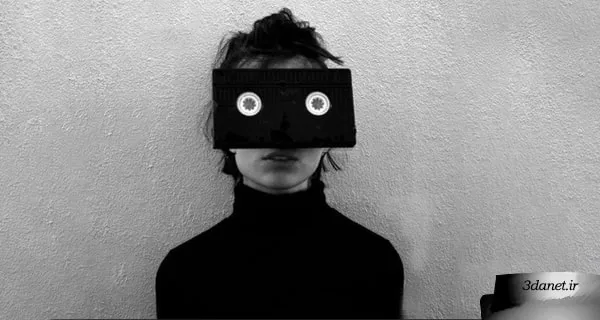
This short text is excerpted from the very beautiful book Philosophy of Life by Christopher Hamilton, translated by Meysam Mohammadamini (Chapter Three). The central theme of the discussion here is the necessity and the manner of turning oneself into a work of art.
Excerpts from the Book Philosophy of Life (1)
Turning Oneself into a Work of Art
Introduction:
This short text is excerpted from the very beautiful book Philosophy of Life by Christopher Hamilton, translated by Meysam Mohammadamini (Chapter Three). The central theme of the discussion here is the necessity and the manner of turning oneself into a work of art.
The main issues raised in this writing can be broadly stated as follows:
1_ The feeling of futility, everydayness, and boredom in life
2_ Montaigne's view on the problem of futility and his response
3_ The importance of processing experience in order to gain mastery over one's own experience
4_ Nietzsche's horror at the destructive effects of the passage of time and the sense of futility
5_ Nietzsche's answer to resolve this crisis is the realization of the self as a work of art, because art both liberates man from futility and is invigorating
6_ Spirituality (in the sense of the enthusiastic acceptance of whatever life may place in a person's path) as one of the strategies for turning oneself into a work of art
7_ The importance of believing in fate and destiny in order to see oneself as a work of art
8_ Heinrich's critique of the belief in destiny and his proposed solution of planning one's life
9_ The drawbacks of planning one's own life
10_ Kant's response to the contradiction between the necessity of having order in life and the felt need for richness and chaos
11_ Kafka's critique of Kant's solution in the short story Before the Law
Main Text:
We have built a world for ourselves in which futility can be a way to pass the day. In our time, many human beings spend the major part of their lives in busyness—that is, their job and all the things associated with it—which gradually wears them down and turns their spirit to ashes.
In general, it is not the great moral tragedies of life that destroy individuals, but rather the boredom and monotony of everyday experience that brings a person down; the constant compulsion to continue working without enough sleep, the struggle and strife during rush hours, the lack of a space that places something invigorating before one's eyes, and the like.
In Kafka's story The Metamorphosis, Gregor Samsa wakes up one morning and finds that he has been transformed into an insect.
One of the reasons Kafka presents is that Gregor's work brought this calamity upon him, or in a sense, destroyed his spirit.
"Oh God... I have really chosen an exhausting job, traveling every day. The incidental troubles of the work are greater than the work itself in the office, and on top of that I have to endure these things: the torment of travel, the worry of changing trains, bad and irregular food, and relationships with temporary and constantly changing people who never become intimate... and having to wake up early every morning drives you quite mad. A person needs sleep." ...
The horror at the destructive effects of the passage of time had caused Nietzsche to be severely tormented by this dreadful feeling that he must find something valuable in himself and his life. We, at least from time to time, sense such a thing in ourselves. Some also advise that we be at ease about this matter. For instance, Montaigne says:
«How foolish we are! We say, 'So-and-so has spent his life in idleness.' We say, 'I did nothing today' – [one ought to say:] What! Have you not lived? That is not only the most fundamental of your tasks, but the most glorious as well. Again we say, 'If they had put me in charge of some great undertaking, I would have shown them what I can do' – but one ought to say, if you have been able to test and govern your own life, you have accomplished the greatest of tasks... Our duty is to order our morals, not to arrange material for a book.»
But what happens if someone is like Rainer Werner Fassbinder, the German filmmaker who said he had never really felt he had experienced something until he had made a film about it? And Montaigne himself was severely afflicted by a similar need; writing until he was satisfied that he had written abundantly. This kind of processing of experience – whether making a film, writing a book, painting a picture, or many other things – is an attempt to gain mastery over experience, to prevent experience from being something whose meaning one cannot fully grasp. It is an attempt to create oneself, to stamp the seal of one's own nature upon one's experiences, so as not to lose control over these experiences.
This attempt requires exerting inner pressure upon oneself; it is a struggle to achieve a life in which nothing is wasted or lost.
See how many moments of life pass before our eyes and are squandered, while we know we could derive abundant benefit from them. Of course, it is also true that what seems a waste to one person is pleasure and delight to another.
But in the midst of this, someone like Nietzsche fell into a terrible trap, because he wanted to strike a balance between two things: on one hand, the sense of waste that threatened his life with the danger of falling into the abyss of meaninglessness, and on the other, the feeling that when he tried to waste nothing and struggled intensely to extract something valuable from all his experiences, he tormented himself more severely from within, and thus, in fact, his life was wasted even more.
For Nietzsche, as for others who fell into this predicament, the experience of art was the best way to achieve a middle state. Because art seems to bestow a kind of vitality upon the spirit, while at the same time filling one's being with the sense that time has been well spent and used in the best possible way.
But if one realizes that art offers moments free from waste, it will not be long before the thought occurs that one might try to give one's own life artistic value as well, and bring life closer to the status of art. ...
It is not at all unlikely that the hidden truth behind why we enjoy listening to music while strolling and moving about in the world is that it creates the impression in our minds that we are a work of art within another work of art, since the experience in question is something akin to our experience when watching a film and fantasizing that we are the character within the film. In fact, film has powerful effects on us in other ways too, for there is almost no doubt that we adopt many styles of speech and behavior because we see them in films. Certainly, everyday life has an artificial, theatrical aspect, and this is one of the factors that makes it bearable.
Another way a person can employ to turn themselves into a work of art is to cultivate spirituality within themselves. Understanding this concept is not at all simple, but I imagine its central axis is a kind of enthusiastic acceptance of whatever life may place in one's path – that is, the ability to accept all things that, in another state, namely in their natural state, would be considered harmful.
In this way, a person will manifestly possess a secure and self-sufficient self, and life itself will appear to them as a magnificent, glorious spectacle.
Anyone who thinks this way must accept that this kind of spirituality is a fragile possession; if they do not feel, to the depths of their being, that their spirituality might be blown away tomorrow, then that spirituality is not yet entirely authentic and reliable.
Of course, this view does not contradict the effort to change the affairs of the world, but what has no place in it is anger and hatred when the hardest efforts to bring about change fail.
This kind of attitude toward life was a fundamental aspect of the life of Christ and also the thought of some Eastern mystics. Nietzsche, too, found this way of looking at things attractive, but he could never reconcile it with his admiration for a man like Napoleon, who in many respects was truly the polar opposite of a person of spirituality.
Although it must also be said that Napoleon, too, viewed life as a work of art and considered himself the main actor on the stage of European politics. For this very reason, he constantly spoke of fate or destiny, and someone whose conception of himself is that he follows fate or destiny tends to see himself as an actor in a play, an actor who has no free will in life and is captive to the whims of the playwright, but in that case, he would be a work of art within a work of art. It is no coincidence that Nietzsche thought the highest form of spirituality, which in his view was the affirmation of life, required a love of fate.
But Heinrich von Kleist would probably have disagreed with this statement, because he was terrified of becoming, in his own words, a plaything of fate. His proposed solution was to make a plan for life. [He says:]
"I cannot conceive how a human being can continue on his way without a plan for life ... without a plan for life, without a definite goal, always in a state of hesitation and indecision between fleeting desires, always in conflict with one's duties, a plaything of chance and fortune, like a marionette in the hands of destiny; such a humiliating condition is so repugnant and distressing to me that I would many times prefer death."
In fact, Kleist was a man of action. He kept his word, and when he concluded that the plan he had made for his life could not give him what he needed, he blew his brains out. He had realized that making a plan for one's life has a fundamental problem.
The problem is that a life plan can only deliver what a person expects by trying to limit life's impact upon oneself.
Because if one's arms are open to life, then this very openness must, to some extent, entail the possibility of deviating from one's plan for life.
But both deviating from the plan and adhering to it are things that we can feel life demands of us, and indeed, it is this pervasive feeling that life wants us to be both open to all its richness and chaos and to try to subdue and discipline it by establishing order and making a plan for life.
Some philosophers, like Kant, have tried to reconcile these two by defending the idea that by following the moral law, we are both open to life and truly free.
Perhaps Kant, by taking this path in his personal life, felt at peace.
Perhaps some others would say that Kafka's commentary on Kant's philosophy is closer to the reality of life than the philosophy itself. In one of his short stories called "Before the Law," Kafka tells the story of a man who spends his entire life standing before the gates of the law—gates that exist for him and for him alone, and only he can pass through them, but he is not granted entry. The man is called toward something that repels him. He is doomed to failure. In Kafka's view, this is the fate that is decreed for all of us.
.



Discussion3 comments
جالب و مفید!
بسیار عالی ، ممنون از زحماتتون
واقعا عالی بود ...ممنون از گردآوری و متن مفید و با ارزشی که در اختیارمون گزاشتید..