Literature
Maternal Love: On a Story by Dostoevsky
Christopher Hamilton, through a reading of Dostoevsky's 'Notes from the House of the Dead', examines the reaction to the death of a despised prisoner; where the sentence 'He too had a mother' unveils the value of a human being and his irreplaceability in the eyes of a mother's love.
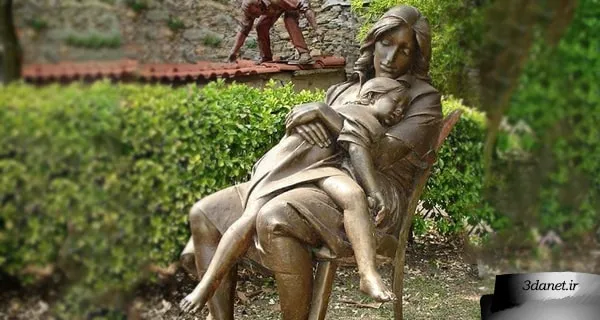
This short text is excerpted from the very beautiful book The Philosophy of Life by Christopher Hamilton, translated by Meysam Mohammadi Amini (Chapter One).
In this short piece, Christopher Hamilton examines an interesting story by Dostoevsky, and in the course of it, he explores the quality and characteristic of maternal love (such as its irreplaceability), the value maternal love bestows upon an individual, the reason for this valuation, and how this affection is generalized in human relationships.
But the original text of Dostoevsky's story is as follows:
«He had his helmet on and his sword at his belt... He was walking towards the corpse, and with each step his pace became slower and slower, and he looked with astonishment at the convicts who sat silently, eyeing him sullenly from all sides. He stopped a step or two from the corpse, as if suddenly startled by something. The sight of the completely naked, shriveled body, wearing nothing but a leg-iron, made a deep impression on him, and suddenly he unbuckled his sword and took off his helmet – without being obliged to do so by regulations – and made a large sign of the cross over his chest. He was a battle-hardened, grey-haired soldier who had spent years in military service.
I remember that at that very moment Chekunov, another grey-haired man, was also standing beside him. Without saying a single word, he stared fixedly at the guard officer's face and followed his every movement with strange attention. But their eyes met, and for some reason Chekunov's lower lip suddenly began to tremble. He twisted his lip strangely, showing his teeth, as if involuntarily drawing the guard officer's attention to the corpse.
At the same time, he said quickly:
Every day hundreds of thousands, perhaps millions, of human beings die. We are indifferent to the majority of these deaths. But sometimes someone dies who matters to us, someone whose death is a tremendous loss for us. Because there are some people—and their number is very small—who, in our eyes, have no substitute. If we reflect on the nature of this substitutability, we come closer to describing the character of the man or woman who has died. And of course, when I speak of irreplaceability, I have this very difference in character partly in mind. But in the story that was told, Dostoevsky makes it clear that no one really knew Mikhailov well. The blow that Mikhailov's death dealt to the guard officer, Chekunov, and Dostoevsky himself was not because they were suddenly stunned by the death of a man with such-and-such character traits—however interesting, original, and unusual those traits may have been. The words Chekunov speaks upon Mikhailov's death indicate that something else was at stake. Something that matters from an aspect other than the nature of individual character traits, and their reaction to the condemned man's death was connected to it.
In that prison, the prisoners were forced to endure every kind of indignity, punishment, and humiliation. To the prison authorities, their existence as individuals meant nothing, or was considered of very little importance. The same can be said of their relations with one another, for Dostoevsky recounts that the trait most common among the prisoners was their excessive desire to exert influence over one another. Almost all of them were ridiculously arrogant and proud, concerned with keeping up appearances, boastful and conceited, and the like. This, as Dostoevsky points out, indicates their deep need to establish their place as an individual in the eyes of the other prisoners. In short, the prison was an environment in which the prisoners lacked any individuality, and they themselves knew it.
With his words, Chekunov points to this matter, as if for the first time he had suddenly been confronted with Mikhailov's individuality. For these words establish Mikhailov's relationship with someone—namely, his mother—for whom the dead man was not, and could not have been, merely one among others. For his mother, he was truly irreplaceable. When Chekunov speaks of him in this way, he indicates that he has suddenly realized Mikhailov can also be viewed from another angle, and from that angle he can be seen as a unique and irreplaceable individual. This kind of gaze is the very gaze a mother has for her child. And the most important matter here is the mother's love for her child; a mother's love for her child in itself expresses her perception of the child's unique and irreplaceable individuality.
Perhaps this statement may seem strange. Chekunov knew nothing—for all we know, perhaps Mikhailov's mother detested her child and abandoned him. From this perspective, Chekunov's words can be seen as entirely unwarranted and pure speculation about a relationship of which he knew nothing. But Chekunov is not speculating. He is not engaged in hypothesizing about the relationship between Mikhailov's mother and her child. Even if he had learned that Mikhailov's mother detested him and abandoned him in childhood, he still would not have had to retract his words. For Chekunov is speaking of motherhood as a moral ideal, precisely the moral ideal in whose light Mikhailov can be seen as an irreplaceable individual. If it had turned out that Mikhailov was a foundling and his mother had abandoned him, Chekunov would have deemed that mother, according to the ideal of motherhood to which he implicitly appeals, to have failed in her duties.
اما اصلا چرا باید اینجا به عشق مادر استناد کرد؟ ممکن است بسیاری از انواع دیگر از عشق باشند که نشان دهند موضوع آن عشق فرد بی همتا و جایگزین ناپذیری باشند. چه نکته خاصی درباره مفهوم مادر بودن وجود دارد؟ پاسخ در این حقیقت نهفته است که عشق مادر به فرزندش دقیقا عشقی است که برهیچ آگاهی درمورد ویژگی های شخصیتی کودک – و اصلا آگاهی درمورد هرگونه جزییات – وابسته نیست.چنین وابستگی نمیتواند وجود داشته باشد چون اصلا کودک، مگر به معنایی ضعیف، شخصیت ندارد.البته گاهی پیش می آید که چون کودک کمی بزرگ تر شد پدر و مادر میگویند که همه ویژگی های شخصیتی اش از همان آغاز در او وجود داشت. اما این بیش تر نشانه ای از مهر مادر به فرزند است، نه اینکه توجیهی برای آن باشد.و به منزله انکار این موضوع هم نیست که همزمان با رشد کودک میتوان پدید آمدن الگوهای شخصیتی را در او مشاهده کرد.بلکه آنچه میگویم این است که ابراز علاقه به پدید آمدن این ویژگی ها و لذت بردن از آن، همان چیزی است که باید آن را بفهمیم و نیاز به توضیح دارد.
میتوانیم مسئله را اینطور بیان کنیم.فلاسفه گاهی این پرسش را مطرح میکنند که آیا میتوان علاقه خاص ما به کودکان را بر پایه ویژگی های آن ها توجیه کرد. چون تصور بر این است آنچه واکنش ما در برابر چیزی – خواه آدمیزاد و خواه حیوان و خواه سنگ – و نحوه برخورد ما با آن را توجیه میکند، ویژگی های آن چیز است.و اغلب تصور میشود آنچه رفتار خاص ما با انسان های بالغ را توجیه میکند واقعیت هایی است نظیر اینکه آن ها موجوداتی هستند عاقل یا ناخودآگاه یا خودآیین و مانند این ها.
اما کودکان صاحب هیچ یک از این ویژگی ها نیستند و در نتیجه نمیتوانیم توجه و علاقه خاصمان به آن ها را اینگونه توجیه کنیم.ولی چیزی که در این خط استدلالی فراموش میشود این است که والدین واقعا در عمل چه رفتاری در برابر کودکانشان دارند.چون با رفتارشان به روشنی نشان میدهند که عقیده دارند اینکه کودکشان صاحب عقل و چه و چه نیستند در برانگیختن ها به کار هایی که واقعا انجام میدهند، اهمیت چندانی ندارد.این هم چندان مهم نیست که کودنشان در نهایت روزی صاحب عقل و خودآگاهی و غیره میشوند. مادری که به او گفته اند کودک نوزادش، مثلا به علت نوعی بیماری مادرزاد و کشنده، چند ماه بیش تر زنده نمی ماند به این موضوع فکر نمیکند که توجه و مراقبتش از کودک نابه جاست. کاملا برعکس، حتی ممکن است فکر کند که کودکش بیش از هر کودک دیگری مستحق محبت و دلسوزی است.حقیقت این است که اگر در اینجا واقعا به دنبال توجیه رفتارمان در برابر کودکان، از طریق بررسی ویژگی ها ی آن ها باشیم، به بیراهه رفته ایم.
یکی از دوستانم که به تازگی صاحب فرزند شده است، به من گفت وقتی که پسرش را با اتومبیل از بیمارستان به خانه برد، حین رانندگی در میان خیابان های آلوده و دود گرفته و پر سر و صدای لندن، ناگهان به شدت نسبت به فرزندش احساس مهر و دلسوزی کرد.واکنش او در برابر کودک برآمده از این احساس اوست که زندگی را چیزی خشن و دشوار و حتی دشمن خو میداند، چیزی که رویداد هایش ناگزیر سرشاز از منازعه و رنج و آشفتگی است.احساس این مادر ناشی از درک او از شکنندگی و ضعف کودکش نیز بود، ناشی از اینکه او روحی است نوشکفته در جسمی که از جهتی ناتوان و بی دست و پاست، اما درعین حال کامل و بی نقص هم هست.
But my friend's reaction also depended on another factor. His feeling about his child's innocence in the face of a harsh and unfeeling world was also involved. Some philosophers have become perplexed when confronting this concept. In their view, it is not at all reasonable to say that a human infant is innocent in a specific sense in which the infants of other species are not. This is why, for example, Peter Singer claims that a human infant is exactly as innocent as a laboratory mouse. What is implicitly assumed in this line of reasoning is that what makes any being innocent is that it has committed no morally reprehensible act, and since this is clearly true of both the human infant and the laboratory mouse, they must be innocent in one and the same sense. But what is overlooked in such reflections is that the innocence of the human infant has almost nothing to do with the concept of moral fault. Because the understanding of the concept of innocence present in my friend's reaction to his child corresponds to the idea that the whole of human life is nothing but abandonment, loss, and waste, in various ways and to different degrees, and that his child's fate is to experience such things, even though she has so far been spared from it.
This is precisely where we encounter the very concept of waste. Hannah Arendt points out that everything in nature moves in a circle. Therefore, the concept of waste, in the strict sense of the word, has no instance in nature, unless we view nature in the light of human considerations. It is in human life that, unlike all other things in the world, waste can actually occur; what appears to us as waste elsewhere is an image projected from the waste that threatens every human life. The reason for this is that the trajectory of human life from the moment of birth is, in Arendt's terms, not circular but linear. It is a trajectory from birth toward death. We can tell the story of any human being's life; narrate their journey through time. But we cannot do this for the life of an animal. If we want to tell the story of an animal's life, we can do nothing but recount the events of that life; that is, describe what happened and when. But with human life, the situation is entirely different. Because a human being can consider their life utterly meaningless; or feel that their entire life is flawed and defective; or reach a point where they say, cursed be the day I was born; or realize they have turned their back on what they once were or could have been. The story of a man's or a woman's life is the story of such things. And for a human infant who dies before maturity and consequently cannot have such an understanding of life, one can rightfully feel pity; because they have missed out on such an extraordinary adventure, whereas it is not at all reasonable to say such a thing about an animal, no matter how intelligent—like Washoe the clever chimpanzee—or no matter how many words and phrases it has been taught. Throughout life, humans constantly strive against the fact that we live linearly, while biologically our life, like the life of all natural beings, is cyclical. This striving and its accompanying failure, to a greater or lesser extent, gives us a kind of feeling of waste and casts its shadow over the life of every single human being, but such a thing can never apply to the life of an animal. This very issue shows us one of the fundamental differences between human life and animal life; in fact, our understanding of what a human is and what an animal is, is defined in this way. This is why philosophers and others who want to defend the claim that animals also have interests similar to human interests, and that we should therefore give equal consideration to the preferences of animals and humans, or grant some of the legal rights of humans to animals, overlook the fact that human life is something categorically different from animal life.
It very often happens that a mother, even before her child has grown up and become a man or a woman, still harbors that same feeling of his innocence. This does not necessarily mean that the mother mistakenly thinks her child's life has not been touched by ruin and waste. Indeed, perhaps when she has a particular feeling about the waste of her child's life, he appears even more innocent in her eyes. For the feeling of the child's innocence is a form of the mother's compassion manifesting itself precisely because of this fact, just as the feeling of a newborn's innocence in the mother's eyes is partly born of the knowledge that the infant's life will not be spared the jolts of a cruel world. It is for this reason that a mother's feeling of her child's innocence grows strongest from the moment she not only knows that her child's life entails waste, abandonment, and loss, but knows that this has been realized in the form of wrongdoing or evil. If the mother still insists on her child's innocence, she has not made an error about him and his deeds. Nor is it that she thinks her feeling of his innocence is something that might, for instance, be taken into account in a court of law. I repeat, this feeling is the expression of the mother's compassion for her child; pity for him as a person who has erred; for the fact that his life has come to this.
Thus, the compassionate love a mother bears for her child, according to the moral ideal we hold of motherhood, is a form of apprehending her child's irreplaceable individuality and his sense of innocence. But the conception of individuality at issue here is in no way dependent on any awareness of the child's character traits, and likewise, the concept of innocence is not dependent on the notion that the child has done nothing wrong.
As I said, Chekhov's remark about Mikhailov was not made with the intention of hypothesizing about how his mother had treated him. Rather, this sentence reminds us that any human being can be looked at from this angle, in the light of this form of love and compassion that is seen as a moral ideal in maternal love, and whose nature I have tried to indicate. From this angle, one can well perceive the indifference of the world and the fragility of humankind within it. In this sense, the function of Chekhov's words was to draw Mikhailov out of his anonymity and bestow upon him a dignity and standing that, as one of several hundred prisoners in a forced labor camp, he lacked. But as we noted earlier, Chekhov's instantaneous apprehension of Mikhailov's dignity and individuality did not stem from the fact that he or anyone else had suddenly realized what kind of person Mikhailov was; that is, had understood something about his character. He did not suddenly realize that Mikhailov possessed good or interesting character traits. Rather, the dignity and individuality in question came from the fact that Chekhov looked at him just as a mother looks at her child; that is, in the light of that same love and compassion I mentioned. And this kind of looking is not contingent upon knowledge of a person's character traits. But there is another, related matter. It is clear that Chekhov knew Mikhailov was a wicked man; had it been otherwise, he would not have been in prison. Yet when he said of him, "He too had a mother!" he was pointing to the possibility that Mikhailov could also be seen as an innocent being. The meaning of innocence here expresses compassion for the human fate, compassion for the fact that such things can happen in any human life, compassion that a human being may come to an end in this way.
We said earlier that Chekhov suddenly realized what the death of a particular human being could mean. But what does it mean to grasp this? When someone who matters to us dies, the common reaction is disbelief. This disbelief is not a refusal to accept the truth of a proposition such as “x is dead.” When someone says they cannot believe their friend has passed away, that is not at all what they mean. They have not made a mistake. Rather, this disbelief is an expression of astonishment and bewilderment in the face of the fact that there is no longer a world for their friend, and that the perspective which was their friend’s point of view on the world has now vanished. This relates to the concept of the friend’s spiritual life. But what is meant here by spiritual life is not the sense in which philosophers call it the subject of experiences, that is, possessing beliefs, desires, and the like. For this can also be said of an animal. But when one says they cannot believe their friend has died, the meaning of spiritual life they have in mind conveys that individual’s striving to make sense of their life. This is why Heidegger says an animal cannot die; it merely perishes (verendet). But the extinguishing of a man or woman’s spiritual life is, from the friend’s perspective, a kind of mystery. That is why the usual reaction in these circumstances is disbelief. This sense of mystery is the sense of that friend’s individuality.
But to confront this mystery, we do not need to know much about the deceased’s personality. Even if we know nothing about their character, we may still be affected by this mystery. The only thing we need to know is that they possessed the kind of spiritual life we discussed; that is, the story of the individual’s struggle to find meaning in their life, regardless of what those strivings were like.
The sense of mystery in question can be clearly seen in the reaction of those who were around Samuel Johnson at the time of his death.
Everyone who knew him shared in this feeling of disbelief... As Boswell said of himself... “My feeling was a vast expanse of stupefaction... I could not believe it. My imagination was not convinced.” William Gerard Hamilton expressed it best of all: “He has created a deep chasm, which not only can nothing fill, but nothing has a desire to fill. Johnson is dead. Let us go to the next best: there is no one; no one can be said to bring Johnson’s memory to life for you.”
When Chekhov said that about Mikhailov, he wanted to express his sudden feeling of the mysteriousness of his death. And along with this sense of mystery was the realization that Mikhailov had a spiritual life and could perhaps have thought his life had been wasted. There is here a kind of awareness of the terrifying truth that human life is so short, everything in it can go wrong, and the man or woman who lives this life can understand that such a situation has come to pass.
The importance of the concept of human spiritual life is clearly evident in the fact that we consider the dead human body something that can be respected or desecrated. This is why Antigone insists so much on her brother’s burial, and why Achilles drags Hector’s corpse behind his chariot. But the concept of respecting or insulting a human body cannot mean doing good or harm to the subject of experience, because once dead, such a subject no longer exists. Respect or insult to a human body must relate to a good or evil that can befall someone even when that person is no longer such a subject. This matter must be connected to the concept of the meaningfulness or meaninglessness of a life.
A person's life may be meaningless, even if they themselves think otherwise, and vice versa; the meaning of someone's life may be shrouded in ambiguity for them. And it is for this reason that our treatment of a dead human body is connected to the concept of the meaning of that person's life, even in a state where there is no longer any conscious experience at all. When someone's body is desecrated, an attempt has been made to reduce that person's life to something meaningless and purposeless. An effort has been made to reduce their body to a mere mass of matter, whose existence or non-existence is of no importance. Similarly, respect or veneration for someone's body expresses a serious determination to find a purpose or aim in their life. And of course, in either of these two cases, no one thinks that the person in question is aware of (the effort to ensure) the meaninglessness or purposefulness of their life, just as a living man or woman may also be unaware of the meaningfulness or meaninglessness of their own life. Chekhov's ability to view Mikhailov from that perspective arose from his recognition of a mother's love for her child and his sudden capacity to view a grown human being from an angle attentive to this kind of love. A necessary condition for this recognition is a culture that gives its members the opportunity to understand this kind of love. Every culture can function in this way in various manners: through its writings, through the persons who are considered sacred in that culture or are admired in some other way, through its music, and similar things. And indeed, it seems that this very way of looking at the human infant that we were discussing is deeply woven into the fabric of how all members of the human species look at their children. For we see this same kind of love for children and this same feeling of compassion for them and their innocence throughout world literature. But this kind of gaze upon grown human beings, which Chekhov expressed regarding Mikhailov, is not something common among all cultures and is far beyond what most of us can attain. Undoubtedly, there are many reasons for this, but certainly the main reason is that grown men and women manifestly have personality, and this very personality somehow prevents the formation and growth of the moral perspective under discussion. It is not at all unlikely that we may dislike someone because they may have harmed us, or we may hate them, and so on.
This issue, for some, like Dostoevsky, gave rise to the most important moral task before them: how can one cultivate within oneself that kind of love, compassion, and forgiveness for human beings that was implicit in Chekhov's words? Despite the fact that there are many things about human beings that seemingly make them not particularly deserving of such attention and affection.
.
Excerpts from the book Philosophy of Life (2)
Maternal Love: On a Story by Dostoevsky
Compilation and Introduction: Atefeh Tabatabai
.



Discussion2 comments
زندگی تراژیک انسان مملو از چیستی ست. شوربختانه پاسخی در خور و اقناع کننده هم وجود ندارد که چگونه و با چه ساز و کاری می توان جهتی را یافت که در روابط انسانی رنگی از مهر مادرانه عمومیت یافته و شکل بگیرد؛ هرچند که مهر مادری به تنهایی قادر به کاهش رنج ناشی از خود خواهی و زیاده خواهی انسان نیست. زیرا مهر مادری بنا به ماهیت فردیتش نمی تواند تعمیم یابد. مسئله این است که انسان، مادرِ مشترک نداشته و نخواهد داشت تا امید داشته باشیم؛ شاید روزی عشق بی چشمداشت عمومی شود. عشق مادری در شرح داستانی از داستایوفسکی باز خوامی منفعلانه از یک تراژدی ست. اشاره به رذیلت و بیرحمی ی انسانی ست که همواره خود را در آئینه ی اعمالش می بیند و بر نتایج عملکردش اشک تمساح می ریزد و با فلسفه بافی این گونه بودنش را ناگزیر می داند.
متن جالب بود. واقعا انسان موجودی بی نواست و اگر نگاه ما به انسان و ارزش گزاری او با این حس ناب و دلسوزانه همراه بود اینقدر بر خودمان و دیگران بی رحم نمی بودیم. و خودبخود جنگ و کشتار انسان ها متوقف می شد. به نظر من مهمترین مانع این نوع نگاه به انسان نگرش دین به انسان هاست و رواج فرهنگی که در آن آدمها به دو دسته خوب و بد تقسیم می شوند