Sociology
The Only Path to Deliverance According to Mostafa Malekian: A Pathology of the Roots of the Protests
Mostafa Malekian sees protests as a response to the pain caused by threats to basic human needs, and considers concealing problems futile. The only way out is cultural reform and inner transformation through replacing false beliefs with true ones.

When our first appointment in early Aban was canceled, it took nearly two months to arrange another meeting and visit him for an interview. In the meantime, a significant event had occurred in the country. Protests that began under the pretext of a gasoline price hike and soon turned violent. The news that followed these protests and what came after changed the subject of our interview: “What is happening?” and “What path is society taking?”
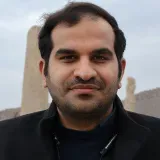
He seemed unwell. He appeared a bit impatient and tired, perhaps even a little angry at the events that had occurred and the reactions they had provoked. If one knows Mostafa Malekian, one fully understands the reason for this impatience and anger. Someone whose entire concern is living ethically and striving for the well-being and happiness of human beings is certainly made unwell by the unwellness of humans.
He began to criticize, saying that attention must be paid to the existing problems: “No matter how much you throw dirt on the problems, ultimately you must find those root problems and solve them.” Malekian says that human beings have a specific mental, physical, and psychological structure, and for social life to be possible, these structures must be taken into account. If not, this creature cannot maintain its social solidarity with other fellow human beings in society: “There is no other way.”
Malekian says that when people vote for someone, it is to secure “order, security, justice, and freedom.” Any action that threatens these things will raise their voice of protest, from the standpoint that they are human and have a set of human needs. One cannot tell them why they raised their voice. He views the popular protests against the gasoline price hike from this perspective: “When my kneecap is struck, my leg involuntarily jerks up. When a needle is stuck into my hand, I involuntarily scream. There is no time for reflection here. These protests are precisely the scream of someone who has been hurt.”
Malekian levels three fundamental criticisms and identifies flaws in the words of those whose argument for the gasoline price increase is to compare it with other countries.
Finally, when we asked him, “What is to be done and what is the solution?”, he gave the same answer he has, more or less, directly and indirectly, pointed to many times in his other lectures and interviews: “cultural reform” or “inner transformation.”
Malekian believes that “cultural work means that I take false beliefs away from people and introduce true beliefs into their minds. I take away inappropriate feelings and emotions from people and, in their place, plant appropriate feelings and emotions in their minds and consciences. I take unreasonable desires away from them and give them reasonable desires.” Although this is an exceedingly difficult and long path, it is the only path available.
Read the Shahrvand newspaper’s conversation with Mostafa Malekian below:
In Aban, we faced protests to which political figures, some members of parliament, sociologists, thinkers, and even artists had various approaches and offered diverse opinions. Of course, contrary to what some imagine, it seems these protests were not the continuation of a path but rather the results of a path that merely manifested in economic issues. Although some have long been explaining the protests in a broader sense from the perspective of a social crisis. What is the matter from your point of view?
In my opinion, the totality of these protests, firstly, was never purely economic in nature, although the pretext was an economic matter; but it was certainly a comprehensive protest that opened a door and window by way of an economic event. That is, it was a dissatisfaction and protest against many things, and of course, on the occasion of an economic event.
Secondly, as you yourself said, it was the effect, result, and manifestation of a series of other matters. I want to say that if the government had immediately retracted the gasoline price and returned to the fixed price, this protest would still not have been prevented. Because there is a difference between “why I am dissatisfied with you” and “with what pretext I declare my dissatisfaction.” We must address what has caused this dissatisfaction and protest to emerge; if we want to get to that, it seems that major issues can be raised, among which, of course, are economic issues. In other words, in my opinion, the economic issue is not only “not the only issue” but is not even “the most important issue.”
With this introduction, it seems you are speaking of a kind of accumulation of issues and predicaments; a great mass resembling a tangled ball of yarn. How can this concept be examined? How can it even be explained?
Let me give an example. Suppose I have a radio whose volume control is broken. The reasonable way is to remove the plastic casing of this radio, pull the radio out of this plastic casing, and bit by bit find the thing that has caused the radio's volume control to malfunction and repair it. This way is, of course, the reasonable and rational way, and it has its own subtleties and nuances and takes more or less time.
Now, there is another way, and that is, to protect the neighbors from the roar of the radio, to throw a blanket over the radio to muffle its sound a bit. Perhaps by doing this, we might very easily solve this problem; but gradually, this blanket, due to generating heat, causes the radio's alloys to soften and creates a problem. Now we say, let's put a container full of ice on this blanket to eliminate the heat. This ice, however, gradually melts and drips onto the blanket and the radio, causing rust.
Now we also place a device there that periodically applies anti-rust to these metals so they don't rust from the moisture, and in this way, you solve the problems. But you suddenly come to your senses and see that you have created a vast factory, just so the radio's sound comes out properly! This is not the way. The right way is the first way, which must be taken. Unfortunately, from the beginning, whenever we faced any practical problem or theoretical difficulty, we used the second way, and instead of solving the problem and removing the difficulty, we only tried to cover up the problem. But you must know that eventually, this radio must be opened and that screw, gear, or spring that has encountered a problem must be fixed. There is no other way.
We have generally repelled problems with “more problematic things”; that is, we repelled every problem with a “more difficult problem”; and that more difficult problem must be resolved with an “even more difficult problem,” and ultimately our work reaches a point where even if we have firm resolve, high ambition, and a sacred and emphatic decision to improve the situation, solving the problem is still beyond our capability.
In the example you gave, the discussion of dissatisfaction is still present, but the concept of satisfaction and dissatisfaction itself remains a question. In fact, if we want to examine this issue a bit further from current discussions, we arrive at whether dissatisfaction is always justifiable? Indeed, can we not go along with public opinion and ask ourselves whether dissatisfaction always leads to the conclusion that something somewhere is problematic?
If it truly becomes public, yes. I might be dissatisfied for any reason, and that dissatisfaction may have no rational basis whatsoever. But if the dissatisfaction becomes public and gradually spreads everywhere, then know that it is truly something that must be taken seriously. But it is always possible for an individual or a small group or several small groups to have dissatisfaction whose demands also lack rationality. In this case, we should not indict the political system governing that society; although even there, the very fact of why this individual or small group or several small groups have become dissatisfied is important and must be addressed. But addressing the causes of their dissatisfaction is not a justification of their demands. We must merely explain and make understood why this small group is dissatisfied.
At the same time, we can observe events and see that sometimes rationality does not prevail over the situation. That is, grievances create an amalgam of feelings and emotions such that one can no longer determine precisely where it is reasonable and where it is unreasonable.
I have said many times that the injustice that can be done to people is to push them to a threshold where they themselves allow their feelings and emotions to overcome their rationality.
I mean to say that if, in any circumstances, we resolve to solve the problem and remove the difficulty, it is better than saying, "We have come this far down this road, and from now on we will proceed in the same manner."
I say this based on history; based on the book Nahj al-Balagha of Ali ibn Abi Talib (AS). Look at this rational statement: Ali ibn Abi Talib (AS) appointed Kumayl ibn Ziyad al-Nakha'i as the governor of a province. Kumayl ibn Ziyad al-Nakha'i did not attend to the affairs of the people of that province at all, but when he received news that Mu'awiya's troops had attacked the neighboring province and were close to conquering it, he (Kumayl) gathered all his forces and equipment and went to the neighboring province to defend it against the attack of Mu'awiya's army.
Ali ibn Abi Talib (AS) wrote a letter addressed to Kumayl, which is recorded in Nahj al-Balagha. He said: "It is sufficient folly for a man that he neglects the task entrusted to him and undertakes the burden of a task not assigned to him!"
Ali ibn Abi Talib (AS) had entrusted the administration and management of this province's affairs to you, but you went and performed a task that was not assigned to you.
When I vote for my parliamentary representative, when I vote for my president, be fair and tell me, do I vote so that my situation improves or not? These 80 million people voted for you to secure their order and security, their justice, and their freedom, not for you to have neither order, nor welfare, nor justice. This is our problem. No one emerged to say, "We have come to bring this nation to a society possessing these five characteristics: an orderly society, secure, prosperous, just, and free."
Yes! You say that we have come to "shatter the vault of the firmament and devise a new design" or "A human being does not come into being in this earthly world / A world must be built anew, and a new human being!" Then we will say, if you have the power, go and create a new human being; but if we are the very same people we are, such a situation is doomed to failure.
So, in this situation, the only path that comes to mind is to be an observer! Because in conditions of boiling emotions and uncontrollable excitements in which we see no rationality, naturally, nothing else can be done.
If you were to tell me now, "Mostafa, pick up a brick and break this window!" the first thing I would ask you is, "Why?! Why should I break this window? What fault does this window have?"
But in the street, I do not ask you this "why" or this question. There, when I see you have picked up a brick and are hitting the window, I hit it too; this is the triumph of feelings and emotions over rationality.
Well, why don't I do this now? Because I am now calm and my reason governs me, not my feelings and emotions.
But in the street, given the pressures I have endured, you should no longer expect that my feelings and emotions will not overcome my reason. When a blow strikes my kneecap, my leg involuntarily jerks up. When a needle is stuck into my hand, I involuntarily scream. There is no time for reflection here. These protests are precisely the scream of someone who has been hurt.
Nevertheless, some believed that the protests sometimes deviated from rationality. At the time, arguments were being made that we must accept that energy carriers such as gasoline are supplied very cheaply in Iran, and for this reason, we should also look at other developed or developing countries. For instance, they cited Turkey or Canada, where the price of gasoline is more than one dollar. Numerous tables were also compiled, which overall sought to inject a more logical critique into the protest movements.
This comparison that gentlemen on radio and television constantly repeat has a fundamental flaw.
Look, do these countries have as many underground reservoirs and subterranean oil and gas resources as our country does, for their gasoline prices to be the same as ours?
The second point is that in Canada, for example, if a citizen spends ten times what we do on gasoline, their salary is several times that of our people. It is said that Canadians buy gasoline at 16,000 tomans per liter; I say, granted, but they pay 16,000 tomans for gasoline in a place where their simple laborer earns 35 dollars for one hour of work.
Then how many dollars does your laborer earn for each hour of work? That is, do not compare a laborer who earns over 400,000 tomans per hour with an Iranian laborer who does not even earn 400,000 tomans for 10 hours of work in a day.
But the third point: if that Canadian pays this amount for gasoline, they are at least satisfied with the rest of their society's affairs; ultimately, they only have a problem with the price of gasoline. But is an Iranian citizen satisfied with everything?
Therefore, comparing one thing with another that bears no resemblance to it has a fundamental flaw. If that Canadian pays 8 or 12 percent tax, in return, they see every day where their tax is spent, not like us, who occasionally see a new thief cross the borders with several thousand billion! So, one must pay attention to the points I mentioned. Otherwise, it becomes the same example I gave at the beginning of my talk; that is, a blanket you pull over the radio, put ice on it, apply anti-rust, and so on... and in the end, you see you have set up a steel mill just because you do not want to open up this radio and fundamentally repair it.
I believe we must pay attention to these problems; no matter how much dirt you throw over the problems, it is of no use. Ultimately, you must find and solve those fundamental problems. When you see a human being lose their life in these protests, you are truly saddened, but in my opinion, the one who is killed is not at fault; the guilty ones are those who deprive a person of everything to such an extent that they say to themselves: "I have nothing to lose; there is nothing left for me to lose." Why should you do something that makes a human being see they have nothing to lose?
Other approaches were also seen during the days of protest, especially from opponents of the government. For example, "You yourselves voted for this government, and this decision is your elected government's, and you must comply." How do you evaluate this response and similar approaches that were raised during and after the days of protest?
I think this statement also has three answers.
The first answer is that if the government we voted for has done this, it turns out this government has betrayed the mandate we gave it. So, we are not at fault; the government is at fault.
The second point is that you must prove the decision-maker in these matters is the government; this also needs to be proven. In fact, the discussion is framed as if only the government decides on these matters. Of course, I do not want to absolve the government, not at all. The government is certainly at fault too, but I want to say that the government is not the "sole culprit." One must consider the hidden pressures that exist from other places.
The third point is that this government is part of the political system. If it is bad, they must also write this down to their own account, not consider themselves absolved.
Another point that these gentlemen repeatedly emphasize on television is that they say,
In general, I still believe in the primacy of culture; not in the primacy of politics, nor in the primacy of economics.
I still believe that the best thing a human being can do, whether for themselves, for their fellow citizens, or fundamentally for their fellow human beings, is to provide complete and total enlightenment.
Whenever you discover a fallacy in the speech of a deceitful person and bring it to the attention of your companions, you have undertaken a rational act; this is what reasoning in society means.
Cultural work means that I take false beliefs away from people and introduce true beliefs into their minds. I take misplaced feelings and emotions away from people and cultivate appropriate feelings and emotions in their minds and consciences. I take unreasonable desires away from them and give them reasonable desires. Of course, this path is a long and gradual one, which may well disappoint many, but I think this is the only path.
When the path is the only one, it means there is no other choice. If there were five roads from one city to another, we would of course have to choose the shortest, safest, and least consequential road. But if there is only one road from one city to another, and we truly want to get from this city to that city, we must take this road. No matter how long this road is, no matter how rocky it is, and no matter what consequences it has.
I believe the only path is the path of cultural transformation. Even though I know that on this path one must endure great suffering, I say there is no other way. Therefore, we must take the path of cultural transformation, meaning we must show people their own beliefs, emotions, feelings, and desires, and tell them that their problem is due to these erroneous beliefs that they must cast out of their minds, and then replace them with true and correct beliefs. We must tell them that their problem is due to these misplaced feelings, emotions, and excitements; they must exchange them for appropriate feelings, emotions, and excitements, and finally, we must tell them that their problem is these unreasonable desires; make your desires reasonable.
This definition of cultural transformation leads us to inner transformation. Is that what you mean?
Yes. Cultural transformation means inner transformation, and inner transformation consists of these three things: correcting our beliefs, correcting our feelings, emotions, and excitements, and correcting our desires. As long as we are who we are with these same beliefs, these same feelings and emotions, and these same desires, our situation will remain the same; as long as our culture remains this culture, we will, by our own hands, turn good governments into bad ones, and this vicious cycle and endless chain will continue.
.
.
PDF file of this conversation in the Shahrvand newspaper
.
.
The Only Path to Deliverance According to Mostafa Malekian: A Pathology of the Roots of the Protests
Shahrvand Newspaper | Issue 1888 | 2020/01/15
Interviewers: Mojtaba Parsa - Yaser Norouzi
.
.
Discussion5 comments
تحول فرهنگی یا به قول استاد تحول درونی آدمها در جامعه، تحت تاثیر چه عواملی است؟ قطعا تحقیقات متعدد روانشناسی در این زمینه انجام شده. عوامل خارجی غیر از خود افراد، چقدر در تحول فرهنگی شان موثرند؟ دقیقا دولت ها و حکومت ها چقدر موثرند؟
راه حل دکتر ملکیان در کدام کشور عنوان نمونه، به نتیجه رسیده؟ آیا رفتار انسان ها صرفا وابسته به آگاهی آنهاست که با آگاهی بخشی جامعه تغییر کند؟ آیا مهمترین عامل شکل دهنده یا تغییر دهنده رفتار مردم در یک جامعه، آگاهی است؟ شواهد تحقیقات جامعه شناسی چه میگویند؟ تاریخ چه میگوید؟
پاسخ ما همان پاسخ جناب استاد ملکیان می باشد که گفتند:...باید این جاده را در پیش بگیریم. هر چقدر هم این جاده طولانی باشد، هر چقدر هم که سنگلاخی باشد و هر چقدر هم عواقب داشته باشد. من معتقدم یگانه راه، راه تحول فرهنگی است. با اینکه میدانم انسان در این راه باید خون جگر بخورد، اما میگویم راه دیگری وجود ندارد. یا در جایی دیگر گفتند:... گیرم که مصطفی را ترور کردید و کشتید فردای دفن مصطفی کس و کسانی دوباره همان پرسش مصطفی را قویتراز شما خواهند پرسید. خدایا همان خدای مصطفی را می گویم بما جرات و علم و توانی ده تا همانند مصطفی درپی حقیقت ناب باشیم تا در مسیر کاستن رنج و درد انسان قدم برداریم و در این راه جان دهیم. برای چون شخصیتی هماننداستاد ملکیان کمترین کار آنست که تمام قد و با افتخار و نهایت احترام بایستیم.
باید دلایل متقنی بیاورید که راه دیگری وجود ندارد.
آیا(ع)های مقابل علی بن ابی طالب کلام دکتر ملکیان میباشد یا شما اضافه کردید.