Foreign thinker
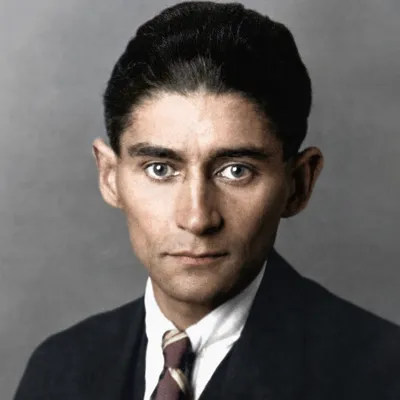
Franz Kafka
Franz KafkaModern literature and existential philosophyCzech1883–1924
"Kafkaesque."


Life and Thought
Franz Kafka was a German-language writer from Prague and one of the most important figures of twentieth-century modern literature. His works are known for their anxiety-filled, bureaucratic, and nightmarish worlds, exploring themes such as alienation, guilt, invisible power, and human helplessness before obscure systems.
Franz Kafka was born in 1883 in Prague, in a German-speaking Jewish family, within the Austro-Hungarian Empire. He studied law and worked for many years at an insurance company; this administrative environment both constrained his daily life and provided him with a profound experience of bureaucratic structures and impersonal systems of power.
During his lifetime Kafka published only a small number of works, but after his death, his friend Max Brod published and preserved many of his writings, helping establish his position in world literature. His major works include "The Metamorphosis," "The Trial," "The Castle," "Amerika," and stories such as "In the Penal Colony" and "A Report to an Academy." Many of these works remained unfinished, a condition that reflects his themes of uncertainty, suspension, and the absence of final judgment.
Kafka's importance extends beyond fiction; his writings have influenced philosophy, theology, psychoanalysis, theories of power, and critiques of modernity. The Kafkaesque world depicts individuals confronted with systems that have laws but lack transparency, that judge without revealing their reasons, and that leave people trapped in guilt, waiting, and alienation. For this reason, Kafka's name has become a key concept for understanding the modern human condition.