Foreign thinker
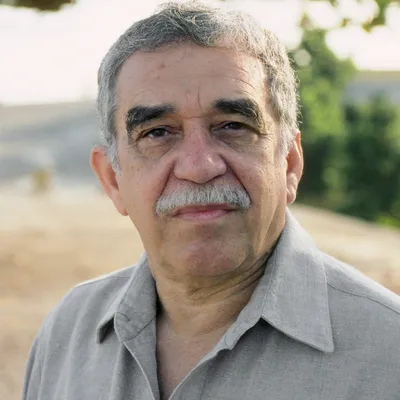
Gabriel García Márquez
Gabriel García MárquezFiction literature and novel writingColombian1927–2014
"Literature reveals the connections between memory, history, imagination, and human experience."
In their times
Open in the Timeline of Thought


Life and Thought
Gabriel García Márquez was a Colombian writer, journalist, and novelist and one of the greatest figures of twentieth-century Latin American literature. He gained worldwide fame through novels such as "One Hundred Years of Solitude" and "Love in the Time of Cholera," using the technique of magical realism, and received the Nobel Prize in Literature in 1982.
Gabriel García Márquez was born in 1927 in Aracataca, Colombia. He spent his childhood with his grandparents, an experience that later influenced his fictional world and the blending of memory, history, and imagination in his works. He studied law at the University of Bogotá but pursued journalism and writing as his main activities.
In the mid-twentieth century, Márquez became one of the most important writers of the Latin American Boom. His 1967 novel "One Hundred Years of Solitude" is considered his most important work. The novel tells the story of several generations of the Buendía family in the fictional town of Macondo and created a remarkable example of magical realism by combining historical reality with extraordinary elements.
Among his other famous works are "The Autumn of the Patriarch," "Love in the Time of Cholera," "Chronicle of a Death Foretold," and "The General in His Labyrinth." His works often explore themes such as love, solitude, memory, power, political violence, and the social history of Latin America.
Márquez received the Nobel Prize in Literature in 1982. In addition to writing, he was active in journalism and social and political affairs, and his works had a wide influence on world literature.