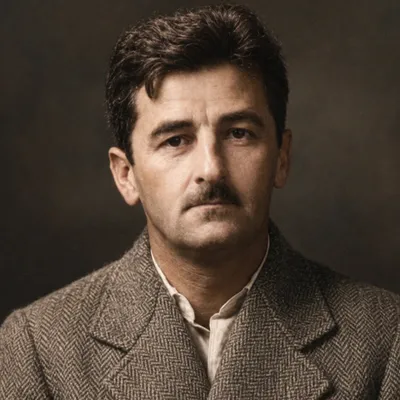
Foreign thinker
William Faulkner
William FaulknerFiction, Modern NovelAmerican1897–1962
"Man will not merely endure; he will prevail."
In their times
Open in the Timeline of Thought


Life and Thought
William Faulkner was a major American writer and novelist, and one of the most important figures in twentieth-century modern literature. Known for works such as The Sound and the Fury and As I Lay Dying, he was celebrated for his innovations in narrative, polyphony, and explorations of the human mind, and received the Nobel Prize in Literature in 1949.
William Faulkner was born in 1897 in New Albany, Mississippi, and spent most of his life in the American South. His experience of the South’s cultural and historical setting, especially the memory of the American Civil War, racial discrimination, and social change, profoundly shaped his fictional world.
Faulkner owed much of his reputation to the novels and stories set in the fictional Mississippi county of Yoknapatawpha. In these works, he focused on families, tradition, guilt, social decline, race, and crises of identity, offering a complex portrait of Southern society.
His major works include The Sound and the Fury, As I Lay Dying, Light in August, Absalom, Absalom!, and “A Rose for Emily.” His narrative method, use of stream of consciousness, shifting points of view, nonlinear time, and entry into the inner worlds of characters had a major influence on the modern novel.
Faulkner received the Nobel Prize in Literature in 1949. In his Nobel address, he emphasized human endurance, literature’s commitment to human truth, and the writer’s role in confronting the fundamental questions of life. His works remain central texts in world literature and subjects of literary and philosophical study.
William Faulkner died in 1962, but his works secured his place as one of the greatest writers of the twentieth century.