Foreign thinker
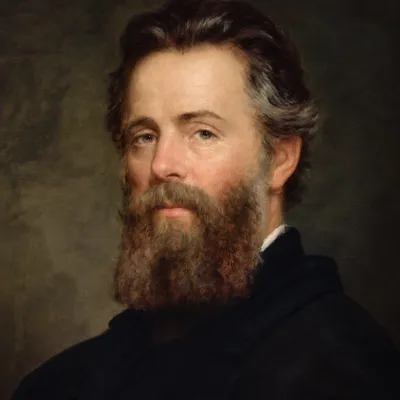
Herman Melville
Herman MelvilleFiction and the Philosophy of the NovelAmerican1819–1891
It is not down on any map; true places never are.


Life and Thought
Herman Melville was an American novelist and poet, the author of "Moby-Dick," a work now regarded as one of the greatest novels in American literature and a profound exploration of fate, evil, and human metaphysical blindness. His work received little attention during his lifetime, and his true fame only took shape in the twentieth century, after his death.
Herman Melville was born in New York, and after his father's bankruptcy and death during his adolescence, he was forced into various occupations, including seafaring. His years working aboard whaling ships and living among the natives of the Marquesas Islands became the raw material for many of his early novels, such as "Typee" and "Omoo," which were received with relative success upon publication and made him a recognized author.
His masterwork was the novel "Moby-Dick; or, The Whale" (1851), the story of Captain Ahab's pursuit of a white whale named Moby-Dick, which, beyond its adventurous seafaring narrative, becomes a philosophical meditation on obsession, revenge, an indifferent nature, and the limits of human understanding. The book was largely overlooked upon publication and sold poorly, a fact that profoundly affected the later course of Melville's career.
Following "Moby-Dick," Melville published the darker novel "Pierre; or, The Ambiguities" (1852), which was met with negative critical reaction and led to a further decline in his popularity. He then turned increasingly to short fiction, such as "Bartleby, the Scrivener," and the novella "Billy Budd, Sailor" (published posthumously) — works whose economy and moral ambiguity reveal a different facet of his abilities.
In his later years, Melville worked as a customs inspector in New York and was largely forgotten by the literary world. His reputation was revived (the "Melville Revival") in the 1920s and afterward, when modern critics recognized the philosophical and formal significance of "Moby-Dick," placing it among the greatest works of world literature.