Philosophy
Karim Mojtahedi's Lecture at the Book Review of Suhrawardi and His Thoughts
At a book review session for 'Suhrawardi and His Thoughts', Karim Mojtahedi argued that Suhrawardi's intellectual sources were Greek and Western (Asia Minor), setting him apart from Avicenna. He believes Suhrawardi's travels to Anatolia and Damascus led to the introduction of new imaginary figures in the Illuminationist philosophy.
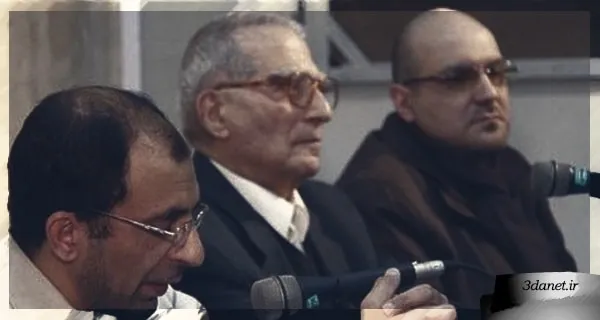
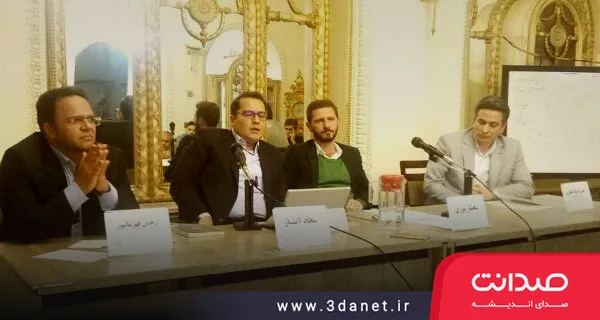
A review session of the book “Suhrawardi and His Thoughts (A Reflection on the Sources of Illuminationist Philosophy)” by Dr. Karim Mojtahedi, with the presence of Professor Mojtahedi, Dr. Shahin A‘wani, Dr. Reza Kuhkan, and Dr. Mohammad Mansour Hashemi, held at the Institute in collaboration with the Iranian Society of Wisdom and Philosophy.
Dr. Karim Mojtahedi stated at this session: I am not happy with what I heard in this meeting, because there are points in my book that had not been seen at all in Iran. In writing this book, I came across historical material, and that material has more historical value than philosophical origin. Until now, few have spoken about the origin of Suhrawardi’s ideas. Suhrawardi has different intellectual sources that separate him from Avicenna and others, and even from his own early works. This origin is a Greek and Western idea and thought—by West, of course, I mean Asia Minor. In writing The Philosophy of Illumination, Suhrawardi used completely different names compared to his previous books and introduces new imaginary figures that do not exist in any of his earlier works. These figures are two divine sages, whose existence seems to be due to his long journey and his acquaintance with and study of science in the various regions he traveled to, such as Anatolia, Damascus, and Rum.
Discussion0 comments
No comments yet; let yours be the first voice.