Philosophy
Review Session of the Book “Ethics; Natural Religion”
A book review session on Ethics: Natural Religion with Ayub Afzali and Dr. Ali Mahjour. By synthesizing the views of Taleghani and John Finnis, the author argues that religious ethics based on natural law is nothing other than universal ethics, and that understanding divine precepts does not require revealed texts.
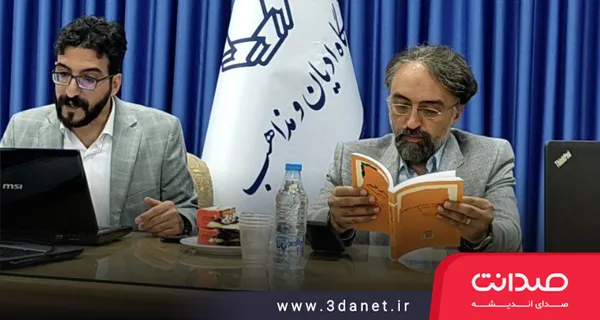

Ayoub Afzali
Author and PresenterThe review session of the book “Ethics; Natural Religion” was held with the presence of the author, Ayoub Afzali, and the esteemed critic, Dr. Ali Mahjour, organized by the Philosophy Department’s Scientific Association at the University of Religions and Denominations in Qom. The author first spoke about the necessity and importance of the book’s subject and spent some time explaining its content. Then, Dr. Mahjour, while commending the book’s place in the field of meta-ethics, proceeded to critique the work. A detailed report of this session and, at the end, the audio recording of the session are presented below.
.
.
A Review of the Book Ethics; Natural Religion
Reflections on the Overlap of Religious Ethics and Universal Ethics
Author and Presenter: Ayoub Afzali[1]
Critic: Dr. Ali Mahjour[2]
In the Christian world, especially after Aquinas, an Aristotelian view comes to dominate the matter of religion and ethics, although attention to natural law also has a history in the Stoic tradition and among the Church Fathers. Moreover, before the translation of the works of Aristotle and Plato, Christian theologians had access to the works of the Stoics and the Roman law tradition. These different historical backgrounds have created different paths for us and for Christianity. In the Islamic world, Aristotle’s Politics is not translated for specific reasons, and even the amount of Aristotelian ethics that was available did not become very central to religious ethics/jurisprudence. It is the Platonic view that has been the paradigm for our jurists, who have considered religious ethics and religious rulings to be of the nature of mysteries from the higher world. In the Islamic world, al-Farabi writes a commentary on Plato’s Republic and Laws, and likewise, Ibn Rushd writes a commentary on Plato’s Republic, but there is no sign of Aristotle’s Politics. Among the Muslim philosopher-theologians of the Qajar era, there is an Iranian figure named Taleghani—in whom we see, to a large extent, a return to Aristotle—who approaches a maximalist reading of natural law in religious ethics. The book Ethics; Natural Religion shows that the logical formulation of the views of Allameh Taleghani (the most important theorist of natural law in our classical philosophy) and John Finnis (the most important twentieth-century theorist of natural law) arrives at a rational reading of religious ethics, according to which, understanding God’s ethical recommendations requires no recourse to transmitted/historical sources and texts. In the fifth chapter of the book, the author presents his own view, based on which religious ethics, from the perspective of natural law, can be nothing other than universal ethics.
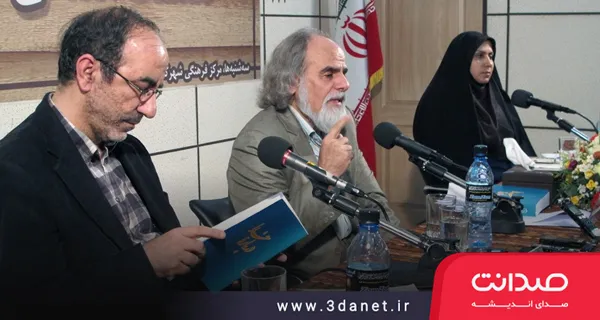
The review session of the book Ethics; Natural Religion, organized by the Scientific Association of the Philosophy Department at the University of Religions and Denominations, was held on Tuesday, June 6, 2023, at the University of Religions and Denominations. In this session, the book’s author (Ayoub Afzali) gave a brief presentation on the book’s content, and Dr. Ali Mahjour critiqued and reviewed it. [3]
After a historical and concise introduction about the interaction of religion and ethics in some world religions, Afzali pointed to the backgrounds of theorizing about religion and ethics in Christian and Islamic culture. In his view, from a historical perspective, we realize that in the Christian world, especially after Aquinas, an Aristotelian view comes to dominate the discussion of religion and ethics, although this view existed before him in the Stoic tradition. Even in the era of the Church Fathers, figures like Augustine also paid attention to natural law, and before the translation of the works of Aristotle and Plato, Christian theologians had access to the works of the Stoics and the Roman legal tradition. These historical backgrounds have created different paths for us and for Christianity. In the Islamic world, Aristotle’s Politics is not translated, and even the amount of Aristotelian ethics that was available did not become very central to religious ethics/jurisprudence. It is the Platonic view that has been the explicit and implicit paradigm for our jurists, who have considered religious ethics and religious rulings to be of the nature of mysteries from the higher world. In the Islamic world, al-Farabi and Ibn Rushd write commentaries on Plato’s Republic and Laws, but there is no sign of Aristotle’s Politics. Among the Muslim philosopher-theologians of the Qajar era, there is an Iranian figure named Taleghani, in whom we see, to a large extent, a return to Aristotle, and who approaches a maximalist reading of religious ethics.
The two main theories in the explanation of religious ethics are the Divine Command Theory and the Natural Law Theory. The Natural Law Theory has a maximalist reading, according to which moral principles possess objectivity and reality, and moral principles are somehow connected to human nature (rational, social nature, etc.). The Natural Law Theory also has two readings: one is a minimalist reading, which, in addition to realism, holds in moral epistemology that the method of discovering religious ethics is by referring to sacred texts; and the other is a maximalist reading, which, besides realism in metaphysics, holds in epistemology that natural law can also be known through natural reason, without reference to transmitted texts.
In this book, I have shown that the logical formulation of the views of Taleghani (the most important theorist of natural law in our classical philosophy) and John Finnis (the most important twentieth-century philosopher of natural law) arrives at a rational reading of religious ethics, according to which, understanding God's moral recommendation does not require recourse to transmitted sources and texts, and ultimately, religious ethics based on natural law can be nothing other than universal ethics. He then, due to time constraints, presented a very brief and general statement of his view: When a person, in their ethical reflections, sees certain necessities (such as the desire for friendship, knowledge, aesthetic experience, play, and recreation, etc.) within the mechanism of their moral thought and finds these to arise from the rational nature of the human being—a nature created according to God's will—then we can say that these inherent principles of morality are the very moral recommendations of God, and God in the sacred texts cannot command anything that contradicts these, because according to all rationally inclined theologians, it is impossible for God to issue a contradiction, and ultimately, the problem of the religious text must be resolved, rather than altering our understanding of natural law. (Therefore, from the author's perspective, religious ethics in all Abrahamic religions is a common ethics, and that is what we find in universal ethics according to the narrative of natural law.) The principles of natural law from Finnis's perspective are: 1. Knowledge 2. Life 3. Friendship and Sociability 4. Aesthetic Experience 5. Play and Recreation 6. Practical Reasonableness 7. Religion / Harmony with the Supreme Order of the Cosmos.) The author, in conclusion, also pointed to the inadequacy of the religious intellectualism approach and added that the problem of religion and ethics must be initiated not from the theoretical contraction and expansion of Sharia, nor from the examination of jurisprudential rationality, but from deeper issues in philosophical theology.
Dr. Ali Mahjour first referred to the various types of natural law theories and stated: Natural law is a label applied to theories of ethics, politics, civil law, religious ethics, and all of these. As far as moral philosophy and those working in the field of ethical thought are concerned, there are two main issues for natural law: first, what are the defining properties of natural law, the properties by which we can identify a system as (Natural law); and second, the theories themselves. In the history of philosophy, we have diverse theories of natural law, each with their own strengths and weaknesses, and what matters is the subtleties of theorizing within them—to what extent they have been able to respond to the objections and criticisms directed at natural law, and to what extent theorists have been able to heal and apply balm to the wounds inflicted on the body of natural law theory. There are two main aspects in the discussion of natural law: one aspect relates to the mind, and the other to the social sphere. As far as the mind is concerned, it is usually referred to reason, argumentation, intuition, conscience, and the like; and in the aspect related to the external and social situation, natural law sets legislation based on rationality as the criterion, and this rationality is either Kantian rationality, which takes place through a kind of Kantian or quasi-Kantian generalization and universality, or if theorists consider this path closed, they advance the discussion through a Hobbesian approach, contractualism, and the like. In moral philosophy, the goal of natural law, even in terms of justification, is to secure these two aspects: mentally, through argumentation and Kantian universality or contractualism, and socially, rational legislation is important. This is the general view of natural law in moral philosophy.
Dr. Mahjour then pointed out some positive aspects of the book and also addressed certain criticisms regarding the book's content and formal aspects related to its publication. He added that this book is written in a precise manner; observing and reflecting the subtleties of theorizing in the work of John Finnis and Taleghani has been important for the author, and it even seems that at times the author engages with the theoretical subtleties of the discussion more than they do, and in addition to advancing the discussion during the writing, also addresses potential objections. The author sometimes constructs explicit statements from the implications of others, and this can simultaneously serve as a preemptive response to a criticism; this is especially more visible in the case of Taleghani. In my opinion, determining the place of natural law within religion is the Achilles' heel, or the vulnerable spot, of all theorizing in this field. Critiquing from an external perspective is not difficult, but writing a book like this is a challenging task.
Regarding criticisms, let me start here: the fact that the Platonic model is used in the Islamic world seems to be largely because, according to evidence, a Platonic conception of the Prophet himself also existed in the Islamic world. We encounter a prophet who distances himself from the people, emerges from the cave of the world like Socrates, sees truths and speaks of them; they call him mad, 'innahu lamajnun.' The events that happen to Socrates also happen to him, and this same prophet later aspires to leadership and high rank and establishes a government, [that is, moves towards legislation], while the grounds for an Aristotelian city-state did not exist for them either. Later, the concept of shura (consultation) and so on emerges, which casts its shadow over the history of Muslims. Even Khosrowani thoughts and Iranian attitudes in the Shia faith were probably influential in establishing the Platonic view. Therefore, the relationship between natural law and religion in Islamic culture is not a very obvious one, or, according to Mr. Afzali's terminology, a minimalist reading becomes more established, and for this reason, positive law finds a strong foothold among Muslims. And fundamentally, the hierarchical view (First Intellect, First Sphere, Second Intellect, Second Sphere, etc.) that was prevalent in medieval cosmology necessitates a minimalist reading of natural law, which we encounter more in the Middle Ages. The sharia-oriented, text-centered view becomes central. Dr. Afzali has thoroughly explored the works of Professor Finnis and Allameh Nazar Ali Taleghani and has examined their foundations under the headings of theological, anthropological, epistemological, and metaphysical foundations. Also, at the beginning, he provides a good summary of their views and then elaborates on them. This book is also a pleasant read, and I definitely recommend reading it. In my opinion, those working in this field will have missed something if they do not read it. The standards and parameters of academic work are present in it, and we see numerous references and conclusions throughout the book. One of my own constant concerns is access to the exact wording of the authors, and it would have been better if, alongside the rewriting of theories, excerpts of phrases and texts were quoted in Arabic and English in the footnotes. He further added: A content-related criticism is that the reformed epistemological model—used in justifying natural law—in my opinion, derives its importance from the figure of Alvin Plantinga, and with the setting of this star from the sky of this world, the radiance of many of his theories will also fade from the sphere of the philosophy of religion. The idea that belief in God is a basic and self-evident belief is not a new claim, but the notion that the Trinity also possesses universal self-evidence is something not so easily accepted. Although this remark may provoke reactions in the academic community, it seems this epistemological approach still warrants discussion and reflection, and later, firmer foundations for natural law can be considered. I also have a criticism of the publisher: in the third chapter, in all the headings, the name Tabatabai is used instead of Taleghani, and this is strange from a renowned publisher like Negah-e Moaser. Also, typographical errors are seen in some places, the correction of which requires more attention.
In the end, due to time constraints, the session concluded without Dr. Mahjour's critiques and points being answered. Mr. Afzali deferred his responses to another occasion and only answered two questions from the attendees.
[1] Researcher in analytic philosophy and intercultural philosophy, PhD graduate in comparative and intercultural philosophy
[2] Researcher and professor of moral philosophy, religious studies scholar, and director of the Moral Philosophy Department at the University of Religions
[3] The present text is not a complete report of this lecture and only reflects some of its parts in brief and with slight adaptation. Those interested can access the audio file of the session on Sedanet.
.
.
Audio of the Review Session of the Book “Ethics; Natural Religion”
.
.

Discussion2 comments
سلام. 1) لطفاً نام آقای افضلی را به عنوان نویسنده این گزارش را در ابتدا یا انتهای آن بیاورید. 2) لطفاً عنوان دانش آموخته دکتری فلسفه تطبیقی را در معرفی ایشان تصحیح کنید. ایشان دانشجوی دکتری فلسفه تطبیقی در مدرسه عالی شهید مطهری هستند و هنوز از تز خود دفاع نکرده اند. معرفی ایشان به عنوان دانش آموخته مصداق دروغگویی و فریبکاری است. متشکرم
عناوین در همه نوشته ها در بالای مطلب است ، مشخصه خیلی با ایشان رقابت دارید و خیلی هم دقیق وضعیت تحصیلی ایشان را می دانید که هنوز از تز دکتری دفاع نکرده اند، اما چرا این را یک خطا نمی دانید ، اینقدر این موضوع برای من خواننده مهمه که ایشان دانشجوی دکتری است نه دکتر که یک مجموعه فرهیخته را بابت آن دروغگو و فریبکار بدانم؟!!!