Iranian thinker
Mulla Sadra
Mulla SadraIslamic PhilosophyIranian1571–1640
Existence is the sole true reality in the external world, while quiddities are merely mental concepts and boundaries formed to comprehend it.






Life and Thought
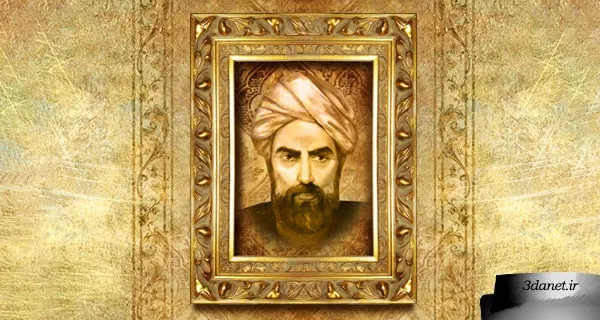
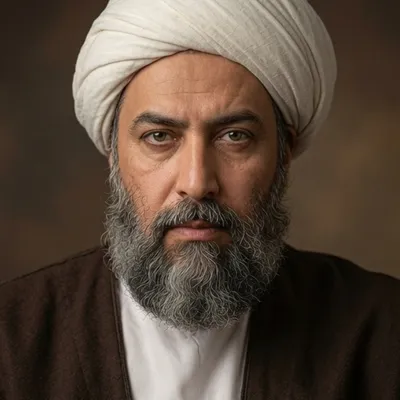
Mulla Sadra, known as Sadr al-Muta'allihin, is a philosopher and divine sage of the 11th century AH and the founder of the Transcendent Theosophy school; a school that brought together philosophy, mysticism, and religious teachings into a single philosophical system.
Sadr al-Din Muhammad ibn Ibrahim Qawam Shirazi, known as Mulla Sadra and Sadr al-Muta'allihin, was born in Shiraz in 979 AH and died around 1045 AH. He was a philosopher, divine sage, and the founder of the Transcendent Theosophy school; a school that sought to bring together Peripatetic philosophy, Illuminationist philosophy, the mysticism of Ibn Arabi, Islamic theology, and the teachings of the Quran and Hadith into a new philosophical system.
Mulla Sadra studied in Qazvin and Isfahan and benefited from masters such as Sheikh Baha'i, Mir Damad, and Mir Fendereski. After a period of teaching and debate in Isfahan, due to the opposition of some scholars of the time to his philosophical and mystical views, he went to Kahak, Qom, and spent a period of seclusion, ascetic practice, and contemplation. Later, at the invitation of the rulers of Fars, he returned to Shiraz and taught and wrote at the Khan School.
Transcendent Theosophy is Mulla Sadra's most important achievement. In this school, he did not see philosophical reason, mystical intuition, and divine revelation as three conflicting paths, but rather sought to employ them on a single path toward understanding the truth. For this reason, his philosophy is not merely a mental, academic discussion; it is a kind of intellectual and spiritual wayfaring.
Primacy of Existence: Contrary to some philosophers before him, Mulla Sadra considered existence to be the objective, authentic reality and regarded quiddity as a mentally posited concept. Simply put, what truly is, is 'existence,' and quiddities are the molds of our understanding of existents.
Gradation of Existence: In Mulla Sadra's view, existence is a single reality, but it possesses intensity and weakness. All existents partake of existence, but this share is not the same in all; from the weak level of matter to the supreme, infinite level of the Almighty Truth.
Substantial Motion: This is one of his great innovations. Before Mulla Sadra, motion was mostly considered to occur in accidents such as place, quantity, and quality; but he argued that the substance of material things is also in constant motion and becoming. The world, in his view, is not static; it is entirely becoming, process, and evolution.
Unity of the Intellect and the Intelligible: In knowledge, the human being and the known object do not remain completely separate. In the process of cognition, the soul becomes united with the intelligible form, and knowledge brings about a kind of existential perfection for the soul.
The Soul's Corporeal Origination and Spiritual Subsistence: The human soul, at the beginning of its genesis, is dependent on the body and is material, but on the path of evolution, it attains a spiritual and independent level.
Bibliography
Writings and transcribed lectures12 titles
Transcendent Theosophy in the Four Journeys of the Intellect, commonly known as the Four Journeys
Divine Witnesses
al-Mabda' wa al-Ma'ad
The Book of Inner Feelings
The Wisdom of the Throne (al-Ḥikma al-ʿArshiyya)
Commentary on Usul al-Kafi
Interpretation of the Holy Quran
Mafātīḥ al-Ghayb (Keys to the Unseen)
Kasr al-Asnam al-Jahiliyyah
Three Principles
Treatise on the Resurrection
Treatise on the Union of the Intellecting Subject and the Intelligible Object