Philosophy
Lecture: Differences Between the Philosophical Systems of Mulla Sadra and Hegel, by Mohammad Mansour Hashemi
A talk by Mohammad Mansour Hashemi at Shahr-e Ketab focuses on the differences between the philosophical systems of Mulla Sadra and Hegel, and the critiques leveled by philosophers such as Morteza Motahhari against Hegel regarding the primacy of existence over essence and the transition to modern philosophy.
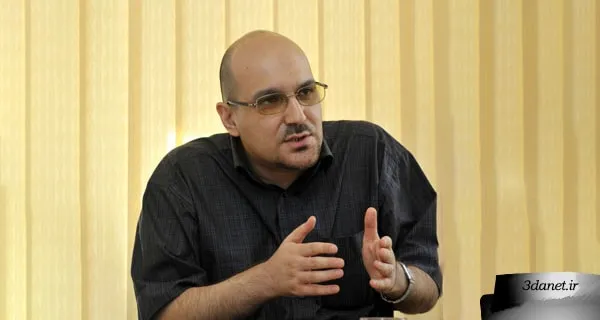
Explanation by Mohammad Mansour Hashemi: On May 20, 2008, in the series of lectures organized by Mr. Ali Asghar Mohammadkhani at the City Book (Shahr-e Ketab) center, a session was held comparing the philosophy of Mulla Sadra with two Western philosophers: Hegel and Whitehead. Dr. Mehdi Dehbashi, who has written a book on Mulla Sadra and Alfred North Whitehead, spoke about the relationship between the philosophies of Mulla Sadra and Whitehead. I, who had written a book on Mulla Sadra and Hegel, spoke about those two and, as is my usual approach and based on the interpretation I have of the method of comparative philosophy, which I outlined at the beginning of that same book, I emphasized not the similarities but the differences between the two philosophers.
.
The reason for choosing this topic for the lecture is that in Iran and among our Islamic philosophers, Hegel has been criticized from this perspective. That is, some contemporary Islamic philosophers have criticized him with the explanation that Hegel is a proponent of the primacy of quiddity, and that had this not been the case, his philosophical problems would have been resolved. The most famous person who criticized Hegel from this perspective is the late Motahhari. In his lessons on the Shifa, he wrote: "They say it is wrong to say that a thing's existence and non-existence do not come together. A thing's existence and non-existence come together in motion. Then they have said that if we believe in the principle of fixity, we have become proponents of the principle of existence. That is, existence is equivalent to fixity, and the opposite of this existence is non-existence. This statement is certainly from Hegel. According to the principle of fixity, it is true that A either is or is not. But according to the principle of motion, the truth of motion is becoming; existence means being, and the opposite of existence is non-being. Becoming is neither being nor non-being. In one respect, it is both being and non-being." Mr. Motahhari then continues his critique of what he attributes to Hegel as follows: "In Mulla Sadra's statements, matters have been raised as if he had raised those statements to preempt these words. Through the path he himself traversed, he arrived at the primacy of existence and the ideality of quiddity. The primacy of existence brought many issues in its wake. Perhaps if someone were a proponent of the primacy of quiddity, they would be forced to accept Hegel's very words. That is, according to the primacy of quiddity, becoming had no justification." Martyr Motahhari then raises two other objections to Hegel: One is that he said Hegel claims causality is not explanatory, and that reason explains the world and with it the world can be explicated. In reality, causality in the primacy of existence is different from causality in the primacy of quiddity. According to the late Motahhari's interpretation, therefore, in the philosophy of the primacy of existence, the cause explains the effect. The other objection they raised is that they believe Hegel considers mind and object to be one, and says that in the world of the object, just like in the world of the mind, the process of reasoning holds sway, which is an incorrect interpretation by Mr. Motahhari. Neither are mind and object one, nor is the world of the object and its process like the world of the mind a passage from premise to conclusion. Apart from the late Motahhari, other Muslim theologians of our era have also criticized Hegel from this same perspective. For example, Ayatollah Jafar Sobhani in the book "Comparative Philosophy or the Principles of Dialectics and Islamic Philosophy." Therefore, I think it is clear that this topic can be a subject for discussion. Whether Hegel is a proponent of the primacy of quiddity or a proponent of the primacy of existence, or, as I will explain, a proponent of neither. In the following, I will speak about what the primacy of quiddity and the primacy of existence are. In Islamic philosophy, from Suhrawardi onwards, this question was raised: when we encounter an external object in the external world, our mind makes a distinction between the existence and the quiddity of this object. Now, since the object cannot be two things at once, one of these two exists in the external world and the other is an abstraction of my mind. The question is, which one exists in the external world? Mulla Sadra, through various discussions he raises, tries to prove that existence exists in the external world and quiddity is nothing but the limit of existence that our mind abstracts. That is, in encountering a tissue box, my mind first says that this is, and secondly, this is a tissue box. Suhrawardi said that its being is something your mind predicates upon it, but its being a tissue box is an external matter that pertains to its external realization. Mulla Sadra explains conversely that no; what this is, its whatness, is the limit that your mind understands from it. What is realized in the external world is its existence. With the help of the primacy of existence, Mulla Sadra explained various issues in Islamic philosophy. He was able to believe in the gradation of existence. With its help, he was able to believe in substantial motion. On the other hand, he was able to resolve the union of the intellect and the intelligible. In reality, all of Mulla Sadra's philosophical discussions were based on this insight into the world that what exists in the external world is existence itself. In reality, the primacy of existence is a master key with which Islamic philosophers from Mulla Sadra's period onwards have opened various locks. It is natural that in encountering Western philosophies, they have also tried to use this master key. One of the challenges they faced in encountering Western philosophy was Marxism. They had realized that Marxist philosophy, based on Hegel's ideas, was not properly formulated and that we could critique those philosophies.
Marxist philosophers believed in dialectical contradiction, and Muslim philosophers such as the late Motahhari, by explaining that if you believe in the primacy of existence you can believe in substantial motion and therefore can explain change and becoming in the world without those implications, sought to use these data to critique Marxism and show Islamic philosophy to possess dynamism. Keep the issue of the primacy of existence and quiddity in mind so that we may address another historical point in the history of Western philosophy. The dividing line between modern philosophies and classical philosophies is what is called Cartesian subjectivism. The question that arose in modern philosophy was how we know an external object. In classical philosophy, this question was not of concern. That is to say, classical philosophers—whether Islamic, Greek, or medieval Christian—all agreed that there is a correspondence between our mind and the objective world, and that knowledge is in fact the correspondence of the mind with the object. We acquire knowledge of the external world in this way. This datum was criticized by the philosophers of the modern period. Descartes began to doubt and said, how do I know that I know things? In the end, he did not doubt his own thought; I think, therefore I am—such is Descartes. The Cartesian cogito holds that we know everything because we know our own mind. Since we do not doubt our own mind, he bases the rest of philosophy on the knowledge of the external world for this reason. What happens here? If in classical philosophies it was our mind that was supposed to conform itself to the real world and know it, in modern philosophies, from Descartes onward, it is the objective world that is presented to our mind and our mind knows it. But like any knowing agent and subject, it in fact appropriates it. How can we say this? One of those instances is error. The reality is that the human mind errs. If you do not give primacy to the erring of the human mind, you can very easily believe in the correspondence theory and say that the human mind also makes mistakes in some places. All philosophers before the modern period do this. For example, Mulla Sadra, in volume 9 of the Asfar, perhaps did not discuss error for even three pages. What process occurs that causes our mind to err? In fact, he knew that the human mind errs, but error did not have primacy for him, did not find a point of entry into his philosophy, and was secondary. But in modern philosophies, this issue becomes central. That is, our mind errs. Therefore, to formulate an epistemological theory, we must necessarily take it into account. The correspondence theory, given our error, gives way to a theory in which my mind is no longer a mirror of the real world but is the knowing agent and subject, and the world is presented to my mind. That is, the axis of knowing the world, instead of being in the external world, is transferred to my mind. This affair, from Descartes onward, is the question of all subsequent philosophies, and every philosopher has tried in some way to free themselves from this question, which, if we continue it, leads to a kind of relativism. That is, to have a theory of knowledge with which they can both explain the world and keep in view the question that has been raised since Descartes. After Descartes, this philosophical line is pursued until it reaches Hume's skepticism. Then Kant tries to overcome it, but his attempt, although after 200 years it is perhaps the most magnificent attempt made in modern philosophy, is still an attempt within the limits of subjectivism. That is, Kant explains to us that we cannot have knowledge outside of time, space, and the categories of understanding, and the limit of our knowledge is just this. In Kant's philosophy, too, it is never explained how the phenomena that our mind knows correspond with the noumenon and the external world. This is a famous problem that critics from Descartes to the present day have pointed out. One of the great philosophers after Kant who wanted to solve this problem is Hegel. Hegel tries to remove the separation that had arisen with Kant between ontology and epistemology and to relate these two to each other again. Hegel makes every effort to overcome subjectivism, but as I will explain, all of Hegel's efforts to overcome this Cartesian-Kantian problem lead nowhere except to the consolidation of subjectivism in its place. In the sense that the problem that had begun with Descartes and deepened with Kant was not only not solved by Hegel but is dissolved into the knowing subject of the world. From here, I will enter Hegel's philosophy and pursue the discussion of existence and essence. I will address this discussion with reference to Hegel's book "Science of Logic." زیرا مطالبی را که مرحوم مطهری به آن می پردازد ماخوذ از علم منطق هگل است. با این تفاوت که ایشان بر اساس روایت های سیر حکمت در اروپای فروغی و کتاب فلسفه هگل نوشته استیس این مسائل را مطرح کرد. کتاب علم منطق هگل سه بخش دارد. بخش اول وجود، بخش دوم ذات یا ماهیت، بخش سوم صورت معقول(عقلی). هگل در کل علم منطق به مساله وجود و ماهیت فکر کرده و دو بخش اول کتاب درباره وجود و ماهیت است. این را از آن جهت می گویم که خیلی وقت ها وقتی شرح یک کتابی خوانده می شود فرض کنید در تصوری که مرحوم مطهری از هگل دارد نقل کردم، ظاهرا این توجه وجود نداشته که آن فیلسوف به این مساله فکر کرده و این مساله برای خود او هم شناخته شده بوده است. در فلسفه های قرون وسطی بحث اصالت وجود و اصالت ماهیت هم وجود دارد. ژیلستون در کتاب خودش توضیح داده که توماس اکویناس و دیگران چگونه سعی کردند این مساله را حل کنند و چگونه درباره وجود بحث کرده اند. می خواهم بگویم این تصور که آنها این بحث را نمی شناختند تصور دقیقی نیست. بخش اول کتاب هگل با عنوان وجود با سه گانه ای شروع می شود: وجود، عدم، سیرورت. یعنی همان نکته ای که مرحوم مطهری اشاره کرد که در واقع می خواهد بگوید ما در عالم خارج سیرورت داریم. او چگونه توضیح می دهد؟ من بخشی از نوشته هگل را می خوانم: وجود محض بی هیچ تعیّن دیگری در بی واسطه گی نامتعیّنش تنها به خودش می ماند. همچنین با هیچ امر دیگری متفاوت نیست. هیچ تغایری و تکثری ندارد نه در خود و نه نسبت به امور دیگر. اگر تعیّنی یا محتوایی داشت که می توانست در آن مشخص شود یا از این طریق قابل تمییز از دیگری باشد، دیگر در محض بودن خود ثابت نمی بود. وجود محض، عدم تعیّن و تهی بودن محض است. آنچه در آن به شهود می توان دریافت اگر بنا باشد در اینجا از شهود سخنی به میان آید عدم است. وجود در فلسفه اسلامی و ملاصدرا را به خاطر بیاورید و عباراتی را هم که از هگل خواندم بر خلاف آنچه که مشهور است اتفاقا قابل فهم هم هست مورد توجه قرار دهید. هگل راجع به عدم می گوید: عدم محض یکسانی SELF با خودش است. تهی بودن کامل. هگل سپس نتیجه می گیرد: پس وجودِ محض و عدم محض یکی است. حقیقت نه وجود است نه عدم حقیقت آنها حرکت است. عباراتی را که خواندم اگر که به زبان فلسفه اسلامی برگردانده شود، به کلی نامفهوم می شود و یا اگر مفهوم افتد به کلی غلط است. اگر بگویید هگل درباره وجود لا به شرط صحبت می کند یا وجود مطلق؛ فورا فیلسوف اسلامی می گوید وجود مطلق عین عدم نیست. بنابراین همه حرف هگل اشتباه است. اگر بگویید او درباره وجود لابه شرط صحبت می کند، فیلسوف اسلامی به شما خواهد گفت وجود لابه شرط عین عدم نیست، بلکه عین وجود است و آنچه هگل می گوید اشتباه است. این اشتباهی است که اتفاق افتاده است و کسانی که سعی کردند فلسفه هگل را با مفاهیم اسلامی توضیح دهند همه آنها در این قسمت گفته اند هگل درباره وجود لابه شرط سخن می گوید و می خواهد بگوید وجود لابه شرط عین عدم است. اما با توضیحی که ارائه می دهم می توان فهمید که این نتیجه کاملا اشتباه است. طبق تعریف فلاسفه اسلامی، وجود هرگاه به شرط لا اعتبار شود وجود عام است و اگر به شرط شیئی اعتبار شود وجود مقید است و اگر بلا شرط وجود مطلق. وجود مطلق همان خداست. در واقع ما در فلسفه اسلامی تقسیم بندی 3 تایی داریم. وجود یا به شرط شیئی است یا به شرط الا و یا به شرط است. وجود به شرط شیئی همان موجود است. یعنی وجودی است که مقید شده و یکی از موجودات عالم شده است. وجود به شرط لا یعنی وجودی که به شرط اعتبار شده و ماهیاتش از او گرفته شده و به وجود عام تبدیل شده است. وجود لابه شرط یعنی وجودی که از تقیدات آزاد و وجود مطلق است. بین وجود مطلق و مطلق وجود تفاوتی است. وجود مطلق در فلسفه اسلامی خداست. اما مطلق وجود در فلسفه اسلامی وجود عام مشترک بین همه موجودات است. اگر آن اشتباه را تکرار کنیم و بگوییم هگل از وجود لا به شرط حرف می زند و وجود لابه شرط خداست؛ طبیعی است که خدا عین عدم نیست؛ بنابراین فیلسوف اسلامی از اینجا به بعد با ما جلو نخواهد آمد. اما اگر بگوییم که هگل در اینجا درباره وجودِ به شرط لا سخن می گوید، احتمالا می توانیم امکان گفت و گوی بهتری را فراهم کنیم. من اصراری ندارم که تعابیر هگل را با فلسفه اسلامی تطبیق دهم فقط می خواهم بگویم اگر بنا باشد این کار را بکنیم به نظر می آید باید بگوییم این وجود به شرط لا است. یعنی وجود عام است. چنانچه خود هگل هم گفت وجود محض بدون تعین حال. اساسا مگر وجود به شرط لا در عالم داریم؟ در واقع خودمان داریم می گوییم وجودی که اعتبار کنیم، این کلمه اعتبار کردن می تواند نقطه ورود ما به فلسفه هگل باشد. بحثی را که درباره سوبژکتیویسم کردم به خاطر بیاورید. In that discussion, I said that in modern philosophies the knowing subject has become central and presents its world to the mind of the knowing subject. Hegel participates in the same game, even though he tries to bridge the gap between epistemology and ontology. He is also talking about existence now. He speaks of things that belong to the excesses of reason, but he does it anyway and talks about ontology, yet what he says makes sense only within the realm of subjectivism. This means that Hegel is not concerned with what happens in the external world; rather, he says we can grasp two concepts: pure being and pure nothingness. He then says that if we consider being as pure, it is identical to nothingness because it acquires no thingness and is not realized in the external world. It becomes merely a mental concept, and this becoming a mental concept and not producing an effect in the external world is identical to nothingness. What exists in the external world is neither pure being nor pure nothingness; rather, it is becoming. That is, we see things in the world that change and undergo transformation, and as Hegel's philosophy reaches its peak and is conceptualized, they have a history. In Hegel's philosophy, we do not have a thing-in-itself. We only have real things in the real world, and the real world is in a state of becoming and change. With these explanations, allow me to also explain the discussion of essences from Hegel's Science of Logic and see whether Hegel believes in the primacy of existence or essence. With these explanations, it is clear that Hegel does not believe in the primacy of existence. The reason is that he believes what we can possibly access is existence conditioned by thingness. Its mental concept is existence conditioned by nothingness, which is in fact a mental construct, and naturally it cannot have primacy in the external world. Therefore, up to this point, we agree with Mr. Motahhari. The next part of Hegel's Science of Logic, after existence, is the discussion of essence or quiddity. Hegel also presents a different discussion about essence. If you believe in the primacy of essence, you say that the thingness of this thing lies in its essence. That is, its essence is actually realized in the external world. For this thing to be stable and to have a fixed position in time and space, it must have a fixed essence. But Hegel's entire discussion of essence is that we do not have something called essence in the external world. We have essence in history; essence is the becoming of essence. Hegel has a famous sentence about this that is a kind of wordplay and is very difficult to translate from German into another language. It can be expressed like this: essence is the becoming of essence. That is, you do not have essences. That is, what exists in the external world is the becoming-essence of essences. What does that mean? In a sense, it is meaningless. If we remove the human perspective of subjectivism, the things Hegel says seem to have no meaning. That is, if someone says essence is the becoming of essence, and we ask them, "No, I am asking about essence in itself," Hegel would have no answer and would say, "I cannot give you an answer about essences in themselves. I only tell you about the essence that I know." How is essence known? Essence is known through its realization in history. What is history? History is in fact nothing but the accumulated scientific consciousness in encountering the world in order to know the world. I must also mention that history in this sense is entirely different from the historical science we know. The history of which Hegel is one of the most prominent theorists is the course of affairs, not our knowledge of the past. In fact, we are all now situated in history, and every human action is in fact a part of history. History is the evolution of human consciousness. This is different from my reading events of the past written in books and gaining knowledge of them. This is a new concept of history. If you believe in the historicity of humanity and the historicity of essence, many of the absolute cognitions we have, for example in Islamic or classical and Christian philosophies, all face serious questioning. We are beings bound to history and we know things within the limits of our historical conditions. I can say I know essence to this extent. What happens later, I do not know. Absolute knowledge cannot exist. This knowledge is at the end of history. And the end of history does not exist. We can only speak of our better and greater knowledge, not absolute knowledge. With this explanation, I hope I have been able to show that fundamentally for Hegel, not only is existence not at issue in the sense we know it in Islamic philosophy, but essence is also not at issue in that form. Therefore, Hegel does not believe in the primacy of essence either. یعنی در مواجهه با شیئ خارجی اگر از هگل بپرسید که یک شیئ خارجی مثل دستمال کاغذی یک وجود دارد و یک ماهیت، زیرا ما آن را می بینیم و نمی تواند هر دوی آنها در عالم خارج باشند، پس به نظر شما کدام یک وجود یا ماهیت در عالم خارج محقق است؟ هگل هرگز پاسخ مستقیمی به ما نخواهد داد. هگل پاسخ سوال ما را در بخش سوم کتاب علم منطق می دهد. بخش مربوط به صورت معقول. حال صورت معقول چیست؟ هگل می گوید در فلسفه های جدید بین شناخت من و عالم خارج شکافی وجود دارد. ما این شکاف را شناخته و به رسمیت شناخته ایم. حال اگر بخواهیم از آن بگذریم چه باید بکنیم؟ ظاهرا راهی نداریم جز اینکه به آگاهی انسان اصالت دهیم و بگوییم گویی هیچ امری در این عالم شناخته شدنی نیست مگر اینکه بر آگاهی آدمی عرضه شود. مثال خوب آن که می تواند ما را به عالم هگلی نزدیک کند مفهوم مطلق است. معنی مطلق در همه زبانها یکسان است: امری ثابت و لایتغیر که جایگاهی در این عالم دارد ، ورای تغییر و سیرورت و اینکه با شناخت من تحول پیدا کند. اما در فلسفه هگل، مطلق؛ مطلقا به این معنا نیست. یعنی در فلسفه هگل، مطلق که به معنای دیگری یعنی خداست، فقط و فقط وقتی هست که در تاریخ خود را آشکار کند و مواجه شود با آگاهی ما. مطلق هیچ تحقق و تعیّنی ندارد مگر وقتی که به آگاهی انسانی دربیاید. آن موقع انگار دارد به کمال خودش می رسد. مطلق می آید و خود را در تاریخ انسانی شکوفا می کند. حال اگر مطلق را خدا در نظر بگیریم این قرابت برای ما بیشتر معلوم می شود. خدا برای ما کاملا ورای عالم مادی است. اما هگل در سنتی است که می تواند آن را نادیده بگیرد. به این دلیل که در سنت مسیحی خدا یکبار به صورت پسر متجسد شده و به صلیب کشیده شده است. خدا یکبار خود را در تاریخ آشکار کرده است و بین آنچه که هگل گفته و سنت مسیحی پیوند خیلی جدی وجود دارد. کسی که کتابهای هگل را بخواند ربط خیلی خیلی جدی را بین مجموعه مفاهیمی که هگل پردازش می کند و سنت مسیحی خواهد دید به ویژه سنت عرفانی مسیحیت. اما اینها به این معنی نیست که فلسفه هگل، دینی، عرفانی یا مسیحی است. او در چهار چوب زبانی و مفاهیم مفهوم پردازی می کند برای اینکه در واقع آن فکر را پیش ببرد و از آن یک فلسفه مدرن بسازد. فلسفه ای که به خلاف فلسفه های مسیحی و عرفانی قبلی، محورش خدا یا مسیح یا دیگران نیست. آنها باید خود را به آگاهی انسان عرضه کنند. در واقع شکافی که بین آگاهی انسان و عالم خارج افتاده است را هگل به نفع آگاهی انسان حل می کند. کما اینکه پدیدار شناسی روح هیچ چیزی نیست جز شناخت تطورات روح در تاریخ بشری. هگل در آن تاریخ ماجرای آگاهی را بررسی می کند و اینکه آگاهی چگونه با آگاهی دیگری مواجه می شود و آگاهی چگونه خودش را می شناسد، آگاهی چگونه عالم را می شناسد و عالم چگونه در طول تاریخ به این آگاهی عرضه می شود. برای کسی که همچنین رویکردی پیدا کره و مطلق هم برای او مطلق نیست و مطلق امری است که به ذهن بشری عرضه می شود، یک نقطه ارتباطی باید برای شناخت عالم وجود داشته باشد. این نقطه ارتباط برای هگل همان صورت معقول است. صورت معقول برای هگل صرفا یک مفهوم ذهنی نیست. گویی در عالم یک نوع هماهنگی وجود دارد که امری است که این امر از حیثی انضمامی و ناظر به عالم خارج و از حیثی انتزاعی و ناظر به شناخت ماست. از حیثی ذهنی و از حیثی ارتباط با عالم خارج دارد. این در واقع صورت معقول است. صورت معقول اشیاء است که ما آنها را می شناسیم و راجع به آنها بحث می کنیم. در واقع گویی چیزی است که ذهن ما به آن چنگ می اندازد و آن را می گیرد تا با آن عالم خارج را بشناسد. در واقع محل ارتباط ما با عالم صورت معقول است. یعنی نقطه تلاقی عین و ذهن صورت معقول است. آخرین تحقق و فعلیت صورت معقول در منطق هگل، مفهوم ایده است. یعنی آخرین نقطه ای که منطق هگل به آن می رسد مفهوم ایده است. ایده مانند صورت معقول وجهی در بیرون دارد. مثل ایده های افلاطونی که عالم را متحقق می کند و وجهی هم در ذهن ما دارد. با این توضیحات هگل نه قایل به اصالت وجود و نه اصالت ماهیت. هگل قایل به اصالت صورتِ معقول است. به معنای دقیقتر، او ایده آلیست است. اینجاست که معنی ایده آلیست بودن هگل معلوم می شود. نه به آن معنی که مارکسیستها می گفتند. یعنی قایل است چیزی که در عالم اصالت دارد و ما می توانیم به آن دست پیدا کنیم. باید گفت آن چیزی که در عالم خارج تحقق دارد، ایده است. ایده نه وجود است نه ماهیت. جایی است که ما با آن وجود و ماهیت را انتزاع می کنیم و می فهمیم و تحقق آنها هم در سیرورت تاریخی امور است. با این توضیحات به سه اشکالی که از مرحوم مطهری نقل شده است می پردازیم که یکی فرعی تر است؛ مساله علت و دلیل. مرحوم مطهری گفته اند علیت در اصالت وجود توضیح دهنده شیئ است. Hegel, not recognizing it, speaks of reason. Here, an initial problem in translation caused a misunderstanding for the late Motahhari. In the book Stais, written in English, the concept of Reason is used. One of its meanings is reason (دلیل) and another is intellect (عقل). What Hegel is talking about is in fact the common aspect of the two. In philosophy, there is a principle called the principle of sufficient reason. Here, it would have been better if the translator, the late Dr. Enayat, had translated it as rational direction (جهتِ عقلی), which would have resolved many of the problems our philosophers had in understanding Hegel. Because rational direction is broader than reason and cause. In fact, causality is also one of the derivatives of having direction. With this explanation, that problem would be resolved. Hegel believes that matters have direction. He has a very famous phrase: The real is rational. The rational is real. He uses real in the sense of valuable. Perhaps one should say it is actual. Because Hegel uses two German concepts for reality. All words with Latin roots are used by Hegel in a lower-level sense, and all words with Germanic meanings are used at a higher level. In ethics, too, he has two words that are like this. He separates individual morality from civil-social morality. He speaks of the valuable real. The actual is the rational. And the rational is the actual. In a sense, if we want to speak within the mental framework of Islamic philosophy, we must ask what happens in the external world. We must remember that Hegel is not talking about the external world; rather, he speaks of the meeting point of the world of mind and the world of objects. The rational direction of matters is like this. As Leibniz said, it is as if there exists a pre-established harmony between the human mind and the knowledge of God, and in fact, the meeting point of knowledge and mind becomes the external world. That is where Hegel discusses. Therefore, the issue of cause and reason is eliminated. I also explained the issue of the primacy of quiddity and the primacy of existence. In fact, Islamic philosophers had fundamentally not encountered the question raised by Descartes and Hume, and the efforts made by Kant, to have an answer for it. That is, for you to say that in a certain philosophy, such a problem does not exist at all. In fact, all of this happens when you take Descartes' question seriously. First, you must answer that question, then you can arrange the rest of it. In fact, if Islamic philosophers want to answer this question, they have no way but to enter into modern philosophies. Islamic philosophy, in its own time, is a philosophy that raises serious questions and answers. Its last great form was realized in Mulla Sadra. But all of them are within our pre-modern philosophical discourse. If Islamic philosophy and being an Islamic philosopher is possible today, there is no way but to answer the questions of modern philosophy. That is, repeating previous claims does not help solve philosophical problems. You must understand the new problem. To say that Hegel did not know the primacy of existence and if he had known it, his problem would have been solved, is in fact not an accurate statement at all. In fact, first we must understand their problem to see whether we have an answer for it or not! If we provide an answer, that would in fact be our magnificent participation in those philosophies. Because even now, the Cartesian affair continues, and in the philosophies of the twentieth century, all the great philosophies—the tradition of European philosophy (Heidegger), the tradition of middle philosophy (Wittgenstein), and the tradition of analytic philosophy—all strive to go beyond this question. The final point is the issue of subject and object. With the explanations I have given, it should be clear. Hegel faced a problem in that he could not figure out how to go beyond the framework of the mind and build a bridge to the outside. This is a philosophical question, not that Hegel did not know the external world exists. A philosophical problem is not a problem that we are obliged to answer with common sense; otherwise, there is enough common sense for a person to know that the subjective and the objective exist. The problem is, from a certain point onward, how can we build a bridge from our mind to the external world, and the question that has arisen for philosophers is: How do we fill the gap between human consciousness and the external world? If we understand this question, we realize that the point the late Martyr Motahhari made about subject and object in Hegel's philosophy is not correct. I will end my speech with a historical note. My issue in this lecture was neither the primacy of quiddity nor the primacy of existence. It was not whether Mulla Sadra is right or Hegel. My issue was the conditions for understanding philosophies. I think every subsequent philosophical discussion depends on recognizing the problems. In fact, what we have not yet reached in our own cultural space is that philosophy is a historical matter. Human knowledge and consciousness are historical matters, and without understanding its history (in the sense of understanding the course of events), you cannot arrive at a correct understanding of philosophies. In fact, what I want to emphasize, contrary to what we imagine, is that philosophy does not merely require a philosophical aptitude or a philosophical mind, of which the late Motahhari possessed one of the finest examples. But this mind, which has the aptitude for philosophical discussion, does not possess sufficient philosophical knowledge for this discussion. When you lack sufficient knowledge, no matter how intelligent you are, even if you have philosophical genius, you will get nowhere. Because you cannot become acquainted with the problem itself. Isaiah Berlin has a beautiful expression: throughout the history of philosophy, philosophical questions are not solved; rather, in different periods, they give way to new questions. This is what we have neglected, and sometimes we have failed to realize that we must ask: what is the new question that has now been raised? And how can we interact with it, and for what reason has it arisen? Why can others not solve it? Why, no matter how much they circle around, do they encounter the problem again? When we lack such an understanding of philosophies, we understand and comprehend those philosophies whose terminology is more or less closer to us within a realm of misunderstanding. That is, we think we more or less understand Descartes, Kant, or Hegel. I will provide an example to show how great these misunderstandings can sometimes be. The eleventh thesis of Marx's Theses on Feuerbach is very famous, and we have all heard it: "Philosophers have hitherto only interpreted the world in various ways; the point is to change it." If we consider this statement outside the philosophical atmosphere in which Marx grew up, it is a slogan. Just as in many countries, it found no function other than a slogan. In the sense that until today we wanted to understand the world, from now on we will change it. From this sentence, a guerrilla idea emerges. But if we consider that Marx had studied philosophy and his doctoral dissertation was written on ancient Greece, all the concepts he speaks of, especially in his early period, are derived from German Idealism, we will realize that this sentence only has meaning within its own historical context, namely German Idealism. Marx is telling us that philosophers hitherto imagined they were standing outside the world, and there is a world and a philosopher, and they try to explain the world. Whereas this is not the case. The world is realized in our minds. We, as knowing subjects, if we change our ideas, the world will also change. We are not something outside the world, but rather within the world. This sentence must be understood in its philosophical context. With this explanation, I intend to say that philosophies whose language is more or less close to us, we think within a framework of misunderstanding that we understand them. Philosophies that are more distant from us, like Marx, Foucault, and others, go even beyond the framework of misunderstanding and turn into a bunch of philosophical sentences from which slogans and fashionable things emerge. But we cannot attain philosophical thought from them. I think what our cultural atmosphere needs is a historical understanding of philosophy./ End..
.
The present file is a lecture by Mohammad Mansour Hashemi titled Mulla Sadra and Hegel, delivered at a session on comparative philosophy (Mulla Sadra, Whitehead, and Hegel) at the Central Book City on 31/02/1387.
Audio talk explaining the differences between the two philosophical systems of Mulla Sadra and Hegel by Mohammad Mansour Hashemi
.
.
Related content:
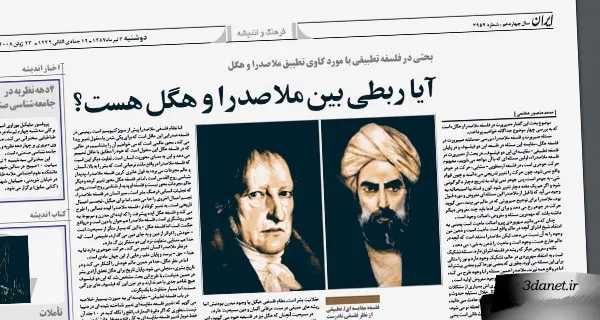
Is There a Connection Between Mulla Sadra and Hegel?, Mohammad Mansour Hashemi
.
.




Discussion0 comments
No comments yet; let yours be the first voice.