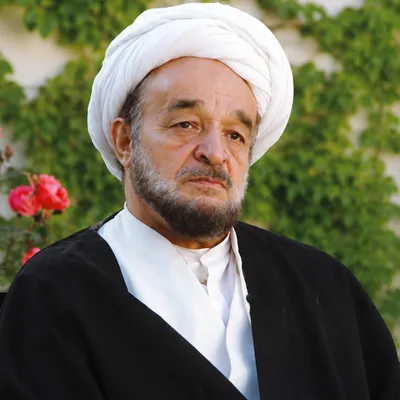
Iranian thinker
Mohammad Taghi Jafari
Mohammad Taghi JafariIslamic philosophy, ethics, and philosophical anthropologyIranian1923–1998
“Science, when not accompanied by ethics, cannot ensure human happiness.”
In their times
Open in the Timeline of Thought


Life and Thought
Mohammad Taghi Jafari was an Iranian philosopher, interpreter of Nahj al-Balagha, and thinker in the fields of Islamic philosophy, ethics, and philosophical anthropology. Through his analyses of philosophical and religious works, especially his studies on Nahj al-Balagha and the Masnavi, he became one of the influential figures in contemporary Iranian thought.
Mohammad Taghi Jafari was born in Tabriz in 1923. He continued his religious studies in the seminaries of Tabriz, Tehran, and Najaf, benefiting from prominent scholars in Najaf. After returning to Iran, he taught philosophy, jurisprudence, principles of jurisprudence, and theology, becoming known as a major commentator on Islamic philosophy.
A significant part of Jafari’s scholarly work focused on fundamental questions of philosophy, ethics, philosophical anthropology, and the relationship between science and religion. He sought to connect the Islamic philosophical tradition with the concerns of modern human beings and examined issues such as freedom, human rights, the meaning of life, human development, and moral values.
Among his important works are the multi-volume "Translation and Commentary on Nahj al-Balagha," "Commentary on the Masnavi of Rumi," "Universal Human Rights from the Perspective of Islam and the West," and "Science and Religion." He died in London in 1998.