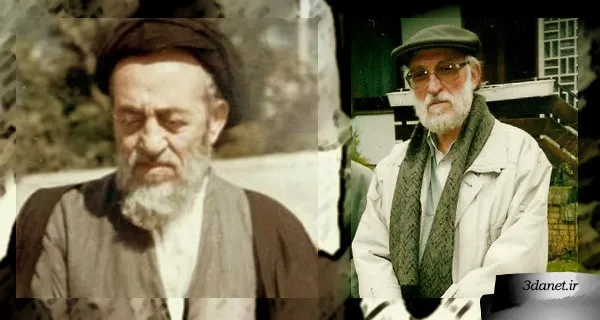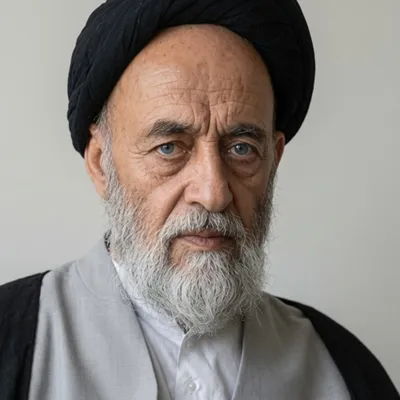
Iranian thinker
Mohammad Hossein Tabatabai
Mohammad Hossein TabatabaiPhilosophy and ExegesisIranian1904–1981
Subjective constructs are matters whose realm of realization is the realm of action and will, not the realm of external existence.
In their times
Open in the Timeline of ThoughtInfluenced2


Influenced by4




Students3


Teachers1

Contemporaries1

Life and Thought
Seyyed Mohammad Hossein Tabatabai, Quranic exegete and Shia philosopher, was born in Tabriz in March 1903 and died in Qom in 1981. Through his authorship of Tafsir al-Mizan and the revival of Islamic philosophy, he was one of the most influential intellectual figures of contemporary Iran.
Seyyed Mohammad Hossein Tabatabai, widely known as Allameh Tabatabai, was born in Shadabad-e Mashayekh, near Tabriz, in March 1903 and died in Qom on November 15, 1981. He was a Quranic exegete, philosopher, Usuli jurist, mystic, and one of the most influential Shia intellectual figures in contemporary Iran.
After his preliminary studies in Tabriz, Tabatabai went to Najaf to continue his education, spending about ten years there studying jurisprudence, principles of jurisprudence, philosophy, mathematics, ethics, and mysticism. Among his most important teachers were Mohammad Hossein Naini, Mohammad Hossein Gharavi Esfahani, Seyyed Hossein Badkoubei, and Seyyed Ali Qazi Tabatabai. After returning to Iran, he spent some time in Tabriz managing family affairs and farming, before moving to Qom in 1946.
In Qom, Tabatabai dedicated himself to the revival of Islamic philosophy and Quranic exegesis. His teaching of the Asfar, the Shifa, Sadrian philosophy, and Quranic exegesis gave him a prominent position in the Qom seminary. He also held significant philosophical and theological dialogues with Henry Corbin, the French philosopher and Iranologist, which were influential in introducing Shiism and Islamic philosophy to Western intellectual circles.
The central axes of Tabatabai's thought are Quranic exegesis, Islamic philosophy, Sadrian wisdom, epistemology, Shia theology, theoretical mysticism, and the relationship between reason and revelation. In his Tafsir al-Mizan, he extensively employed the method of 'interpreting the Quran by the Quran,' and in his philosophical works, he sought to reread and strengthen the tradition of Islamic philosophy against currents such as materialism and Marxism.
Bibliography
Writings and transcribed lectures19 titles
Al-Mizan fi Tafsir al-Qur'an
The Qur'an in Islam
Revelation or Mysterious Consciousness
The Principles of Philosophy and the Method of Realism
Bidayat al-Hikmah (The Beginning of Wisdom)
Nihayat al-Hikma (The End of Wisdom)
Treatises on Divine Unity
Ali and Divine Philosophy
Commentaries on Bihar al-Anwar
Glosses on the Asfar
Shi'a in Islam
The Mission of Shiism in Today's World
Shi'ism: Collected Conversations with Professor Henry Corbin
Islamic Studies
Guardianship and Leadership in Islam
The Quintessence of the Kernel
Sunan al-Nabi
Treatise on Man Before the World, in the World, and After the World
Treatise on Guardianship (Risālat al-Wilāyah)