Philosophy
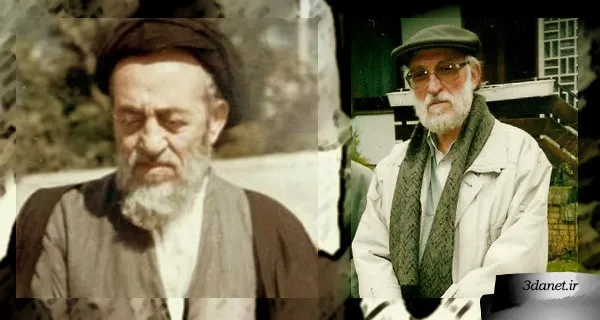
When Motahhari Rages Against Tabatabai...
Tabatabai considered the goodness and badness of actions to be conventional; Motahhari feared this would lead ethics toward relativism. His critique of the article on conventional perceptions reveals the contrast between the master's conventionalist view and the disciple's innate-oriented perspective.
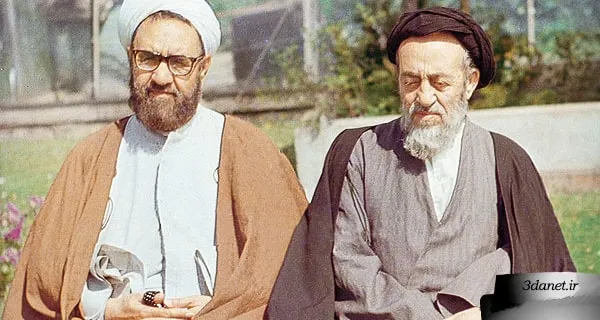
When a devout Muslim, and a commentator on the Qur’an at that, states that adultery and marriage, or lying and truth-telling, are no different from one another insofar as they are both actions and expenditures of energy,[1] fairness demands that the listener pause to reflect, or at least doubt the genealogy of such a proposition. The implication of the above proposition is that the goodness and badness attributed to these acts depend on the consideration of the one who considers them, and that these conventional attributes have no reality in the realm of creation. It is not without reason that the late Motahhari, when confronted with this, feared that a Muslim had been led astray and raged against Allameh Tabatabai, declaring that such speech was unworthy of a Muslim.
The affair began when Tabatabai took up his pen and wrote the book The Principles of Philosophy and the Method of Realism for novices in philosophy. The sixth article of this book, “Conventional Perceptions,” became the most controversial article among students of philosophy. (Before Tabatabai, one can only name Shahab al-Din Suhrawardi, who apparently opened an independent chapter on explaining conventional concepts and distinguishing them from other concepts.) Motahhari later set out to annotate the book The Principles and wrote an introduction and commentary for it. When he reached the middle of the sixth article, his time grew short and he refrained from the task:
Article 6 undertakes another new and unprecedented philosophical discussion, which, as far as we know, has been raised for the first time in this series of articles... During this period, I strove to the utmost extent, and as far as time and leisure permitted, to write footnotes for this article and to explain some parts and add other parts; ultimately, I did not succeed in completing Article 6... For this reason, despite the fact that the remaining parts of that article contained precise and sensitive issues, and I had even prepared some notes for [it], I decided against finishing it.[2]
Motahhari was not alone in this. There were others—both clerics and non-clerics—who were displeased with this article and attacked Tabatabai (some even denied that this article was Tabatabai’s). They wrote that “Mr. Tabatabai wrote The Principles of Philosophy, including the article on Conventional Perceptions, as far as was possible in simple, non-technical, and not very precise, eloquent, or rhetorically refined expressions...”[3]
Motahhari’s critique, however, was of a different kind. It was a confrontation between two colleagues from the same school. Tabatabai knew Islamic philosophy well, and so did Motahhari. Both were familiar with the elements of tradition—the Qur’an, narrations, commentaries, and so on. Motahhari attacks Tabatabai in several places, but here, to understand Motahhari’s critique of Tabatabai, it is first necessary to dissect Tabatabai’s claim.
The article “Conventional Perceptions” is a discussion in the field of moral philosophy. In this article, Tabatabai addresses various issues, including the difference between conventional concepts and reality, good and evil, and so on. In this article, he has adopted the view that good and evil are conventional. This means that the goodness or badness of an act cannot be attained in an absolute form; rather, it depends on context and changes from one situation to another. According to the opinion of commentators, Tabatabai, in The Principles of Philosophy and the Method of Realism and Al-Mizan, posited two types of good and evil: one is a goodness attributed to the act itself, independent of the agent in the external world, and the other is a goodness that the agent or the one making the convention attributes to the act while performing it:
Good and bad (good and evil in actions) are two conventional attributes that are considered in every issued act and performed deed, whether individual or social. It should not remain hidden that “goodness,” like “obligation,” is of two types: a goodness that is an attribute of the act in itself, and a goodness that is a necessary and inseparable attribute of the issued act...[4]
To explain this, it must be said that for Tabatabai, we find a real meaning for “good” and a figurative, conventional one. The real meaning of good is what the ancients also said: that which is agreeable to one’s nature and in accordance with one’s purposes and goals. For example, statements such as “this painting is good,” “the weather is good today,” or “these shoes are suitable for mountaineering” all either mean desirable and pleasant or that they facilitate the attainment of a goal. The figurative and conventional meaning of good is realized when “good” is used in ethics and in evaluative and normative matters, such as the statement “keeping a promise is good” or “lying is bad.”
To explain the conventional nature of good and evil, he states in The Principles of Philosophy and the Method of Realism that good and evil are not among the essential attributes of actions.[5] For a single action can be characterized by the attribute of evil in one place and by the attribute of good in another. That is, good and evil are our conventions, not our discovery of the attributes of actions. In this sense, adultery and marriage, telling a lie and the truth, are no different from one another insofar as they have the same external appearance and manifestation. These conventional attributes are not found existentially in the external world. Thus, good and evil, and ethics in general, are instruments for action and our conventions, not a discovery of reality. In Al-Mizan, he writes: “When we say the face of a certain person is beautiful, the meaning is that it is agreeable to human nature and the sensory and perceptive faculties; consequently, the meaning of evil, as opposed to good, is the lack of agreeableness.”[6]
Motahhari becomes worried when confronted with this phenomenon. His entire concern is that Tabatabai’s ethics will lead to relativism, something that can be traced in the West and is considered one of the ethical schools (skepticism).[7] Motahhari characterizes Tabatabai’s ethics as, at least outwardly, egoistic and materialistic.[8] Also, in A Critique of Marxism, he considers Tabatabai’s ethics to be exactly the same as Russell’s ethics and states: “Russell says we must dissect the issue of ethics… and his analysis turns out to be exactly the same as Mr. Tabatabai’s, and he says the principle of good and bad is a relative concept.”[9]
Motahhari considers ethical concepts and attributes to be implicit and contained within the inner inclinations of the human being. In this way, the human being is not determined and specified from birth, and a person does not enter this world with a soul already equipped for ethics. Rather, ethics exist potentially in the human soul, and they are actualized and manifest when the human being engages in behavior. It is the individual and social life of the human being that creates the ground for actualizing his ethical primordial nature. In his life, by strengthening his soul, a person can perceive ethical values and concepts.[10] Therefore, Motahhari is not in agreement with his teacher Tabatabai regarding the analysis of ethical concepts. Tabatabai relates ethical concepts (and, in Bernard Williams’s terms, thin ethical concepts) such as good and bad, ought and ought not, to the agreeableness or disagreeableness of an action with happiness and perfection. In contrast, Motahhari places it within the domain of the human being’s “higher self”:
“We accept the principle of good and bad just as the likes of Mr. Tabatabai and Russell have said, that the meaning of being good and not being good, ought and ought not, is the same as liking and disliking, but which ‘self’ likes it? The ‘lower self’ or the ‘higher self’? Where the ‘higher self’ of the human being likes it, that becomes ethics and value.”[11]
Without making a philosophical judgment about Tabatabai's ethics, Motahhari's objection to Tabatabai can also be considered significant from a historical-political perspective. In this regard, after Motahhari and Tabatabai, this disagreement persisted, and the remaining scholars, clerics, and intellectuals in Iran took positions on this matter in various ways, falling into two groups: proponents of Tabatabai's ethics and opponents of Tabatabai's ethics. By the irony (tragedy) of the times, most opponents of this ethics found themselves in the camp of supporters of the Islamic Republic of Iran's policies, and most proponents of this ethics in the camp of critics. At the forefront of proponents of Tabatabai's ethics, one can name Abdolkarim Soroush, and among the opponents of Tabatabai's ethics, one can point to Reza Davari, Jafar Sobhani, and many clerics from Qom. At times, conflicts have also arisen between these two groups. For example, in 1979, Soroush, in his book Knowledge and Value, came out in support of Allameh and considered his ethics similar in some respects to Hume's (a kind of Hobbesian ethics); then, a few years later in 1984, Davari attacked him in an article, stating that the "modernist deniers of ethics" should not present the decadence of the West to the people in a capsule of expressions: "... [Tabatabai's] view has no relevance to what is commonly quoted from the sayings of Popper and Russell, usually without citing sources, and sometimes even accompanied by the Quran on the tip of a spear."[12]
This short piece was not intended to pass judgment on Motahhari's perception of Tabatabai's ethics, but it might at least raise the question in one's mind: how is it that Tabatabai and Motahhari, despite both breathing within the Sadrian philosophical tradition, diverge so markedly on ethics? How is it that employing the same foundations yields contradictory results?
Many critics of Tabatabai's ethics, including Motahhari, have well understood that certain implications and consequences of Tabatabai's speech conflict with being a Muslim, rendering the universal and general principles of Islamic ethics context-dependent and invalidating them. For this reason, Motahhari engaged in opposition so that the conduct of a Muslim might be preserved. In this sense, Motahhari's encounter with Tabatabai's ethics appears to have a more ideological-doctrinal aspect than a philosophical one. In truth, Motahhari rose to defend the sanctity of Muslim identity, and the element of philosophizing—as found in his other works—has faded. With all this, one might ask: when a philosopher faces a philosophical situation that endangers his religious beliefs, what is his duty? Should he step into the role of a philosopher and mount a philosophical defense, or into the role of a believer in his religion? Which encounter seems justified?
.
.
[1] Refer to Tafsir al-Mizan, the late Tabatabai's discussions in Surah Al-A'raf, under the verses related to the creation of Adam and Satan's prostration. Also see his commentary on Surah Al-An'am in the seventh volume. In addition, look at his views under the verses at the beginning of Surah Ibrahim.
[2] Mohammad Hossein Tabatabai, The Principles of Philosophy and the Method of Realism, introduction and footnotes by Morteza Motahhari, Sadra Publications, Tehran, Volume 2, Introduction, p. 10.
[3] Reza Davari, article "Considerations on Subjective Perceptions," The Second Commemorative Volume for Allameh Tabatabai, Institute for Cultural Studies and Research, p. 139. Jafar Sobhani—a cleric—also attempts, in the final chapter of the book Rational Good and Evil, to present an interpretation of Tabatabai's ethics that aligns with Islamic principles.
[4] Principles, p. 204.
[5] See: Principles, p. 204.
[6] Mohammad Hossein Tabatabai, Tafsir al-Mizan, Vol. 2, pp. 9-11.
[7] Although someone like Arash Naraghi, in his article “Considerations on the Disagreement between Tabatabai and Motahhari Regarding the Relationship between Real and Conventional Rulings,” defends Tabatabai against Motahhari and sees Motahhari’s concern about Tabatabai’s ethical relativism as unfounded (see Ketab-e Mah Monthly, no. 12, September 2008, pp. 89-100).
[8] See: Yadnameh-ye Shahid Motahhari, vol. 1, Eternity and Ethics, under the supervision of Abdolkarim Soroush, 1981.
[9] pp. 194-196.
[10] See: Falsafeh-ye Akhlaq (Philosophy of Ethics), pp. 127 and 66.
[11] See: Majmu‘eh-ye Asar (Collected Works), vol. 13, p. 739.
[12] Reza Davari, ibid., p. 146.
.
.
When Motahhari Rages Against Tabatabai . . .
Hossein Dabbagh
.
.


Discussion4 comments
با عرض سلام متاسفانه این مقاله سرشار از کژفهمی و مغالطه است. ادعای خروشیدن شهید مطهری بر علامه طباطبایی(ره) ادعای پوچی بیش نیست که با کمترین فهم فلسفی از این دو بزرگوار کاملا روشن است که مسیر شهید مطهری کاملا نور افشاندن به همان مسیری است که علامه می نمایاند. در خواندن تمام سیر مقاله برایم سوال بود که با چه هدفی فردی به دنبال متقابل نشان دادن این دو اندیشه می تواند باشد واقعا کژفهمی تا این حد؟!!! که متاسفانه در پایان مقاله روشن شد که باز هم کار سیاست بازی ای بیش نیست.
علامه طباطبایی به جرات یکی از آزاداندیش ترین فیلسوفان مسلمان زمانه ماست.
این چه فلسفه ای است که بین عمل انسان ویک پدیده طبیعی تفاوتی نمی گذارد. یک نتیجه این فلسفه غلط، نفی حقوق است. اینکه دزدی غلط است یک امر اعتباری نیست بلکه یک امر واقعی است. البته واقعیت ممکن است غیر مادی باشد مانند واقعیت روح.اگر فلسفه این است که در مقاله بالا آمده معلوم شد که حق با دین است.
عقل می گوید قبح ذاتی نداریم و در ثانی قرآن می گوید تمام موجودات خلق خدا هستند و باز میگوید تمام خلق خدا زیبا هستند پس می ماند همان جنبه عدمی موضوع که همان اعتبارات چه شرعی چه عرفی باشد حال این مخالفان از کدام جبهه بحث میکند آیا می خواهند بر این مطلب به این روشنی سرپوش بگذارند به عبارت ساده زنا بد است چون مخالف دستور خداست و این مخالفت است که بده نه آن عملی که انجام میپذیرد چون صورت هردو عمل چه نکاح چه زنا یکی است و چون عمل است و مخلوق، پس زیباست و چون مخالف دستور است زشت است. حال شبه آن را هرکس دیگه ای هم مطرح کرده باشد . حق حقه چه از زبان مؤمن چه منافق چه فاسق و چه چه چه حال سوال ساده اگه حکم ادیان بر حرام بودن بعضی امور نبود آیا این آقایان باز آن را انجام نمی دادند ، اگه جوابشان مثبته یعنی انجام نمی دادند پس نیازی به تشریع نبود . و هم در تامل در آیات قران و هم در بیانی از امیرالمومنین در مورد آیین زرتشت و دلیل انحراف آنها این به روشنی مطرح شده که فرزندان آدم ( ع) با هم ازدواج کردن . پس درد از جای دیگر است