Political Science
A Summary of Allameh Tabatabai's Political Meditations
The book Allameh Tabatabai's Political Reflections by Soroush Mahallati argues that Allameh did not see fiqh as relevant to governance and considered the Sharia to be involved only in legislation; justice based on employment and the link between fiqh and ethics are among the book's discussions.
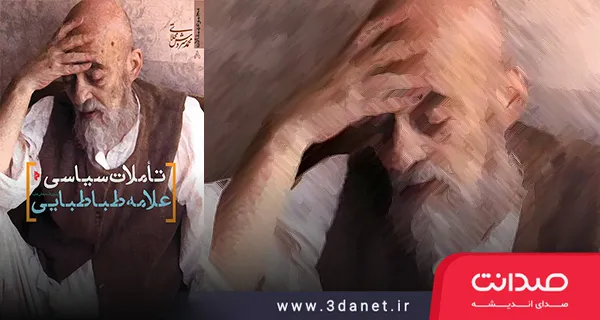
A Summary of Allameh Tabatabai's Political Meditations
Ali Bahari, Autumn 1403
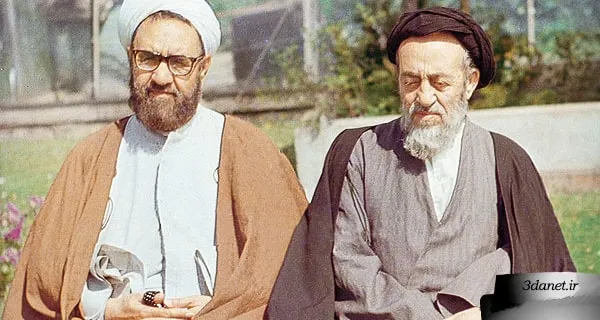
The political thought of the late Allameh Tabatabai (Seyyed Mohammad Hossein Tabatabai) has been a subject of discussion, inquiry, and controversy in recent years. Some researchers, such as Dr. Mohsen Kadivar, have claimed that his political thought differs from the official discourse of the Islamic Republic, while others have attempted to establish compatibility between the two.
Ayatollah Mohammad Soroush Mahallati is a professor of advanced jurisprudence (Kharej-e Fiqh) at the Qom Seminary and has held an official teaching chair for many years. He has published numerous works to date, most of which are in the field of political jurisprudence. The book "Political Meditations of Allameh Tabatabai" is among the writings in the field of political thought by this contemporary jurist, who has sought to shed light on some ambiguities regarding the political thought of the late Tabatabai. The Miras-e Ahl-e Qalam Publications first released this book in 1396. The following text is a report-like summary of this book.
Chapter One: The Philosophy of Government
Allameh evaluates the philosophy of government as follows: since there are various needs and interests in society and individuals pursue their own interests and needs, we therefore require a coercive power to prevent profiteering and the violation of others' rights. For this purpose, humanity first turned to absolute government, then sought constitutional government, and ultimately ended up with a republic, which is the least troublesome type of government. Allameh believes in individualism and says that if a person submits to social life, it is to obtain individual benefits and protect oneself from harm.
Allameh seeks the function of government in two things: preventing oppression and coordinating the various tendencies of society for development and progress.
The late Tabatabai articulates the role of Sharia in government in a philosophical manner. He says that since humans inherently seek to exploit and use one another, they need a law to restrain them. On the other hand, God's guiding attribute means He does not leave humanity to its own devices in this matter; thus, He guides them through innate nature (fitrah) and revelation. [A part of this law God has placed in their innate nature, but since it is insufficient, it must be completed through Sharia.] Therefore, Sharia is applicable in the legislative process within government, but execution is up to the people.
Of course, he does not consider the existence of a political program in religion to mean that all affairs must be specified in Sharia; rather, he believes that only the essential and permanent parts are mentioned in religion, and the remaining matters, which are subject to specific temporal and spatial conditions, are left to human reason.
Allameh Tabatabai considers the interpretation of "Ul al-Amr" (those vested with authority) as referring to jurists to be unfounded and contrary to reason, and believes that jurisprudential expertise has nothing to do with governance.
Chapter Two: The Value of Justice
Seyyed Mohammad Hossein Tabatabai explains the philosophy and value of justice based on two premises. He says that humans inherently seek to exploit others and want to gain profit, and on the other hand, to obtain maximum profit, they are compelled to also consider the benefit of others. Of course, Martyr Motahhari disagrees with the theory of exploitation and has expressed his opposition in various places. He says that a distinction must be made between profiteering and love. Sometimes a person loves something or someone and therefore pursues it, and is even willing to sacrifice their life for that person or thing. Therefore, reducing human actions to profiteering and ignoring other psychological and innate dimensions is a mistake. Motahhari considers the principle of exploitation to be another term for the principle of the struggle for survival and rejects it. In fact, Allameh Tabatabai's theory of justice is similar to Russell's theory, and perhaps this is what provoked Motahhari's sensitivity. At the end of this chapter, Soroush Mahallati considers Allameh's theory of justice astonishing and different from his doctrinal and moral foundations, and from this point, he cites the words of some professors like Dr. Davari Ardakani, who have articulated Allameh's theory of justice in a different way to mitigate its unseemliness, although Mahallati disagrees with these articulations and considers them contrary to Tabatabai's explicit statements.
Chapter Three: Allameh's Different View on the Relationship Between Jurisprudence and Ethics
An examination of Allameh's works shows that he holds two different views on ethics. In the first view, he states that monotheism (tawhid) is the same as the supreme purity that leads to clarity in action, ethics, and belief. In fact, everything goes back to the principle of monotheism and its ethical function.
In the second view, Allameh believes that ethics and jurisprudence complement and complete each other. Neither is complete without the other, and neither can lead a person to a good end alone. (Contrary to his first view, which prioritized ethics over jurisprudence.) He cites a verse from the Quran as an example, which states: Divorce is twice. Then, either keep [her] in an acceptable manner or release [her] with good treatment. And it is not lawful for you to take anything of what you have given them unless both fear that they will not be able to keep [within] the limits of Allah. But if you fear that they will not keep [within] the limits of Allah, then there is no blame upon either of them concerning that by which she ransoms herself. These are the limits of Allah, so do not transgress them. And whoever transgresses the limits of Allah – it is those who are the wrongdoers. (Al-Baqarah; 229) Allameh then criticizes some commentators who have separated jurisprudence from ethics, asking why they believe that in this verse, the ruling on divorce is jurisprudential and obligatory, while the subsequent part is ethical and recommended? The Quran has placed them together. Either both are obligatory, or both have an ethical aspect. He then considers the phrase These are the limits of Allah at the end of the verse as evidence that this command is obligatory and that jurisprudence and ethics are inseparable. Ultimately, he believes that separating jurisprudence from ethics and believing that jurisprudence alone is sufficient for us to consider a society Islamic is one of the calamities of our Islamic society.
Chapter Four: The Realm of Religion
Contrary to some commentators who, from verses such as "an explanation of all things" and "We have not neglected in the Book a thing," have inferred that the Quran has expressed an opinion on all matters, Allameh Tabatabai believes that the phrase "a thing" is an expression that is interpreted according to its context in each instance. For example, if the pharmacist of a pharmacy says, "We have everything," it means that all kinds and types of medicine are available in our pharmacy, not that they have everything in the strict literal sense. Therefore, when the Quran uses such phrases, it means that everything necessary for guidance is present in the Quran.
Chapter Five: Religious Despotism from the Perspective of Allameh Tabatabai
Allameh Tabatabai is among the few Islamic scholars who have raised the issue of religious despotism. In the author's view, this is because Allameh was a student of the late Naini; that is, the same influential scholar who first discussed religious despotism in his book Tanbih al-Milla wa Tanzih al-Milla. Of course, there is a difference between Allameh and Naini, which is that Naini interprets religious despotism as a situation where a despotic government exists and the religious institution supports it. That is, the institution of power and the institution of religion are separated from each other, and the religious institution merely supports the power structure but is not integrated or united with it. However, Allameh Tabatabai discusses religious despotism under the assumption of the union of religious sovereignty and despotism.
Another point is that Allameh Tabatabai, being a Quranic commentator, is engaged with the issue of religious despotism. This is because some Quranic verses contain references, even if indirect, to this subject; for example, where the Quran criticizes Christian or Jewish scholars for turning religion into a tool for worldliness, and unfortunately, the people of their time remained silent and obeyed.
The next point is that there is a difference between religious despotism and non-religious despotism. In the words of the late Naini, non-religious despotism is merely domination over the physical bodies of people, carried out with branding irons, awls, cannons, and guns. However, religious despotism affects the souls and minds of people, shackles their correct thinking, and by using the capacity of religion to justify crimes and sanction evil deeds, it disables people's power of discernment.
Allameh considers the root of religious despotism in Christianity to be the doctrine of incarnation. That is, they first said that God became incarnate in Jesus, and then gradually extended this incarnation to the Church and religious scholars, claiming that whatever they say is God's will and God's word, and therefore sacred and unquestionable, and that anyone who seeks to oppose it must be dealt with. He goes on to say that unfortunately this culture of sanctification has also become widespread among us Muslims; a plague that must be countered.
Instead of using the term religious government or majority rule, Allameh uses the term human government and believes that if majority rule results in half plus one of the people securing their rights while the other half are oppressed, this is unacceptable. Majority rule must also respect the rights of the minority.
Chapter Six: Allameh Tabatabai's Confrontation with Despotism
There is not much new in this chapter. Soroush Mahallati has included the text of his interview with a publication. Only one issue stands out and is worth addressing. The reporter asks why Allameh Tabatabai necessarily considers religious government to be non-despotic. Soroush replies that it is because Allameh interprets the term awliya (guardians) in a verse from Surah At-Tawbah, which declares all believers to be guardians of one another, as meaning supervisors, and believes that in an Islamic society, a degree of guardianship exists for all individuals over others. Therefore, an Islamic society is one in which believers govern, not one in which they are governed.
Chapter Seven: Governance and the Implementation of Sharia
Commenting on the verse And the Messenger's duty is only to convey the message clearly, Allameh Tabatabai states that the Prophet's sole duty is to convey and deliver the religious message, and he has no right to compel or force people to accept it.
Allameh offers an interesting explanation regarding rational necessities and non-necessities. He says that some matters are rational necessities, and here non-compulsion is meaningless. For example, dealing with lawbreakers, criminals, and those who disrupt security. However, some matters are not rational necessities, such as the implementation of Sharia in society. Regarding the second category, one cannot exert pressure or compulsion.
Chapter Eight: Allameh Tabatabai's Freethinking
Allameh's annotations on the Asfar show that he was not merely a professor of philosophy but a philosopher with his own views, who freely expressed his perspectives. Furthermore, in matters of belief, exegesis, and history, he does not consider isolated reports (khabar al-wahid) as authoritative proof. For this reason, in Al-Mizan, he approached the interpretation of Quranic verses with a more open perspective.
Allameh is among the rare individuals who prioritize freedom over security. Usually, when faced with oppression, Shia scholars say that if an uprising leads to the loss of security, one should not rise up. But Allameh accepts the risk of insecurity and prioritizes freedom over security. The story is that the Holy Prophet, in response to the companions' question about whether they should rise up against an unjust ruler, said: "Upon them is what they bear, and upon you is what you bear." (Its approximate translation is that their sin is upon their shoulders and your sin is upon your shoulders; it seems this hadith implies that one should not rise up against a despotic ruler). Allameh does not accept this and says that Islam does not permit people to endure the oppression of despotism, and indeed, the danger of continuing despotism is greater than that of civil war and strife.
Soroush Mahallati's analysis is that because Allameh was a student of the late Naini, he was influenced by his freedom-loving thought. According to Soroush Mahallati's claim, Naini is the one who introduced the discussion of dividing rulings into fixed and variable, and believed that an Islamic government can, based on expediencies, enact variable rulings. Through this, Naini opens the way for endorsing new institutions.
Allameh advances Naini's thought several steps further and says: Religion is not a fixed matter, and it is not the case that religion has fixed and non-fixed rulings. Religion only has fixed divine rulings, and the non-fixed ones are not essentially religion. Rather, they were temporary rulings that were enacted and established according to the exigencies of circumstances.
Allameh Tabatabai's jurisprudential method differs from that of other jurists. Although no independent jurisprudential work of his remains, when he does engage in jurisprudence, he shows himself to be different. He bases the foundations of discussion on reason and the Quran, and then refers to narrations. In the matter of finding the cause of a ruling, he is also bolder than the generality of jurists. For example, in the discussion of the verses on inheritance, he attempts to explain and reason out the cause for the difference in the inheritance rulings for men and women.
Chapter Nine: The Theory of the Separation of Revelation and Opinion
Allameh Tabatabai distinguishes between revelation and opinion. He believes the Holy Prophet had three roles: guiding people to the right path, managing and leading society, and judging and resolving disputes. Allameh considers only the first to be revelation, and calls the second and third the Prophet's opinion. Therefore, the Prophet's opinions are fundamentally not part of religion, but were put forward according to the exigencies of the specific temporal and spatial circumstances in which he found himself. As mentioned before, Allameh considers religion to be only the fixed divine matters and rulings.
Regarding the Prophet's infallibility, Allameh believes that infallibility has three domains: receiving religion, conveying religion, and acting according to religious teachings. Based on Allameh's view, the Prophet is infallible in all three domains, but in other matters – such as many personal affairs unrelated to religion, or governmental matters where the Prophet might express his own opinion – the Prophet is not necessarily infallible.
Chapter Ten: Allameh's Legacy for Our Present Day
This chapter practically contains nothing new and is a restatement of the points from previous chapters.
Chapter Eleven: Allameh and the Theory of the Primacy of Education over Politics
Allameh considers education to take precedence over politics, and even applies this same method in analyzing the events of early Islam and the deviations of the caliphs. He says, "Education halted and regressed." He even analyzes the Prophet's thirteen-year presence in Mecca and subsequent move to Medina and formation of a government from this perspective, arguing that Muslims needed to be educated during those thirteen years in order to later form a government in Medina. Allameh considers the level of the Muslims' education to be such that when someone committed a specific sin, they would come to the Prophet themselves to have the prescribed punishment carried out. Thus, until society is educated, forming a government will be of no benefit. And when a government is formed, neither democracy nor autocracy is effective. Rather, the governance of humanity must flourish, and individuals themselves must uphold each other's rights.

Discussion7 comments
باید از جان رالز پرسید که چرا باید در جهانی ephemoral و گذرا نگاه Eugenics اصلاح نژادی و ساینتیستی خودخواهانه را نداشت و فاشیست نبود. وقتی جهان هدفی ندارد و خدایی نیست و یا اگر هست آن عروسک دروغین جان هیک، آنتونی فلوی تغییر عقیده داده، و یا تصورات بسیار عجیب و نگاه عجیب هایدگر است، هیتلر rational و فاشیسم علنی (حزب سوسیال ناسیونال نازیَ) نتیجه دراز مدت است و سازمان ملل که بدون این که پذیرفته شود حاصل مؤلفه مسیحی و یهودی غرب است نه حاصل فلسفه اخلاق مضحک آن ، همین اکنون عروسک خیمه شب بازی است و با حق وتو جنگ های لیبرال ها را با بهانه حمله بر تروریسم تایید و آن ها را هم که تایید نمی کند آمریکا با تکیه بر Pax Americana نظم نوین جهانی ( معادل مدرن صلح آمریکایی و نسخه دیگری از Pax Romana) خود با Authority اختیار خود به عنوان حامی آزادی (!!!!!) آغاز می کند و خاتمه میبخشد. اگر نگاه شیعیان و امامان شیعه و فلسفه سیاسی شیعه و لزوم تشکیل حکومت پذیرفته نشود، یعنی اگر روش شناسی طبیعت گرایی و فلسفه تحلیلی طبیعت گرای مدعی استقلال روش شناسی فلسفه سیاسی ما اشد ، آلمان هیتلری نتیجه خواهد بود ؛ همان که الان در فاشیسم-لیبرالیسم مدعی طرفداری آزادی در جهان در ایالات متحده فاشیسم در ترامپ به عینه دارد دیده می شود. یا کشورها تجارات جهانی را می پذیرند و pacifist صلح طلب (=برده و ساکت) می شوند و یا مانند غزه شمال اش را می زنند می گویند برو به جنوب و بعد جنوب را می زنند و بعد می گویند برو اردن و مصر و عربستان= معنای عدالت، دموکراسی و لیبرالیسم!
در تکمیل عرایض قبلی باید عرض شود که در سوره النساء قیام بالقسط موج میزند : يَا أَيُّهَا الَّذِينَ آمَنُوا كُونُوا قَوَّامِينَ بِالْقِسْطِ شُهَدَاءَ لِلَّهِ وَلَوْ عَلَى أَنْفُسِكُمْ أَوِ الْوَالِدَيْنِ وَالْأَقْرَبِينَ إِنْ يَكُنْ غَنِيًّا أَوْ فَقِيرًا فَاللَّهُ أَوْلَى بِهِمَا فَلَا تَتَّبِعُوا الْهَوَى أَنْ تَعْدِلُوا وَإِنْ تَلْوُوا أَوْ تُعْرِضُوا فَإِنَّ اللَّهَ كَانَ بِمَا تَعْمَلُونَ خَبِيرًا ﴿۱۳۵﴾ النساء همه باید از حکم خدا و نه مرجعی دیگر تبعیت کنند ، همه در برابر حکم خدا یکسان هستند...حتی رسول الله و اولی الامر(عالمان و امیران و فرماندهان)...سوره با اقدام به قسط برای یتیمان شروع میشود...قسط بین مستضعفین و توانمندان و اغنیاء ، حتی بین مسلمین و آنهایی که با مسلمین در جنگ و جدال نیستند... يَا أَيُّهَا الَّذِينَ آمَنُوا إِذَا ضَرَبْتُمْ فِي سَبِيلِ اللَّهِ فَتَبَيَّنُوا وَلَا تَقُولُوا لِمَنْ أَلْقَى إِلَيْكُمُ السَّلَامَ لَسْتَ مُؤْمِنًا تَبْتَغُونَ عَرَضَ الْحَيَاةِ الدُّنْيَا فَعِنْدَ اللَّهِ مَغَانِمُ كَثِيرَةٌ كَذَلِكَ كُنْتُمْ مِنْ قَبْلُ فَمَنَّ اللَّهُ عَلَيْكُمْ فَتَبَيَّنُوا إِنَّ اللَّهَ كَانَ بِمَا تَعْمَلُونَ خَبِيرًا ﴿۹۴﴾ النساء در سوره ممتحنه : لَا يَنْهَاكُمُ اللَّهُ عَنِ الَّذِينَ لَمْ يُقَاتِلُوكُمْ فِي الدِّينِ وَلَمْ يُخْرِجُوكُمْ مِنْ دِيَارِكُمْ أَنْ تَبَرُّوهُمْ وَتُقْسِطُوا إِلَيْهِمْ إِنَّ اللَّهَ يُحِبُّ الْمُقْسِطِينَ ﴿۸﴾
ریشه مشکلات از اعتقاد به معصوم بودن اولی الامر همچون رسول الله در فهم کتاب و سنت است...علامه نیز همین اعتقاد را دارد... حال آنکه با رعایت اتصال اجزاء آیه تا پایان آن ، معلوم میشود اولی الامر که سهل است خود رسول الله نیز باید منتظر حکم خدا باشند چنانکه در ابتدا اطاعت الله جدا از اطاعت رسول الله بیان میشود و در انتها الله و الرسول با هم مرجع تنازع معرفی میشود...و این با نزول تدریجی رسالات الله هماهنگ است... الرسول در ابتدای آیه با الرسول در بعد از تنازع فرق دارد و آن وحی و رسالت جدید است...برای همین دو اطاعت ذکر شده است... اطاعت از الله با اطاعت در بقیه آیه ، تاویل میشود ، بهترین تاویل ، که استثنائات را هم میپوشاند... سوره مجادله و بی نظری یا دادن نظر شخصی از جانب رسول الله موجب شکایت بانوی مورد اشاره به خداوند ، شاهد بر این موضوع است... این الگو ادامه پیدا میکند تا رحلت رسول الله و کامل شدن قرآن...بعد از رحلت رسول الله ، قرآن کامل و متصل مرجع رفع تنازعات میشود...هر تجربه عقلی و نقلی (روایت) در نهایت باید با اتصال قول الهی سنجیده شود...
لطفا تبیین بفرمایید و توضیح دهید. sinlessness در نظر من بیسواد در مورد فرهنگ دین داران یک pivotal concept است.
اگه امکان داره اینگونه مطالب رابصورتpdfدر آورید که مااینها را داشته باشیم
🔹آیت الله حائری شیرازی🔹 🔸دینِ تمامیتخواه یا دینِ حداقلی؟ مردم، عاشق چه نوع دینی میشوند؟!🔸 ▫️شما ببینید، با وجود اینکه اروپاییها خیلی تلاش میکنند که کسی به داعش ملحق نشود، اما پنجاه هزار جوان به اینها ملحق شدهاند!! میدانید چرا؟ چون مسیحیّت، دین را برای این گذاشته است که فقط روز یکشنبه توی کلیسا حضور داشته باشی؛ اما مردم، دین را برای #مصرف_کردن نمیخواهند، بلکه میخواهند #خودشان برای دین #مصرف_شوند! ▫️امام خمینی (ره) از وقتی مردم را برای دین مصرف کرد، جهانی شد و #جذّابیت پیدا کرد. دین برای این است که ما قربانش شویم نه اینکه دین قربانی ما شود. علتش هم این است که انسان احساس میکند اگر قربانی دین نشود تلف شده است؛ این بدن و عمر من، یک کوپن است؛ اگر در راه خدا کشته شدم، این کوپن را مصرف کردهام؛ امّا اگر در بستر مُردم، این کوپن سوخته و از بین رفته است. ▫️آنچه علی (علیهالسلام) میفرماید #زبان_حال_هر_انسانی است!! «...لَألفُ ضَربَةٍ بالسَّيفِ أهوَنُ عَلَيَّ مِن مِيتَةٍ عَلَى الفِراشِ في غَيرِ طاعَةِ اللّه...». هزار ضربت شمشير بر من آسانتر است از جان دادن در بستر. این مختص آن حضرت نیست؛ این زبان فطرت و زبان عقل است، منتها ایشان در فطرتگرایی مقدّم بر دیگران است. ▫️شما وقتی باب #جهاد را گشودید، دین اقامه و ماندگار میشود: «و الجهادَ عزّاً للاسلام». عزّت خیلی مهم است. اگر شما بتوانید عزت را برای دین بیاورید، خیلی از مسائلتان حل میشود؛ عزّت دینی، عزّت الهی، عزّت پایدار، عزّت اخروی، این عزّتها را زنده کنید. ▫️مردم بخاطر نقل و نبات سراغ دین نمیآیند؛ بلکه میخواهند خودشان برای دین مصرف شوند. اگر فکر میکنید با #مشکل_شدن_دین، مردم آن را رها میکنند و با راحت شدنش اقبالشان بیشتر میشود، اشتباه میکنید؛ شما در ماه رمضان علاوه بر نماز، از مردم روزه هم میخواهید، حالا اقبال مردم به نماز در ماه رمضان بیشتر است یا در غیر ماه رمضان؟ ببینید مردم در شبهای احیاء و ایام اعتکاف، چه اقبالی دارند؟! چون علاوه بر معمول، چیزهای دیگری هم از آنها خواسته میشود. مردم را مثل حوض ندانیم که اگر از آن برداشتیم آبش کم میشود؛ مردم را چاه بدانیم که وقتی آبِ مانده را برداری، به جایش آب تازه میآید؛ شما هرچه از مردم بردارید، میزان سخاوت مردم بیشتر میشود، حتی حاضر میشوند در راه دین، جانشان را هم بدهند! ▫️ هر روحانی که توانست از مردم #اموال_بیشتری برای مصرف در راه دین بگیرد، مردم بیشتر #احترامش کردند!! اما کسی که این کار را نکرد، نتوانست هیچ واجبی از جمله امر به معروف و نهی از منکر را اقامه کند. @haerishirazi
The distinction betwixt the western selfish world destroying weltanshauung and the Islamic rejuvinating breath. غرب نابود میکند و این افراد در فرهنگ شما احیاءگر و دوستی ایجاد میکنند. دموکراسی اسرائيل bunker buster بمب سنگر شکن چند تنی بر سر نوزاد میاندازد و ملای ایرانی در کشور شما علیه تجاوز روسیه فرمان احیاء دفاع از میهن ایرانی میدهد. تمامی غرب روزی anti-renaisance و Ressurection pre-modern thoughtرا با تمام وجود در آغوش خواهند گرفت. دموکراسی و لیبرالیسم بمب بر سر masses می ریزد و شرق آگاهی و معرفت و بازگشت به درون self-awareness میدهد. صدانت میتواند به جای ارتجاع و Conceptulization مفاهیم demodeمتعلق به sweet sixties به آینده و احیای شرق و نابودی دوباره Hellenism پس از بازگشت اروپا به یونان و روم باستان بپردازد. اگر غیر بدیع بودن مطالب افراد مشهور برای شما روشن شده، به آینده clash of civilizations هم میتوان نظر انداخت. آن چه که در جنبش والستریت خود را کمی به شماایرانیان نشان داد اما با توسط رسانه و دانشگاه supress شد.