Religion
Greetings to That Beautiful Soul
Allameh Tabatabai taught that faith must be nourished by reflection, or it will end in violence. He transformed Qom’s frozen jurisprudential climate in favour of philosophical reasoning and opened a path for dialogue with Western philosophies. A review of the character and thought of the universal teacher.
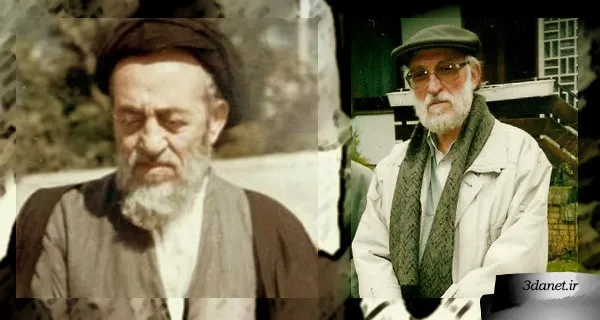
From him I learned that “faith” must be nourished with “thought and reason,” otherwise it ends in violence...
How can I take my eyes off him / When at first glance, seeing him gave me sight (Sa‘di)
When you ask me to write something about that beautiful soul, the philosopher-mystic and universal teacher, ‘Allamah Tabatabai, how can I refuse this request, not write about him, and not savor the joy of remembering him! I am still deeply influenced by his personality, conduct, and teachings.
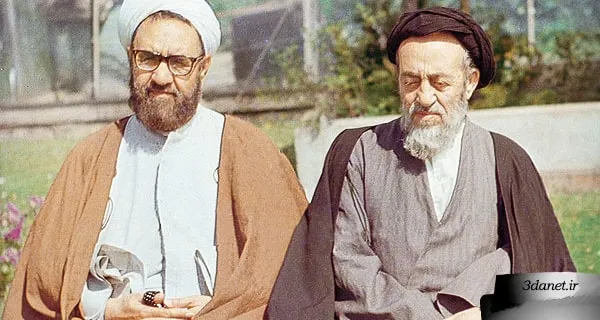
Muhammad Husayn Tabatabai, who for many years was the undisputed master of philosophy and exegesis in the Qom seminary, was a blessed presence. By teaching philosophy in that seminary, he significantly altered the frozen jurisprudential climate in favor of philosophical rationalism. Through his analytical and methodical teaching of Qur’anic exegesis, he made the seminarians understand that the foundation of Islamic teachings is the “Qur’an,” not jurisprudential, usuli, or hadith texts. By delivering his lessons on the principles of philosophy (on Thursday nights), he confronted the materialism of Dr. Taqi Arani and his comrades and laid the groundwork for modern theology in that seminary (which, unfortunately, was not pursued).
As a Muslim philosopher, he opened the path of “dialogue” with Western philosophies in Iran. Without exaggeration, I say that the person who shook religious thought in the Shi‘i seminaries in the last century and brought them, to some extent, into the modern age was Tabatabai himself, and no one else. The many new intellectual seeds that are growing and blossoming in these seminaries today, although they have had various causes and factors, were undoubtedly first cultivated by Tabatabai. But in addition to all the rational teachings I mentioned, Tabatabai was a “radiant exemplar” of positive Islamic mysticism. Being in his presence elevated one’s soul. When you listened to his mystical words, you realized that he had taken you out of quantitative space and time. His personality was entirely unique—both deeply influential and exemplary. His life showed that his mysticism did not come from books. You would feel a longing, wishing you could live like him.
Tabatabai carried out all his great works with complete humility and without material or status-related expectations. His students know that for many years he made his living from the modest royalties he received from the publication of Tafsir al-Mizan. Before the 1979 revolution, during a political squeeze when he was pressured to sign a declaration, he said that he had nothing from being a cleric except these clothes, and if necessary, he would set those aside too. He truly was like that. Through his life, he showed that speaking of faith should not become a profession, and if it does, faith is corrupted. He showed that faith must be nourished with “thought” and “reason,” otherwise it ends in violence. He showed that vulgar, undisciplined language, devoid of reflection and depth, must be set aside in learning or teaching religious knowledge, otherwise religion becomes demagogic.
The writer of these lines, who for some time attended his Qur’anic exegesis sessions with great enthusiasm and benefited immensely from them, and occasionally tasted the pleasure of personal companionship with him, when I reflect on my own past, I see that Tabatabai has influenced the course of my intellectual life more than any other person. During the 18 years I studied in the Qom seminary, among all those with various titles, it was only Tabatabai who, through his teachings, character, and conduct, invited young people of my age to think and deterred them from stagnation in outward appearances and falling into the pursuit of titles, occupying the front row, and spending a lifetime in positions of authority.
Here I would regret not recounting a sweet memory of him. I had not yet reached the age of 20 when a mental preoccupation would not leave me alone and tormented my mind. One day, to solve that problem, I took a clumsy and ill-considered action. Without any preamble, one afternoon, I went to Tabatabai's door. I knocked, and he himself came and opened the door, and after greetings, he said to me, "Tell me, what can I do for you?" I said, "Sir, for some time now this question has arisen for me: how can one have faith in a God who is other than the world and separate from the world? I cannot accept such a God, and this issue troubles me." Tabatabai gave a half-smile and said to me, a raw but truth-seeking youth: "Yes, that is exactly so; a God separate from the world is meaningless, and God is not separate from the world," and he gave some explanations. This answer of his put me at ease, and we said goodbye and I left. But later, I felt ashamed before myself, thinking what a clumsy and ill-considered act it was to go to his house without preamble and disturb him. In later years, when I studied Islamic philosophy and supplemented what I had read with my own personal studies, I better understood the brief explanations he had given me at the door.
________________


Discussion0 comments
No comments yet; let yours be the first voice.