Religion
These Three Thinkers (Shabestari, Soroush, Malekian)
In their intellectual evolution, Shabestari, Soroush, and Malekian have moved from traditional readings of religion toward critical rationality and personal spirituality. What they share is a reliance on Kantian reason and a critique of official religious interpretations in the search for meaning in life.
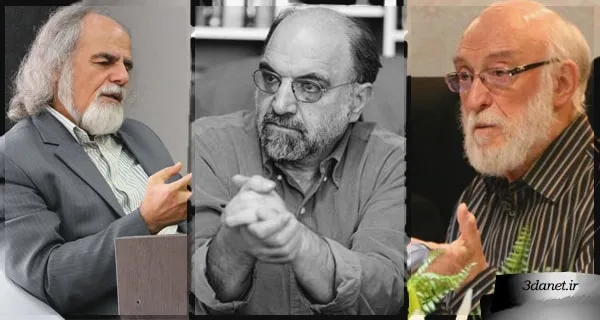
In a comment that friends left on my earlier post about “Abu Zayd,” they asked me to draw a comparison between the views of three influential Iranian thinkers—Shabestari, Soroush, and Malekian—which I deferred to a later time. With the repetition of this request in subsequent friendly conversations, I saw that I must now answer it to the best of my current ability. It is clear, of course, that summarizing all the intellectual concerns of a thinker is no simple matter, and these are entirely my personal impressions of their views; it is quite possible that in reality those esteemed figures are something other than what I describe. I therefore apologize to those great men and to the readers for any possible inaccuracies, and I am eager to receive the critiques and opinions of friends on this matter.
First, a kind of descriptive classification of their views:
A— Mohammad Mojtahed Shabestari, born 1936; holds seminary and university education in the field of theology; retired professor at the University of Tehran. Broadly speaking, three periods can be distinguished in his intellectual life:
1— Traditional jurisprudential-theological orientations within the framework of the teachings of Shia seminaries.
2— Religious new-thinking; an attempt to re-understand the referential text of the Islamic religion (the Quran) by relying on the findings of hermeneutics, striving to present a new reading of religion and to move beyond official readings. This concern can be clearly seen in his books such as: “The Book, Tradition, Hermeneutics” and “A Critique of the Official Reading of Religion.” At this stage, by separating the accidentals of religion from the essentials of the Islamic religion, and with an emphasis on a historical-epochal understanding of the Quran, he attempts to present a reading of Islam that is compatible with the concerns of modern humanity.
3— Moving beyond “historical-textual” religiosity and entering the stage of constructing a personal relationship with God. In this stage, which crystallized and gradually matured mostly through his series of articles titled “A Prophetic Reading of the World,” he considered the prophetic experience to be a kind of outlook on existence and a mode of receiving the word of God, and distanced himself from confining the connection of people of later ages with God within that tradition. As he explicitly stated in a lecture in the fall of 2010 at the Serat Institute, for the wayfarer on this path of truth, he prefers to use the term “monotheist” (muwahhid), which is more expressive, rather than the term “Muslim,” which seems to be ambiguous.
B— Abdolkarim Soroush, born 1945, educated in chemistry and pharmacy and later in the history and philosophy of science. He was never a formal university professor and for years worked as a research faculty member, researching and teaching at scientific and academic centers in Iran. In classifying Soroush’s views, one can both identify parallel and simultaneous domains and also undertake a kind of periodization. Alongside interpreting the Quran, Nahj al-Balagha, and the Masnavi, he also taught the philosophy of science and lectured on the views of Kant and Popper, which speaks to the parallel nature of his intellectual layers. However, in his project of study solely concerning religion, the following periodization can be proposed:
1— A modern rereading, exposition, and interpretation of Islamic-religious texts, though without moving beyond the paradigm of tradition. An inclination toward Islamic mysticism, especially a combination of Ghazali and Rumi, as the best reading of the tradition of the Prophet of Islam (Soroush before Qabz va Bast [Contraction and Expansion]).
2— Entering the arena of modern theology and separating religious knowledge from religion, separating the changing understanding from the fixed essence of religion, and using logical-historical-hermeneutic techniques to present a modern reading of religion (Soroush of Qabz va Bast).
3- Moving beyond the paradigm of traditional religiosity and affirming the multiplicity and plurality of faith experiences, moving beyond the exclusivity of religiosity in the prophetic experience, affirming transformation and change in the essence of religion, affirming the distinction between the essential and the accidental in the essence of religion. In his own words, if in the previous stage he affirmed contraction and expansion in religious knowledge, now he announced contraction and expansion in religion itself. (Soroush of the Expansion of Prophetic Experience) In this stage, Rumi's experience was not merely an interpretation of the Quran and the Sunnah of the Messenger of God, but an expansion of that experience. Rumi had his own experience of Islam and faith, although he could, at the beginning of his spiritual journey, benefit from the pure Muhammadan experience. Again, in Soroush's own words, if one were to ask him whether Rumi was Shia or Sunni, he would prefer to say that Rumi was a follower of the Rumi religion. That is, he had his own experience of religiosity. By citing this statement from Soroush, I want to claim that if one were to ask the current Soroush what religion he follows—Islam, or...—he would say he is Soroush and has his own experiential-thoughtful portion of religiosity, and of course, in this passage, he is greatly indebted to fortunate ones like Muhammad and Rumi.
C- Mostafa Malekian, born 1956; a graduate of engineering and then Islamic philosophy and theology, he was never a member of a university faculty (as far as I know, he did not wish to pursue formal study for a doctoral degree), but until such time as obstacles were created for his teaching at universities, he even taught at the doctoral level. He demonstrated, of course, that more than an appetite for formal lessons and discussions, he belongs to free reflection and enlightenment. Perhaps Malekian also passed through stages 1 and 2 of what was said about Shabestari and Soroush in his personal journey, but as a producer of thought, he did not reflect those phases. It could perhaps be said that the existence of experiences of the Shabestari and Soroush type before Malekian's sharp eyes made him needless of repeating them. He undertook this journey within himself with greater compression. Now, if we wish to reflect Malekian's intellectual journey in the mirror of what has been turned into text by him, we might perhaps do so as follows:
1- Teaching and clarifying foundational concepts from culture and philosophy such as modern theology, traditionalism, modernity, postmodernity, and the like.
2- Presenting the project of "Rationality and Spirituality." Malekian's concern, more than Islam or even religiosity, is first and foremost the human being, and then the most fundamental possessions and quests of the human being. The most fundamental possession of the human being is "reason" and nothing else, and their most fundamental quest is "giving meaning to life" or "spirituality." Now, how is this spirituality attained? It depends, firstly, on the psychological type of individuals and then on the culture in which they have lived. This may be attained through faith in a specific religion or through the use of something he referred to with the term "religious salad."
In the views of these three thinkers, there are points of commonality and points of divergence. I find them classifiable as follows:
Commonalities:
1- These three thinkers, in their latest intellectual station, have drawn from the fountainhead of modern enlightenment; the self-founded, critical Kantian reason can be considered their point of reliance; they can be considered intellectuals.
2- All three have reflected on religion, considering at least one reading of it to be meaning-giving and responsive to the spiritual needs of the human being for attaining a better life.
3- These three have held a critical view of the official and traditional readings of religion.
Explanation:
A- Official religion must be distinguished from traditional religion. By official religion is meant a reading of religion that is backed by governance, and traditional religion is that which relies on pre-modern reason. That is, although in the current conditions of our society the official reading of religion is based on the traditional reading of it, it is not the case that everyone who holds a traditional reading of religion is backed by governmental support.
B- The critique of these three of the official reading of religion is because it constricts the space for free and faithful religious practice. And their critique of the traditional reading is because the traditional reading of religion contains a set of teachings that are incompatible with the modern human being's understanding of things like human rights or natural laws.
And the Differences:
1- Terminology: Dr. Soroush considers the term "religious intellectual" to be a term with a definite meaning, and one might even say he is its originator or played a role in its institutionalization. Shabestari 3 seems to have taken his theoretical level beyond "religion" in his final phase. He is more of a monotheistic intellectual than a religious one. As for Malekian, he considers this term (religious intellectualism) to be fundamentally lacking a clear meaning. In his view, one can have an enlightened religious person, but not a religious intellectual. It is as if he detects a whiff of paradox in this expression. Thus, Soroush uses the term religious intellectualism and strives to keep its flame from dying out, Shabestari does not use it, and Malekian critiques it.
2- Attention to the Text: Soroush makes a novel reading of the text (specifically the "Quran") the focus of his endeavor. He tries, by referring to the text, to offer a reading of it compatible with modern reason, although he does not confine the text to the Quran, but also considers, for example, the Masnavi as a text based on weighty inspirations worthy of consideration. So, firstly, he considers religious experience, albeit with a pluralistic view, to have a distinguished status in the pure experience of a meaningful life; secondly, he considers recourse to the text a necessary condition for religiosity; and thirdly, he considers a modern reading of the text a necessary condition for a correct and effective reading of the text. Shabestari 3, however, by moving beyond "historical-textual" religiosity, does not rule out reference to the text, but considers it only one of the models for a meaning-oriented view of existence. In his view, every human being must define their own relationship-with-God and, after listening to the call of the Supreme Being (God), reflect it in their own way. The product of hearing God's word should not be considered confined to a single text that was realized in a specific history and inevitably possesses the limitations of that specific era. The believer can refer to the text or not, according to their need. It might be said that just as Shabestari 3 can be separated from Shabestari 2, such an explicit separation is not easy in Soroush's case. Shabestari 2 is in the position of extracting a true and transhistorical message from the text and the prophetic discourse. (> A Critique of the Official Reading of Religion, article: Characteristics of the Prophet's Discourse) At this stage, he clearly considers the Prophet's message to be eternal and declares its essence to be four things: rationalism, realism, love, and justice. But Shabestari 3 fundamentally moves beyond the concern of separating the essence from the shell.
Malekian's primary concern, however, is fundamentally the rational analysis of sources that possess meaning and inspire meaning. The product of this analysis can be the separation of the pure from the impure. He has no hesitation in finding, even in an authentic text, matters that require critique and abandonment (up to this point, he shares a starting point with Soroush 3), but Malekian's focus is more on revealing aspects of the text that cannot be sympathized with based on rational standards (such as parts of the text that contradict human rights), rather than offering a reason-pleasing reading compatible with the needs of modern humans. He explicitly states: In my opinion, based on historical experience, religion can be both the greatest aid to spirituality, and the greatest obstacle and destroyer of spirituality. In my opinion, the greatest friend and the greatest enemy of spirituality is religion. But it depends on what conception you have of religion. (> The Book of Longing and Abandonment, Negah-e Moaser, p. 419)
3- As was also hinted in the previous post, Malekian's project, so far his final one, is "Rationality and Spirituality"; Shabestari's project is the "Establishment of Free Monotheism," meaning preserving the concern for faith and constructing a personal relationship between the human and God; and Soroush's project is "Experience-Oriented Religiosity," and in this experience, the endeavor to draw near to the prophetic experience holds an undeniable place.
4- For Soroush, God is the "Majestic Beloved," and Soroush's relationship with God can be described as: "The Tale of Servitude and Enchantment" (the title of a book by him, Serat Institute Publications). Shabestari's relationship with God is a relationship of faith in a cloud-covered space: "My faith was something in the palm of my hand, and I clung to it tightly so it would not slip away. But in a moment, my hands opened ... and now there is nothing in them. But my hands remain open as a sign of seeking, and faith for me becomes a constant search." (> Madreseh Magazine, Issue 6, The Lifeworld of Mujtahid Shabestari, Jalal Tavakolian) And Malekian's tale with God and religious faith is this: "The Tale of Wishing" or the story of "Longing and Abandonment" (the titles of two recent books by Malekian, published by Negah-e Moaser Research Institute).
If I were to conclude by offering my personal impression in a concise comparison, I would say that among these three, Soroush is a Muslim facing the modern world, inviting one to an Islamic faith that is free, authentic, and compatible with modern reason and the desires of contemporary humanity. Malekian is a modern spiritualist concerned with the rational life of human beings and the alleviation of their suffering; he is more a universal human who happens to have been born a Muslim. And Shabestari stands between these two.
.
.
These Three Thinkers (Shabestari, Soroush, Malekian)
Author: Ardeshir Mansouri
Source: The Mountain-Philosophy Blog
.
.

Discussion10 comments
سلام در آغاز،سپاس از مقاله تطبیقی جناب منصوری. آنچه به نظر بنده می رسد این است که این سه بزرگوار، به نوعی دگردیسی اندیشه ورزی که حاصل روحیات جستجوگری و آشنایی با فلسفه غرب بوده است،دست یافته اند.اما انچه حائز اهمیت است اینکه،رسوبات مذهب سنتی، که گاهی بنظر میرسد حتی در ژن افراد مبتلابه به اینگونه اقالیم دینمدار، رسوخ کرده است مانع ابراز پیراسته ی عقیده ی شان در نقد صره دین میگردد وبکار گرفتن واژه های چندین پهلو، تنها مفری برای این بزرگواران در مواجهه با مخاطبانشان در جوامع متعصب میباشد. بنظر حقیر،حرکت این بزرگوران در عصر کنونی جوامع اسلامی گرته برداری هرچند نامحسوس از نقد عقل محض کانت و راشنالیزم دکارت در دوران تجدد اروپاست که در نوع خود حرکت مبارکی محسوب میشود. در پایان ضمن عذر خواهی از پرگویی ام با جمله ای از گاندی بزرگ کلامم را به پایان میرسانم: بهترین دین دین انسانیت است هرچند پیروان اندکی دارد
آقای جواد، دوست بزرگوار, سلام بر شما. ممنونم از توجه و دقت تون به جزییاتِ احتمالا مغفول. ========== قدیم ها(قبل از بهمن ۵۷) اسم نقد را “ردیه” می گذاشتند. مصرف کننده و مخاطب این تعبیر چپ و راست نداشت. کافی بود در نقش تحسین گر و تاییدگر و هم دسته ی نظریه ای ایدئولوژی زده ظاهر نشوی, پس ضدخدا یا ضد خلق یا ضد میهن یا دشمن بودی و توطئه گر و عمله ی … و جیره خوار و مزدور … ،و سزاوار انواع دیگر تعابیر ستیزه گرانه ، شکاف انداز و برهم زننده ی جریان گفتگو. "گفت" و "گو" داشتیم، اما "هنر شنیدن و گقتگو" نداشتیم. این نوع نگاه را محکوم می کنیم؛ و محکوم کنیم؛ حتی اگر هزینه هایی عاطفی یااندیشگی داشته باشد. اگر من اشتباه کرده ام در تشخیص این مصداقِ خاص و اگر صائب بوده ام، هر دو قابل تحقیق و کشف است. سرپایی نمی توان رد یا تایید کردادعای کمترین را. کافی است هر کس (از جمله خود این کمترین) به موارد رخ داده مراجعه کند. جدا از این بحث، هستند کسانی که نظرات مخالف شان را گوش می دهند، اما پاسخ نمی دهند، یعنی فکر می کنند جنجال راه می افتد و جنجال هم خوب نیست. پس پاسخ نمی دهم. هستند کسانی که می شنوند و پاسخ می دهند. تا این جای کار، ایرادی ندارد. ایرادی که مطرح کردم،ایراد بر لحن پاسخ است، و نه صِرفِ پاسخ گویی به اتهامات یا نقدهای منصفانه یا مغرضانه. فرق است میان این دو. و یک قضیه ی دیگر که خیلی هم مهم است: گیریم که شما دشنام هایی را ردیف کنید برای منِ نوعی. من حتی اگر یک بار هم، همان دشنام ها یا حتی کمتر از آن رادر جواب شما ردیف کنم, از شمای نوعی کمترم. این از این. از طرف دیگر،اگر دیده شود که از میان چند مخاطب و گوینده،یکی از آنان لحن و زبانی خاص را مکررا بکار می گیرد, می توان نتیجه گرفت که این حال و وضع، امری نیست آنی،تصادفی و عَرَضی. نتیجه ای که عقل سلیم می گیرد چیست؟ جز این است که این نوع رفتار، یک رویه است؟ پس بهتر است برگردیم به خود موارد رخ داده، تا صواب و خطای مدعامعلوم شود. به این ترتیب، مدعا می تواند برای هر کس به شکلی پژوهشی، رد و اثبات شودو در حد مدعای معلق باقی نماند. با تشکر مجدد از اعتناو اشاره تان. با احترام.
قابل توجه اقای کشانی حملاتی که کتبا و لفظا و عملا به سروش شد هرگز به آن دو بزرگوار دیگر نشد.این راهم در محاسبات خود به حساب آورید.
سلام. مطلب خوبی است. اما درباره دقت آن نمی توان اظهار نظر دقیق داشت. به ویژه اینکه در یک مورد که موضوع کاملا واضح است و براحتی قابل مستند شدن، ایشان اطلاعاتی ندارد. مثلا استاد مصطفی ملکیان خود به صراحت گفته است که ایشان 5 دوره و گفتمان فکری بسیار متفاوت از هم را در طول زندگی خود سپری نموده و پروژه عقلانیت و معنویت آخرین و پنجمین دوره فکری ایشان است. اما نویسنده چنین نکته برجسته ای را ندیده است. با این دانش و داده ناقص چگونه می توان به ارزیابی ایشان درباره سه متفکر برجسته ایرانی اطمینان داشت؟ به عبارت دیگر گر چه این موضوع بسیار خوب است و جای بررسی دارد، اما این مطالعه ناقص و در نتیجه چه بسا گمراه کننده است.
با سلام و تشکر از انتشار مطالب مرتبط با فهم دینی ۱- نویسنده محترم مقاله با توجه به تخصصشان سعی نموده اند که به تمایزات و تشابهات این سه تن بپردازند اما بنظر حقر نتوانسته اند خود را در جاده سلامت نقد نگهدارند و قالب فکری حکومتی خود را در بحث غالب نکنند!! به نظر میرسد موضوعاتی را که علاقه داشتند و از تحلیل حکومتی آنها بر می آمدند را تنها در بوته ارزیابی قرار دادند و صد البته در همان اندک موضوعات ؛ نکات مفیدی بود که سپاسگزاری میکنم ۲- در نقد دوم طرح شده توسط جناب اقای کشانی ، ظاهرآّ انکار و حذف و قذف در ناقد بیشتر متبلور شده تا شخصیت های مطرح شده در اصل مقاله امیدوارم به سطحی از فهم نقد برسیم تا در فضایی بدون حب و بغض و تنها در حوزه علمی مطرح شده ، به نقد آراء دیگران بپردازیم
جناب آقای عاشوری، دوستان، سلام. از اعتنای تان به این چند کلمه سپاسگزارم. ممکن است کلام من همان طور باشد که شما گفته اید, اما امیدوارم این طور نباشد. پیشنهاد می کنم یک بار دیگر بدقت بخوانید همین چند کلمه را. و بعد لینک ارجاعی را؛ شاید نظرتان قطعی تر شودو شاید هم نظر دیگری پیدا کنید. باز هم از اعتنا و ادب تان تشکر می کنم. کمترین.
ممنون از فرصتی که برای مقایسه ی آرای این سه نامدار فراهم کرده اید, اما واقع اش را اگر بخواهید, از مقایسه ی آرا مهم تر این نکته است که کمتر از آن سخن رفته است: ================= یک نکته ی بسیار بسیار مهم : وجه افتراق زبان آقای سروش با دو تن دیگر است. زبان ایشان و نحوه ی خطاب ایشان تاکنون خطابی ستیزه جویانه و آنتاگونیستک بوده. ادبیات ایشان ، ادبیات ستیزه و حذف است. با وجودی که صابون حذف بعد از رضایت به حذف قبلی ها به تن ایشان هم خورده، هنوز هم که هنوز است این زبان را در مورد کسانی که با او هم نظر نیستند، به کار می برد. شمشیر زبان ایشان، از بهترین زبان طعن و کنایه ی ادبیات فارسی یعنی حافظ به شکلی حداکثری و بخوبی استفاده می کند و در نهایت به زبان جافظ، زبان لعن و تکفیر را هم اضافه می کند، حتی در این دوران فترت دورافتادگی از قدرت. متاسفانه این جمع بندیِ تجربه ی ۴۰ سال با جناب آقای سروش است ، یعنی از کمی قبل از بهمن ۱۳۵۷٫ در این نوشته، اشاره ای کرده ام به زبان ۴ روشنفکر مطرح ایرانی (البته به نقل از کسی دیگر): هدایت آل احمد شریعتی و سروش. http://goo.gl/mK1Rgn ====================== می شود گفت باقی “سواد دار” های ایرانی هم دست کمی از این جمع چهارگانه نداشته اند. فقط اندکی از این جماعتِ اهل بحث و فحص بوده اند که نظرات خود را در خُم خشونت غرقه نکرده اند و فقط از دریچه تنگ حذف، مبارزه ی زندگی را ندیده اند. بله! این شبستری و ملکیان هستند که تا بهحال، متفاوت بوده اند با بسیاری؛ و امیدواریم که متفاوت بمانند و به چاه ویل “چشم در برابر چشم” سقوط نکنند. اما چرا در کنار مباحث نظری ، این نکته مطرح می شود؟ هر چند که این نکته، ربطی به مباحث نظری و معرفت شناسیکِ این سه نامدار ندارد؛ اما تفاوتی است بسیار پراتیک و تحول ساز. نمی توان نسبت به تاثیر این نوع جهان بینی – که دنیا را پر از توطئه ی دشمنان می بیند- بر روی مباحث نظری بی توجه بود. با احترام فراوان از توجه تان.
درود و سپاس برای توجه و نکات قابل تأمل. مطلب نگارش شدۀ جناب عالی را نیز خواندم و بهره بردم. آرزوی توفیق
سلام جناب کشانی. در مورد ادبیات سروش بنظر میرسد قدری از دایره انصاف خارج شده اید. بنده با آثار هر سه این بزرگان تا حدود زیادی مانوس هستم و علی الخصوص با سخنرانی های سروش. و البته نقدها و تخفیفات و ریداکشن هایی که در مورد سروش نگاشته میشود را با دقت رصد میکنم.بر خلاف نظر شما اتفاقا این سروش است که همواره در تیررس طعن طاعنان قرار دارد و هر کسی میخواهد تعداد فیوهای مطالب کانال خود را بالا ببرد سروش را از زبان گزنده خود بی نصیب نمیگذارد. آنچه که من تاکنون از سروش دیده ام خطاپوشی و بوده و کاظمین عافیین. اما آنجا که دیگ غیرت جوشیده با زبان خود طاعنان با ایشان سخن رانده است.اما چون سروش مسلط به متون ادبی است نکته هایش چون تیغ پولاد تیز است. لازم به پرده پوشی نیست که روشنفکری دینی بدون نام بردن از سروش فاقد مفهوم خواهد شد و از بنیادگرایان دینی گرفته تا ایرانشهریان به رهبری سیدجواد طباطبایی و براندازان و باصطلاح دین ستیزان همگی فی الجمله به سروش میتازند. علتش هم واضح است. سروش آخرین ایستگاه دینداری معرفت اندیشانه است.ما نمیتوانیم این نوع دینداری را در ملکیان و شبستری جستار کنیم.لذا گمان میکنند اگر با سروش گلاویز شوند میتوانند فاتحه اسلام را بخوانند.
تحلیل خوبی بود موفق وپیروز باشید