Philosophy
On the Recent Debate Between Soroush and Alidoust on the Relationship Between Sharia and Rationality
The Soroush–Alidoust debate, after three decades, offers an opportunity to re-examine the relationship between sharia and rationality and to reintroduce Soroush's thought. Belated as it was, this conversation represents a step toward expanding free expression and critical thinking in the intellectual sphere.
Ardeshir Mansouri
AuthorOn the Recent Debate Between Soroush and Alidoust on the Relationship Between Sharia and Rationality
Ardeshir Mansouri – January 2025
Foreword
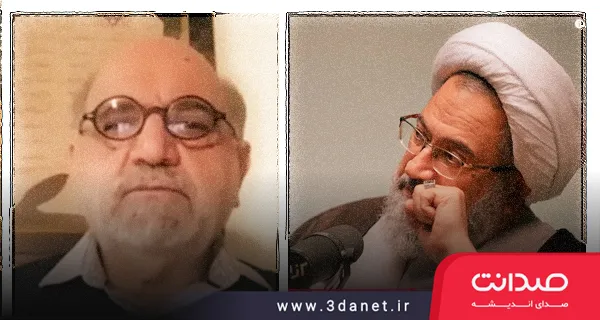
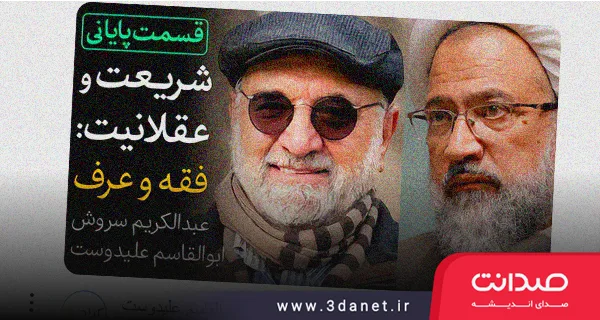
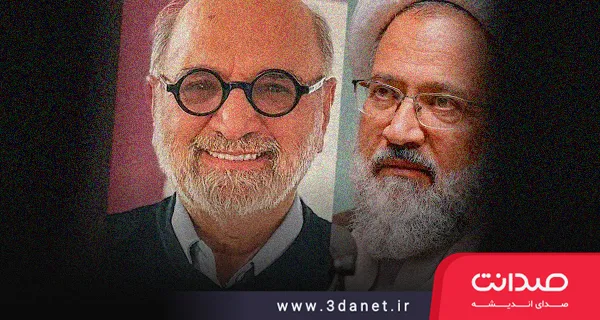
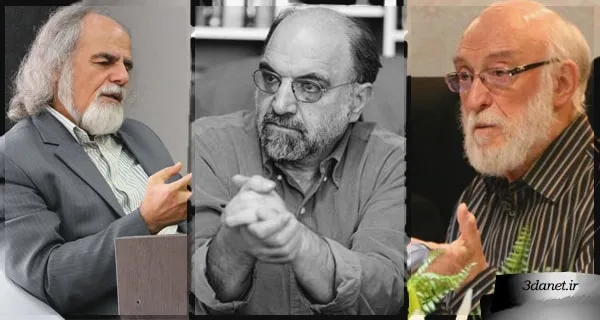
In October 2024, Abdolkarim Soroush and Abolqasem Alidoust, at the initiative of the "Free School" (Madreseh-ye Azad-e Fekri), held three non-co-located (online) sessions of dialogue, the likes of which have been unprecedented in the past three decades. This note does not afford the space for a detailed examination and critique of the positions of both sides of the debate, and in response to the kindness and inquiry of the friends at Sedanet, it has been written as a review report on the status and potential significance of this debate. - All three sessions, totaling approximately 5 hours and 45 minutes, are accessible through media such as YouTube and the Azad Telegram group (here).
- Abdolkarim Soroush, 79, currently residing in the United States, is a philosophy researcher and former lecturer in the philosophy of science and literary and mystical texts at Iranian universities from the 1980s to the mid-1990s. From the mid-1990s, he was first banned from teaching at Iranian universities, and then the space for his free, non-academic lectures, and even the public and official publication of his works, became severely constricted. As the constraints intensified, leading to violent threats, this commentator on the Nahj al-Balagha, university lecturer, and theorist of modern theology and the epistemology of religion ultimately left his homeland and, in a forced migration, has been living away from Iran for nearly two decades. Thus, a two-way deprivation was wrought; he was deprived of the blessings of his familiar homeland, its cultural atmosphere, and the companionship of eager audiences inside the country, and Iran's academic community was deprived of his vigorous knowledge and teaching.
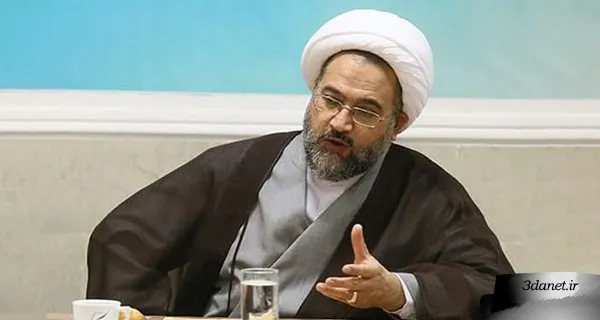
- Abolqasem Alidoust, 63, residing in Qom, is a religious scholar and seminary researcher who is a relatively new name among those engaged in Islamic jurisprudence, theology, and philosophy. His published writings and opinions indicate that he strives, in addition to seminary sciences, to be familiar with modern sciences and academic knowledge and, with an awareness of the scientific theories of the new world, to "update" the religious sciences, as the term goes. His resolve is to enrich jurisprudence in order to find a remedy for the problem of the efficacy of Sharia in today's world.
Does any benefit accrue from this debate?
In feedback to this debate, some considered it entirely devoid of value, because despite a certain difference in the perspectives of the two sides of the debate, both discourses are religion-oriented. From this viewpoint, a rift of the type seen in the differing perspectives of Soroush and Alidoust may be meaningful for the two groups of "religious modernists" and "religious traditionalists," but for the broad stratum of the intellectual community that has reached a secularism more severe than what religious new-thinkers offer, this debate has been deemed lacking in appeal and a futile or low-yield effort at reviving religiosity.
Another reaction to this debate belonged to enthusiasts who, while considering this effort valuable, nevertheless lamented its belatedness and deemed its low impact a consequence of its delay. From the perspective of this group, citing a foreign expression that Soroush himself has used regarding the excessive delay of jurists in revising the challenging teachings of the jurisprudential tradition, one could also say to the organizers of this debate: "too little too late," "You came, but how far; you came, but how late."[1]
Nevertheless, this debate—or, to put it differently, this respectful dialogue between two opposing thinkers—seems, in several respects, worthy of reflection and welcome. The first respect is that over the past two decades, on the one hand, certain zealous religious propagandists who found Soroush's thoughts incompatible with the official reading of religion sometimes placed the burden of the new generation's departure from traditional religiosity on Soroush's shoulders, attacking him for this reason and speaking of him only with harshness and anger. On the other hand, some opponents of religion and the new, pervasive current of atheism, with displeasure, held Soroush responsible not for the flight from religion, but for the survival of religion among the educated stratum of society. As if, by striving to update religion, reconstruct traditional Islam, and present a metamorphosed version of faith, he had been slowing the process of contemporary Iranians' passage beyond religion. From this perspective, Soroush's efforts under the banner of religious intellectualism guarantee the survival of Islam more than the unappealing propagation and promotion of traditional clerics. Thus, in recent years in Iran, Soroush not only lacked an official platform to express his thought, but the republication of his books also officially faced obstacles, and even periodicals were not permitted to publish anything directly under his name. It is no secret, of course, that his works were reproduced in the unofficial book market, and among those familiar with his ideas from previous generations, his name was spoken of in certain specialized academic circles. But among the younger generation, Soroush's name was gradually being placed on the list of the unfamiliar. The first aspect of the debate's importance is the platform it creates for the reintroduction of Soroush.
While avoiding exaggeration regarding Soroush's standing in philosophical contemplation, one can note the importance of his role in the intellectual dynamism of the past half-century within Iran's cultural, social, religious, and political landscape. Whether one agrees with Soroush's theological theory entitled "The Theoretical Contraction and Expansion of the Sharia" or is a critic of it, it can be said that few ideas in the humanities, among academics and seminary scholars, during the 1980s, 1990s, and 2000s, have been the source of so much intellectual movement and dynamism. Without exaggeration, one can cite hundreds of articles, books, theses, and lectures that both proponents and opponents of Soroush have produced, in some way influenced by the ideas he put forward; from his books: Contraction and Expansion, Expansion of Experience, The Wisdom of Intellectualism and Religiosity, and the like, to the ideas he transmitted to Iran's intellectual sphere in the form of lectures and articles, subjects such as: rethinking liberalism, secularism, religious pluralism, and analyses of the relationship between religion and government. It is no exaggeration to say that in recent decades, cultural institutions, think tanks, and even periodicals were established with the aim of opposing Soroush's thoughts, in order to prevent the promotion of what is called the "religious intellectualism approach" influenced by Soroush's views. It is undeniable that when this same intellectual capacity is placed on a blacklist for over two decades, it gradually fades from the attention of the new generation, and the intellectual community is deprived of the fruits of his thoughts, or of the intellectual freshness arising from the critique of his thoughts. With the publication of this debate/dialogue, in addition to the re-emergence of Soroush's name in Iran's intellectual and media sphere, Alidoust was also presented and introduced as a religious scholar who claims that the seminaries are not empty-handed in confronting the questions of modern man.
The second respect is the effect, however small, that this debate has on the expansion of the rare blessing of "freedom of expression" and its concomitant phenomenon, "critical thinking," in the public sphere of thought and scientific culture in Iran. In this dialogue, while maintaining respect for his counterpart, Soroush frankly put forward his same perennial critiques of the foundations of jurisprudence, openly called for the contraction of jurisprudence, and spoke of the futility of the expenses incurred for "training mufti jurists." The challenging dialogue between Soroush and Alidoust, even if it holds no appeal for a segment of the young generation that has moved beyond the "necessity of religion for attaining a felicitous life," can, since it was enveloped in signs of mutual respect amidst a meaningful confrontation, have a symbolic impact on the enrichment of scientific culture in Iran's intellectual sphere today.
In the author's view, this debate offers no new scholarly contribution for those already familiar with Soroush's critical positions on jurisprudence and traditional religiosity, except that they will glean Soroush's latest, condensed exposition of his earlier stances and gain assurance of his insistence on the harmful aspects of juristic and traditional piety. From this perspective, the debate's significance can be seen as a fresh, modest effort to revive Soroush's project of "religious intellectualism."
Another outcome of this debate is an awareness of the weight of the positions opposing religious intellectualism, and also, of course, the observation of a certain diversity within the traditional religion-jurisprudence discourse. Although Abolqasem Alidoust's effort can still be considered a defense of a maximalist view of the juristic tradition and political jurisprudence, a relatively considerable difference is visible between this jurist's positions and the perspective of another maximalist jurist, namely Seyyed Mohammad Mehdi Mirbagheri. To elaborate: Mirbagheri can be considered, in the strict sense of the term, a maximalist-exclusivist-radical jurist in his conception of religion. That is, someone who believes that not only the humanities, law, and politics, but even the technical sciences, engineering, agriculture, and industry (and as an example from himself: even a saucepan) have Islamic and non-Islamic forms, and their non-Islamic forms, as mentioned, are tyrannical (taghut) and void. Whereas Abolqasem Alidoust, at least as evidenced by this debate, although believing in the expansion of jurisprudence, including into politics, does not extend its domain to "Islamic aircraft manufacturing" (example from Alidoust).
So, does acknowledging that this debate contains no new points in the parties' positions render it entirely insignificant? It seems not. To explain the importance of publishing this debate, of paying renewed attention to the themes—however repeated—of Soroush's intellectual project, of observing his willingness to engage in dialogue with the traditional religious institution, and of understanding the opposing position, several aspects can be listed:
- As evidenced by the results of sociological studies on the understanding of value and attitudinal changes among Iranians, Iranian society is still considered a religious society. A significant percentage of people still view Islam as a meaning-giving worldview for life. Accordingly, in addition to fundamental ontological questions, in spiritual-religious conduct and acts of worship, an undeniable percentage of people look to religious teachings.
- A part of the legal system and normative law-making in Iran is still influenced by jurisprudence. Current laws in the country on subjects such as inheritance, blood money (diya), the settlement of legal claims in transactions, as well as criminal law and punishment, are still under the influence of Islamic jurisprudence. Accordingly, people have no choice but to resort to certain religious rulings and procedures to claim their rights.
- Despite acknowledging the points mentioned in (1) and (2), deep questions trouble the minds of the faithful, both at the theoretical, worldview, and devotional conduct level, and at the socio-legal level. A large number of people are dissatisfied with governance procedures influenced by jurisprudence on issues such as the philosophy of hijab, relations between men and women, evident differences and discriminations in women's rights; in the amount of blood money and testimony in court, the right to divorce, and even matters like the right to leave the country without the husband's consent, as well as the right to abortion and the like. Accordingly, caught between these two paths: either a) be religious and endure all the constraints that traditional jurisprudence imposes on fundamental human rights, or b) sever ties with religion to claim one's fundamental rights, the discourse of religious intellectualism, to put it simply and concisely, seeks to propose option c: one can be religious and refer to jurisprudence only in acts of worship—and that too, a jurisprudence refined and passed through the filters of ethics and modern theology; but in social and individual life, seek assistance from conventional reason and ethics.
With these considerations in mind, one can now follow this nearly six-hour debate-dialogue between Soroush and Alidoust in the hope of observing a challenge between two discourses attentive to the role and impact of "religion in the contemporary world." Mr. Soroush, in this debate, as a religious intellectual, calls for the contraction of jurisprudence and criticizes the conflicts institutionalized in the history of jurisprudence between the requirements of reason and ethics and jurisprudential teachings. Meanwhile, Mr. Alidoust, from the position of a jurist reflective of the exigencies of the new world, calls for the expansion of jurisprudence and claims that in the juristic tradition, ethical and rational considerations have predominated, and that the extent of the gap between jurisprudence and reason and ethics that Soroush claims is not correct.
In the three-part debate that has taken shape under the general title “Sharia and Rationality,” the first part is devoted to the scope of jurisprudence; the second part focuses more on the relationship between jurisprudence and reason; and the third part is titled Jurisprudence and Custom.
The guiding question of the debate is, in brief, as follows: “How do Soroush, from the standpoint of a religious intellectual, and Alidoust, from the standpoint of a religious scholar committed to the jurisprudential tradition, assess the ‘possibilities and capacities of jurisprudence,’ especially in view of the collision that jurisprudence has with custom, expediency, and modernity?”
Soroush’s answer to this question begins with these remarks:
“I have not tangled with any intra-jurisprudential ruling of any jurist. My main discussion is extra-jurisprudential.” He immediately adds, however, that he cannot agree with the claim that “jurisprudence has both normative richness and programmatic richness”—that is, that it can both provide law and manage—and challenges it. In his view, jurisprudence (contrary to Mr. Alidoust’s opinion) should not be expanded, but rather should be contracted. And he specifies: “I am an advocate of a ‘minimal’ jurisprudence, not a ‘maximal’ jurisprudence. To organize our lives in this age, we need other sciences, not a bloated jurisprudence that wants to take the place of law, provide programs, and manage.”
Examples that Soroush recalls to reveal the constraints of traditional jurisprudence are these: “Centuries passed and no jurist said anything against slavery. After slavery was abolished in the new world, jurists then came to find a remedy for the place of slavery in jurisprudence. Issues such as ‘human rights’ have been neglected in jurisprudence. Jurisprudence is fundamentally ‘duty-based,’ and ‘rights’ have little place in it. Yes, there is some mention of certain rights in it, but the human right does not have the standing in it that it has in modern sciences. If jurisprudence has anything to say, it is in the realm of acts of worship.” It should not go unsaid that Soroush’s concern, in addition to human rights, is also a concern for preserving the credibility of religion, and he expresses dissatisfaction that many social rulings of the jurisprudential tradition are outdated and lack the necessary efficacy compared to rival teachings in the West, saying: “For the problems of modern human life, such as mortgage and rent, or criminal laws to prevent crime, jurisprudence cannot say that I have laws that are superior and more effective than the laws current in Europe and America.”
Soroush does not limit himself to social rulings in his critique of jurisprudence and insists that even in acts of worship, jurisprudence is formalistic, and jurist-approved worship does not even guarantee the individual-inner spirituality of the believer, and in this critique, he cites Ghazali’s criticism of purely jurisprudential worship, devoid of spiritual-mystical concerns. In Soroush’s opinion: “Even the devotional rulings of jurisprudence are empty of ethics, so much so that nothing comes of them for spiritual growth. Alas, our jurisprudence is severed from ethics.”
With such a start in the first part of the debate, Soroush, in a respectful tone towards his discussion opponent—which could be interesting for observers of the history of Soroush’s confrontations with his opponents—reminds that: “Of course, Mr. Alidoust has paid attention to this point [i.e., the weaknesses of jurisprudence regarding attention to human rights and the requirements of ethics], but how little and how late (as the Westerners say: too little too late). If our jurists today have abolished a ruling like stoning, it was for extra-jurisprudential reasons; they said implementing this ruling causes the weakening of Islam. But suppose all the people of the world become Shia, become Muslims, should this ruling then be implemented?” And it is here that, referring to Ghazali’s opinion on the pathology of jurisprudence, he says: “This jurisprudence even permits embracing Islam under the shadow of the sword, while such an Islam will be of no use in the afterlife. A jurisprudence that enforces discrimination between the infidel and the believer, between woman and man, between slave and master, and is severed from sciences such as anthropology and even theology. The science of jurisprudence is the lowliest of the religious sciences. I [Soroush] do not think the expediency of the Muslim community lies in: equipping so many seminaries, training so many mufti mujtahids, writing so many jurisprudential treatises, and immersing themselves in secondary rulings; and that the solution and way out of their problems depends on this.”
And the final point worth raising in this brief piece is Soroush’s invocation of a Quranic verse which, in his view, not only does not support the expansion of jurisprudence, but contains an allusion to a perspective that calls for its contraction. That is, the contraction of jurisprudence is not merely the desire of a modern thinker, but is also compatible with the intention of the Lawgiver. Recalling verse 101 of Surah al-Ma'idah, he says: “The Quran itself issues a fatwa for the contraction of jurisprudence. The Quran says: O you who have believed, do not ask about things which, if they are shown to you, will distress you. Commentators like the late Mr. Tabatabai have written that this verse refers to jurisprudential rulings.”
Alidoust’s response, while entirely respectful, is also frank: He begins thus: “There are unacceptable dichotomies in Mr. Soroush’s views and statements. If we believe in the expansion of jurisprudence, does that mean we have no need for other sciences? If jurisprudence seeks to be a revealer of the Sharia, it does not mean an unplanned bloating... We do not mean Islamic mathematics, Islamic physics, and Islamic chemistry, but we can have political jurisprudence.” Alidoust also rejects the objection Soroush raises against jurisprudence based on its distance from ethics, stating: “We do not have unethical propositions in jurisprudence. If such a thing is found, either that ethic was not a true ethic, or that jurisprudential ruling is not true jurisprudence. The claim that jurisprudential prayer is incompatible with ethics, because, for example, lying does not invalidate the prayer, is not accurate, for the jurist is responsible for the conditions of prayer. Jurisprudence says, for instance, that a prayer performed with one’s back to the Qibla is invalid, and if the jurisprudential conditions of prayer are observed, that prayer is correct. This has nothing to do with it being said elsewhere that lying is ethically impermissible. Why do we expect the ruling on the impropriety of ‘lying’ to be linked to the jurisprudential rulings of ‘prayer’?
Among the points emphasized by Alidoust in this debate is determining the “scope of the Sharia.” By distinguishing between “minimalist” and “maximalist” views of the “scope of the Sharia,” he declares his position between these two. According to him: “The minimalist view: it is limited to that amount of rulings related to the existence of God and the Day of Judgment. The opposite view, which can be called the theory of comprehensiveness, claims, so to speak, that there is nothing, wet or dry, but that the Sharia has an opinion on it. In between, there is a view that says, for example, we do not have Islamic aircraft manufacturing. Many things mentioned in the Sharia are methods of implementation [appropriate to the time], which [with the passage of time] are set aside. So I do not believe in unjustified expansion.” And thus Alidoust distinguishes himself from those traditionalists who even advocate an Islamic-non-Islamic division for the basic sciences and engineering.
In response to Soroush’s objection that Islamic jurisprudence is “duty-oriented” and not “rights-oriented” and lacks ethical concern, Alidoust replies thus: “Is it not the case that [according to jurisprudential teachings] lying and betrayal of trust are forbidden; are ‘Cooperate in righteousness and piety’ and ‘Fulfill the contracts’ not in jurisprudence? Why do we not consider the other chapters of jurisprudence [besides acts of worship]? In books like Makasib Muharrama, in the testimony of a witness, they raise the issue of justice; the topic of major sins is also raised in the discussion of testimonies in jurisprudence. Ethical discussions such as spending in charity, benevolence, and self-sacrifice also exist in jurisprudence.” Speaking from the position of someone who has no problem with scientific advances and the achievements of the new world, but considers adherence to religious life and a Sharia-oriented approach essential in cultural, ethical, and spiritual aspects, Alidoust says: “If we have a comprehensive view and consider all chapters of jurisprudence, we will see that if jurisprudence governs comprehensively, society will attain felicity. That is, in addition to those discussions of testimonies, major sins, and acts of worship, the discussions of political jurisprudence are also raised.”
Finally, as a reminder of the main points of Alidoust's perspective, one can point to his tying of the issue of

Discussion5 comments
سلام البته جناب علیدوست خوب می داند فقه سنتی نمی تواند جوابگوی مسائل مبتلا به عصر روشنگری باشد چه برسد که فقه سیاسی که مثل جلیلی که خودرا استاد سیاست خارجی پیامبر و اسلام میداند و آخور اختصاصی ومورد تمع اقتدارگرایان وراس نظام را توجیح کند وصدور انقلاب که نتایج فاجعه باری را سبب شده ومخصوصا استکبار ستیزی را بخواهی بامنش استکباری سیستم که خودرا ولی مسلمین جهان متکثر از نوع فرقه ای بنامد را پی ریزی کند .وبه نظر بنده ایشان لازمه ی حفظ نظام را درحقظ قدرت روحانیت که ابزارش شریعت فقهی بیان می کند و خوشبختانه تنها سودی که انقلاب ۵۷ داشت منهای صدمات بی اندازه ی آن همین مرگ فقه سنتی و نهایتا در بعد عبادی آنهم بصورت فردی نه حکومتی واجباری که منبع قوانین باشد و متاسفانه آنقدر از اسلام سواستفاده کردن که دیگر آشپز هم ازشوری آن به فقان امده
صورت بندی استدلال این آقای محترم! مقدم: آقای جلیلی نمیتواند پاسخگوی مسایل روشنگری /مدرن باشد ________________________________ تالی: فقه سیاسی نمیتواند پاسخگوی مسیائل مدرن باشد. از چه مبنایی به چی رسیدند ایشان! در عالم قشر متعصب موبایلی امروز فقط یک مقدمه میگویند و از آن هر نتیجهای میشود گرفت. در این مورد خاص کسی نیست از این آقای محترم بپرسد مکر آقای جلیلی استاد فقه است؟ واقعا اگر این بیسوادی نیست پس چیست؟
سلام من از طرفداران پروپاقرص نظریات دکتر عبدالکریم سروش هستم هرگاه صحبت های ایشان را کوش می کنم از مسلمان شیعه بودن خودم افتخار می کنم ایشان سرمایه بسیار گرانقدری برای فرهنگ دینی کشورماست برای سلامتی طول عمر ایشان دعاگو هستم بسیار خودم را از نظر فکری مدیون اندیشه های ایشان می دانم انشالله سلامت باشند 🌺🌹
شیعه چیست؟ مولفه های شیعه چیست؟ ایشان که مبلغ فلسفه با مبنای اندیشه یونان باستان است. درست دشمن شیعه و امامت و باور به وحی. چطور مخالف دین میتواند شیعه را نمایندگی کند وقتی وحی را و قرآن را اشکال میگیرد؟ یا شیعه را نمیشناسید یا مثل افراد متعصب روزنامه خوانده و مجله خوانده میخواهید تبلیغات کنید روحانی می تواند صحیح و یا خطا سخن بگوید. اما آن چه ما قشر ناآشنا با دینداران فهمیدیم تلاش برای تحقیر و تخریب آنان است. بیایید منصفانه مطالعه کنیم. تعصب قشر ضد میهن و ضد روحانی کاملا خصلت کینه توزی و ناآگاهی دارد.بدترین شأن قشر دانشگاهی است که حتی متن textbook خود را نمیفهمد و برای شما تظاهر میکند و با تکبر شما را تابع نسخه غلط فلسفه میکند.
نظرات؟ یا ترجمه تحت لوای تألیف؟