Religion
Beyond Ijtihad in Principles and Derivatives
Concerned by the regime’s religious justification of violence, Mujtahid Shabestari questioned the very possibility of jurisprudence in the modern world and described the encounter with God in phenomenological terms; from the standpoint of political theory, he critiques the presupposition that religious reform is a precondition for political reform.

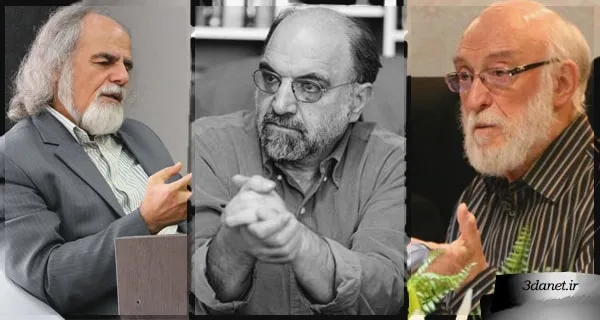
The birthday of Dr. Mohammad Mojtahed Shabestari is a fitting occasion to remember and acknowledge a lifetime of blessed intellectual endeavor by this esteemed and rare teacher. Just as our material life depends, among other things, on the heartbeat and the continuity of inhalation and exhalation, our spiritual and intellectual life also depends on the constant flow of spirit, psyche, mind, and thought—a pulse that requires the continual renewal of vital questions and the ever-greater clarification of the scope of fundamental problems. Pioneering thinkers, inventive artists, and steadfast, dynamic wayfarers on the path of knowledge are the central pillar of the continuity of the pulse of spirit, psyche, mind, and thought, not only on an individual scale but also on a social and generational one. In this sense, trailblazing thinkers hold a right to life over society. Mohammad Mojtahed Shabestari is among such thinkers.
The intellectual record of Mohammad Mojtahed Shabestari over the past half-century constitutes a prominent and striking part of the record of unsparing rethinking in religion and uninhibited ijtihad in jurisprudence and its principles in the contemporary Islamic world—a rethinking and ijtihad whose scope spans a vast range from the principles of religion to the principles of jurisprudence and religion-based law, and whose unsparing blade delves deep into the question of the phenomenon of revelation and the encounter between the human and God, as well as into the possibility and impossibility of jurisprudence and its principles in the late modern world. With such a broad scope and such profound depths, the ijtihad that Mojtahed Shabestari represents, and indeed pioneers, has made him an original thinker who has not only expanded the range of conceivable answers to theological questions and issues pertaining to religiosity, but more importantly, has opened new horizons of precise questions and difficult problems before the thoughtful and measured life of Muslimness, philosophical theology, kalam, jurisprudence, and its principles.
All this lofty flight in the sky of thinking about God and swimming in the depths of the sea of religious life is the fruit of his hopeful, measured, and tested experience—the experience of setting out in pursuit of the call of "religious truth" and the "sound of a bell" that still reaches his ear, the same call and melody that, in this age of the freezing of the spirit, the twilight of divine absence, the silence of the heavens, the deafening quiet of the unsheltered desert of existence, and human estrangement in the face of the storm of technology and the clamor of the psychically deformed masses following the garrulous and belligerent prophets of the post-truth era, falls pleasantly on few ears and hearts and promises few horizons of hope.
One of the prominent distinguishing features of Mojtahed Shabestari's research program (and that of a handful like him) compared to other research programs that have undertaken the critique and refinement of Sharia is that he early on recognized a great danger facing a society that had, willingly or unwillingly, come to live under a religion-based government that sought to use the capital of the Shi'a tradition to provide a backing for the exercise of sovereign coercion in the modern era. The monopolistic exercise of force, violence, and coercion, as Max Weber and, following him, many others have elaborated, is a ubiquitous phenomenon and a defining component and constitutive element of national sovereignty in the modern era. Thus, when the reservoir of religious tradition is summoned to justify the legitimacy of sovereignty—that is, the monopolistic exercise of force, violence, and coercion—it seems that responsible thinkers like Mojtahed Shabestari, who saw moral and social good in alignment with the popular movement of revolution and political transformation and whose hearts were also devoted to a capable and humane religiosity, were entirely right to become sensitized with concern about the unbridled power of tradition in justifying the monopolistic violence of sovereignty and to strive to place a rein of innovative ijtihad upon this historically accumulated power, lest tradition become a pretext for justifying coercive violence and discrimination.
Restoring the lost dynamism of jurisprudence was the first answer given to this important concern. But it did not take long for him to realize, with his keen insight, that a jurisprudential answer was not proportionate to the breadth and depth of that concern. The stream that had welled up from his effort to open a path for innovative intra-jurisprudential ijtihads soon became a roaring river, carving out new paths on two broad slopes: one on the slope of religion-based jurisprudence and law, and the other on the slope of encountering God as a phenomenological matter. On the first slope, a path was opened toward recognizing the principled impossibility of religion-based jurisprudence and law in the modern era on the scale of the state and society. The second slope led to a change in his understanding of the logic behind the formation of encounters involving speech and meaning between the human and God—a change in understanding that phenomenologically shifted the axis of this encounter with the divine from God to the person of the Prophet as an active, agentive person. By shifting this axis and pivot, Mujtahid Shabestari, with a phenomenological approach, re-cognized everything available from the encounter between the human and God in the form of prophetic traditions and the central text of Islam as an interpretation of the world formulated through the lens of the Prophet's soul.
Over the past two or three decades, both of these theoretical achievements have been the subject and object of critique and commentary in the course of their formation and emergence, and they will undoubtedly occupy the bright minds of many new thinkers, intellectuals, and researchers of religion, jurisprudence, theology, and philosophical theology for years to come. Critique and questioning are the conditions for intellectual due diligence, and how can one honor the efforts of the proponents of ijtihadi opinions with anything more than critical questioning of their views and works?
Here, solely from the perspective of political theory—which is the author's area of scholarly interest and expertise—I humbly pose, in brief, from among the questions that can be raised from this perspective, only one overarching question regarding this rich intellectual record, a record a large part of which is a reflection of profound thoughts about God and a rethinking of the Quran and religious tradition, and thus, in Hafez's words, is "a mirror reflecting God."
As noted, sensitivity toward political violence and the concern to limit the scope of religious justification for political violence have been among the most important drivers of this intellectual-political program. Alongside this, of course, enabling the continuity of religious life in the late modern world has been a goal whose traces can be seen throughout this program. The strategy of this intellectual and political program, however, was a reformist and epistemological one—that is, pursuing the first goal by way of securing the second. Or, to put it differently, pursuing political and social objectives through the initiation of a kind of Islamic reformism or the reform of the foundations of the Shi‘i jurisprudential and theological tradition. The high frequency of the use of the term “reading of religion” in the works of Mohammad Mojtahed Shabestari is a formal yet clear sign of adopting the path of religious reform as a strategy for change. His declared and explicit aim, and that of some religious intellectuals, has been to offer modern, democratic, human-rights-based, humane, and merciful readings of jurisprudence, sharia, or religion. Thus, it is as if an unexamined presupposition is at play—a long-standing, thick, and axiomatic presupposition latent in the works of Mojtahed Shabestari and some secular or non-secular new thinkers and religious intellectuals, which dictates that religious reform is a necessary (and sufficient) condition for political reform. In other words, it is as if those parts of the Quranic texts, hadith sources, and jurisprudential rulings that have been used by Islamists, inside and outside Iran, to incite and justify political and social violence have been the primary cause of violence by Muslims, such that without these texts, sources, and rulings, such violence would not occur in Muslim-majority societies or would be significantly limited. If this proposition were correct, then of course the nearest path to curbing violence would be the path of religious reform, which assumes a direct line between offering a new reading of religion and curbing political violence, and leads to the purification and refinement of religious sources and texts from these violence-inciting rulings—a reformist path that yields violence-averse readings of sharia, jurisprudence, or religion. But the central question arises precisely from doubt about the validity and credibility of this very presupposition. Is the violence of recent decades in Muslim-majority societies truly a direct function of the existence of Quranic references, hadiths, and rulings that are used to justify violence? On another level, one might ask: does the formation of violent Muslim movements and groups stem from these Muslims’ excessive adherence to the hadith, Quranic, and jurisprudential sources they use to justify their violence? To put it differently, if these verses, hadiths, and rulings did not exist, and these groups could not, by referring to them, justify the violence they commit, would these groups and movements not find other justifications, and in the absence of those justifications, would they desist from violence? The flip side of all these questions is this: if, through a mechanism we do not yet understand, a completely sanitized, violence-averse, democratic, and human-rights-based reading of the entirety of religion, sharia, and jurisprudence were constructed, and if, by some unknown means, it acquired a religious authority on par with traditional and prevalent readings, would such a reading find any purchase in Muslim societies living under current political, economic, and social conditions?
This set of questions is, in fact, various expressions of different facets of a single problem. Is religious reform a necessary condition for monitoring, reducing, and curbing political violence? The author has addressed this question piecemeal in his works of the last five years, but on this occasion, he confines himself to recalling this question in the brilliant mirror of the works and views of the esteemed Professor Mojtahed Shabestari.
I hope his physical health and intellectual and spiritual vitality endure for many, many years to come, and that he, as a model of fair-minded, profound, precise, and compassionate thinking, continues to guide those who are eager.
.
.
Beyond Ijtihad in Principles and Derivatives
Author: Mohammad Mehdi Mojahedi
.
.




Discussion0 comments
No comments yet; let yours be the first voice.