Iranian thinker
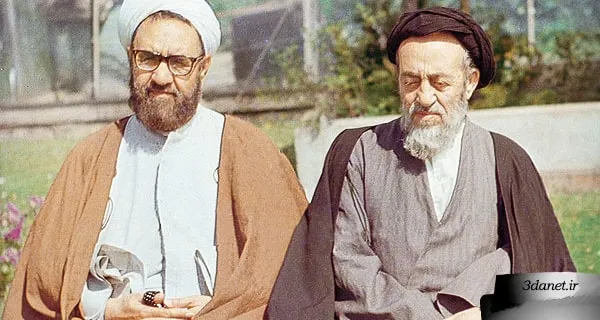
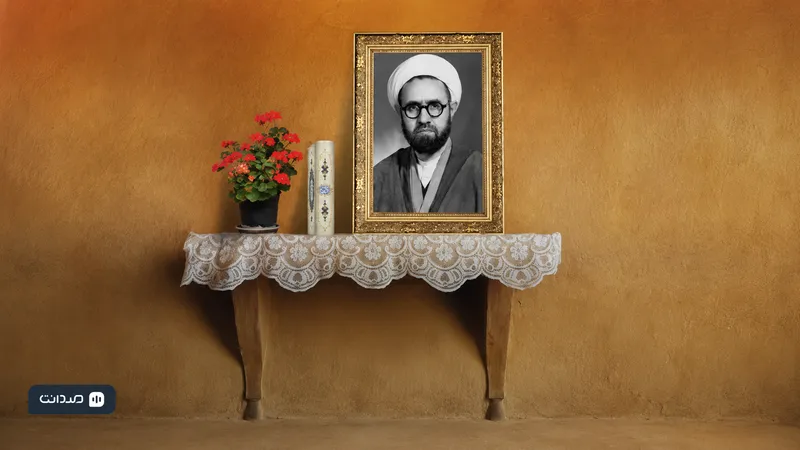
Morteza Motahhari
Morteza MotahhariIslamic Philosophy and TheologyIranian1920–1979
Freedom of thought is different from freedom of belief.


Life and Thought
Morteza Motahhari was one of the influential thinkers, philosophers, and religious scholars of contemporary Iran. Drawing on the tradition of Islamic philosophy, theology, jurisprudence, and exegesis, he sought to explain religious concepts in an educational and systematic language for a new audience.
Morteza Motahhari was born in 1919 in Fariman and, after his preliminary studies, went to the seminaries of Mashhad and then Qom. In Qom, he studied philosophy, jurisprudence, principles of jurisprudence, and exegesis under masters such as Allameh Tabatabai and Ruhollah Khomeini, later becoming one of the most prolific teachers and writers in the field of Islamic thought.
From the 1950s, Motahhari moved to Tehran, where alongside his university and seminary teaching, he devoted himself to writing and lecturing on philosophy, ethics, anthropology, Islamic history, modern theology, and social issues. His works are often written in a clear prose, with an educational structure and a concern for answering the questions of the new generation.
Among his important works are 'The Principles of Philosophy and the Method of Realism' with his commentaries and explanations, 'Divine Justice', 'Man and Destiny', 'The Problem of Cognition', 'Mutual Services of Islam and Iran', 'A Journey Through Nahj al-Balagha', 'Education in Islam', 'Fitrah', 'The Perfect Man', and his collections of lectures on ethics, mysticism, and society.
Motahhari's thought is founded on the bond between reason and religion, the importance of philosophy in understanding faith, the defense of justice, the explanation of human primordial nature (fitrah), the critique of determinism, and attention to ethics and education. Within the tradition of Islamic philosophy, particularly in the continuation of Sadrian Transcendent Theosophy and the philosophical exegesis of Allameh Tabatabai, he holds an important place in transmitting philosophical and religious concepts into contemporary Persian.