Life and Thought
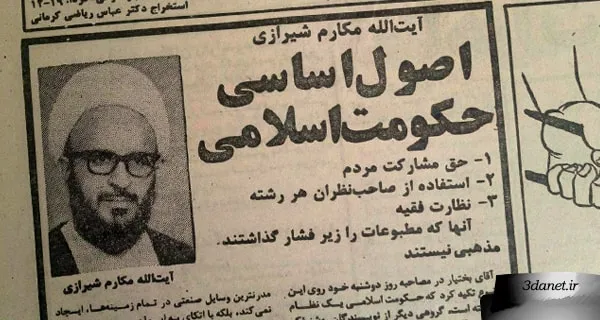
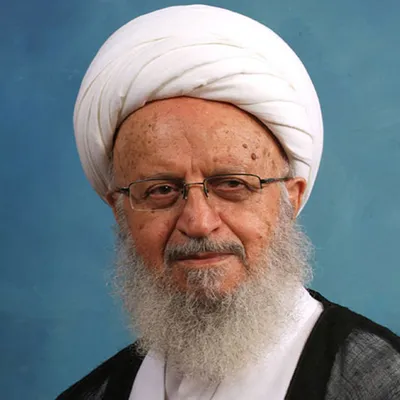
Naser Makarem Shirazi is a Shia source of emulation, a Quranic exegete, and a distinguished professor at the Qom Seminary. Through authoring and supervising numerous works in jurisprudence, exegesis, doctrine, ethics, and responding to religious questions, he is considered one of the influential figures in contemporary religious education in Iran.
Naser Makarem Shirazi was born in 1926 in Shiraz. After his preliminary studies, he entered the Shiraz Seminary and then moved to Qom to continue his education. He attended the classes of prominent seminary professors and began teaching and writing in jurisprudence, principles of jurisprudence, Quranic exegesis, theology, and Islamic studies.
A significant part of his scholarly renown stems from his exegetical and educational activities. The collection 'Tafsir-e Nemuneh' (The Ideal Exegesis), compiled under his supervision with the collaboration of a group of researchers, is one of the most well-known contemporary Persian exegeses of the Quran and, due to its relatively fluent language and educational approach, has found a wide audience among Persian speakers. He has also published numerous works in the fields of discursive jurisprudence, practical rulings, Islamic ethics, and doctrinal topics.
In Makarem Shirazi's works, one can observe an emphasis on the public understanding of the Quran, the connection between religion and ethics, the simplification of doctrinal concepts, responding to doubts, and the systematic teaching of Islamic studies. His position is primarily defined within the Shia jurisprudential and exegetical tradition; a tradition in which Quranic exegesis, jurisprudential inference, and religious education are placed alongside one another.