Life and Thought
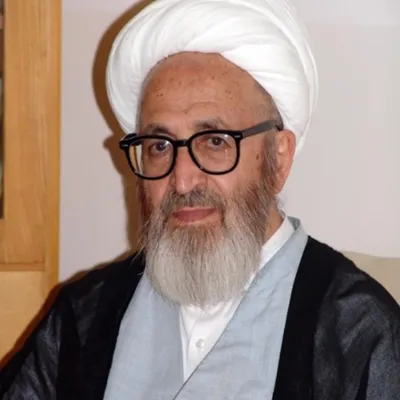
Ja‘far Sobhani is a Shi‘i marja‘ al-taqlid, theologian, and distinguished professor of the Qom seminary. With extensive works in Islamic theology, jurisprudence, legal theory, exegesis, Islamic history, and responses to religious doubts, he is considered one of the most prolific figures in contemporary religious education and scholarship in Iran.
Ja‘far Sobhani was born in 1929 in Tabriz and began his religious studies there. He then moved to the Qom seminary to continue his education, studying jurisprudence, legal theory, philosophy, exegesis, and theology under masters such as Sayyid Husayn Borujerdi, Ruhollah Khomeini, and ‘Allama Tabataba’i. From the mid‑20th century onward, he has been engaged in teaching, research, and writing in the Islamic sciences.
A significant part of Sobhani’s scholarly standing rests on his theological and doctrinal works. In his writings he addresses topics such as divine unity, prophethood, imamate, eschatology, the history of Islamic thought, critiques of theological schools, and the defence of Shi‘i doctrinal foundations. He has also produced numerous works in jurisprudence and legal theory, Qur’anic exegesis, biographical evaluation, Islamic history, and comparative studies among Islamic denominations.
Among his well‑known works are Manshur‑i ‘Aqa’id‑i Imamiyya (The Charter of Imami Beliefs), al‑Ilahiyyat (Divine Theology), Buhuth fi al‑Milal wa al‑Nihal (Studies on Sects and Creeds), Furugh‑i Abadiyyat (The Eternal Light), Kulliyat fi ‘Ilm al‑Rijal (An Overview of the Science of Biographical Evaluation), al‑Mujaz fi Usul al‑Fiqh (A Summary of Legal Theory), and numerous exegetical and theological collections. In many of his Persian works his prose is didactic and explanatory, written for readers who wish to become systematically acquainted with the structure of Islamic and Shi‘i beliefs.
In Ja‘far Sobhani’s scholarly approach, Islamic theology occupies a central place. He seeks to explain doctrinal teachings by drawing on the Qur’an, hadith, reason, and the heritage of Muslim theologians, thereby forging a link between the seminary tradition, public education, and systematic religious research.