Religion
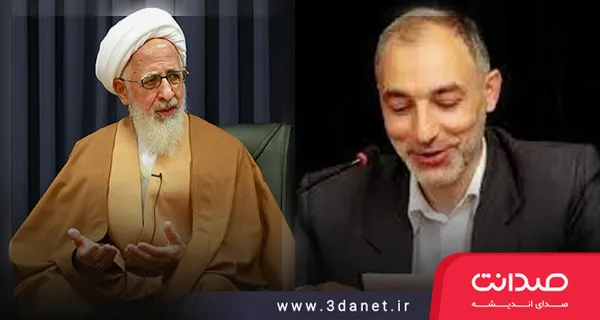
Ayatollah Sobhani's Critique of Mohammad Mojtahed Shabestari's Remarks at the University of Isfahan
Ayatollah Sobhani described Shabestari's remarks as a reflection of Christian and Marxist ideas cloaked in religious intellectualism. He stated that after the collapse of Marxism, the West is employing creeping methods to de-Islamize society.
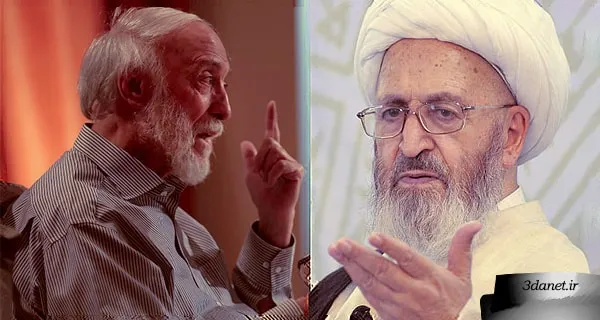
Grand Ayatollah Sobhani, one of the eminent sources of emulation, in response to requests from seminary students, university students, and a group of thinkers to comment on remarks recently made by Mohammad Mojtahed Shabestari at Isfahan University of Technology, has written a piece that his office has provided to the media for publication.
.
Ayatollah Jafar Sobhani's Statements on Mojtahed Shabestari's "Prophetic Reading of the World" Theory and Lecture at the University of Isfahan
Ayatollah Sobhani states in the introduction to his writing: The religion of Islam has invited humanity to reflection and thinking and has considered it one of the signs of firm faith in human beings, where it says:
"... and reflect upon the creation of the heavens and the earth, [and say]: 'Our Lord! You have not created all this in vain!'"
In another verse, it considers the purpose of the Quran's revelation to be contemplation upon its contents and commands, and says:
"This is a blessed Book which We have sent down to you, so that they may contemplate its verses, and that those of understanding may be reminded."
It is stated in Islamic narrations: A moment of reflection is superior to and greater than seventy years of worship. Therefore, religious new-thinking based on contemplation and reflection is what Islam desires, and a Muslim individual must rely on proof and reason in the principles of belief and avoid baseless imitation.
But unfortunately, some individuals, using this beautiful term, insinuate another concept behind it, which is that they blend the thoughts of Westerners, especially Christian theologians, with contemporary literature and attribute it to Islam, saying that we are followers of religious thought, and Islam is in harmony with new-thinking!
* Westerners have planned for 'de-Islamization' since after Marxism
Ayatollah Sobhani then addresses the roots of the thought expressed at Isfahan University of Technology, stating: For many years, Westerners have planned for 'de-Islamization,' and the basis of their program is casting doubt on the prophethood of the Prophet of Islam. However, they have learned through experience that explicit and overt doubt-mongering is ineffective, but it can achieve its goal in a creeping manner. Therefore, they have preferred the second path over the first, to negate prophethood and Islam in a creeping way, especially since their new theorists have learned lessons from the collapse of Marxism. The reason Marxism collapsed was that it had an explicit and head-on confrontation with religion and faith, and for this reason, it proved ineffective in combating religion and religiosity, and so when it collapsed, mosques and churches flourished again.
* The 'Catholic Encyclopedia' is the best source for this kind of new-thinking
The best source for this kind of new-thinking is the 'Catholic Encyclopedia,' which has poured its poisons under the entry 'Islam' and has written at length on this matter as much as it could, and in this scope, contrary to its general policy, it has explicitly attacked the Prophet and the Quran. One of its interpretations of Islam is that it says: Muhammad did not receive revelation from God; rather, the Quran is his own fabrication, and through the Quran, he conveyed the thoughts he had arrived at during his life. This encyclopedia was published in 1967 and reprinted in 2002.
The authors of the Catholic Encyclopedia, as their name indicates, are Catholic Christians, and therefore they have explicitly denied the Muhammadan revelation and considered it his own fabrication.
* This new-thinker attended Christian theology classes at night in Germany
This source of emulation has specified: Certainly, an individual who grew up in an Islamic environment, in a university whose students are Muslims and the inviting party is the Islamic Association, cannot present the issue in a naked form and with a Catholic expression. He is compelled to present this imported thought under the title of religious new-thinking with a different expression and say:
"The Quran is the Prophet's interpretation of existence, the Prophet's monotheistic interpretation of existence with divine assistance..."
Now the question arises: what is the difference between the statements of this religious intellectual—who considers himself a Muslim and a follower of the Prophet—and what the Catholic Encyclopedia thinks about Muhammad's revelation?
Is it anything other than that this intellectual, during his stay in Germany, attended Christian theology classes at night and was influenced by them?
Is there the slightest difference between the two? The only difference is that the former says, "I am a Christian. I do not accept the religion of Muhammad (PBUH), and therefore I say: the Quran is his own fabrication," whereas this religious intellectual, in the guise of Islam and being a Muslim, reiterates that same imported idea with this phrasing.
* In parts of his remarks, Shabestari has presented the Marxist theory
Ayatollah Sobhani has pointed out: More than that, he has not only reiterated the Catholic theory about the Prophet, but in parts of his remarks, he has reflected the Marxist theory about all religions and the phenomenon of revelation, which holds that: religion is fundamentally a human construct and has no metaphysical aspect. (And the books of Arani and his followers are filled with such statements.)
A portion of this intellectual's words refers to this belief, where he says: "Therefore, religion begins with the human being, philosophy begins with the human being, science begins with the human being, art begins with the human being. Therefore, I do not see a correct meaning for this interpretation that religion is transcendental ... because I fundamentally consider religion and religiosity to be the work of the human being himself."
Is repeating the words of Marxists (which they themselves have now abandoned and no longer believe in) considered intellectual renewal or blind imitation?! And that too, imitation of theories whose falsehood has been proven in practice and experience, and which have been discarded by the civilized world due to the advancement of science!!
It is astonishing that this religious intellectual, at the end of his speech, criticizes the uncritical following of others' thoughts and says: "I say this in a friendly manner, that when a person wants to be a thinker, to be a person of reason, to seek guidance from some, blind imitation is wrong... blind imitation is not the right thing to do..."
Is uncritical following of Catholic Christians, and worse, of Marxist ideas, befitting a Muslim intellectual?
* "Modernity" as a pretext for suppressing religious thoughts
Ayatollah Sobhani, continuing and in response to another part of the doubts raised by Mojtahed Shabestari, has stated: There is no doubt that human beings have constantly revised their way of life, and their individual and social life has continually evolved. What a difference between living in mud houses and living in skyscrapers? What a difference between using the polluted water of open streams and using hygienic tap water? What a difference between the individualistic and despotic governments of the past and today's popular governments and parliamentary systems? These new phenomena are a requirement of human evolution, and humanity has never stopped at the first step; the life of the people in Noah's time was very different from the life of the Christian Romans.
Islam also supports this type of evolution in life, to the extent that regarding strengthening defensive capability, it reminds: (وَأَعِدُّوا لَهُمْ مَا اسْتَطَعْتُمْ مِنْ قُوَّةٍ) "Prepare against them whatever force you are able to muster."
He continued: In light of Islam's call to knowledge and science, and contemplation on the heavens and the earth, Muslims, step by step, conquered the peaks of science and created a new civilizational circle. In this regard, it suffices to look at the history of sciences, particularly the book "The Legacy of Islam," written by twenty Western scholars about the services of Muslims to the world of science and knowledge and the advancement of civilization, which testifies to this meaning.
Ayatollah Sobhani has clarified: "Modernity," meaning adapting life based on new data in social, political, individual, and health matters, is not a subject of debate. However, one must understand the proper place of modernity. In matters related to the world of creation and the laws governing it, there is no place for modernity, because the laws governing the universe are constant and enduring. The Pythagorean multiplication table has maintained its rule for thousands of years, and chemical laws like Archimedes' principle and other sciences, where they have definitive results, have no place for modernity.
He added: In religious matters, one must distinguish between fixed and variable affairs. Variable matters are the garments of fixed matters, which change according to the times, but the core and root are constant and enduring. Therefore, the issues of preserving justice, fulfilling covenants or repaying kindness with kindness, patience and perseverance on the path to one's goal, preserving human dignity, and dozens of doctrinal and ethical principles are among the fixed principles of Islam, which never undergo transformation and are not subject to modernity.
However, the garment of these principles, for instance, the methods of expanding justice in society, is subject to change. If Muslims have accepted parliament, it is because parliament is a tool for expanding justice, and if they have drafted a constitution for the country, it is so that the parliament, which strives for the executive planning of fundamental laws, does not violate its principles.
Therefore, the issue of "modernity" must not become a pretext for suppressing religious thoughts that originate from divine revelation and are rooted in creation, genesis, and human innate nature.
* Unreasoned revision in doctrinal and philosophical matters is childish
Ayatollah Sobhani has pointed out: This type of thinking is completely childish: because we use modern tools and instruments in our daily lives, we must therefore revise our doctrinal and philosophical matters every day and, without reason or necessity, discard them and accept new, imported foundations.
If this religious intellectual had separated fixed principles from variable ones, he would never have extended modernity to everything.
* Shabestari has been influenced by the writings of Marxists
He added: Marxists consider the reality of religion to be something fabricated by priests and sorcerers, and they write at length about spell-writing and how people, when ill, take refuge with spell-writers to be saved from the jinn and fairies that have caused their illness, portraying religion as a superstitious matter.
In another part of his writing, Ayatollah Sobhani states: This religious intellectual has been influenced by the writings of Western Marxists, and this idea has taken root in his mind that the people of yesterday sought everything from religion and prayer, while in today's life, they seek everything from science and philosophy!
* This religious intellectual has portrayed the people of Tabriz 60 years ago as superstitious and backward
Ayatollah Sobhani continues:
And regarding the life of the people of Tabriz sixty years ago, he says: "I remember that 60 years ago, in the neighborhood where we lived in Tabriz, across the alley there were two houses that had a platform where the homeowner was a spell-writer. This spell-writer's house was very crowded; I was also taken there once for them to write a prayer for me... A long time later, I went back to Tabriz; there was no news of those spell-writers or those houses. Tall buildings have been constructed, and as many doctors' offices as one could want have been added. We now say that a hundred years ago, people's religion was not like this; it was recourse to spell-writers. They solved their problems through those means... Those same devout people no longer have this expectation from religious incantations and supplications to cure their illness; they go to the doctor. That is, the expectations from religion are diminishing; it is a subtle point."
In this regard, we note that this religious intellectual has shown ingratitude and portrayed the brave and enlightened people of Tabriz, who were the founders of the Constitutional Revolution 106 years ago, as being this superstitious and backward, as if they, like the primitive tribes of early human history, always took refuge in prayer and talismans instead of using science and knowledge. In the very vicinity where this intellectual lived, there were several skilled physicians who were authorities in medicine:
- The late Faylasuf al-Dawla, who studied in France and is the author of the book "The Lives of the World's Physicians," one volume of which has been published up to the letter S.
- The late Mirza Kazem, known as Tabib (the Physician)
- Dr. Mohammad-Ali Mojir Mowlavi, a high-ranking surgeon
- Dr. Safizadeh, the founder of ophthalmology in Azerbaijan
And in the city there were great physicians, each with their own name and reputation, such as the late Dr. Hossein Ordoubadi, a specialist in internal medicine, Dr. Razi Eslami, and dozens of other doctors who had their own practices and ran hospitals.
How far it is from human dignity for a person to so disparage a great nation!
The teachings of Islam indicate that the physician and medicine are among the pillars of society. Imam Sadiq (AS) states: No country is without need of three things in the affairs of this world and the hereafter, and if these three are absent, their life will be ruined:
- A jurist, scholar, and pious person
- A just ruler and commander whom the people obey
- A knowledgeable and honest physician.
* Modernity must take place in the light of revelation
The issue of humanity's expectation from religion does not mean that humanity wants everything from religion; rather, it means that in the fundamental matters of life where revelation has remained silent and left them to humanity itself, one should learn the method and approach from religion, and move in its light, and also seek new thinking and modernity in its light and with its guidance.
The services of Islam to the world of medicine throughout the centuries are clear to researchers. In Baghdad alone, according to the writings of Jurji Zaydan, in the fourth century [AH], there were four hundred licensed midwives.
Turning to a physician does not mean that a person should not stretch out their hands to the Divine Court and seek healing from Him, for supplication is also sometimes among the means of healing.
* This religious new thinker has denied the infallibility of the prophets
Ayatollah Sobhani continues: One of the innovative ideas of this religious new thinker is that he has questioned, indeed denied, the infallibility of the prophets, and in this regard, he relies on two things:
- The influence of Christian theology on Islamic culture, in the sense that Christians considered Jesus to be God, and Muslims considered the Prophet to be infallible.
- Verses and narrations in which it appears that the prophets committed sins.
Regarding the first point, we note: Muslims have derived the infallibility of the Prophet from the Quran itself and the judgment of reason. The proofs of infallibility are clearly stated in theological books. Those interested can refer to the book "Manshur-e Javid" (The Eternal Charter), volume 7, pp. 265 to 306.
He continues: Essentially, the issue of infallibility was discussed among theologians in the first centuries of Islamic history. A literalist group cited the superficial, initial appearances of some verses as evidence, while scholars like Sayyid Murtada in his book "Tanzih al-Anbiya" (The Infallibility of the Prophets) and Fakhr al-Din al-Razi in a similar book proved the issue of infallibility from the perspective of reason and tradition, and correctly interpreted the verses that were used as pretexts by the deniers. Unfortunately, this is not the place to recount these matters.
* What this new thinker imagines is the view of the "Hashwiyya," from whom the great Sunni scholars dissociate themselves
Ayatollah Sobhani continues: A scholarly man and new thinker must, on an issue like the infallibility of the prophets, examine the history of the issue from the first centuries until today and weigh the evidence of both sides, and then express an opinion, so as not to fall into the illusion that what he imagines is a new idea!
Moreover, what you are saying is the view of the "Hashwiyya" among the Sunnis, from whom the great Sunni scholars dissociate themselves.
Where is the religious innovation and religious new thinking in this?!
Here, the question arises: This new thinker himself has also considered the Prophet infallible in conveying the message; is his belief in his infallibility in this case not inspired by Christian theology?
It is astonishing that he takes the supplications of the prophets as a sign of their lack of infallibility and says: "Can someone not feel deficiency and darkness within themselves and still offer a true supplication?..."
The worship of the prophets is a sign of their perception of God's majesty and indicates a pure and clear soul that has grasped the greatness of the Truth and worships Him for His absolute perfection. And in the words of the Commander of the Faithful (AS): 'I did not worship You... but I found You worthy of worship,' they found God worthy of worship.
What evidence can this type of worship provide for the issuance of sin and error from them? Should there not be a relationship between the evidence and the claim? Can these two matters be linked?
Did sin and error issue from the prophets because they worshipped God?
* This religious intellectual, on the day of the passing of the Holy Prophet (PBUH), makes not the slightest reference to the station of the prophets
The text continues:
As for what is mentioned in supplications and has been used as a pretext for this speech, explanations have been provided about this since ancient times, and the late Sayyid ibn Tawus has a convincing answer in this regard, a summary of which we present here!
'The prophets are directly connected to the Origin of the universe, and the rays of His infinite knowledge shine upon their hearts. Many truths are revealed to them that are hidden from others. Their knowledge, faith, and piety are at the highest degree. In short, they are so close to God that a single moment of inattention to God is considered a lapse for them.
Therefore, it is no wonder that actions considered permissible or disliked for others are called 'sins' for them. The sins attributed to them in the verses and the sayings of the great religious leaders, or for which they themselves sought forgiveness, are all of this kind. The famous saying, 'The good deeds of the righteous are the sins of those brought near to God' (hasanat al-abrar sayyi'at al-muqarrabin), refers to this truth.
They are always mindful of God, turning towards Him. Whenever they are heedless of this state for a moment and engage in permissible activities such as eating, drinking, or sitting in gatherings of little benefit, they consider this amount of heedlessness a sin and error for themselves and seek forgiveness from God. The Holy Prophet (PBUH) says: 'Verily, a cloud covers my heart, and I seek forgiveness from God seventy times a day.'
It is astonishing that this religious intellectual was invited on the day of the passing of the Holy Prophet (PBUH) to honor the Messenger of God and his services to human society, yet what is absent from this speech is the slightest reference to the stations of the prophets, especially the Prophet of Islam, and particularly his virtues and the values that even Jews, Christians, and materialists have acknowledged about him.
Finally, one must ask this speaker: Throughout all this time you were busy lecturing and took hundreds of hours of the listeners' time, what benefit did the listener gain? Did you elevate his faith? Did you strengthen religion in his heart? Or did your listener gain nothing but doubt and hesitation?!
The title of your speech is 'What Do You Expect from the Prophets?', yet what was not said in this speech is precisely this. Apart from the fact that this title itself is a kind of imported thought, and its correct formulation is: What does religion expect from humanity, or what does God expect from man?
* The errors of this religious intellectual in his recent remarks are more than these
Ayatollah Sobhani has stated:
These are a series of general critiques presented to you, friends; otherwise, the errors interspersed throughout his words are more than can be contained in these pages.
Ayatollah Sobhani concluded by stating: Is it befitting for the son of a high-ranking mujtahid like the late Ayatollah Haj Mirza Kazem Shabestari to, on the day of the passing of the Great Prophet, instead of honoring his services, introduce him as a wrongdoer?!
Should an individual who has a certain connection to the family of the high-ranking mystic, Haj Mirza Javad Agha Maleki Tabrizi, instead of speaking about the mystical conduct of the prophets, call their religion their own personal thought?
Is it right that a person who, from his orphaned and destitute childhood, was taken under the guardianship of grand ayatollahs like Ayatollah Hojjat and others, who showed him affection as much as they could, and who was admitted to the Hojjatiyeh School at a young age, then, under the tutelage of the great scholars of the seminary, rose to the position of manager at the Maktab-e Islam magazine and was given a pen to write with, should now ignore all these kindnesses and rise up in Islamic society as a “religious opposition”? Now who is caught in a paradox?!
.
.
Ayatollah Sobhani's Remarks on Mojtahed Shabestari's “Theory of the Prophetic Reading of the World” and the University of Isfahan Lecture
March 17, 2009 | Fars News Agency
.
.
Related Content:
.
Mojtahed Shabestari's Response to a Question on the Infallibility and Knowledge of the Prophet
.
Ayatollah Sobhani's Critique of Mohammad Mojtahed Shabestari's Remarks at the University of Isfahan
.
Mohammad Mojtahed Shabestari's Response to Ayatollah Sobhani's Critique
.
.

Discussion0 comments
No comments yet; let yours be the first voice.