Religion
Mohammad Mojtahed Shabestari's Response to Ayatollah Sobhani's Critique
In response to Ayatollah Sobhani, Mohammad Mojtahed Shabestari rejects false accusations of Western influence and the denial of revelation, emphasizing that the Quran is the 'product of revelation, not revelation itself'; he considers these charges slanderous and devoid of scholarly critique.
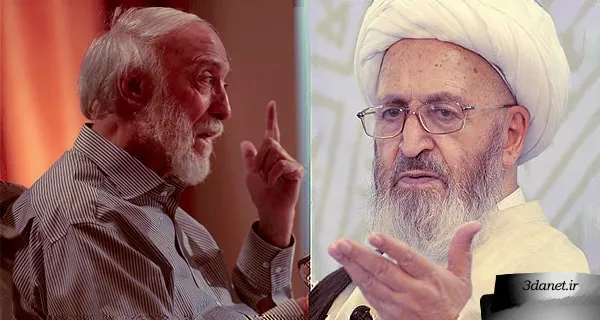
After greetings and salutations, in the final days of 1387 (2009), I read your remarks concerning my lecture at Isfahan University of Technology, which were published with great fanfare and on a very wide scale by state-affiliated news agencies. I was both surprised and saddened by those statements. My surprise stems from seeing a professor of Islamic sciences, who has toiled in these sciences for over sixty years, write with much ado things devoid of any scholarly critique, but which are instead a collection of false claims and accusations. My sadness is because, as your former friend, I do not find such speech befitting you, and I am displeased that you have ultimately resorted to the language of slander and destruction. In those same days, I promised you that I would respond to those remarks after the Nowruz holidays of 1388 (2009). Now I fulfill that promise, not by way of debate or rivalry, but because I consider it my moral duty to clarify the minds of your audience and my own regarding those false claims and accusations.
Mr. Sobhani! After stating that "the religion of Islam has invited mankind to reflection and thinking, and has considered it one of the signs of firm faith in human beings," you have, as usual, taken a detour to the misdeeds of Westerners and written: "For many years, Westerners have been planning for 'de-Islamization,' and the basis of their program is casting doubt on the prophethood of the Prophet of Islam. However, through experience, they found that explicit and overt doubt-mongering is not compatible, but it is possible to achieve the goal in a creeping manner. For this reason, they preferred the second path over the first, to negate prophethood and negate Islam in a creeping way." Then you have addressed the new thinking of this writer on religion and written: "The best source for this kind of religious new thinking is the Catholic Encyclopedia, which, under the entry for Islam, has poured its 'poisons' and written whatever it could on this matter, and in this expanse, contrary to its general policy, has explicitly attacked the Prophet and the Quran. One of its interpretations of Islam is that it says Muhammad did not receive revelation from God; rather, the Quran is his own fabrication, and through the Quran, he conveyed the thoughts he had arrived at during his life." Then, referring to this writer, you have said: "Certainly, an individual who grew up in an Islamic environment, in a university whose students are Muslims, and where the inviter is also the Islamic Association, cannot present the matter in a naked, Catholic formulation. He is compelled to present this imported idea under the title of new thinking with a different expression and say: 'The Quran is the Prophet's interpretation of existence, the monotheistic interpretation of the Prophet with divine aid from existence...'
Now the question is asked: what is the difference between the statement of this religious new thinker, who considers himself a Muslim and a follower of the Prophet, and what the Catholic Encyclopedia thinks about Muhammadan revelation? Is there the slightest difference between the two? Except with this difference: that he says, 'I am a Christian, I do not accept the Muhammadan religion, and for this reason, I say the Quran is his own fabrication,' but this religious new thinker, in the guise of Islam and being a Muslim, recounts that same imported idea with this phrasing."
Mr. Sobhani! Firstly, the questioning of the prophethood of the Prophet of Islam by Christians is not specific to recent years, decades, or even centuries. From the very beginning of the encounter between Muslims and Christians in Medina, then in the ancient Levant, thereafter in Baghdad, and subsequently in many other parts of the world, such questionings have taken place, and Muslim theologians have written numerous books in response to them. Such questionings in the encounter and confrontation of religions with one another are a completely natural phenomenon. Secondly, you have in no way demonstrated on the basis of which reliable evidence you claim that Westerners have been planning for “de-Islamization” for many long years; whom do you mean by Westerners, which individuals, which institutions, or which governments? What are the generalities and details of these plans? What, in fact, do you mean by “de-Islamization”? How can Islam be erased? Thirdly, you say that the Catholic Encyclopedia, because in its entry on Islam it introduced the Quran as the product of the Prophet’s thoughts, has thereby poured its “poisons.” If a Christian researcher in a Christian encyclopedia writes his views about Islam, the Quran, and the Prophet for his readers, is he “pouring poisons”? Do you, as a theologian, expect a Christian, like you and me, to attribute the religion of Islam to revelation in his encyclopedia and consider the Quran a book of revelation, and if he does not do so, he is pouring poisons? Fourthly, did you not say at the beginning of your remarks that Islam invites human beings to reflection and warns against imitation? If you truly believe in this matter, why, when a Christian researcher expresses the result of his reflection and research about Islam, do you call it pouring poisons?! Fifthly, and most importantly, let us assume, as you say, that Westerners have planned for de-Islamization; what scientific, ethical, or religious objective are you pursuing by linking my views and my lecture at Isfahan University of Technology to those plans?! It is quite clear that these irrelevant connections hold no value in the eyes of discerning people and are in no way acceptable. But you, whose thoughts are directed at the common people, apparently wish, by inciting those very people who, for political purposes, have fabricated the myth of Western de-Islamization, to insinuate to the common people that the author of these lines, after fifty-five years of studying and researching Islam and expounding upon it, has become an agent of Western de-Islamization! What can this insinuation be called but slander, defamation of a believer, misleading the audience, and ultimately “disobedience to God”?! I have the right to file a complaint against you with the judicial authorities. If some illiterate and violence-mongering preachers weave together unrelated things in their speeches in order, as usual, to push effective thoughts and opinions off the stage with the weapon of the “Western cultural onslaught,” they are doing something befitting their nature!! But such actions are not befitting a religious scholar and a veteran professor of Islamic sciences. Sixthly, you have written that what Shabestari says is the same as what is found in the Catholic Encyclopedia, and you have said that he also says the Quran is entirely the fabrication of the Prophet himself, and that the Prophet brought in the Quran the thoughts he had arrived at throughout his life.
 If you disagree with me about the meaning and concept of revelation, why do you resort to these unethical methods to refute my views? I have expounded my philosophical-linguistic, hermeneutic, and literary foundations regarding this theory—that the Quran is the product of revelation and not revelation itself—in the seven-part series of articles “A Prophetic Reading of the World,” all of which are available, and I will continue to expound upon them...The correct and useful method is to refer to those articles and critique them scientifically, not to ignore or feign ignorance of those serious discussions, or to distort them, and to turn to persuading and inciting the common people. If you disagree with me about the meaning and concept of revelation, why do you resort to these unethical methods to refute my views? I have expounded my philosophical-linguistic, hermeneutic, and literary foundations regarding this theory—that the Quran is the product of revelation and not revelation itself—in the seven-part series of articles “A Prophetic Reading of the World,” all of which are available, and I will continue to expound upon them...The correct and useful method is to refer to those articles and critique them scientifically, not to ignore or feign ignorance of those serious discussions, or to distort them, and to turn to persuading and inciting the common people.  |
I must tell you, Your Eminence, that those very Western scholars you attack at least possess the virtue that when they critique the views of others, they first read almost all of their works carefully so as not to misrepresent them, and in their critique, they do not attack a straw man and remain faithful to the truth. Why do you not adorn yourself with this virtue, and instead, relying solely on what is at hand, first misrepresent someone and then proceed to destroy them?! This writer first published the theory of the “Prophetic Reading of the World” as a detailed article in the spring of 1386 (2007) in the quarterly Madreseh, and subsequently wrote six more articles explaining it, which, due to press censorship, were only published on the internet. It would have been good if you had taken a look at those articles to first ascertain what this writer actually says, or if you have read them and are quoting from them, it would have been good if you had observed integrity and accurately quoted what this writer has stated in those articles about revelation and the Quran, and then attacked him and said this is the same as the Christians’ claim. Here, I will quote short excerpts from the articles “Prophetic Reading of the World” (1) and (2) for the readers so that it becomes clear to what extent the attribution you have made to this writer is contrary to fact:
“So what was the claim of Prophet Muhammad (PBUH) that his opponents did not accept? His claim was that he was a special human being who, according to his experience, God had chosen, raised up, and enabled him through ‘revelation’ to speak in this manner (recite the Quran). This enabling to speak is termed waḥy (revelation) in Quranic terminology. From the totality of the Quranic verses, it is understood that the Quran is the product of revelation, not revelation itself. In the Quran, revelation is the very indication and prompting that is an act of God... From the Quran’s perspective, revelation is God’s speaking with the Prophet of Islam, which caused the Prophet’s mission and his speaking, i.e., reciting the verses of the Quran... We might imagine that God’s speaking with the Prophet of Islam through revelation was a kind of divine teaching or a special linguistic communication... and for this very reason, we cannot form a conception of the reality of that speaking (revelation).” “It can be said that it is understood from the Quran that revelation was the cause of the Prophet’s speech in the Muṣḥaf, or that the Muṣḥaf contains the Word of God, or that the Muṣḥaf is the product of revelation, and similar expressions. But it cannot be said that the Muṣḥaf is the very Word of God itself. According to the Quran, the Prophet (PBUH) experienced that it is God who enables him in a ‘special way’ to experience the entire world as ‘God’s signs and to read it in a monotheistic manner.’”
Mr. Sobhani! I ask you, in light of these repeated explicit statements that have been observed, how could you attribute to me that I say the Quran is the fabrication and creation of the Prophet himself and his own views? How could you say that I am pouring the doubts of Christians down the throats of Muslims under the guise of Islam and being a Muslim?! If you have read these explicit statements and yet made that attribution to me, you have committed slander; and if you have not read them and made the attribution, you have leveled a false accusation against me. If you disagree with me about the meaning and concept of revelation, why do you resort to such unethical methods to refute my views? I have set forth my philosophical-linguistic, hermeneutic, and literary foundations regarding this theory—that the Quran is the product of revelation, not revelation itself—in the seven articles on the “Prophetic Reading of the World,” all of which are accessible, and I will continue to do so. There, I have shown for what reason I say that in a common understanding, the Noble Muṣḥaf cannot be understood as the “very Word of God itself” (I am speaking of how the Muṣḥaf is understood by everyone, and not of whether the Prophet actually heard the phrases of the Muṣḥaf from God or not. These two matters are completely separate). And I have shown how I say the text of the Muṣḥaf is a prophetic reading of the world. The correct and useful method is to refer to those articles and critique them scientifically, not to ignore or feign ignorance of those serious discussions, or to distort them, and resort to persuading and inciting the common people. This humble person has repeatedly said and written that I welcome sincere scholarly critiques, learn from them, and am grateful to the critics.
2. In reinforcing that misrepresentation and in a state of wonderment, you have made an astonishing and novel! conjecture and written:
“Except that this new thinker, during his stay in Germany, attended Christian classes at night and was influenced by them?”
Mr. Sobhani: During my years of residence in Germany, although I did not attend Christian classes by night or by day! I did have the good fortune, after learning the German language, to devote all my effort to becoming acquainted with modern Western philosophy and Christian theology and to gather some provisions in this regard. Today I am very pleased and satisfied with that acquaintance. This acquaintance saved me from remaining in the whirlpool of imitation and enmity with reason and thought, from sacrificing life-giving spiritual and religious experiences at the altar of superficialities and demagogic appearances, from exploiting the religious feelings and emotions of society for immoral political ends, from theorizing violence in the name of religion, and from servitude to the masses instead of servitude to God. Although I spent 18 years in the seminary of Qom accumulating Islamic knowledge, I was only able to evaluate it properly when I gained those new acquaintances. Today I understand the Islamic sciences and my religion and creed far better than in the past. The difference between the likes of me and you is that you consider the conventional Islamic sciences of the seminary to be eternal truths to which 'falsehood cannot come from before it or from behind it,' and for this reason you belittle modern philosophy and science, you do not consider knowledge of other religions necessary for understanding Islam and not merely for refuting those religions, you do not tolerate a critical approach to the foundations of those sciences, you deem every new word to be the casting of doubt or heresy, you call for new thinking in the light of revelation but refrain from philosophical discussion about how the Noble Scripture (the Quran) is understood and consider that to be reprehensible interpretation by opinion, and, in a word, you do not want to set aside theological and jurisprudential dogmatism and become a person of true inquiry. Because you have directed your thought only to the limited circle of traditional believers and the faithful, and above all to the common people, you do not know how the educated, young Muslim generation of the present age—especially in Iran—has fallen severely into nihilism. You do not know that the traditional answers of religious scholars and their actions no longer bear any relation to the questions of today's generation, and that this generation hears no spiritual message from those answers and those actions. And regarding social and political issues, what place is better than a corner of comfort?!
The effort of this writer to introduce philosophical hermeneutics (Hermeneutik) and new philosophies of language into scholarly-religious circles is among the fruits of those very acquaintances of which I am pleased. Know that in the present age, no researcher or interpreter of religious texts can carry out valuable scholarly work without sufficient knowledge of these disciplines. The new philosophical hermeneutics, in its broad sense, which has appeared in the world of philosophy for nearly three centuries, examines the problem of 'understanding,' analyzes the non-empirical preconditions of understanding in a philosophical manner, and ultimately arrives at the understanding of 'human being,' the 're-understanding of tradition,' 'living in the world of the text,' and the like. The new philosophies of language are also inseparable from these discussions. These fateful philosophical discussions have not yet properly found their way into the Islamic seminaries. With the exception of a very small number, it is still imagined there that the discussions of words in the science of legal theory (usul al-fiqh), the authority of apparent meanings, and the like suffice for understanding the Book and the Tradition, interpreting them, and providing a reasoned defense of that understanding and interpretation, and for establishing that understanding and interpretation upon a firm philosophical theory in this regard. Everyone says we understand such and such, but no one asks philosophically what understanding itself is. Writing exegesis for the common people is different from the kind of exegesis that can be defended with scholarly standards in the academic circles of the world and be given credibility. If you do not accept this statement, participate in a few international scholarly (and not political or doctrinal) gatherings so that it becomes clear to you to what extent the standards and methods current in the seminary are ineffective for competing on the scholarly stages of today's world.
Unfortunately, you take these philosophical discussions so lightly that, by citing two or three second-hand Persian books, you write a refutation against hermeneutics in your own hand in the Journal of Islamic Kalam! It is because of this very simplistic thinking that you have remained oblivious to the meaning of the word interpretation in the theory of the 'Prophetic Reading of the World' and have imagined that what I mean by interpretation there is the employment of a series of rational premises for understanding the world, and have concluded that if prophethood is this, then where does revelation go?!
The author of these lines has stated in several places in the article
“I never use the expression that religion is something that has come from somewhere else… What we call religion, that is, the spiritual wayfaring of the human being… A human being performs an act which is scientific, performs an act which is philosophical, performs another act which is artistic, and performs yet another act which is religious. In that religious act, one tries to go beyond daily life and perceive a depth and, so to speak, open up one’s inner spiritual horizon more. Whoever engages in this has religion. It is stated in the Qur’an: ‘Indeed, the religion in the sight of God is Islam’… The meaning of Islam is submission, and submission is an act of the human being, meaning that the human being does not resist the will of God, from which this universe comes into being… In this absolute activity of God in existence and these manifestations of God that show themselves from every corner, we (the religious) do not show negative resistance; we harmonize with it and move forward with it, which is also the meaning of ‘Indeed we belong to God and indeed to Him we return’… Therefore, religion also begins from the human being… Of course, throughout history, individuals have come and guided the human being on the path of religiosity… God has guided people to religiosity… through the prophets, saying: be religious, walk this path, undertake this spiritual wayfaring… Therefore, I see no correct meaning for the characterization of religion as ‘supernatural.’”
Mr. Sobhani! Are these words I have quoted the theory of the Marxists? Do Marxists speak of the spiritual wayfaring of the human being (toward God), the absolute activity of God and His manifestations in existence, of “Indeed we belong to God and indeed to Him we return,” and the guidance of the human being by the prophets?!! Is what I have said not another expression of the content of the verse “So direct your face toward the religion, inclining to truth, [adhering to] the fitrah of God upon which He has created mankind” (Qur’an) and “[…] that He might make them fulfill the covenant of His fitrah and remind them of the forgotten instance of His grace” (Nahj al-Balaghah)?! If you have a difference of opinion with the author of these words regarding the definition of religion, why do you deny obvious facts in order to discredit his view and say that this view is the same as what the Marxists say? In addition to this, it is important to remind you that Marxists consider religion to be a reflection of the “economic base” of society in its “cultural superstructure,” and this matter is entirely different from saying that priests and sorcerers fabricated religion.
4. In order to caution me against misunderstanding modernity and confusing constants with variables, you have also undertaken to define modernity and have written as follows:
“There is no dispute that ‘modernity’ means adapting life based on new data in social, political, individual, and health-related matters. However, one must grasp the proper place of modernity. In matters concerning the universe and the laws governing it, there is no place for modernity, because the laws governing the cosmos are fixed and enduring. The Pythagorean multiplication table has maintained its rule for thousands of years, and in the laws of chemistry, such as Archimedes’ principle, and other sciences where results are definitive, there is no place for modernity. In religious matters, one must distinguish between constant and variable affairs. Variable matters are the garments of constant matters, where the garment changes according to the times, but the core and root remain fixed and enduring. Hence, matters such as upholding justice, fulfilling covenants, rewarding good with good, patience and steadfastness on the path of one’s goal, preserving human dignity, and dozens of doctrinal and ethical principles are among the constant principles of Islam, which have never undergone change and are not subject to modernity.
However, the garment of these principles, for example, the methods of extending justice in society, is subject to change. If Muslims have accepted parliament, it is because parliament is a tool for extending justice, and if they have drafted a constitution for the country, it is so that the parliament, which strives for the executive planning of fundamental laws, does not deviate from its principles.”
I do not know where you have gotten this definition of modernity. Modernity is not such a simple phenomenon that anyone can offer a handy definition of it. If you glance at books on philosophy and sociology, you will see how much profound philosophical and scientific effort the champions of these two disciplines have shown in defining this fundamental transformation that has occurred in human life, how cautiously they have spoken, and at the same time, how much their views on defining modernity have diverged. There is no room here to delve into those views, and I will only remind you that, quite contrary to you, who have limited the realm of modernity to social, political, and individual issues, researchers have considered the most important component of modernity to be its “epistemic” component. The foundation of modernity is that modern man tries to justify knowledge solely with knowledge, and in doing so, does not rely on anything outside of knowledge, to which he has no access. This important component has shaken what you have considered eternal certainties. The era of modernity is the era of moving away from certainty and assurance and becoming steeped in doubts. The very social and political issues you have pointed to today rest upon new philosophies and sciences, and the past certainties in this regard have collapsed.
The author of these lines has not, in the Isfahan lecture or elsewhere, denied the validity of first-order principles of ethics or the generalities of beliefs, for you to need to remind him of the necessity of commitment to this validity. Apparently, you hold a single, fixed meaning and definition for justice and consider changes to be only in the methods of expanding justice. But the history of the philosophy of law, ethics, and politics clearly shows that justice has not had a single, fixed meaning and definition. One can count at least ten major and fundamental definitions of justice, each reflecting the view of a number of philosophers. The author of these lines does not hold a fixed definition for justice, and whenever he has spoken of justice in his sayings and writings, he has clearly stated what he means by the commitment of Muslims to justice. I have explicitly stated that in the present age, Muslims must themselves provide a rational, acceptable, and defensible definition of justice and base their political, economic, and social organization upon it. I have said that such a definition ultimately leads to the acceptance of “human rights” as the basis of political, economic, and social organization.
The author of these lines, as a Muslim, can offer such a view because he interprets the social secondary rulings of the Qur’an and Sunnah “historically” and not jurisprudentially. Historical interpretation means that by referring to the Qur’an, the Sunnah, and the social history of the Hijaz during the era of the Prophet (PBUH), he seeks that “ethical meaning and role” which those social rulings held within their specific socio-historical context. The writer of these lines believes that those ethical meanings and roles represent a set of general orientations in the path of human ethical life, and what a Muslim must commit to in his social and individual life is observing those ethical orientations, not the form of those secondary rulings (I have explained this matter in various articles, including in the final section of the article “A Prophetic Reading of the World (1),” with reference to Qur’anic verses and without ambiguity). The author of these lines is fully aware that the historical interpretation of verses and narrations related to social secondary rulings is entirely different from their conventional jurisprudential interpretation, which became established among Muslims from the mid-second century AH and gave rise to a vast portion of the “science of jurisprudence.” However, not only does he harbor no fear of changing the method from jurisprudential to historical interpretation in the present age, but, out of commitment to the inner ethical logic of the Qur’an and Sunnah, he deems this change necessary in the present age. The method of jurisprudential interpretation did not descend from the heavens so that it cannot be set aside; it was a method that Muslims adopted or invented and lived with, for better or worse, for centuries. In the present age, not only is there no convincing reason to preserve it in social and political matters, but there are clear reasons for the necessity of setting it aside.
Mr. Sobhani! But you, who do not abandon jurisprudential textualism, and consider secondary jurisprudential rulings so eternal that you cannot even tolerate the adjustment of women's inheritance from their husbands regarding the land and the building by the Islamic Consultative Assembly, would do well to explain what you mean by parliamentary methods of expanding justice in the present era and the like. In your view, justice has a fixed and unchangeable meaning and only the methods of its expansion change; please state from where and with what reasoning you have obtained this fixed meaning, and how do you reconcile parliament—which finds no proper meaning except on the basis of human sovereignty over the regulation of its own social life—with jurisprudential textualism and commitment to the eternity of rulings related to social life, without falling into logical incoherence?
| The author of these lines, as a Muslim, can hold such a view because he interprets the social secondary rulings of the Qur'an and the Sunnah "historically" and not jurisprudentially. Historical interpretation means that by referring to the Qur'an, the Sunnah, and the social history of the Hijaz during the era of the Prophet (PBUH), he seeks that "ethical meaning and role" which those social rulings held within their specific socio-historical context. |
5. You have finally addressed the controversial issue of infallibility and written:
"One of the innovative thoughts of this religious intellectual is that he has questioned, and indeed denied, the infallibility of the prophets... A scholarly man and intellectual must, on an issue like the infallibility of the prophets, examine the history of the issue from the early centuries to the present day and weigh the arguments of both sides against each other, and then express an opinion, so as not to fall into the delusion that what he thinks is a new idea. Besides, what you (the author of these lines) are saying is the view of the 'Hashwiyya,' from whom the great Sunni scholars dissociate themselves."
There is no doubt that your emphasis on the history of the emergence of theological issues is entirely correct, but I ask you not to limit the matter of historicity to theological issues. The theological beliefs of Muslims also have a history of emergence and evolution, and precisely for this reason, the formulated religious Islamic beliefs also have a history of emergence and evolution. Regarding infallibility, not only the theological issue of infallibility but also the religious belief in infallibility has a history of emergence and evolution. And it is based on various kinds of conflicting interpretations of the Qur'an and hadiths, or conflicting rational arguments, and this matter is undeniable. After this reminder, I ask you to pay attention to the text of what was said in the Isfahan lecture concerning infallibility and sin:
"What is certain, and is derived from the Qur'an and from the statements of the Prophet himself, is that the Prophet possessed infallibility in that primary duty he was charged with. In the sense that his duty was to call to the One God, and he never deviated from calling to the One God. If you examine the entire Qur'an, you will not find a single instance where the Prophet deviated from this principle, meaning that he called to a life other than for God and non-monotheistic. But what a meaning beyond this in infallibility is... The issue of whether he committed sins or not is a matter of dispute among Muslim scholars. There were some who said yes, it was possible for a sin to occur from the Prophet as well. This issue has always been a disputed matter throughout history, and if, hypothetically, a sin did occur, it would not have harmed that primary duty of calling."
You have written that only the "Hashwiyya" considered infallibility and sin to be compatible. Greater precision was expected of you on this matter as well. I will quote here only two passages from two famous and authoritative theological books, one from the Shia and one from the Sunni tradition, to make it clear that not only the Hashwiyya but also many prominent Sunni theologians considered infallibility and minor sins to be compatible:
"Theologians have disagreed regarding the infallibility of the Prophet. The Mu'tazila have deemed it permissible for prophets to commit minor sins, either inadvertently, or through interpretation, or on the basis that their abundant rewards compensate for their sins. The Ash'ari and the Hashwiyya have also said that the commission of minor and major sins, with the exception of disbelief and lying, is permissible for prophets. The Imamiyya have said that prophets must be protected from both minor sins and major sins."
Kashf al-Murad fi Sharh Tajrid al-I'tiqad, Allamah al-Hilli, the third issue, from the fourth "Maqsad."
“The majority of Islamic theologians (with the exception of al-Jubbāʾī) have considered the deliberate commission of minor sins by the prophets to be permissible. The Rawāfiḍ (Shiʿite sects) have not considered the commission of any sin, whether major or minor, to be permissible.” Sharḥ al-Mawāqif by al-Jurjānī, Sixth Station, Fifth Objective.
Thus, if the author of these lines, in that lecture, counted the permissibility or impermissibility of the commission of sin by the prophets as a disputed issue among Islamic scholars, he has not spoken incorrectly. What are you objecting to? In another passage of that lecture, there are also statements indicating that the Prophet was engaged in “spiritual struggle with the self,” and a tradition from the Noble Messenger is cited in this regard, and this practice has been counted as one of the virtues of that great personage.
I ask you: is recounting the differences of opinions and beliefs and describing the Prophet’s spiritual struggle with the self a denial of the Prophet’s infallibility? Truly, over what imaginary denial have you and the other gentlemen stirred up such a commotion?!
6. Elsewhere in your writing, you have claimed that because the author of these lines spoke of the prevalence of talisman-writing in Tabriz, he has insulted the people of Tabriz of sixty years ago. You have taken expressions from that lecture out of the context of the full text and made it appear as though I said that the religiosity of the people of Tabriz sixty years ago consisted of nothing but consulting talisman-writers! Or that there were no physicians in Tabriz at that time! Who, upon reading the full text of that lecture, would understand anything other than that Tabriz was mentioned merely as an example and instance, and who can deny that sixty years ago, throughout Iran, people resorted to talisman-writers for the treatment of illnesses far more than they do today, and that with the growth and advancement of medicine in Iran, the prevalence of this practice has diminished? Truly, what are you after with these meaningless and laughable interpretations?! Those aware, freedom-loving people with a distinguished record in politics, whose homeland is Tabriz, themselves understand for what purpose your statements about the people of Tabriz are being made!
7. Regarding the title of my lecture, “Our Expectation of the Prophets,” you have written: “This title is a kind of imported idea, and the correct formulation is: What is the expectation of religion from humanity, or what is God’s expectation of man?” You have objected that I did not speak about the stations and virtues of the prophets and did not seek to strengthen the faith of the listeners.
| I have not risen up against anyone, nor am I a person of rivalry; otherwise, I would have lived differently. But I am committed to the truth, and I express what I recognize as the truth as far as possible, and in practice, I also stand firmly upon it. I defend myself against the attacks that are made against me on this path, and this is my moral duty. |
Firstly, I say to you: attributing expectation to God or to religion is both manifestly incorrect. Expectation is a psychological state in humans and has meaning and concept only in the human world. God is exalted above human attributes, and one cannot attribute expectation to Him and ask what God’s expectation of humanity is. Religion, as I have said, is the spiritual wayfaring of the human being, and one cannot ask what expectation the spiritual wayfaring of the human being has of us. The correct, meaningful question is precisely to say: what can the expectation of the human being be from God, or from their spiritual wayfaring, or from the prophets? Our ancient theologians, by posing the question of why humans should give effect to the call of the prophets and by giving the answer that “warding off probable harm” is rationally obligatory, had implicitly acknowledged the role of the human being’s expectation from God and the Prophet in understanding their speech. Today, too, in the discussions of modern hermeneutics, attention to the very important role of the expectations of the interpreter of a text in understanding that text and the direction of their interpretation is very prominently seen. One who proceeds from the question “What does God expect of man?” falls from the very beginning into the misleading valley of anthropomorphism and becomes afflicted with such an incurable dogmatism that it does not release its grip on them at any stage of interpreting religious texts or personal religiosity.
Secondly, the likes of this writer usually lecture for the purpose of teaching in universities, not for directly strengthening the faith of listeners—which is, of course, a very noble act. We want to raise the level of knowledge and ability of listeners so that they themselves can understand and interpret religious texts and sources, and not remain perpetually under the guardianship of others. Our effort is aimed at eliminating “vulgarity,” not consolidating “vulgarity.” The goal of our endeavor is for faith to be the acquisition of human beings’ own knowledge and experience, and not the product of indoctrination and imitation! Of course, no one denies the value of being spiritually guided.
8. Mr. Sobhani! At the end of your remarks, you said, “Did We not raise you among us as a child, and did you not stay among us for years of your life?” (Quran, 26:18) and asked me not to rise up ungratefully: If this is your problem with me, rest completely assured, for I have not risen up against anyone and am not one for rivalry; otherwise, I would have lived differently. But I am committed to the truth, and I express what I recognize as truth as much as possible, and in practice, I also stand firm upon it. I defend myself against the attacks made against me on this path, and this is my moral duty. I wholeheartedly welcome scholarly critiques, learn from them, and am grateful to the critics. You, too, instead of initiating and spreading fruitless yet populist polemics, should harmonize the level of your discourse with the contemporary world, assist in the cultural growth and elevation of Muslims in the present age, and not insist on keeping people in vulgarity.
After all this, I would like to remind that the main claim of my lecture in Isfahan was that one can be both a Muslim and live with human rights. Would it not have been better if you and the other protesting gentlemen, instead of stirring up controversy over peripheral matters, had addressed the main content of that lecture and spoken about it? Is the discussion of human rights and the defense of freedom, justice, and human dignity so insignificant and trivial in the gentlemen’s view that it must be completely passed over in silence?!
At the end of this letter, I draw your esteemed attention to the following noble verse:
“And do not pursue that of which you have no knowledge. Indeed, the hearing, the sight, and the heart—about all those [one] will be questioned.” (Quran, 17:36)
Mohammad Mojtahed Shabestari
.
.
Mohammad Mojtahed Shabestari's Response to Ayatollah Sobhani's Critique
Farvardin 1388 | Personal Website of Mohammad Mojtahed Shabestari
.
.
Related Content:
.
Mojtahed Shabestari's Response to a Question on the Infallibility and Knowledge of the Prophet
.
Ayatollah Sobhani's Critique of Mohammad Mojtahed Shabestari's Remarks at the University of Isfahan
.
Mohammad Mojtahed Shabestari's Response to Ayatollah Sobhani's Critique
.
.

Discussion12 comments
من از هیتلر و گوبلز گفتم اما می دانستم که مدرنیته از طریق روزولت و چرچیل کاری را که هیتلر نتوانست بکند عملی کرد. strangulationism خفقان و توهین که در فاشیسم-لیبرالیسم وجود دارد خفقان فریبکار خشن و قاتل است. البته شما مدرنیته رو هم نمی شناسید چون نوع رویکرد شما مانند ایلات متحده داعش ساخته اوباما و هیلاری کلینتون و طالبان مبارز با شوروی سابق برای مبارزه با حضور نظامی شوروی قبل از انقلاب است. نشانه های فاشیسم-لیبرالیسم آقای محمد آزادی طلب . نام جعلی که درش تنش و دروغ تمامی کسانی است که مانند گشتاپو و اس اس به کسانی که جرات کنند نسبت به لیبرالیسم، فاشیسم و مدرنیته سخن بگویند حمله می برد و می خواهد صدایش را خفه کنند. .نسبت دادن به مخاطبی که نظر انها را ندارد. سنت و مسلمان از کجای حرف من درآوردید؟ آیا موسیلینی اینگونه بود که اگر نظر او را نداشتی این همه hatred speech تولید می کرد؟ یعنی شما این احساسات را باید نسبت به انسانهای دیگکر آنهم هم وطن خود داشته باشید؟ به جرم این کهنظر شما را ندارند؟ من چه ربطی به روحانیون شما دارم؟ کمی پیش وجدان خود تون خلوت کنید. بخدا این همه تنفر شایسته ایرانی نیست. کی گفته من طرفدار سنتم؟ از کجای حرف من اعتقاد به شیعه در میاد؟لحن سخن شما و نسبت هایی که به من دادید شرم آور است! به همین علت لیبرالیسم و فاشیسم مورد انتقاد هستن. فقط دشمن اینهایی که شما به صرف ذهن paranoid تصور کردید نیستید شما دشمن آزادی و انسانیت هستید.
به بابک : بله مدرنیته اینها هم بود و کسی نمی تواند ادعای بی نقص بودن جهان مدرن و مدرنیته کند اما اگر بنا به ماندن و در جا زدن در سنت و زیست جهان پیشامدرن شما سنت گرایان بود که تاکنون بشریت درگیر برده داری و جنگ های مذهبی و سوزاندن و کشتن مرتدین بود مثل سربریدن معلم فرانسوی توسط جوان مسلمان چچنی به بهانه ی توهین به پیامبر اسلام که این جنایت آن چنان ضربه ای به آبرو و حیثیت مسلمانان زد که روحانیون و نهادهای دینی مثل الازهر در بیانیه ای ضمن محکوم کردن توهین به پیامبر اسلام این عمل را محکوم کرده و اعلام کردند این جنایت ربطی به اسلام ندارد . در صورتی که این اقدام خلاف فقه سنتی نبود و حکم ساب النبی توسط غیرمسلمان در فقه چه شیعه چه سنی قتل و کشته شدن است . در مورد این ماجرای محکومیت قتل معلم فرانسوی توسط علمای مسلمان اتفاقا عدنان فلاحی در کانال تلگرامی خود مطلبی با عنوان " فشار تاریخ حقیقت یا افسانه " دارد . اگر مدرنیته و فشار تاریخی برآمده از آن نبود که ما شاهد دهها برابری این جنایات به اسم دین و حتی فتوای صریح علما در قتل مرتدین و توهین کنندگان بودیم اما فشار تاریخی مدرنیته اگر نتوانسته آن را ریشه کن کند اما تا حد زیادی به عقب رانده است . اگر مدرنیته به قول امثال شما سنت پرستان و ضد تجددگرایان هم چون دکتر حسین نصر این قدر دچار مشکل و شیطانی است و در مقابل سنت بدون ایراد و نقص و یا نقص و ایراد و مشکل کمتری بود و هست و گل و بلبل بود پس چرا اصلا مدرنیته و زیست جهان مدرن در مقابل آن و برای نقد و بازسازی آن پدید آمد ؟
اگر واقعا هرمونتیک فهم صحیح وعمیق از متن و روش درست فهمیدن رارایه می دهدپس چطور متکلمان مسیحی و عالمان غربی تاکنون نتوانسته اند معمای خدا درعین واحد بودن یکی از سه تاست را حل نمایند《قالوا ان الله ثالث ثلاثه و ما من اله الا اله واحد》آیا با توحید در اسلام قابل قیاس است 《قل هو الله احد》پس درود بر اسلام عزیز و علمای درست فهم ما.
بخشی که خوانا نبود: آقای سبحانی: صاحب این قلم در سالهای اقامت در آلمان گرچه نه شبها و نه روزها به کلاس مسیحی نمیرفت! ولی این توفیق را داشت که پس از فرا گرفتن زبان آلمانی تمام کوشش خود را بکار برد تا با فلسفه جدید غرب و الهیات مسیحی آشنا شود و در این باب توشهای اندوزد. من امروز از آن آشنائی بسیار مسرور و راضی هستم. این آشنائی مرا از ماندن در گرداب تقلید و خصومت با عقل و اندیشه، فدا کردن تجربههای زندگیبخش معنوی و دینی به پای قشریات و ظواهر عوامفریبانه، بکارگیری احساسات و عواطف دینی جامعه برای مقاصد سیاسی غیراخلاقی و تئوریزه کردن خشونت به نام دین و بندگی عوام به جای بندگی خدا نجات داده است. گرچه من ۱۸ سال در حوزه علمیه قم دانشهای اسلامی اندوختم ولی هنگامی توانستم آنها را درست ارزیابی کنم که به آن آشنائیهائی جدید دست پیدا کردم. من امروز علوم اسلامی و دین و آئین خود را به مراتب بهتر از گذشته میفهمم. تفاوت امثال من با شما در این است که شما علوم اسلامی متداول در حوزه را حقایق جاودان میپندارید که «لا یا تیه الباطل من بین یدیه و لا من خلفه» و به این جهت فلسفه و علم جدید را ناچیز میشمرید، آگاهی از ادیان دیگر را برای فهم اسلام و نه ردّ آن ادیان، ضروری نمیدانید، نگرش انتقادی به مبانی آن علوم را بر نمیتابید، هر سخن جدید را شبههافکنی و یا بدعت میشمرید، به نواندیشی در پرتو وحی دعوت میکنید ولی از بحث فلسفی دربارۀ چگونه فهمیده شدن مصحف شریف (قرآن) خودداری میکنید و آن را تفسیر به رأی مذموم میشمارید، و در یک کلام، شما نمیخواهید دگماتیسم کلامی وفقهی را کنار بگذارید و به معنای کامل کلمه اهل تحقیق شوید. شما چون فکرتان را تنها به دائره محدود مؤمنان و متدینان سنتی و بیش از همه به عوام معطوف کردهاید نمیدانید نسل جوان درس خوانده و مسلمان در عصر حاضر ــ خصوصاً در ایران ــ چگونه به شدت دچار نهیلیسم شده است. نمیدانید پاسخهای سنتی عالمان دین و اعمال آنها با پرسشهای نسل امروز دیگر هیچ نسبتی برقرار نمیکند و این نسل، هیچ پیام معنوی از آن پاسخها و از آن اعمال نمیشنود. در ارتباط با مسائل سیاسی و اجتماعی هم چه جائی بهتر از کنج عافیت؟!
فکر نمی کنید ادعا با ارائه شواهد متفاوت است؟ شما عصبانی هستید و نسبت می دهید . ظاهرا با dogmatism روز دنیا که جبر فلسفه زبان و معرفت شناسی را به جامعه فلسفی حقنه می کند برخورد نداشته اید. آن داگماتیسمی خطرناک است که حاکم شده و باورش کردی نه اون که در کشور خودت بهش می تازی. اگر داگماتیسم بود اینطور عصابنیت بخرج نمی دادید. خودتون رو نقد کردید نه اون روحانی رو. منهم بعنوان فردی که برخلاف شما با دین آشنایی زیادی ندارم به شما بگویم که جزم روز دنیا آن است که بر ذهنتون مسلط شده نه اون که به این راحتی بهش توهین می کنید. Calling somebody irrational does not make them irrational. It makes you an accuser who should drop degradation and give refereneces and evidence. فاشیسم روز ادعایهای علم علم علم است نه دو تا روحانی توی گوشه یک شهر کوچک توی کشور شما. Wisen up!
مگر مدرنیته تئوریزه کردن eugenics اصلاح نژاد هیتلر و فاشیسم گوبازی نبود؟ مگر new world order تئوریزه کردن تحمیل جنگ به کودک افغانی بی پناه نبود. مگر JFK جان اف کندی خوش قیافه و شیرین زبان مسئول اون جنایات وحشیانه در ویتنام نبود؟ مگر rationalityرشنالیته فرانسوی و انگلیسی و دقت کانتی منجر به جنگ جهانی اول و دوم ethnic cleansing , وmassacreکشتار جمعی نشد؟ رسانه و نهاد تحصیلات در دست caucasian است و بایست توجه داشت به قدرت دانشگاه و رسانه که قفسی انگلوساکسونی برای اذهان با rationalizeکردن نسخه فیزیکالیستی که به علوم انسانی هم تحمیلش می کنند ساخته است . ّGet your priorities right.
آقای شبستری در متن خود به نظر درست و غلط را به هم آمیخته اند.
خب قابل نقد علمی هست نظرات ایشان خیلی راحت و بدون ناراحتی و توهین و تهمت و افترا، اگر مشخص میکردید من هم متوجه میشدم خیلی خوب بود.
لااقل حلاج از ایثار جان در راه اعتقاد خود ابا نداشت ، اما اینان که اعتقاد دینی را براستی منافع و میل انسان تفسیر می کنند چه نسبتی با حلاج دارند .
از سرگذشت حسین حلاج و عین القضات باید فهمید عده ای هیچ نظری که با نظر آنها کوجکترین زاویه ای داشته باشد را برنمی تابند و کلام خود را کل حقیقت میدانند
دست مريزاد
کسی که به جای پاسخ دادن ، به هو کردن طرف مقابل می پردازد ، تفسیر تاریخی خود از دین را افتخار خود می داند چون امروز مدرنیته چنین اقتضایی دارد چگونه شایسته ی تحسین است . ایمان دینی را به فهم افراد می سپرد و معرفت را نسبی و بی ثبات می داند ، باید از خود او پرسید که آیا اندیشه خود او هم نسبی و تاریخی و محکوم به تفسیر متناسب با گذشت زمان است؟ آیا در مورد سخن مخلوق این امر را می پذیرد که سخن خدا را اینگونه آلوده به نسبیت می کند تا خاصیت هدایت را از ان بگیرد . دیگر دین به چه دردی می خورد اگر قرار است دیروز تفسیر سنتی باشد ، روز دیگر مدرن و روز دیگری پست مدرن ؟ چنان از هرمنوتیک تمجید می کند مه گویا از کلام خدا سخن می گوید و هرگز در آن تردید کرد . خود او دچار بیماری دگم گرایی و انخصار فهم در قالب هرمنوتیک شده و هر که را که خارج آز آن محدوده را برای اندیشه انتخاب کند به انواع اتهامات متهم می کند و انواع افتراها را محاز می شمرد .