Religion
Mohammad Mojtahed Shabestari Responds to Viewers' Questions on the Pargar Programme
Mujtahid Shabestari considers the Soroush–Bazargan debate sterile because it rests on “a priori metaphysical-doctrinal presuppositions,” and argues that understanding the Qurʾan requires setting aside assumptions and passing through the stages of historical criticism, phenomenology, and hermeneutics.
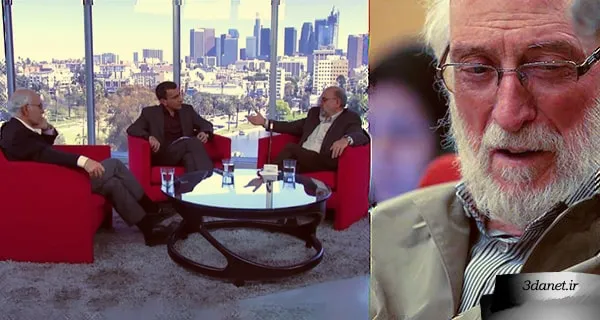
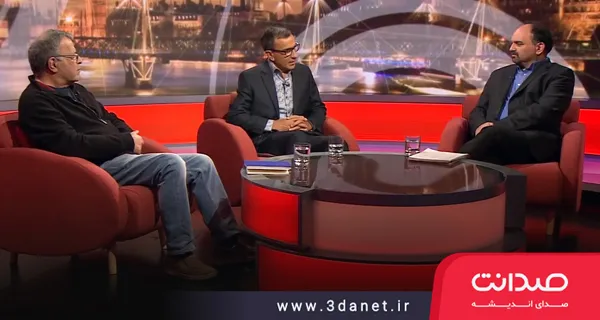
Mohammad Mojtahed Shabestari: Since, in the dialogue between two thinkers I hold in great esteem (the debate between Abdolkarim Soroush and Abdolali Bazargan on the Pargar programme) about the Quran, broadcast on the BBC Persian television programme Pargar, a reference was made to my views in the article “A Prophetic Reading of the World,” a large number of those interested in these discussions are asking me: what is your scholarly opinion of that conversation?
I think that since it is not right to remain silent about those friends’ questions, and as such questions continue to be put to me, the proper thing to do is to provide a general, very brief, yet explicit answer to these questions through this very website. My answer is as follows:
1- Expressing an opinion about the nature of the Quranic text while preserving a set of “a priori metaphysical-doctrinal presuppositions” about this text, as it is in any case unmethodical, leads to polemical statements from both sides and repeated escapes from within the doctrinal set to outside it and vice versa, aimed at persuading the interlocutor, and ultimately results in a sterile conversation. If it solves one theological problem, it adds several other problems to the existing ones and creates further bewilderment about this text. In my view, because the statements of both esteemed gentlemen about the Quranic text were replete with such a priori metaphysical and doctrinal presuppositions, vague and imprecise expressions, and repeated shifts from within religion to outside it and vice versa, that conversation took the form of polemics and did not reach a clear conclusion.
2- My view is that a methodical and rational approach to a religious text that is historically available to human beings in the form of a compiled, written, or printed book, and expressing an opinion about the nature of that text and the modalities of an intersubjective and defensible understanding and interpretation of it, is only possible if, first, all a priori metaphysical-doctrinal assumptions about that text are set aside; then, a historical critique of that text is undertaken (the first stage of hermeneutic understanding) (1); and then, what has been obtained from the historical critique is subjected to phenomenology (the second stage of hermeneutic understanding); and in the third stage, what has been seen in the phenomenology of the text enters the stage of interpretation or construal (the third stage of hermeneutic understanding). Only after traversing this path can one say what the text in question is and how it might be subjected to “interpretation” or “construal.” If it is done otherwise, no conversation will reach a clear conclusion.
________
(1) To become informed about the subject of “Historical Criticism of the Quran” and the stage this criticism has currently reached, we recommend reading the useful article “Critical Traditionalism in the Realm of Religion” written by Arash Naraghi. We are bringing the text of the article, as quoted from his personal website, to this website. In an extensive section of that article, the subject of the historical criticism of the Quran is explained. (To download the article, click on its title.)
.
.
Mohammad Mojtahed Shabestari Responds to Viewers' Questions on the Pargar Programme
Source: Official Website of Mohammad Mojtahed Shabestari | Monday, 6 June 2016
.
.


Discussion0 comments
No comments yet; let yours be the first voice.