Religion
From the Ayatollah's Dispute with the Intellectual to Medieval Morality and the Freemason Henry Corbin: An Essay by Yaser Mirdamadi
An open letter from Ayatollah Sobhani to Ettela'at newspaper regarding the remarks of Hassan Mohaddesi and his reply, together with an introduction to The Cambridge Companion to Medieval Ethics and its chapter on Islamic ethics, offers an account of the adventures of religion and philosophy.

Yaser Mirdamadi
AuthorAdventures of Religion and Philosophy (3):
From the Ayatollah's Dispute with the Intellectual to Medieval Morality and the Freemason Henry Corbin
Yaser Mirdamadi
Amidst the hustle and bustle of daily life and far from the public eye, adventures unfold in the labyrinth of religion and philosophy in Iran and the world that may not have a direct or immediate impact on our lives. After all, we are not all scholars of religion or philosophy, and perhaps we do not even dabble in these matters from afar. Yet experience has shown that the seemingly quiet intellectual events around us can, in the medium or long term, leave a lasting effect on our collective existence.
In "Adventures of Religion and Philosophy," we address events that, although currently unfolding in Iran or the world, may only be heard of later. These events could be the publication of a book, article, or journal; they could be a lecture, debate, dialogue, or intellectual dispute; or they could be the pursuit of a thinker, the tracking of a trend, or the narrative of a virtual wave that has arisen around a topic in religion or philosophy.
1_ The Ayatollah's Dispute with the Intellectual
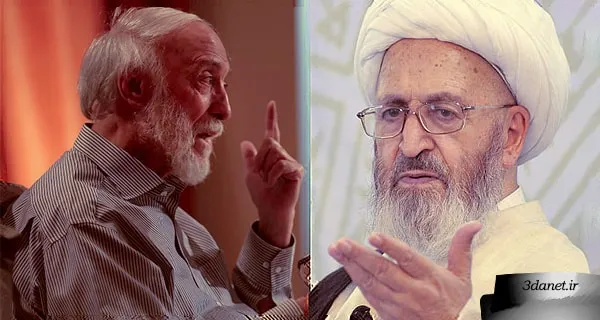
The episode began when Ayatollah Jafar Sobhani, a Shiite source of emulation residing in Qom, wrote an open letter on February 9, 2020, to Seyyed Mahmoud Doaei, editor-in-chief of the Ettela'at newspaper, objecting to that newspaper's report on the remarks of sociologist Hassan Mohaddesi at a meeting titled "The Problem of Culture." According to Ayatollah Sobhani's understanding of the Ettela'at report, Mohaddesi's remarks sought to convey that religious culture in Iran is incompatible with the people's culture and suppresses natural human inclinations, such as love.
Ayatollah Sobhani considered this sociological analysis tantamount to promoting "libertinism" and judging Islamic teachings as "contrary to innate nature," and asked Doaei not to publish "morally destructive material" in his newspaper. At the end of his letter, Ayatollah Sobhani expressed regret that Mohaddesi is a professor at the Islamic Azad University and asked in a tone of denial, "What will be the outcome of a student nurtured by such a professor?"
Two days after the publication of Ayatollah Sobhani's letter, on February 11, Hassan Mohaddesi published a response. At the beginning of his letter, while welcoming the sensitivity of "a top-ranking cleric" to the intellectual issues of society, Mohaddesi wrote, "I hope that Your Excellency and your like-minded colleagues pay as much attention to the pain and suffering of the people and their problems, and take note of the deplorable living conditions of many people in this land, and at the appropriate time, criticize and protest against the creators of this situation."
Mohaddesi went on to complain about how a jurist allows himself to judge the intellectual and belief system of a researcher based solely on an "incomplete report" in a newspaper, instead of referring to the original lecture or reading his other books. He then explained that when a sociologist of religion speaks of religion, he does not mean "divine religion" but rather religion as realized in society. The sociologist's critique is also directed at social religion, not "divine religion."
Mohaddesi, a sociologist close to the national-religious tendency, goes on to write that, in his view, the Prophet of Islam did not suppress the natural needs of human beings, but immediately adds that he says this out of heartfelt belief and not to please the Ayatollah. Nevertheless, he adds that the dominant culture of Iranian society is repressive and, among other things, does not recognize love. Such a repressive culture, in his view, drives people toward subjugation, dissimulation, and hypocrisy. He concluded that this repressive culture brings about moral corruption, not its critique.
Mohaddesi continues plaintively: "Your Eminence Ayatollah Sobhani, I am deeply regretful that you, too, like your predecessors, have requested that the words of a simple teacher be censored!" In his view, this method no longer works and only diminishes the standing of jurists in the eyes of the people. At the end of the letter, with an implicit reference to the fact that Ayatollah Sobhani's letter could lead to an accusation of apostasy and consequently fatal consequences for him, he states that although he has lived 53 years, he never thought he would survive this long, but he reminds the Ayatollah "not to easily accuse a Muslim of antinomianism."
Although Ayatollah Sobhani did not directly respond to Mohaddesi's letter himself, his office sent a reply. In this response, it was stated that after reading Mohaddesi's letter, Ayatollah Sobhani had made three points: 1. If Mohaddesi's speech was reported incompletely, why did he not object? 2. True religion is the "divine religion," and if a belief is common among people that has no root in the "divine religion," it is not religion at all. 3. Spiritual love must be separated from material and sexual love. Love in the second sense is "the fall of humanity into the valley of animality."
Two further points were then added, this time quoting Mohammad Mohammadrezaei, a university lecturer and one of Ayatollah Sobhani's students, whose views, according to the letter, are endorsed by the Ayatollah. The first point is that Ayatollah Sobhani, in meetings with officials, has always shown sensitivity to the people's livelihood and given the necessary reminders, and the second is that judgment regarding Islamic values and the teachings of the Prophet must be made by scholars of Islam and not others, and these others implicitly include academic scholars of religion as well.
Mohaddesi has not yet responded to the letter from Ayatollah Sobhani's office. However, Mehrab Sadeghnia, an assistant professor at the University of Religions and Denominations in Qom, who is himself a cleric, writes in a short piece titled "The Dialogue is Over" that he had hoped a serious and scholarly dialogue would take place between an academic and a seminarian. But the response from Ayatollah Sobhani's office disappointed him: "This letter shows that religious scholars have no desire to play on the field of science; for this reason, His Eminence the Ayatollah says that religion is exactly what we say it is, and only we have mastery over it; you sociologists should abandon your own literature and come make the meaning of religion that we dictate the subject of your lessons and studies."
2_ Medieval Morality
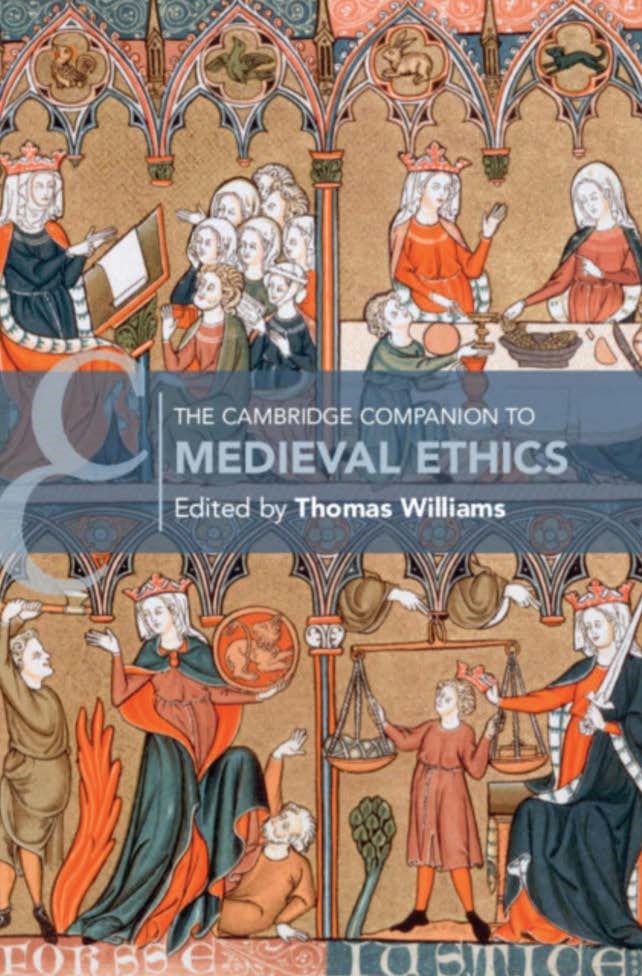
The Cambridge Companion to Medieval Ethics, written by a group of specialists in the history of medieval philosophy and edited by Thomas Williams, professor of philosophy and Catholic studies at the University of South Florida in the United States, was published by Cambridge University Press in late 1397 Solar Hijri / early 2019 CE.
The book is divided into two sections: historical and conceptual. In the historical section, which has five chapters, the history of moral philosophy in the Middle Ages from Augustine to 1350 CE is reviewed. One chapter of this section (Chapter Five) is also dedicated to the history of moral philosophy in the Islamic Middle Ages. In this chapter, an account of Islamic theological-philosophical ethics (and not mystical ethics) between the years 850 and 1200 CE is provided. This chapter was written by Jon McGinnis, professor of Greek-Arabic philosophy at the University of Missouri-St. Louis in the United States. McGinnis concludes that Islamic moral philosophy in the Middle Ages was at the height of its creativity when engaging with Greek sources (p. 100). The end of this engagement signified the beginning of the decline of Islamic ethics in the medieval centuries.
The second part of this work, which has eleven chapters, addresses the main themes and concepts of ethics in medieval thought; concepts such as happiness, virtue, free will, practical reason, reason and will, feelings and emotions, mystical ethics, economic ethics, self-interest, self-sacrifice, the common good, sin, and divine grace.
3_ Henry Corbin, the Freemason
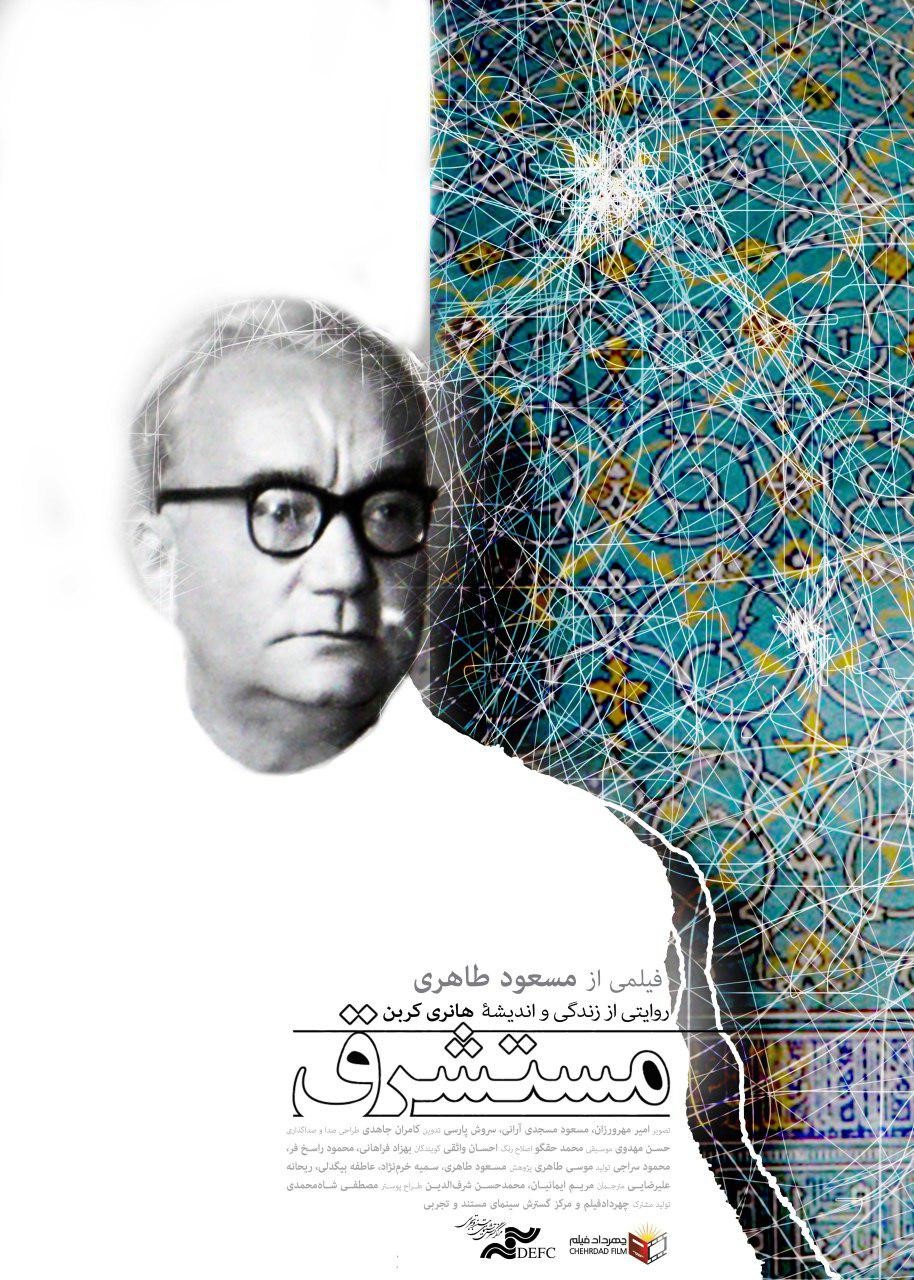
The documentary "The Orientalist" (Mostashreq), made by Iranian researcher and documentarian Masoud Taheri, examines the life, works, and influence of the French philosopher and Islamicist Henry Corbin (1903–1978). The documentary features interviews with Corbin scholars, specialists in Islamic-Iranian mysticism and philosophy, as well as his students, colleagues, acquaintances, and friends, including Mohammad Ali Amir-Moezzi, Christian Jambet, Pierre Lory, Daniel Prou, Yann Richard, Jean-Claude Carrière, Michel-Claude Cassé, Nahal Tajadod, Hermann Landolt, François Proux, Seyyed Hossein Nasr, Daryush Shayegan, Karim Mojtahedi, Enshallah Rahmati, Shahram Pazouki, Hassan Seyyed-Arab, Mostafa Malekian, Gholamhossein Ebrahimi Dinani, Bahman Zakipour, Alireza Sa'ati, and Sadegh Polostius.
This work is a co-production of Chehrdad and the Documentary and Experimental Film Center, produced in Tehran in the solar year 1398 (2019/2020). To make this documentary, its creators traveled to six countries: France (twice), Switzerland, Italy, Turkey (twice), the United States, and Japan.
"Mostashreq" in the title of this documentary does not refer to the modern conventional meaning of the word, i.e., "Orientalist," but to its ancient mystical meaning, i.e., "seeker of the East," one who searches for illumination (spiritual light) in the East of their own being.
Corbin initially intended to become a Catholic priest, but gradually became disillusioned with Catholicism and changed his religion to Protestantism. Corbin showed an interest in Christian mysticism, whereas Catholic priests warned him against studying mysticism. In his new faith, without the heavy shadow of the Church, he felt greater freedom in his philosophical and mystical explorations. Corbin studied philosophy at the Sorbonne. He married Stella, the daughter of an anthropologist and a Protestant pastor; a marriage that lasted until the end of his life.
Henry Corbin is a thinker who has completely detached himself from the "Occidental" and whose sun has risen from the Orient: "Now I am wholly freed from the Occident / For my sun has risen from the Orient." Corbin, fascinated by the spiritual cultures of the East, quickly learned Sanskrit, Arabic, and Persian. He was a student of Étienne Gilson, the historian of philosophy and Neo-Thomist philosopher; Louis Massignon, the Islamicist; and Émile Bréhier, the philosopher and historian of philosophy.
Massignon played a significant role in shaping Corbin's research interests. Massignon gave Corbin a copy of Suhrawardi's "Hikmat al-Ishraq" (The Philosophy of Illumination). Acquaintance with Suhrawardi led Corbin to abandon Indology and turn to the study of Islamic-Iranian mysticism. During a trip to Germany, Corbin met with philosophers such as Rudolf Otto and Edmund Husserl.
In 1936, Corbin visited Heidegger in the Black Forest region. Corbin was captivated by Heidegger's critique of modernity. He was the first translator of Heidegger's works from German into French. According to Mohammad Ali Amir-Moezzi, Corbin's student and successor at the Sorbonne, "Corbin's interest in Mulla Sadra's philosophy and the idea of the 'primacy of existence' is rooted in his knowledge of Heidegger's thought."
Corbin stayed in Istanbul for five years to conduct research on the manuscripts of Suhrawardi's works. He traveled to Iran in 1945, and after his first trip, he returned to Iran repeatedly. He then established a French institute for Iranian studies in Tehran, settled in Iran, and returned to France only during the summers. In Iran, Corbin held regular discussion sessions with Allameh Tabatabai. Corbin considered Allameh Tabatabai the living representative of the Islamic philosophical tradition, a tradition that, in Corbin's view, is closely linked with Shi'ism.
Corbin was a pivotal member of the influential intellectual circle known as "Eranos" in southern Switzerland. The Eranos circle was founded by Rudolf Otto in 1933 for discussion and research on religious studies, particularly mysticism and spirituality. After the death of the psychologist Jung, Corbin became one of the pillars of Eranos.
Corbin's intellectual approach is phenomenological; that is, he is interested in the essence of spiritual and esoteric ideas, not in the spatio-temporal context of their formation. This is contrary to the historicist approach, in which the spatio-temporal context of the formation of ideas is important, not the ideas themselves.
Thus, through phenomenology, Corbin seeks to burrow into "metahistory," to pursue the "unveiling of the hidden" (the revelation of the concealed, unseen realm). For Corbin, the world untouched by modernity is a window into the discovery of this "metahistory." For Corbin, among the worlds untouched by modernity, the East is especially important, and more specifically the Islamic world, and even more specifically, Iranian Shi'ism—not geographical Iran, but cultural Iran, that is, the world whose representatives are Avicenna and Suhrawardi. Suhrawardi was particularly important to Corbin because he considered him the first to establish a link between Islamic mysticism, Greek philosophy, and the wisdom of ancient Persia. Corbin regarded Suhrawardi as the "Plato of the history of Islamic philosophy."
However, in Corbin's understanding of spiritual Islam, which was Iranian Shi'ism, politics had no place. Politics, in Corbin's view, was a worldly matter, whereas Iranian Shi'ism, which is the source of sacred spirituality, was removed from the worldly and the secular. According to Mohammad Ali Amir-Moezzi, Corbin followed the events of the Iranian Revolution even from his sickbed and was not at all pleased by it. From Corbin's perspective, any revolution, whether Marxist or religious, was a materialist event.
According to a saying attributed to Toshihiko Izutsu, the Japanese philosopher, Islamicist, and friend of Corbin, it held a symbolic meaning that on the very day Ayatollah Khomeini arrived in Paris, Corbin passed away in the same city. Ayatollah Khomeini entered Paris from Iraq on October 7, 1978, and Henry Corbin died in that very city on that very day. The symbolic meaning of this simultaneity, from Izutsu's perspective, is this: when political Islam arrives, spiritual Islam will depart. The 1979 Iranian Revolution was the endpoint of Henry Corbin's spiritual Islam and the beginning of Ayatollah Khomeini's political Islam.
One of the interesting points of this documentary is that Daniel Proulx, a French scholar of Corbin, says he has obtained documents showing that Henry Corbin joined the Freemasonry organization around 1968 or 1969. However, Proulx clarifies that Corbin never mentioned his membership in Freemasonry in any text. According to Proulx, the esoteric aspects of Freemasonry were attractive to Corbin. It is as if, in Freemasonry, Corbin was searching for something akin to the ancient "code of chivalry" (javanmardi).

Discussion0 comments
No comments yet; let yours be the first voice.