Religion
Political Islams, Trust, and the Dethroning of the “Prophet’s Mantle”; an essay by Yaser Mirdamadi
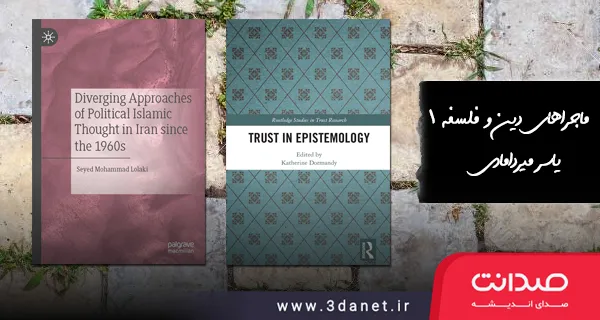
Lolaki's book examines the temporary convergence of three currents of political Islam in Iran. Routledge has published a collection of articles on trust in epistemology, and Akbarnejad does not consider the clerical garb to be the 'garb of the Prophet'.
Adventures of Religion and Philosophy (1)
Political Islams, Trust, and the Dethroning of the “Prophet’s Mantle”
Author: Yaser Mirdamadi
Alongside the hustle and bustle of daily life and far from the public eye, adventures unfold in the labyrinth of religion and philosophy in Iran and the world that may not have a direct or immediate effect on our lives. Yet, we are not all scholars of religion or philosophy, and perhaps we do not even have a hand in these matters from afar. But experience has shown that the intellectual events—seemingly—quietly occurring around us can, in the medium or long term, leave a lasting impact on our collective life.
In “Adventures of Religion and Philosophy,” we address events that, although they are currently unfolding in Iran or the world, their sound may be heard later. These events could be the publication of a book, article, or journal; they could be a lecture, debate, dialogue, or intellectual dispute; or the pursuit of a thinker, the tracking of a trend, or the narration of a virtual wave that has occurred around a topic in religion or philosophy.
1_ Political Islams
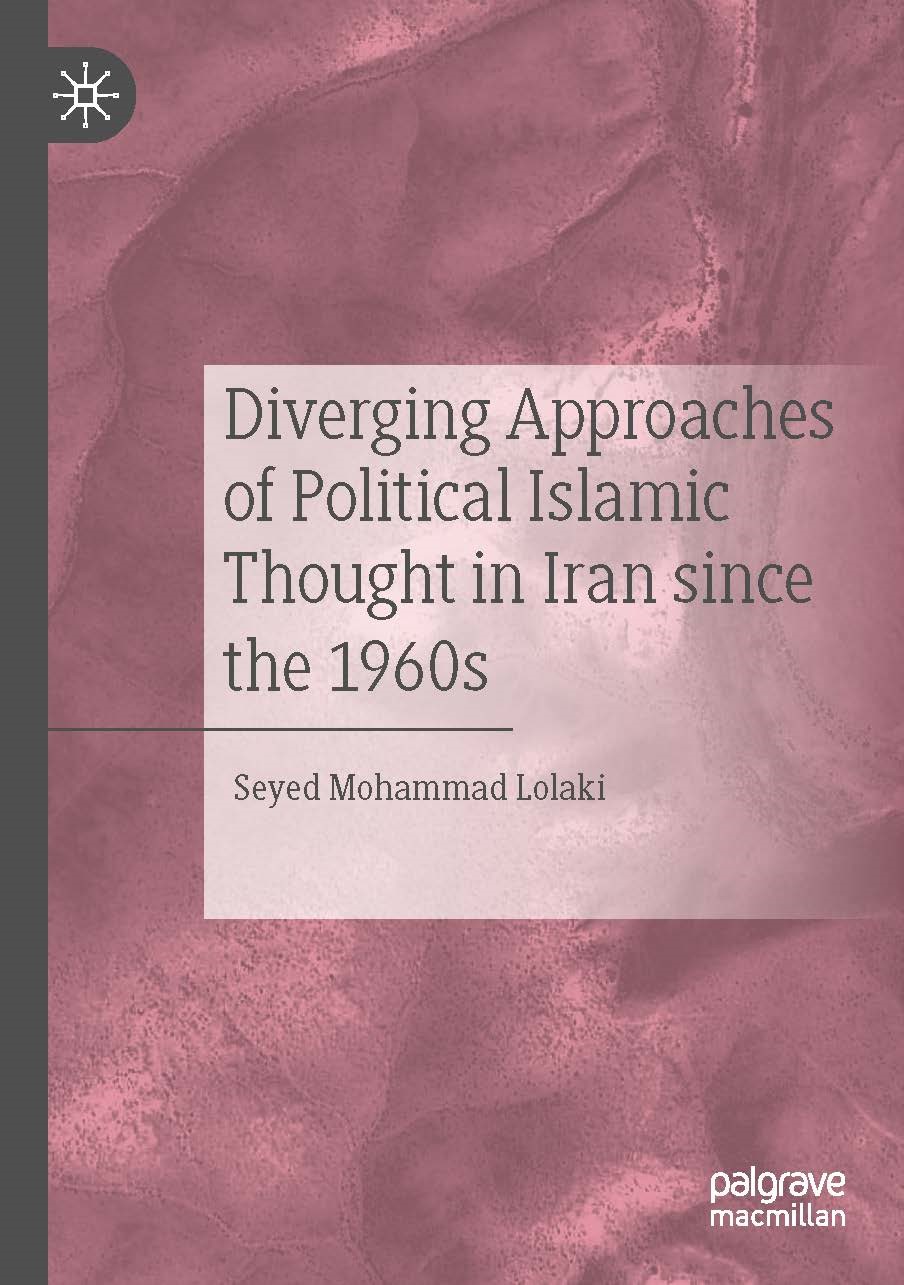
Political Islam in Iran is usually imagined as a monolithic current that sought to seize political power using the tool of religion, came to fruition in ’79, then pushed aside other political currents and has since held power exclusively. But a new book from “Palgrave Macmillan” publishing, released on November 15, 2019 (24 Aban 1398 Solar), offers a different narrative.
“Diverging Approaches to Political Islamic Thought in Iran, since the 1960s” was written by Seyyed Mohammad Lolaki. Lolaki received his master’s degree from the Political Science Department of Mofid University in Qom in the solar year 1384. The subject of his master’s thesis was “The Typology of the Islamic Left with an Emphasis on Religious Intellectuals of Iran (1320-1357).” The thesis supervisor was Davood Feirahi, the advisor was Masoud Pedram, and the examining professor was Seyyed Sadegh Haghighat. Lolaki earned his PhD in 2017 (1396 Solar) from the University of Waikato in New Zealand in political science.
This book is the edited version of his doctoral dissertation. In this work, Lolaki argues that political Islamic thought in Iran during the 1960s and 1970s (the 1340s and 1350s Solar) was the result of a temporary convergence of goals among three different but related intellectual currents: Ayatollah Khomeini’s jurisprudential Islam, Shariati’s leftist Islam, and Bazargan’s liberal Islam. According to the author, although these three currents reached a temporary consensus on forming an Islamic state, they nonetheless had profound differences in both their methods and their philosophical approaches.
Lolaki argues that Ayatollah Khomeini, Shariati, and Bazargan all saw Islam as a “mediating school,” a “liberating” school depicted as a middle way between capitalism and Marxism. All three believed that Iranian-Islamic values should govern society and the state. But their understandings of Islam differed greatly and profoundly. While Ayatollah Khomeini emphasized jurisprudence, for Shariati and Bazargan, jurisprudence was not very representative of Islamic values. However, while Shariati’s emphasis in understanding Islam was on history, Bazargan emphasized the Quran. And while Ayatollah Khomeini’s goal was the revival of Islam, the goal of Shariati and Bazargan was the reconstruction of Islamic thought. Finally, while Ayatollah Khomeini and Shariati emphasized the collective more, Bazargan emphasized the individual more.
2_ Trust Under the Microscope
Without trust, collective life cannot be set in order. The sum total of collective trust is called “social capital.” Profound distrust (of oneself and/or others) may, in some cases, even be a sign of psychological disorder, just as excessive trust (of oneself and/or others) may also be so in some cases.
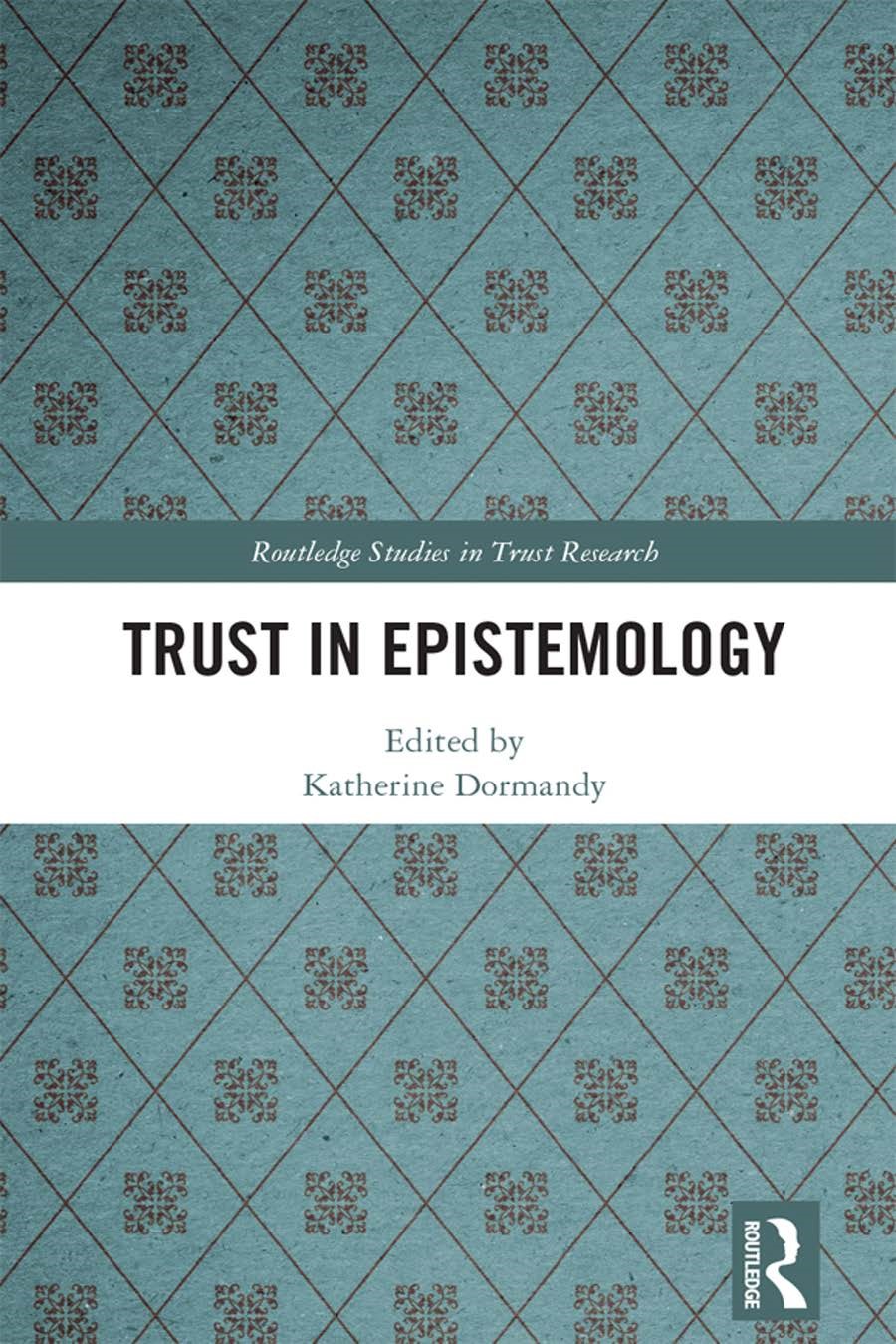
Apart from its practical aspect, trust also has theoretical value, especially in epistemology. Trust is an important topic in a newly emerged branch of epistemology called “social epistemology,” as well as in feminist epistemology and the philosophy of science. The acquisition of knowledge, evidentialism, and the process of understanding are impossible without trust. The cultivation of epistemic virtues (such as truth-seeking) is also dependent on trust. Furthermore, rectifying “epistemic injustice”—a newly emerged term in social epistemology—is also impossible without recourse to the concept of trust.
“Epistemic injustice” means depriving outsider groups (the other) of the acquisition of knowledge and confining knowledge to the insider class (such as the ban on education for Baha’is in Iran). “Epistemic injustice” also means not recognizing the other as an epistemic reference group. For example, a critical source of emulation who is not permitted to publish his manual of practical rulings, an intellectual whose book is held up in the Ministry of Culture and Islamic Guidance’s censorship, or a dissident professor who is expelled from the university—among the other types of injustice perpetrated against them—are also victims of “epistemic injustice.”
“Trust in Epistemology” is the title of a collection of essays published by Routledge on October 14, 2019 (12 Mehr 1398 in the Solar Hijri calendar). Among the epistemological discussions related to trust is the discussion of “transmission” or “the testimony of others” (testimony). Can a listener, under certain conditions, accept a statement simply because a credible person has said it, without having an independent reason in its favor? Has knowledge been attained for the listener in such a case? Some philosophers answer this question in the affirmative, and others in the negative. Refutations of both types of answers can be found in the essays of this work.
3_ Clerics Against the Clerical Garb
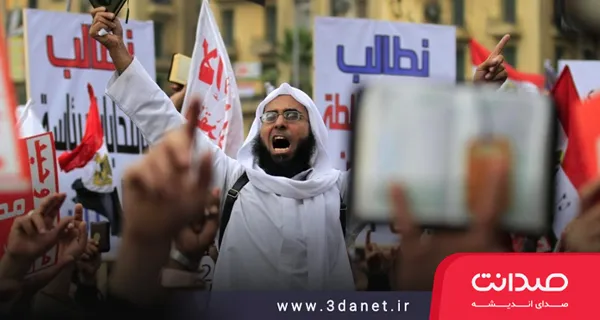
Mohammad-Taqi Akbarnejad, director of the “Institute for Islamic Jurisprudence and Civilization-Building” in Qom, recently argued in an interview with the IQNA news agency, based on jurisprudence, that the clerical garb is not the “Prophet’s mantle.” Akbarnejad’s main argument, he himself being in clerical garb, was that the Prophet did not wear clothing different from the people of his time, and since the clothing of clerics today is different from that of other people, this garb, whatever it may be, is not the “Prophet’s mantle.”
In his view, if the clerical garb is not “libās al-shuhra” (the garment of fame), it is at least a garment distinct from others, and wearing a distinct garment, if not “forbidden” (haram), is also not recommended from a religious standpoint. “Libās al-shuhra” is a jurisprudential term concerning “illegitimate” clothing and refers to garments that cause an individual to stand out in society, and therefore wearing it is considered “forbidden” (haram) from a jurisprudential perspective.
Akbarnejad’s opinion sparked protests in seminary circles. Akbarnejad, however, did not back down from his opinion and defended it in a debate with another cleric. After his interview and debate, he pointed out in a note that following the proposal of the theory that “the clerical garb is not the Prophet’s mantle,” he had received many sympathetic messages from the families of clerics.
He quoted a number of these messages verbatim in his note. His note has historical value because it is a rare, first-hand account of the view of some clerical families toward the clerical garb: “In all these years that my husband has been in clerical garb, I have not seen anyone on the street or in the alley ask him a religious question or raise a doctrinal doubt, but as much as you can imagine, lecherous looks have followed me and my daughter ... I feel this garb has become counterproductive.”
Nevertheless, Akbarnejad was repeatedly confronted with the question that if, in his view, “the clerical garb is not the Prophet’s mantle,” why does he himself still wear it. In response to this question, he explained in another note that changes in the religious community must occur gradually. He suggested that among clerics, “we must first normalize being two-garbed,” and noted that he himself sometimes goes out without clerical attire.
The jurisprudential discussion regarding clerical garb, although not a common debate among clerics, nor was it in the past, is not entirely without precedent. Previously, Ahmad Qabel, a mujtahid who himself once wore clerical attire, considered wearing it “makruh” (reprehensible). Rasul Jafarian, a professor of history at the University of Tehran who is himself a cleric, also recalls a de-garbed cleric from the period of “uniformization of dress” during the Reza Shah era, who argued in a book that clerical attire is not the “Prophet’s mantle” and that it would be better for clerics to set it aside — something Reza Shah, of course, did by force for the majority of clerics.
Moreover, in the not-too-distant past, there were renowned mujtahids who, of their own volition, never donned clerical garb and yet attained a prominent standing among clerics, such as Mirza Jahangir Khan Qashqai (teacher of Seyyed Hassan Modarres, Aqa Zia Iraqi, Ayatollah Borujerdi, Rahim Arbab, and Hassan Ali Nokhodaki) and also Rahim Arbab (teacher of Jalal al-Din Homaei, Beheshti, Mofatteh, and Abdoljavad Falaturi). Mirza Jahangir Khan and his student Rahim Arbab both wore a fur hat until the end of their lives, not a turban.
Regardless of the theoretical debate over the legitimacy or illegitimacy of wearing clerical garb, and regardless of whether this attire represents the “Prophet’s mantle,” in practice, especially after the revolution, many clerics, for a normal and less troublesome life among the people, wear their guild’s special attire only in religious and official places, and appear among the public in ordinary clothes the rest of the time.
In informal seminary parlance, these individuals are called “dual-living” or, in Akbarnejad’s terms, “two-garbed.” The seminaries in Iran, however, do not recognize this situation officially and allocate certain seminary privileges solely to those who, in formal terms, maintain “permanent garbing,” meaning they wear their guild’s attire at all times, even in public places.

Discussion2 comments
بنده خود نه روحانی بلکه طلبه ام ولی واقعا فکرم درگیر این مطلب بوده و البته در سال دوازده بار مجبورا لباس روحانیت را بپوشم
سلام علیکم بنده هم طلبه هستم وبه نظرم لباس روحانیت امروز دست کمی از لباس شهرت نداره و این مطالب رو خوندم قابل فبوله