Religion
Idris Jandari's article “The Turn from Political Islam to Political Post-Islamism”
The trajectory of 'Islamic New Thinking' in the contemporary Arab world moves from political reformism to post-Islamism. The shift from the Nahda to the emergence of political Islam reveals the contrast between Ali Abdel Raziq's separation of religion and state and Mawdudi's theory of the totalitarian state.
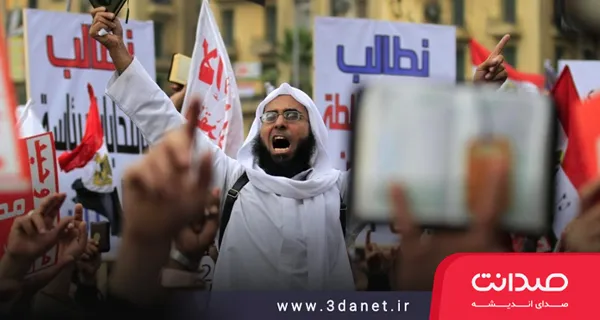
The Turn from “Political Islam” to “Political Post-Islamism”
Idris Jandari
Translation: Yasin Abdi
Published in Dhawat Magazine, Mominoun Without Borders Foundation, Issue 19, 2015
In contemporary Arab history, there is believed to be a process called “Islamic New Thinking” which comprises two parts:
- The Islamic-Political Reformist part
- The Political Post-Islamist part
Part One: Islamic-Political Reformism
This part of “reformism” itself includes two stages: the first stage is called the “Renaissance period” and the second stage is the “period of the emergence of Political Islam.”
1- The Renaissance Period
In this period, during which the “struggle against colonialism” was also underway, the use of religious texts was emphasized in order to unify the ranks, mobilize the believers generally, and remind them of their duty to defend the Islamic Ummah; with the aim that the liberation of the colonized from the yoke of the colonizers (who had managed to dominate the Arab and Islamic geographical expanse) would be accompanied by utilizing the intellectual, scientific, and political experience of those same colonizers. In this same period, the existence of two currents can also be noted:
- One is a current of a Salafi nature (yet a Salafism open to the world) that believed in returning to the original foundations of Islam and purifying it from the remnants of political conflicts, as well as the rust of the age of decline. This current was represented in the Islamic East by pioneers such as “Sheikh Muhammad Abduh” and “Sayyid Jamal al-Din al-Afghani,” and in the Islamic West by figures like Allal al-Fassi.
- The other is a current of a liberal nature — believing in openness toward Western civilization as a fundamental principle for the revival of political, economic, and social affairs in the Arab world. The pioneers of this current in the East were Rifa'a al-Tahtawi, and in the West, Muhammad Hassan al-Hajwi.
At the same time, despite the intellectual and political corruption prevalent in the Arab world, this “Renaissance period,” on the whole and from its very inception, raised monumental and unprecedented questions; questions that were often not aligned with the nature of the prevailing intellectual, political, and social structures. That is, the reality was that, on the one hand, the Arab world was just emerging from the deep, coma-like perdition and destruction of its centuries-long decline, and, on the other hand, its elites had suddenly begun posing questions that were not aligned with the realities of the Arab world.
The reason for this misalignment was that the method of these elites, along with drawing upon the belated awakening of new Arab thought—which itself was a result of the colonial shock—was oriented toward applying the modern intellectual and scientific products born from the heart of that very shock. Therefore, the limitation of efforts to the sphere of intellectuals and elites caused the Arab reformist process to merely suffice with intellectual modeling and fail to penetrate the depths of social and political structures.
2- The Period of the Emergence of Political Islam:
In the second stage of “reformism,” the failure of the projects proposed in the “Arab Renaissance period” paved the way for the emergence of a new project whose proponents turned to another very broad and far-reaching current, one governed by the criteria of ijtihad, intellectual endeavor, and political liberation.
They devoted their efforts to transforming the “civilizational project” into a “political project”; a project that was—wrongly and in a completely inverted manner—referred to as the “Islamic state,” whereas its primary aim was to separate the state from religion.
This experience transformed into a comprehensive political project whose political literature, as a political and Islamic project, crystallized in the form of political and Islamic movements; movements that utilized religious texts in service of their political goals. The result was the repeated reproduction and institutionalization of the thought known as “political Islam,” which worked to deepen the rupture from the “renaissance reformist project.”
It should be noted here that this current did not first take shape in Arab lands but occurred during the partition of Pakistan from India. In those lands, “Abul A'la Maududi” was among the most prominent figures of this “new political view”; a view that, relying on the aspiration for independence, became an instance of a specific political experience, namely the partition of Pakistan from India.
The project known as “political Islam” was put forward by Sheikh Ali Abd al-Raziq, with a teleological (maqasid-based) and foundational approach, in his controversial book “al-Islam wa Usul al-Hukm,” attempting to logically resolve the “challenge between religion and the state” in Islam.
The basis of Ali Abd al-Raziq’s argument was that in the era of the Prophet (PBUH), the state was nothing more than an instrument for advancing religion, and the core matter pertained to religion itself. In his words: “This thing that you may occasionally see in the life of the Prophet (PBUH) and imagine to be a governmental action and a manifestation of dominion and state should not deceive you. If you reflect on the Prophet’s (PBUH) sira, you will find no governmental action except that the ‘Prophetic state’ was merely an instrument that the Prophet (PBUH) used to consolidate religion and affirm his religious call.”[1]
Based on this view, he considered the “caliphate” in Islamic history to be the clear manifestation of the conflation of religion and state, and he emphasized that the religion of Islam was free from the caliphate customary among Muslims, as well as from all the supports and arrangements for the caliphate (whether desire, awe, or power), and that the caliphate, judiciary, and other governing responsibilities of state institutions were in no way part of religious affairs [and domain], but rather all of them were purely political matters.[2]
Sheikh Ali Abd al-Raziq believed in the separation of religion and state and sought, through a rigorous scholarly framework based on the achievements and products of the science of usul al-fiqh, and particularly teleological jurisprudence (maqasid), to demonstrate the true spirit of Islam. Consequently, with a thoroughly scholarly spirit, he deduced that the concept of a “religious state”—which monopolizes all material and spiritual powers—did not exist at all in early Islamic political literature, but rather this matter is the product of periods in which, through the interpretation of religious texts, these texts were used as a political tool in service of the interests of the contending parties. In his view, this is perhaps what makes Islamic culture, among other cultures, ready for the separation of material and spiritual power and, consequently, the establishment of a “civil state” as opposed to a “religious state”; but a state that, since it interprets religious texts to its own advantage, can also be called a “religious state.”
The “religious state,” in the conception of Abul A'la Maududi, is “a total state that encompasses all dimensions of human life and, by the nature of its specific reform program and its particular ethical theory, includes all sectors of human life.”[3] Such a state can also be considered a “totalitarian state” (in its communist sense), as it governs all the movements and stillnesses of human individuals and groups. Abul A'la Maududi justifies this complete dominance and encompassment by stating that this condition “is linked to the comprehensive and all-encompassing divine law, but its enforcement and execution among the people is entrusted to the Muslim ruler.”[4]
In fact, he is the very person who founded the concept of
- On the other hand, one cannot generalize the criteria of one type of political Islam to its many other varieties. For example, the Ikhwani experience in the Arab world is fundamentally very different from the experience of political Islam in Southeast Asia [i.e., Indonesia and Malaysia] and also Turkey. The experience of political Islam in the Arab world—with some exceptional cases—has not moved beyond the theoretical positions of Abul A'la Maududi's Jamaat-e-Islami group, and the core intellectual principle governing it remains divine sovereignty, with its tools being the same traditional ones in the realm of missionary activities and ideological mobilization. Whereas the experience of political Islam in Southeast Asia and Turkey has taken very significant progressive steps in linking Islam—as a spiritual experience—with contemporary political and social developments; and this is what the American researcher, "Alexander R. Arifianto," has referred to as the experience of "progressive Islam"; on the grounds that this experience is an effort to create convergence between the fundamental teachings of Islam (such as the Holy Quran, the Noble Hadith, and Islamic jurisprudence) and ideas derived from Western liberal theory (such as democracy, human rights, freedom, and religious pluralism).[7]
Now, by taking the two fundamental points above into account, one can discern the dividing line between the scientific analysis of objective reality and the ideological tendencies governing certain political and cultural actors.
Here, one can also recall the interpretation imposed upon the concept of "postmodernism"; that is, the same erroneous interpretation that has led some to believe that the "project of modernity" has entirely failed and collapsed. For instance, the Moroccan thinker, Mohammed Sabila, refers to "late modernity," as if postmodernism is nothing but another stage in the metamorphosis of the project of modernity.[8] But is it permissible to speak of "political post-Islamism" in the same way, as a second stage following the foundational stage and some of its failures?
In a book recently authored by a group of American thinkers and writers, one of the book's authors, named Asef Bayat (who is of Iranian descent), says: "In the view of some Western analysts, the term political post-Islamism refers to the end of militant [i.e., jihadist] Islam and the beginning of a new phase in which Islamists have replaced weapons and bullets with ballot boxes and voting." It is quite clear that what this author means by "the end of jihadist Islam" is the Islamists' turning away from the use of methods of sacred physical violence (explosions) and sacred symbolic violence (takfir) in confronting the ruling political structure and society, and "this new approach" tends, in terms of the sufficiency of democratic actions, as a method for participating in the governance process.
Perhaps this is what the Turkish-origin researcher, Ihsan Dagi, also points to in the same book. He believes that the experience of the "Justice and Development Party" is a post-Islamist experience, during which Turkish Islamists have been able to replace "the Creator/Truth" with "the creation/the people/the nation." They engage in politics not in the name of Islam, but in the name of the nation, and have created a kind of fusion between serving the people and serving God, distinguishing themselves from traditional Islamists and declaring that "Islam is not an ideology, nor is the Quran a constitution."
This author distinguishes between two phenomena:
- One is the phenomenon of "traditional Islamism," which enters the political arena in the name of Islam; on the grounds that it considers Islam an ideology and interacts with the Quran as if it were a constitution;
- And the other is the phenomenon of "post-Islamism," whose clear manifestation lies in the Turkish experience—an approach that enters the political arena in the name of the nation and does not hold an ideological, law-like view of Islam and the Quran.[9]
Thus we witness the transition from the “stage of political Islam” (of which the Islamic movements of the Arab world are the prominent manifestation) to the “stage of political post-Islamism” (which certain Islamic movements in Southeast Asia and Turkey exemplify). This transition and metamorphosis have been studied and explicated in two separate examinations, relying on the operative concept of “progressive Islam”:
- One is an examination of the experience of progressive Islam in Southeast Asia, discussed based on the model of the “Nahdlatul Ulama.” Nahdlatul Ulama is an Islamist movement with liberal tendencies. And this liberal tendency is clearly observed in certain highly sensitive intellectual and political issues, such as the relationship between Islam and democracy, religious and sectarian pluralism in society, the question of legislation and the Islamic nature of the state, and the like. In all the aforementioned issues, this “movement” has created considerable potential for convergence between intellectual and political matters and the nature of the Islamic religion; and perhaps this is what, in contemporary Indonesia, made them worthy of leadership in a difficult political phase and brought the leader of this current, Abdurrahman Wahid, to power as the first democratically elected president after the fall of the Suharto regime. The legacy of this movement—based on free religious speculation and human knowledge—continues to be pursued and has founded a new era of political, religious, and sectarian pluralism in Indonesian society.[10]
- In the second examination, the experience of progressive Islam in Turkey, relying on the model of the Justice and Development Party, has been explored; an experience whose value is in no way less than the models preceding it, for it has managed, in a single decade, to bring forth a new intellectual and political model that transcends the two contradictory approaches existing in the political and intellectual sphere of the Islamic world; the very two approaches that have persisted since the era of the great civilizational challenge with the West.
The Turkish Islamic experience managed to:
- On the one hand, transcend the traditional Salafist (text-centered) model; a model that employed the literal text—whether through the claim of an Islamic state or through the application of Sharia—in order to dominate existing reality;
- On the other hand, move beyond the model of laicism (laïcisme as a distorted concept of secularism); the very laicist model that Kemal Atatürk founded, inspired by the French experience of laïcité, and through which he sought to erase all manifestations of the Ottoman [Caliphate]. After its victory, the Justice and Development Party transcended this radical model in both theory and practice and successfully established a new era in Turkey and the Islamic world, in which religious and Islamic literature does not serve as an obstacle to democracy, and, at the same time, the intellectual and political values of modernity do not serve as an obstacle to the ethical concepts of the Islamic religion.[11]
Intellectual and political analysis within the approach of the political Islam experience—in the domain of applying the concept of “post-Islamist movements” or “progressive Islam”—indicates that this experience has undergone profound transformations, both at the level of political instruments and theoretical perspective. Consequently, no fair-minded researcher equates the experience of Abul A'la Maududi's Jamaat-e-Islami in India with the experience of the Justice and Development Party in Turkey, or the Nahdlatul Ulama in Indonesia; for if the first experience belongs to the founding stage and what is termed “traditional political Islam,” the experiences of Turkey and Indonesia speak of the stage of transformation—encompassing transition, transcendence, and progress.
.
.
[1] Ali Abd al-Raziq, al-Islam wa Usul al-Hukm, al-Hay'ah al-Misriyyah al-'Ammah lil-Kitab, p. 79
[2] Ibid., p. 103
[3] Abu al-A'la al-Mawdudi, Nazariyat al-Islam wa Hadyuhu fi al-Siyasah wa al-Qanun wa al-Dustur, Beirut - Dar al-Fikr - 1964, p. 46
[4] Ibid., p. 54
[5] Olivier Roy – échec de l’islam politique – seuil – paris – 1992
[6] Olivier Roy – l’islam mondialisé – seuil – paris – 2002
[7] Arifianto – The Making of “Progressiv Islam” in Indonesia and Turke – Presented at the 2012 Western Political Science Association (WPSA) Annual Meeting Portland, OR March 22-24, 2012- p.p: 2-3
[8] See: Mohammed Sabila, al-Hadatha wa ma ba‘d al-Hadatha, Dar Toubkal Publishing, 1st ed., 2000
[9] Mohammed Massad al-Arabi, Ma ba‘d al-Islamawiyya: al-Awjuh al-Mutaghayyira lil-Islam al-Siyasi – Collective authorship – Edited by: Asef Bayat, Al Jazeera Center for Studies:
http://studies.aljazeera.net/bookrevision/2014/11/2014111865841824759.htm
[10] Idris Jandari, al-Islam al-Taqaddumi: Tajribat Nahdat al-‘Ulama’ Namudhajan, Al-Mesbar Center for Studies and Research, Book Seventy-Four, February 2013, (collective work).
[11] Idris Jandari, al-Islam al-Taqaddumi fi Turkiya: Tajribat Hizb al-‘Adala wa al-Tanmiya Namudhajan, Mu’minun Bila Hudud Foundation – Department of Religion and Current Societal Issues – 28 May 2014
.
.
From the Experience of Political Islam to the Experience of Post-Political Islam:
A Reading of Intellectual and Political Transformations(*)
What any observer of the emergence of political Islam in the Arab world must realize is that this emergence coincided with the distortion of the reformist Nahda idea, outside the Arab geographical sphere in India, after which this distorted idea was reclaimed and implanted to deepen the rupture with the Nahda reformist project—a project intellectually articulated by Sheikh Ali Abdel Raziq in his book, imbued with a Maqasid-based Usuli spirit, as he decisively settles the debate on the relationship between religion and the state in Islam.
1- From the Nahda Experience to the Experience of Political Islam
The first reformist phase in modern Arab history was inaugurated with the Nahda era. This phase coincided with the colonial challenge, and therefore the religious canon was invoked to mobilize believers to fulfill the duty of defending the nation. Yet, at the same time, this phase was characterized by an openness to the colonizer with the aim of benefiting from the intellectual, scientific, and political experience that had enabled it to dominate the Arab-Islamic geographical expanse. Thus, two reformist currents crystallized: the first, of a Salafi (open-minded) spirit, believed in returning to the original sources of Islam after purifying them from the residues of political conflict and the blemishes of the ages of decadence, as seen with Muhammad Abduh and Jamal al-Din al-Afghani in the Mashreq, and with Allal al-Fassi in Morocco. The other, of a liberal (conservative) spirit, considered openness to Western civilization a fundamental pillar for injecting new blood into the arteries of the political, economic, and social reality in the Arab world, as seen with Rifa‘a al-Tahtawi in the Mashreq, and Muhammad ibn al-Hasan al-Hajwi in Morocco.
However, despite the intellectual and political momentum that prevailed, the phase posed major questions that were premature—questions often inconsistent with the nature of the prevailing intellectual, political, and social structure. On the one hand, the Arab world was just emerging from a deep slumber that had extended over centuries of decadence, and on the other, an intellectual elite ahead of its time suddenly emerged, posing major questions inconsistent with Arab reality. This elite benefited from the belated awakening of modern Arab thought in the wake of the colonial shock, and worked to benefit from the modern intellectual and scientific achievements introduced by the colonial campaign. All of this caused the Arab Nahda project to halt at the boundaries of intellectual theorization, which entrenched its elitist character and prevented it from seeping into the depths of the social and political structure.
This failure that befell the Arab renaissance project was paving the way for the emergence of a new project, from the perspective that nature abhors a vacuum—a project that worked to abolish all accumulated intellectual endeavor and focused on the practical political dimension. If the renaissance thinkers carried a long-term civilizational project governed by intellectual endeavor and civilizational openness, the founders of the activist Islamist current worked to demolish this intellectual foundation and replaced the civilizational project with a political project within what was called the Islamic state. Abu al-A'la al-Mawdudi was the most prominent founder of this political trend, supported in that by an unbridled independence ambition that led him to theorize a particular political experiment through the separation of Pakistan from India. However, his particular project would transform into a general political project, as these political writings turned into an Islamic political project embodied in the form of Islamic political movements that work to employ the religious corpus politically, from the perspective that Islam is both religion and state.
What any observer of the emergence of political Islam in the Arab world must realize is that this emergence coincided with the distortion of the renaissance reformist idea outside the Arab geographical sphere, in India. Subsequently, the distorted idea was retrieved and implanted to deepen the rupture with the renaissance reformist project, which was expressed intellectually by Sheikh Ali Abdel Raziq in his book with its jurisprudential-objectives (maqasidi) spirit, as he decisively settles the debate on the relationship between religion and state in Islam. He considers that the state was merely a means during the era of prophethood. As for the fundamental issue, it pertains to religion: "Do not let what you sometimes see in the life of the Prophet, peace be upon him, trouble you, appearing to you as if it were a governmental act and a manifestation of kingship and state. For if you contemplate it, you will not find it so; rather, it was only one of the means that he, peace be upon him, resorted to in order to consolidate the religion and support the call."[1]
Thus, Sheikh Ali Abdel Raziq moves to the issue of the caliphate as an embodiment of the relationship between religion and state in Islamic history, and affirms that the Islamic religion is innocent of that caliphate which Muslims commonly recognize, and innocent of all the desire and awe, might and power they have arrayed around it. The caliphate is not in any way part of the religious plans, nor indeed is the judiciary or any other functions of governance and state apparatuses; all of those are purely political plans.[2]
Sheikh Ali Abdel Raziq, in decisively separating religion and state, was seeking to translate the spirit of Islam from a rigorous scholarly perspective that benefits from the achievements of the science of usul al-fiqh (principles of jurisprudence), particularly what is connected to maqasidi (objectives-based) thought. Therefore, he concludes, with a fully scientific spirit, that the concept of a religious state that monopolizes both temporal and spiritual authorities is not established in early Islamic political literature. Rather, it is a result of subsequent eras during which the religious text was adopted as a tool in political conflict through its interpretation to serve the interests of the conflicting parties. Perhaps this is what made Islamic culture among the cultures qualified to separate the spiritual and temporal authorities, and thus to establish the civil state as opposed to the religious state.
When the first signs of political Islam were introduced by Abu al-A'la al-Mawdudi in India, embodied in Jamaat-e-Islami as the first Islamist movement in the modern era, the Arab world was experiencing an Islamist organizational vacuum after the failure of the renaissance idea to crystallize as a political and social project. Therefore, the idea found resonance when Hassan al-Banna worked to embody it organizationally with the founding of the Muslim Brotherhood, modeled on Jamaat-e-Islami, and also when Sayyid Qutb worked to embody it theoretically through his numerous writings that draw from the same intellectual source established by Abu al-A'la al-Mawdudi. In both directions, organizational and theoretical, the "slogan of al-Hakimiyya (sovereignty) belongs to God" was the controlling factor—a slogan that summarizes a complete theory of political practice centered on the concept of the religious state, through the interpretation of religious texts and twisting their meanings to respond to political plans based on employing the religious text to control the state.
The Islamic state as theorized by Abu al-A'la al-Mawdudi is "a comprehensive state, encompassing the entirety of human life, and stamping every branch of human life with the character of its particular moral theory and its particular reformist program."[3] It is a totalitarian state (in the modern communist sense) that controls every movement and stillness of individuals and groups. Al-Mawdudi justifies this by stating that this hegemony and complete encompassment "is only connected to a comprehensive and all-embracing divine law which the Muslim ruler is entrusted to implement among the people."[4]
Mawdudi, in establishing the concept of divine sovereignty (al-Hakimiyya), envisioned a political project carried by the Jamaat-e-Islami, which sought to implement it in the nascent Islamic state (Pakistan) after its separation from India. Therefore, his concern was not intellectual but purely political, as he imagined that the religious text could help him establish a totalitarian state in which the Muslim ruler monopolizes the execution of the divine command over the people.
Perhaps this is the greatest distortion that the founders of the political Islam experiment in the Arab world did not notice. Consequently, they dealt with this specific political project as if it were a general Islamic project applicable at any time and place. Thus, the experience of political Islam in the Arab world, while borrowing a problematic alien to the authentic intellectual heritage of the Nahda (Arab Renaissance), was at the same time establishing a complete rupture with the rationalist Islamic heritage in its philosophical and jurisprudential (Usul al-Fiqh) form, compensating for this with simplistic juristic interpretations that employ the religious text to achieve transient political goals. Here was the beginning of the crisis whose chapters would later unfold, declaring the bankruptcy of the project from its very foundation.
2- The Post-Political Islam Experience
When we speak of the post-political Islam phase, two fundamental observations must be made:
- On one hand, the term 'post' does not refer to the end of the political Islam experience, but rather to a transformation within the experience, a transformation imposed by numerous international, regional, and national variables. This transformation affected the methodology of thinking of the Islamic actor, as well as the tools of action and practice. Perhaps this orientation governed a researcher who addressed the subject early on, Olivier Roy (OLIVIER ROY), who dedicated a book to the subject of the failure of political Islam[5] in 1992. However, he returned a decade later to develop his previous thesis, after it became clear to him that the matter was limited to a transformation in the experience and not its end. Thus, he began to speak of the transformation of political Islam into social Islam, in his book "Globalized Islam."[6]
- On the other hand, the same characteristics cannot be generalized to the different experiences of political Islam; the Muslim Brotherhood experience in the Arab world differs radically from the experience of political Islam in Southeast Asia (Indonesia-Malaysia), as well as the Turkish experience. If the experience of political Islam in the Arab world—with some exceptions—emerged from the mantle of the Jamaat-e-Islami experience with Abul A'la Mawdudi, and remained captive to its intellectual vision based on the principle of divine sovereignty (al-Hakimiyya), as well as captive to its same traditional tools of missionary work and ideological recruitment, then the experience of political Islam in Southeast Asia and Turkey has made very advanced strides on the path of linking Islam, as a spiritual experience, with the transformations of the modern era politically and socially. This falls within what the American researcher (Alexander R. Arifianto) calls the experience of progressive Islam (progressive Islam), as an attempt to combine the fundamental teachings of Islam (the Holy Quran, the Noble Hadith, and Islamic jurisprudence) with ideas derived from Western liberal theory, such as (democracy, human rights, freedom, and religious pluralism).[7]
إننا حينما نبدي هاتين الملاحظتين، فإنما لتحقيق الفرز بين التحليل العلمي للواقع الموضوعي، وبين الرغبات الأيديولوجية التي قد تتحكم في بعض الفاعلين السياسيين والثقافيين، ونحن نستحضر هنا التأويل الذي تمّ فرضه على مفهوم (ما بعد الحداثة) هذا التأويل الذي أدى ببعضهم إلى الحكم بفشل مشروع الحداثة بكامله، مما اضطر المفكر المغربي (محمد سبيلا) إلى ترجمة المفهوم بالحداثة البعدية كإحالة على أن ما بعد الحداثة ليست سوى مرحلة ثانية من تطور المشروع الحداثي.[8] فهل يصحّ أن نتحدث عن مفهوم الإسلام السياسي البعدي، باعتباره مرحلة ثانية تلي مرحلة التأسيس الأولى وتصلح بعض أعطابها؟
ضمن كتاب جماعي صادر حديثا في الولايات المتحدة الأمريكية حول موضوع ما بعد الإسلام السياسي، من تأليف جماعة من الباحثين المتخصصين في الموضوع، يذهب الباحث الأمريكي ذو الأصول الإيرانية (آصف بيات) إلى أن استخدام مصطلح ما بعد الإسلام السياسي لدى بعض المحللين الغربيين، هو للإشارة إلى نهاية مرحلة الإسلام المقاتل، وبداية مرحلة جديدة اتجه خلالها الإسلاميون إلى تبني الانتخابات بديلا للرصاص. وما يبدو، هو أن الباحث يقصد بنهاية الإسلام المقاتل، تحول الإسلاميين من ممارسة العنف المادي المقدس (التفجير) والعنف الرمزي المقدس (التكفير) في مواجهة الأنظمة السياسية الحاكمة والمجتمع، وذلك في اتجاه الاقتناع بالممارسة الديمقراطية كمنهج للمشاركة في الحكم.
ولعل هذا هو ما يؤكده الباحث التركي (إحسان داغي) ضمن نفس الكتاب، فهو يذهب إلى أن تجربة حزب العدالة والتنمية هي نموذج ما بعد إسلاموي، قام فيها الإسلاميون الأتراك باستبدال "الخالق/الحق" بـ"الخلق/الناس"؛ فقد خاضوا السياسة باسم الشعب لا باسم الإسلام، وزاوجوا بين خدمة الناس وخدمة الله، وفي انفصالٍ عن الإسلاموية التقليدية، أعلنوا أن "الإسلام ليس أيديولوجية والقرآن ليس دستورا. هكذا يميز الباحث بين مرحلة الإسلاموية التقليدية التي تخوض السياسة باسم الإسلام، باعتباره مشروعا أيديولوجيا يتعامل مع القرآن كدستور، وبين مرحلة ما بعد الإسلاموية التي تجسدها التجربة التركية التي تخوض السياسة باسم الشعب، ولا تتعامل مع الإسلام كأيديولوجية ولا مع القرآن كدستور.[9]
إن هذا الانتقال من مرحلة الإسلام السياسي التي تجسدها تجربة الحركات الإسلامية في العالم العربي، وبين مرحلة ما بعد الإسلام السياسي التي تجسدها تجربة بعض الحركات الإسلامية في جنوب شرق آسيا وتركيا، هذا الانتقال هو ما تم التوقف عنده من خلال دراستين صادرتين في الموضوع. وقد تم تناول هذا الانتقال والتحول باعتماد مفهوم "الإسلام التقدمي" كمفهوم إجرائي تم اعتماده في الأدبيات الغربية المهتمة بموضوع الانتقال والتحول من الإسلام السياسي التقليدي إلى مرحلة ما بعد الإسلام السياسي.
Through the first study, the experience of progressive Islam in Southeast Asia was examined via the model of the Nahdlatul Ulama association, an Islamic movement with a clearly defined liberal tendency, manifested in its approach to a set of highly sensitive intellectual and political issues, such as: the relationship of Islam with democracy, religious and sectarian pluralism in society, as well as the question of legislation and the Islamic character of the state. In all these issues, this Islamic movement demonstrated a superior ability to achieve harmony between contemporary intellectual and political issues and the spirit of the Islamic religion. This is perhaps what qualified it to lead a very critical political phase in the history of modern Indonesia, where its leader (Abdurrahman Wahid) came to power as the first democratically elected president after the fall of the (Suharto) regime. He invested the heritage of his Islamic movement, based on religious ijtihad open to the knowledge of the age, in inaugurating a new era of political, religious, and sectarian pluralism within Indonesian society.[10]
Through the second study, the experience of progressive Islam in Turkey was examined, adopting the model of the Justice and Development Party, an experience no less valuable than its predecessor; because it managed, over a decade, to establish a new intellectual and political model based on transcending two contradictory visions that dominated the Islamic sphere since the great civilizational shock with the West. On the one hand, the Turkish Islamic experience managed to transcend the traditional Salafi (textualist) model that employs the literal meaning of the text to control the dynamics of reality, whether through the call for an Islamic state, or through the slogan of applying Sharia; and on the other hand, the Turkish Islamic experience managed to transcend the secularist model (from laïcisme as a distortion of laïcité), this model founded by Atatürk through inspiration from the French secularist experience, through which he attempted to demolish the entire Ottoman edifice. Through the success of the Justice and Development Party in transcending these radical models in thought and practice, it was successfully establishing a new era in Turkey and the Islamic world, where Islamic religious literature no longer becomes an obstacle to embodying democracy, and the values of intellectual and political modernity no longer become an obstacle to consolidating the ethics of the Islamic religion[11], whether through employing the term "post-Islamist movements," or through employing the term "progressive Islam," intellectual and political analysis, in its approach to the experience of political Islam, tends towards the view that this experience has undergone profound transformations, both at the level of intellectual vision and at the level of political tools. No honest researcher can equate the experience of the Jamaat-e-Islami founded by Abul A'la Maududi in India with the experience of the Justice and Development Party in Turkey, or the Nahdlatul Ulama association in Indonesia. If the first experience belongs to the founding phase within what is called traditional political Islam, then the Turkish and Indonesian experiences belong to the phase of transformation, with all that it entails of transition, transcendence, and progress.
.
.
(*) This article was published in Dhāwāt magazine, issued by the Mo'minoun Without Borders Foundation, Issue 19, 2015
[1] Ali Abdel Razek, Islam and the Foundations of Governance, Egyptian General Book Organization, p. 79
[2] Ibid., p. 103
[3] Abul A'la Maududi, The Theory of Islam and Its Guidance in Politics, Law, and Constitution, Beirut - Dar al-Fikr 1964, p. 46
[4] Ibid., p. 54
[5] Olivier Roy - échec de l’islam politique - seuil - paris - 1992
[6] Olivier Roy - l’islam mondialisé - seuil - paris - 2002
[7] Arifianto - The Making of “Progressiv Islam” in Indonesia and Turke - Presented at the 2012 Western Political Science Association (WPSA) Annual Meeting Portland, OR March 22-24, 2012- p.p: 2-3
[8] See: Mohammed Sabila, Modernity and Postmodernity, Dar Toubkal Publishing, 1st ed., 2000
[9] Mohammed Mosaad Al-Arabi, Post-Islamism: The Changing Faces of Political Islam - Collective Authorship - Edited by: Asef Bayat Al Jazeera Center for Studies:
ttp://studies.aljazeera.net/bookrevision/2014/11/2014111865841824759.htm
[10] Idris Jandari, Progressive Islam: The Experience of Nahdlatul Ulama as a Model, Al-Mesbar Center for Studies and Research, Book Seventy-Four, February 2013, (collective work).
[11] Idris Jandari, Progressive Islam in Turkey: The Experience of the Justice and Development Party as a Model, Mominoun Without Borders Foundation - Department of Religion and Contemporary Societal Issues - 28 May
.
.
Discussion2 comments
تجربە پسا اسلام گرایی سیاسی می تواند برون رفت ودرروی مسلمانان از مشکلات موجود وارتباط با جهان تازه باشد. اندیشه های سنتی اسلام سیاسی توانایی انعطاف و گستردگی فهم و تکثر گرایی در عرصه قانونگرایی را ندارد. و شکست آن از ناکامی بهار عربی آشکارتر گشت. بد نبود به نظریات سیاسی روشنفکرتونس راشد الغنوشی ی و تجربه متفاوت تونس هم اشاره ای شود. بهرنک
اشکال: اندیشه سیاسی اسلام چیست که توانی که شما گفتید را ندارد؟ مگر اندیشه سیاسی اسلام یک چیز واحد است؟ تکثر گرایی هم را ارائه نکردید و فرض کردید موضعی موجه است! چرا؟