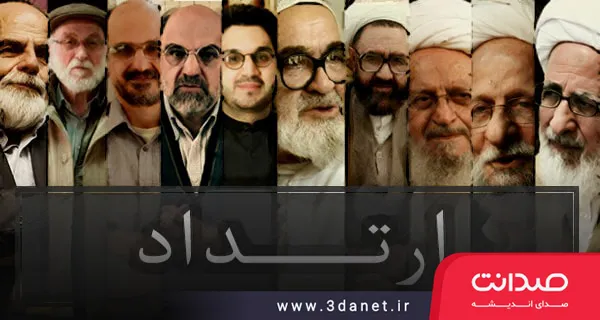
An Examination of the Category of Apostasy in the Views of Iranian Thinkers and Scholars
.
Abdollah Javadi Amoli
Shiite Jurist and Source of Emulation
Apostasy is when someone accepts the religion in an investigative manner and then abandons it. An important point in apostasy is that the person must have previously accepted the religion through logical proof. ... Therefore, apostasy means that someone who possesses epistemological certainty nevertheless toys with the religion and declares his aversion to it.
Jomhuri-ye Eslami newspaper, Sahifeh-ye Howzeh special issue, no. 48, 30 Ordibehesht 1381, p. 14
.
Mohammad-Taqi Mesbah Yazdi
Mujtahid, Professor of Islamic Philosophy
Some deeds destroy all of a person's good actions throughout his entire life. What is agreed upon and certain among all the great scholars and theologians is that becoming an unbeliever after having faith destroys all of a person's past good deeds. If someone has lived in the Abode of Islam, his father and mother were Muslim, and in Islamic society he had the means to learn the rulings of Islam and act upon them, and he also lived as a Muslim for a time, and then, due to various psychological reasons and personal motives, becomes an apostate, he destroys all of his past good deeds. Unfortunately, apostasy is one of the matters that has become prevalent in the present time. It is possible that a Muslim youth who grew up in a religious city, and who now suffers from financial hardship or sexual need, may be befriended by devils who, by providing financial aid and the conditions to enjoy sexual pleasures, invite him to another religion and cause him to apostatize, to the point where the Muslim youth becomes a propagator of a heretical sect. Apostasy is among the religious and social harms that Islamic scholars and psychologists must research and prevent from occurring.
If someone is situated in a part of the world where he cannot distinguish truth from falsehood, and has no way to become acquainted with Islamic teachings, he suffers from a kind of "istiz'af" (being deemed weak and incapable). But if someone, in a religious environment and family, with the presence of scholars and books, leaves the religion and apostatizes due to doubt, God will in no way forgive such a person. The good deeds of an apostate person are completely destroyed, whether he has worshipped for one year or a hundred years. If a person apostatizes at the end of his life, inclines to the creed of unbelief, and also becomes a propagator of unbelief, God will never forgive this person. Even if his period of unbelief is not long, and he apostatized just one day before his death. One moment of apostasy burns all the deeds of a person's lifetime, like a spark that lands on a large amount of gasoline and burns it all.
Commentary on the Forty-Fourth Supplication of al-Sahifa al-Sajjadiyya › Sixteenth Session: The Value of Deeds
.
Hossein-Ali Montazeri
Shiite Source of Emulation
Issue 3211: In the ruling on apostasy, maturity, intellect, free will, and intention are required. Likewise, his denial must be out of obstinacy and enmity. Therefore, the ruling on apostasy does not apply to someone who uses rational proofs in the course of investigation and perhaps reaches a conclusion, and it is not far-fetched to say that the phenomenon of apostasy in early Islam indicated certain political conspiracies against Islam and the Muslim community, and was not merely due to a change of belief and its declaration.
Ayatollah Montazeri in the revision of his Tawzih al-Masa'il in 1384
.
Question: If philosophers and thinkers engage in criticizing religion and also criticize the responses of the jurists and are not convinced, can they be considered obstinate and apostates and executed?
Answer: Scholarly criticism – whether in religious matters or otherwise – is different from obstinacy and stubbornness against the truth and denying it. The criterion for apostasy is enmity toward the truth after it has become clear.
The Quran says: (So give good tidings to My servants* Who listen to speech and follow the best of it).
Without critique and the expression of opinion, choosing the best and then following it is impossible. It should be noted that the intent of the noble verse, if not exclusively concerning religious matters, is certainly not confined to non-religious matters.
As history also testifies, the conduct of the Holy Prophet and the Infallible Leaders with the opponents of Islam and those who fought the true religion with means other than the sword was precisely this. They consistently engaged with those who had doubts about Islam through logic, reasoning, and the best form of disputation. By way of example, the debates and discussions of Ibn Abi al-‘Awja’ and his like with Imam Sadiq in the Masjid al-Haram, as well as the theological disputations of Imam Reza (AS) with the scholars of other religions, are noteworthy.
...Proving apostasy is very difficult, because certainty and clear realization are inner, non-observable matters; hence, one cannot deem someone an apostate merely for denying the truth, and regarding apostasy and other sins that warrant a prescribed punishment (hadd) or discretionary punishment (ta‘zir), if there is the slightest doubt in their proof, the hadd or ta‘zir is not carried out.
Montazeri, Hossein Ali, Answers to Religious Questions, p. 531.
.
Morteza Motahhari
Shi‘a cleric, professor of Islamic philosophy
Whatever befalls a person stems from the truth being presented to them and their responding with bigotry and stubbornness, or at least being in circumstances where they ought to have investigated and searched but did not. However, individuals who, inherently and due to a deficiency of understanding or for other reasons, find themselves in conditions where they are not considered deniers or culpable, they are not in the ranks of the deniers and opponents. The Pure Imams considered many people to be of this class. Such individuals suffer from weakness and deficiency, and divine pardon is hoped for them. Just as the cause of weakness may be the impossibility of changing one's environment, it may also be that a person's mind has not been directed toward the truth and has therefore remained deprived of it.
Morteza Motahhari, Collected Works, vol. 1, p. 320 ff., Sadra Publications
.
Islam considers an apostate, especially a fitri apostate, as someone whose blood may be shed. How is this compatible with freedom of belief?
This is apparently among the prerogatives of an Islamic government, meaning it is because Islam is a government and society has its own interests. Where there is no Islamic government, there is no such ruling either.
Notes of Professor Motahhari, vol. 2, p. 316
.
Naser Makarem Shirazi
Shi‘a source of emulation
An
If individuals were allowed to declare themselves Muslim whenever they wished, and resign whenever they did not, the internal front of Islam would soon disintegrate, the path of infiltration for enemies and their agents and operatives would open, and severe chaos would emerge throughout Islamic society.
Therefore, the said ruling is, in reality, a political ruling that is necessary for preserving the Islamic government and society and for combating foreign agents and operatives.
Moreover, one who abandons a creed like Islam after investigation and acceptance, and turns to other creeds, usually has no sound or justifiable motive, and is therefore deserving of severe punishments.
Tafsir-e Nemuneh, Ayatollah Makarem Shirazi, Dar al-Kutub al-Islamiyyah, 47th Edition, Vol. 2, p. 754.
.
Mostafa Malekian
Moral Philosopher
...If you ask why God has done this, I say that we truly do not know the answer to this question. God has neither placed us in utter ignorance nor given us clear news. All people are both uninformed and have some news; they see a glimmer. I do not know the answer. But as for your saying that one is anxious about what will happen? In answer to this question, I always give Russell's reply, and it seems to be one of the wisest things ever said in the world, this statement of Russell's. Russell lived to be 99. Near the end of his life, a journalist asked him: 'You have said all your life that God does not exist and that there is no life after death. Now, if after death you find that both God and life after death exist, what will you do?' Russell said to that journalist: 'Is this God you speak of just or not? If He is just, I have no problem with Him. Because I will tell Him: either You should have made the proofs for Your existence and the afterlife and the like stronger, in which case I would naturally have accepted them, or You should have created my mind more gullible and credulous than this. That the proofs were not firm, or that the mind was not gullible, is not my fault. Therefore, I am not at fault.' Bertrand Russell says that if God is just, He will not find fault with me. 'God does not burden any soul beyond its capacity.' God must take into account the capacity of every person, because He is just. Russell's capacity was this, and he had no problem. What matters is that one has sincerity and earnestness.
You said somewhere in your talk that the abacuses of us humans differ. So, in that case, perhaps divine justice differs from human justice and our understanding of justice.
If God's abacus is like that of certain gentlemen, then woe betide us. If it is to be that God says, because you did not believe in a series of propositions approved by some council, you must go to hell, we have no common language with that God.
So, in your view, Russell has not been wronged?
No, not at all. In my view, not only Russell, but any human being who has sincerity and earnestness will not be wronged.
Mostafa Malekian | Suffering, Serenity, and Faith | Aban Magazine, September 2002, No. 139, pp. 13 to 19
.
Abdolkarim Soroush
Theorist of Religious Intellectualism
Religious intellectuals, unlike the "tribe of jurists," accept the plurality of thoughts and religions with grace, do not sit longing for the impossible dream of all people becoming Muslims, do not necessarily consider all unbelievers to be misguided and enemies of truth, recognize leaving a religion, just like entering it, as among the rights of human beings, place life above creed, and respect reason everywhere, whether it decrees faith or decrees unbelief.
Abdolkarim Soroush | "That the heart is in the hands of an idolater with arched eyebrows" | May 2012
.
Abolqasem Fanaei
Moral Philosopher and Researcher of Religion
Suppose a Muslim, through sincere and unbiased research, reaches the conclusion that—God forbid—Islam is not the true religion and another religion is true, or that no true religion exists at all, or that all religions are on the same level in terms of truth. If this person, out of fear of death, does not announce the results of their research to others, have they not “concealed the truth”? The rational duty and the moral and conscientious responsibility of this person demand that they renounce Islam, and if they do not do so, they deserve condemnation, reproach, accountability, and otherworldly punishment. That is, apostasy is rationally and religiously obligatory for this person. Now, how can one claim that God has issued the ruling to kill such a person in order to prevent their apostasy and that of others? Can one claim that inquiry into the principles of religion is obligatory, but the outcome of the inquiry is predetermined, and if a person reaches a different conclusion, killing them becomes obligatory? Can one claim that apostasy is obligatory for this person and that killing them is also obligatory for others? With such a ruling in place, would free rational inquiry into the principles of religion not lose its meaning and concept and become an unbearable obligation?
Abolghasem Fanaei | The Ethics of Religious Studies | pp. 488-489
.
Farhad Shafti
Quran Researcher (holds a PhD in Islamic Studies from the School of Divinity, University of Edinburgh)
Q: How do you justify the ruling on apostasy?
It needs no justification at all, because in the Quran we do not have a ruling to kill an apostate for apostasy. Rather, the verse of the Quran that refers to apostasy speaks of the natural death of the apostate (وَمَنْ يَرْتَدِدْ مِنْكُمْ عَنْ دِينِهِ فَيَمُتْ وَهُوَ كَافِرٌ فَأُولَئِكَ حَبِطَتْ أَعْمَالُهُمْ فِي الدُّنْيَا وَالْآخِرَة – 2:217). In the Quran, the promise of hell is given for apostates, but we should note that the intended audience of these verses were the direct addressees of the Quran for whom the truth had been conclusively established. This relates to that specific meaning of arrogance which leads to the denial of truth, which I discussed in response to the first question (see here), and it is specific to the direct addressees of the Prophet. As we discussed, based on the Quran’s account, for this group of addressees, who in Quranic terminology are disbelievers, there will be otherworldly punishment, not because they abandoned their religion, but because, out of the arrogance they harbored, they denied the truth. As was discussed, for the direct addressees of the Prophet who, after the truth was conclusively established, stubbornly opposed it out of arrogance, the Quran also promises worldly punishment. This could have included some of the apostates at that time as well, but like the rest of the rulings arising from the process of establishing conclusive proof, it is a ruling pertaining to the direct addressees of the Prophet.
The Quran, at the end of Surah Al-Ma'idah, shows the importance of sincerity in belief. In verses 116 to 119, where God says to Jesus, “Did you tell them to worship you and your mother?” and Jesus replies, “I did not say that.” Then Jesus says, “If You forgive them, You are the Almighty, the All-Wise, and if You punish them, they are Your servants.” In a way, Jesus seeks intercession. Then the verse says, “This is the Day when the truthful will benefit from their truthfulness.” This is no small benefit; the continuation of the verse says they will attain a great triumph. If, based on sincerity, someone chooses or abandons a religion and joins another, according to this Quranic account I mentioned, there will be no problem. When we say that the direct addressees denied out of arrogance, this is precisely what is meant: they lacked sincerity in their choice. Let us also consider that the account of this conversation does not necessarily mean that such a conversation will literally take place between God and Jesus. The purpose of these verses is to convey a message, and I think the emphasis on sincerity is part of this message.
Q: So, in practice, are apostasy and pluralism compatible?
The answer I gave is not limited to the domain of pluralism. The same applies to exclusivism. Among our contemporary scholars, you see scholars who do not accept apostasy at all, and all of them, of course, are exclusivists.
.
Hossein Dabbagh
Researcher in Moral Philosophy
The majority of Muslim theologians and jurists (such as Imam al-Haramayn al-Juwayni, Imam al-Shatibi, and Imam al-Ghazali) have resorted to the consequentialist argument of the “Maqasid al-Shari’ah” (Objectives of Islamic Law) for the “preservation of religion” to explain the matter of apostasy. It is as if the person who becomes an apostate, like a virus, can corrupt the rest of society and turn them away from their religion. For this reason, killing him is obligatory so that the community remains safe. With this premise, suppose a person born a Muslim in an Islamic society, as a result of research or an incident, doubts his religion and intends to leave it. According to the above argument, such a person, if he declares and confesses, must be eliminated. However, such an argument is hardly compatible with the Golden Rule of ethics, which is also endorsed by the Abrahamic religions. If every religious person considers that they might one day happen to become an apostate and “naturally” would not like to be treated according to this argument, they should not treat others in this way. Furthermore, at the heart of this argument lies a metaphor that can be questioned: the metaphor of the apostate as a virus! Why should a person who has researched his religion and honestly reached a conclusion be considered a virus? Why can such a person not be seen as a medical thermometer that can indicate a fever and infection in the religion so that reforms can be made accordingly?
.
Jafar Sobhani
Shia Marja'
In the domain of apostasy, this question and objection is sometimes raised:
(“Why should a researcher who has pondered the fundamental issues of religion for a long time not be allowed to speak? Whether the researcher in question has reached a conclusion in accordance with the beliefs of the religious or contrary to their beliefs, they must express the result of their scholarly effort so that others may benefit from the outcome of their scientific endeavor, or by refuting and criticizing it, contribute to the dynamism of thought and the progress of the caravan of science and thought. It is not meant that only religiously orthodox speakers are free to speak and express ideas, for in that case, no scientific dialogue will occur. Speaking to oneself and hearing oneself, or going to the judge alone, is certainly satisfying for the one with the voice and the claimant, but it will not untie any knot of scientific problems or legal disputes. Scientific discussions must be held bilaterally or multilaterally, so that both the speakers can untie their scientific complexes and the listeners can thereby gain satisfaction, and grasp and apply the best speech. As the Holy Quran has described the ‘wise’:
(So give good tidings to My servants who listen to speech and follow the best of it. Those are the ones whom Allah has guided, and those are people of understanding.)([1])
Therefore, although hearing the dissenting voice of an apostate is bitter and unpleasant for the religious who firmly believe in religious doctrines, to help advance the caravan of science and thought, one must endure this bitterness and be patient in tolerating disagreeable ideas.”)
Based on the right that God holds over human beings (which He has expressed in the form of obligations and prohibitions through the verses of the Quran and the narrations of the Infallibles, peace be upon them), the apostate must not express and declare his atheistic beliefs among the common people and thereby cause their intellectual deviation. As long as the apostate has not engaged in expressing and propagating his beliefs and has only turned away from Islamic beliefs and inclined towards atheistic beliefs within the realm of his own thought and mind, he has become an apostate only in the theological sense (the science of Kalam). In the previous section, the ruling on such an individual was discussed in detail.
However, when the apostate proceeds to express and declare his atheistic beliefs, in addition to theological apostasy, he has also fallen into jurisprudential apostasy, and for this reason, he becomes subject to jurisprudential prohibitions.
It should not be objected that "now that the individual has turned to apostasy and fundamentally does not recognize an entity called God, speaking to him of divine rights and the necessity of observing and upholding God's rights is a vain and futile discourse"; for at this stage, the address is not to the apostate individual to persuade him and recommend that he observe God's rights. Rather, the address is to the Muslims who believe in Almighty God and consider Him as possessing a weighty right over them, but who have raised questions and objections regarding the ruling on apostasy and freedom of expression. In the position of persuading this questioning and believing group, it can be said: just as performing prayers, fasting, and refraining from backbiting and lying are among God's commands, and observing divine rights means acting upon these commands, preventing the spread of atheism and irreligiosity is also among the commands of that same God, and acting upon this command is among God's rights over us. Just as one cannot, on the grounds of "freedom of action," refrain from performing prayers and fasting, one cannot, on the grounds of "freedom of expression," permit the apostate individual to spread atheism among Muslims.
Apart from divine rights, the "right of the community" and the society of Muslims necessitates preventing any propagation of atheism and irreligiosity within society. Is it not the case that every society shows sensitivity and stands against any encroachment upon its land and territory, and any incident that harms its national interests? Is it not the case that every society safeguards its material and spiritual assets and stands against anyone who threatens these assets? Is it not the case that every society esteems its "cultural heritage" and reacts against the plundering of its cultural heritage? Now let us judge: among the material and spiritual assets of a society, which is more important? Is preserving oil, gas, and iron mines more important, or preserving religious and cultural identity? Is losing a stone statue or an ancient gold piece more detrimental to an Islamic society, or losing the Islamic thought and culture upon which Muslim people have organized all their individual and social actions from birth until death? Let us be fair: is the religion and creed of the Muslim people—which gives direction to daily life, unites hearts and souls, forms the basis of historical and national identity, and is the spiritual capital of their worldly and otherworldly life—less significant than a few kilometers of land, an ancient statue, historical gold and silver, or an old manuscript? If we ask the disciplinary and security apparatus of society to protect such assets and prevent harm to them, let us also ask the guardians of ideological borders to protect the religion and creed of society and prevent harm to the Islamic beliefs of the people.
Apostasy and Freedom of Expression
.
Ahmad Ghabel
Mujtahid and Religious Researcher
The death sentence for an apostate is acceptable only if it truly constitutes an instance of "corruption on earth," and it is clear that "a change of belief due to the inadequacy of the proofs and arguments presented by the custodians and defenders of thought, or the intellectual weakness of the researching individual," has no connection whatsoever to "corruption on earth."
It is clear that in today's world, this issue plays no role in shaking the faith of others; therefore, it must be accepted that the time for these rulings has expired. That is, these rulings pertained to the era of the "beginning of faith in Islam" and the existence of "conspiracies by the People of the Book and the polytheists" against Islam and Muslims aimed at "creating corruption and instability among the followers of Islam," and they do not and did not apply to the "era of stability."
Apostasy (Part Two)
.
Yousef Saanei
Shiite Jurist and Marja'
An apostate is someone who denies and repudiates one of the principles of belief or a ruling of the Sharia that they are certain is part of the Sharia; in other words, in apostasy, repudiation is essential, such that one denies God Almighty or the prophethood of the Prophet (peace and blessings be upon him and his family) in a way that amounts to disrespect, desecration, and belying the Prophet (peace and blessings be upon him and his family), and falsely attributing error to millions of Muslims—that is, denial accompanied by knowledge and proof of the thing they are denying. Therefore, those who are incapable, those whose minds cannot grasp such matters, the heedless, the incapable, and the religiously weak are not juridical apostates, whether they denied something about Islam from the outset or, God forbid, arrived at denial after study; and the apostasy that pertains to disbelief, which is mentioned in two verses of the Quran, in both cases is denial accompanied by knowledge, repudiation, and enmity, such as verse 217 of Surah al-Baqarah: "... And whoever of you reverts from his religion and dies while he is a disbeliever—for those, their deeds have become worthless in this world and the Hereafter, and those are the companions of the Fire; they will abide therein eternally." In this verse, there are two indications that the apostasy of disbelief consists of denial accompanied by obstinacy, enmity, repudiation, and recognition of the truth: first, "while he is a disbeliever," since disbelief means covering and concealing the truth; and second, the nullification of deeds in this world and the Hereafter and their obliteration, which does not occur except through culpability, repudiation, and denial after knowledge of the truth; otherwise, denial arising from incapacity and heedlessness does not entail nullification, and its nullification would be punishment without exposition, which, according to reason, transmitted tradition, and rational people, is repugnant and incorrect; and it should be noted that this repugnance is not specific to the punishment of the Hereafter but encompasses all sanctions and punishments—even if they are worldly—and has always done so. And verse 25 of Surah Muhammad: "Indeed, those who reverted back after guidance had become clear to them—Satan enticed them and prolonged hope for them." This verse is virtually explicit, and its indication is clear that the apostasy of disbelief, meaning juridical apostasy, pertains to after the path of truth has become manifest and guidance has been clarified, not before it, nor to someone for whom guidance has not yet become clear. As for the prior history of apostasy mentioned in the question, it is not clear and has no scholarly or practical effect.
Questions Concerning Apostasy | Question 1
13 Ramadan al-Mubarak 1428
86/7/6
(Q 832) Is it compatible with humanity and freedom of belief that someone who voluntarily and after study leaves the religion of Islam is an apostate and their sentence is execution? Suppose my father was a Muslim and now that I have the power of decision, I hypothetically want to become a Christian—is that ruling justifiable?
A — In the view of this writer, the rulings for an innate apostate do not apply to such individuals who are incapable, not culpable, and have not committed a crime such as desecrating the Quran and the Holy Prophet of Islam and others, and have not erred regarding their sanctity; because punishment for something for which a person has no proof is punishment for a non-unlawful act and is, rationally and legally and initially, repugnant and impermissible.
Questions Concerning Apostasy | Question 832
79/10/17
.
Mohsen Kadivar
Reformist Mujtahid
The ruling that individuals' blood may be shed on charges of apostasy or blasphemy against the Prophet lacks any credible legal basis from the Book, the Sunnah, consensus, or reason; rather, it is contrary to the Quran and reason and, due to the numerous corruptions resulting from it, certainly causes disrepute to Islam. Issuing a judicial ruling is solely the responsibility of a competent court, and its execution is solely within the purview of judicial officers. The ruling of a jurist meeting the conditions for issuing a fatwa does not suffice in place of a competent court. Leaving the religion and apostasy carries no worldly punishment. Executing individuals for insulting the Prophet, the Quran, and religious sanctities is an indefensible matter. The right to life has nothing to do with belief. Whatever the belief, right or wrong in this world, it neither entitles one to a privilege nor merits a punishment. The consequences of the correctness or incorrectness of belief manifest in the Hereafter. What is the basis for worldly punishment is a criminal act; not even every legal sin carries a worldly punishment. Apostasy, meaning leaving Islam with any intention, legally carries no worldly punishment, let alone execution.
.
Mohsen Borhani
PhD in Criminal Law and Criminology; Faculty Member at the University of Tehran (suspended)_Graduate of the Qom Seminary_Attorney at Law; Member of the Central Bar Association
One of the jurisprudential rulings that has faced challenges in the modern world, even among Muslims, is the ruling on apostasy; the central question is reconciling the ruling on apostasy with freedom of belief and freedom of expression. If freedom of belief and freedom of expression are accepted, then why should a person face the death penalty or life imprisonment for changing their belief?
As with some other challenging rulings, three approaches can be outlined among thinkers on this issue:
abrogation of this ruling, meaning it should not be enforced under any circumstances at present; enforcement without the slightest change, viewing this ruling as a defensive line where any retreat stems from being intimidated by the West; and a third way, which this short piece aims to propose: not abrogating the ruling but rendering its enforcement virtually impossible without departing from the conventional method of deriving rulings.
The jurisprudential tradition, in analyzing the crime of apostasy, has mostly emphasized the material element and external conduct, defining apostasy as leaving the religion. However, when we refer to the narrative sources on apostasy, we encounter two terms: "جَحَدَ" (jahada) and "رَغِبَ عن" (raghiba 'an). Scrutinizing these two terms guides us toward the mental element required for apostasy to be realized; these two terms mean "denial out of obstinacy" or "knowing denial," meaning that for apostasy to occur, the person must know and believe that Islam is the true religion and then, in practice, deny it. Therefore, merely leaving Islam does not mean a person has become an apostate; rather, a precondition for the ruling of apostasy is establishing the apostate's heartfelt belief in the truth of Islam.
Thus, two groups are not considered apostates:
If someone truly and with certainty leaves Islam and announces this departure, they are not subject to the ruling of apostasy.
If a person leaves Islam out of ignorance and without sufficient knowledge, they are also not subject to the ruling of apostasy.
The sole instance of the apostasy ruling is a person who, with inner malice and ill intent, and contrary to their own personal understanding and certainty of the truth of Islam, tramples upon this certainty and says, "I have left Islam."
With this interpretation of the mental element in the crime of apostasy, establishing this condition and enforcing the severe punishments for apostasy will practically occur very rarely, as this crime can only be realized in two situations:
The first situation is that the person themselves confesses, "I am certain of the truth of Islam, but I deny it"—such a person should be referred to a psychiatric hospital!!
The second situation is that despite the perpetrator explicitly stating, "I have no inner belief in Islam," the judicial authority establishes that they have perceived the truth of Islam and yet obstinately deny it. Establishing this is also virtually impossible, as it requires a tool for discerning motives that humanity has not yet accessed.
Therefore, apostasy is not the punishment of a believer or an unaware person, but the punishment of a stubborn and sick individual who, contrary to their own belief, falsely professes disbelief and seeks to undermine the faith of Muslims.
It is an established principle of criminal law that the judicial authority must prove the mental element of any crime, and the presumption is that perpetrators lack the criminal mental element.
The above interpretation, while observing the jurisprudential structure and without adopting a deconstructive approach toward existing jurisprudence and narrations, simultaneously accepts this religious ruling while avoiding the harshness of the common interpretation of apostasy and its severe consequences.
.
Abdolali Bazargan
Religious New Thinker
Mr. Bazargan, do you not accept this narration that the Prophet of Islam said: "Whoever changes his religion, kill him"? "Man baddala dinahu faqtuluh"? Where else did this ruling of apostasy, which both Shia and Sunni commonly believe in, come from?
Where does it come from? My answer is the same as the one I gave to the previous question! Apostasy is a completely historical and jurisprudential matter and has nothing to do with the Quran or the Prophet's Sunnah. Here you are, and here is the Quran. Can you show me even a single verse, for example? On the contrary, firstly, the apostasy intended by the Quran is practical, not theoretical; that is, turning one's back on one's own people and joining the enemy, not changing one's religion and theoretically denying it. Secondly, even in the case of practical apostasy, it says to leave them free and have nothing to do with them. As for that spurious narration, the experts in biographical evaluation and hadith comprehension have torn it to shreds and shown it to be completely baseless and unfounded.
The death sentence for someone who turned away from their religion or nation seemed self-evident in all religions and nations, and it was a false presupposition of human beings throughout history. Islamic societies were no exception to this. It is only since modernity that the issue of human rights has gained relative formality and acceptance, and advanced societies accept changing one's religion. The difference between many of our jurists and them is that they have moved past their Middle Ages, but these jurists, with the power they have gained after the revolution, have only now found the arena and opportunity to reveal their true nature.
.
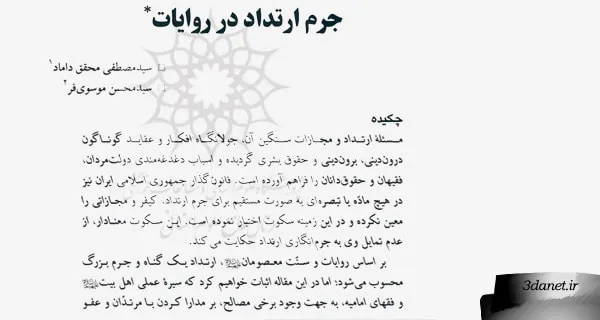
Seyyed Mostafa Mohaghegh Damad
Jurist and Legal Scholar
It seems that an innate apostate is someone who is born into the innate nature of Islam, with at least one of their parents being a conscious Muslim, and who, after reaching maturity, professes Islam, then turns away from the religion out of obstinacy and spite. The Islamic legislator has not directly specified a punishment for the crime of apostasy in any article or clause and has deliberately remained silent on this crime. This meaningful silence of the legislator indicates their reluctance to criminalize apostasy. On the other hand, the subject of some narrations on apostasy is merely changing one's religion, while the subject of other narrations is changing one's religion accompanied by denial and rejection. According to the principles of jurisprudence, absolute narrations must be interpreted in light of the qualified ones. One verse and two narrations were also presented as evidence for this reconciliation. The practical tradition of the Prophet of God and the Commander of the Faithful, Ali (peace be upon him), in early Islam also involved pardoning innate apostates, and there is much historical evidence in this regard; just as Imam Khomeini also refrained from punishing innate apostates on numerous occasions. If an innate apostate returns to the fold of religion, their repentance is accepted, and they are spared the death penalty. Furthermore, the death penalty is specific to those innate apostates who, in addition to obstinacy and spite, openly display their disbelief and propagate against the true religion of Islam. Finally, it seems that considering the extraordinary power of global media and the propaganda campaigns of the enemies of religion, and also in observance of the principle of ((''tanfir'' [averting people from religion])), the execution of the death sentence should be refrained from, and another appropriate punishment should be considered for the apostate, just as instead of the term 'apostasy,' the expressions 'turning one's back on religion,' 'turning away from religion,' and 'religious intolerance' can be used to carry a less negative connotation.
.
Soroush Dabbagh
Researcher in the Field of Religion
Issuing a verdict of apostasy and carrying it out not only does not aid the religiosity of ordinary Muslims, but also fails to present an appealing and reason-nurturing image of the Islamic faith. Moreover, it must be noted that the address of those who have put forward arguments for leaving Islam and criticize Islamic teachings is directed at knowledge-oriented believers; that is, those who are concerned with the justification and truth of religious teachings and engage with theological, philosophical, and intellectual discussions. Throughout history, the general livelihood-oriented believers have neither acquired their religiosity through reasoning and theological and philosophical debate, nor have they abandoned it through such means. Therefore, refraining from engaging in theological and philosophical discussions among livelihood-oriented believers aids its natural realization among the primary audience of such discussions. Resorting to the weapon of excommunication, speaking in the language of threat, straining one's neck veins out of religious zeal, and dragging conflict and strife among the common people in the streets and marketplace, not only fails to convince those who pursue these discussions with epistemic motivations, but also needlessly causes anxiety and distress for others who have no connection to these theological and philosophical discussions and whose Muslim way of life is not built upon or organized by them.
A methodical understanding of the Quran is silent regarding the worldly punishment of the apostate and taking their life, and it makes no normative judgment on this matter; likewise, conventional moral intuitions unanimously decree its impermissibility. Therefore, considering the apostate as "mahdur al-dam" (one whose blood may be shed with impunity) and subjecting them to worldly punishment, physical and psychological harm and harassment, and depriving them of personal and social rights is unjustified and constitutes an anti-ethical and reprehensible conduct.
Apostasy on the Scales of Ethics
.
Mohammad Soroush Mahallati
Shia Jurist and Religious Researcher
The fundamental question concerning the ruling on the apostate, which merits investigation, is whether Islam has "prescribed" a single, "fixed ruling" as a "hadd" punishment for the apostate for all social and cultural conditions, in all ages and eras, for all persons and in all environments, and has obligated the Islamic ruler to implement it regardless of discerning the best interests of the Islamic community; or whether, in punishing apostates, various factors must be considered, and the Imam of the Muslims is duty-bound, taking into account the individual's intellectual circumstances, the factors influencing him, the consequences of his deviation, the motives behind the occurrence of apostasy, and many other social and cultural issues, and with a correct understanding of the state of society, politics, and culture, to decide on the principle of punishment and its type? And did the Messenger of God, in dealing with apostasy, punish apostates from the position of "conveying" and "implementing" a "divine ruling," or did His Holiness, from the position of leadership of the Islamic Ummah and based on guardianship (wilāyah), engage in "legislating a ruling" and then "implement" it?
It should not be assumed that the existence of numerous narrations from the Imams, peace be upon them, in which uniform rulings regarding apostates are stated, negates the second possibility, because these narrations are the explanation and elaboration of a ruling that was proclaimed by the Noble Prophet. And if the original Prophetic ruling, considering certain evidence and indications, had a governmental and discretionary (ta'zīrī) aspect, then these narrations naturally also pertain to the "conditions of that same ruling" and do not alter the nature of the ruling. Just as if, regarding zakāt, the expression "the Messenger of God made zakāt obligatory on nine things" is used to indicate that the legislation of zakāt on these specific items has a governmental aspect, the narrations of the Imams (peace be upon them) that state the conditions of zakāt for these items are an explanation of that same Prophetic ruling and do not change its essential nature. Furthermore, in the narrations of the Imams (peace be upon them), there is no mention of the punishment for apostasy being a "hadd," and this silence also leaves open the path for inferring from the words of the Messenger of God a governmental interpretation of it.
Likewise, an obstacle such as "consensus" (ijmā') does not prevent such an interpretation, because some top-ranking jurists have explicitly stated that the punishment for an apostate is discretionary (ta'zīrī), and many of the early scholars also did not use the term "hadd."
Of course, Islamic researchers and thinkers in the last century have presented various analyses regarding the philosophy of punishing the apostate and have scrutinized the different dimensions of the issue from political, social, and individual aspects. However, it seems that until the "legal nature" of the ruling on the apostate is recognized, such analyses will not be effective or pioneering. Because such philosophies cannot change the generality and inclusiveness of a "divine hadd" and exclude some apostates from the scope of the ruling, for rulings do not revolve around their underlying wisdoms and are independent of them in their breadth and narrowness.
.
With thanks to Mr. Arsham Zadeh Abdollahi, who played an important role in compiling this material.
.
This material is being completed. You can also send us the writings of other thinkers on apostasy in the comments section of this post.













Discussion7 comments
عموم فقها حکم قتل مرتد را پذیرفته اند چه فقهای سنتی و چه فقهای نواندیش ، تفاوت تنها در دایره مشمولیت این حکم است فقهای نواندی این دایره را کوچکتر از فقهای سنتی می داند و این امر نشان دهنده این نکته است کهفقه ، دست فقها را بسته است نظریات نواندیشان دینی و فیلسوفان و اخلاق پژوهان با براهین عقلانی و اخلاقی و تاریخی حکم ارتداد نمی پذیرند و در بین نظر جناب دکتر فنایی بسیار قایل تامل است و مقدم بودن اخلاق بز دین را نه تنها غیراخلاقی بودن حکم ارتداد را بیان می کند بلکه کتمان ارتداد زا هم غیر اخلاقی دانستند
به نظرم اگر ارتداد را به عنوان یک درد در نظر بگیریم باید به دنبال درمان رفت آقایان ! حوصله مراحل درمان را ندارند میگویند عضو را قطع کنید ! امام حسن با فردی که به ایشان دشنام داد و تهدید کرد چه گفتند ، برادر مشکلت چیست ؟ او را به خانه بردن و مشکلش را حل کردند ، کلا باید این ناآقایانی که این همه خشونت در کلامشان است چند روزی ببرندشان سختیها و بی عدالتی های ناشی از دینی که آنها پیاده کردهاند بچشند تا حالشان جا بیاید ، اگر دیگری مرتد شدخ ، تو هم مست شدی ای بیخیال بیدرد ، بله واقعا دین را پیاده کردند و اسبش را سوار شدن و دارن میتازن ، اکنون من و دین تشنه و گرسنه و مضطرب کنار جاده نشستیم ،
هنگامی که فردی به دیانت اسلام مشرف میشود - فرضاً فردی که پیشتر یهودی،مسیحی،بهایی و ... بوده است" عموم مسلمانان به او تبریک میگویند و پیام شادباش به او عرض میکنند. اما هنگامی که فردی بنا به هر دلیلی قصد آن میکند که از دیانت اسلام خارج شود بنا به رای اغلب علماء حکم ارتداد برای او صادر میشود که این حکم بر دو قسم است: ارتداد فطری و ارتداد ملی. ارتداد فطری شامل حال آن از دین خارج شده ای میشود که پدر و مادرش مسلمان بوده اند و در واقع خودش مسلمان زاده بوده است. و ارتداد ملی شامل آن کسی میشود که در زمان حیاتش در ابتدا دین دیگری را اختیار کرده بوده است و سپس مسلمان شده است و بعد از آن تصمیم میگیرد که از اسلام نیز خارج شود و به سراغ دین و باور دیگری برود. بنا به رای قاطبه ی علماء و فقهاء، حتی توبه ی مردی که ارتداد فطری شامل حالش میشود فایده ای ندارد و راهی را برای او برای حفظ جان نمیگشاید.اگر توبه کار مونث باشد، آنگاه است که با توبه کردن راهی برای او گشوده میشود ولی در صورت اباء کردن از این کار نیز او باید عمر خود را تا زمانی که نظر خود را تغییر دهد در زندان بماند. حکم مردی که ارتداد ملی شامل حالش میشود نیز به همین وجهی است که زنی حکم ارتداد فطری شامل حالش شده است. ناگفته پیداست که خروج از دین، الزاماً به معنای "سب" نیست که خارج شده از دین دست به " سب النبی" بزند. که خود مسئله ی سب النبی بنا به حکم اکثر علماء به تنهایی شامل حکم اعدام میشود، کما اینکه در ماده ی 513 قانون اساسی نیز نوشته شده است: «هر کس به هر یک از ائمه معصومین (ع) اهانت نماید اگر مشمول حکم سابّ النبی باشد اعدام می شود.» با توجه به اینکه بنا به حکم قران کریم در سوره ی بقره آیه ی شریفه ی 256 آمده است که "لا اکراه فی الدین" -در پذیرش دین هیچ اجباری وجود ندارد- علمای عظام به آیاتی چون "ان الدین عند الله الاسلام" (آل عمران آیه ی 19) "وَ مَنْ یبْتَغِ غَیرَ اَلْإِسْلامِ دِیناً فَلَنْ یقْبَلَ مِنْهُ وَ هُوَ فِی اَلْآخِرَةِ مِنَ اَلْخاسِرِینَ" (آل عمران آیه ی 85) "إِنَّ الَّذینَ اشْتَرَوُا الْکُفْرَ بِاْلإِیْمانِ لَنْ یَضُرُّوا اللّهَ شَیْئًا وَ لَهُمْ عَذابٌأَلیمٌ" (آل عمران 177) "اِنَّ اَلَّذِینَ کفَرُوا مِنْ أَهْلِ اَلْکتابِ وَ اَلْمُشْرِکینَ فِی نارِ جَهَنَّمَ خالِدِینَ فِیها: (بینه آیه ی 6) "الَّذینَ ارْتَدُّوا عَلی أَدْبارِهِمْ مِنْ بَعْدِ ما تَبَیَّنَ لَهُمُ الْهُدَی الشَّیْطانُ سَوَّلَ لَهُمْ وَ أَمْلی لَهُمْ،" محمد آیه ی 25) "مَنْ کَفَرَ بِاللّهِ مِنْ بَعْدِ إیمانِهِ إِلاّ مَنْ أُکْرِهَ وَ قَلْبُهُ مُطْمَئِنٌّ بِاْلإیمانِ وَ لکِنْ مَنْ شَرَحَ بِالْکُفْرِ صَدْرًا فَعَلَیْهِمْ غَضَبٌ مِنَ اللّهِ وَ لَهُمْ عَذابٌ عَظیمٌ" (نحل آیه ی 106) التزام میکنند و بر آنند که چون در نزد خداوند تنها اسلام پذیرفته است، و چون کسانی که از دین بازگشته اند شیطان آنها را گمراه کرده است و زیانکار هستند و خداوند نیز آنها را مجازات خواهند کرد. یحتملاً به این برداشت رسیده اند که مجازات دنیوی ایشان را هم باید در این دنیا داد که میتوان نشانه های این حکم را برداشتی از سوره ی توبه آیات 65 و 66 دید:" « وَ لَئِنْ سَأَلْتَهُمْ لَیَقُولُنَّ إِنَّما کُنّا نَخُوضُ وَ نَلْعَبُ قُلْ أَ بِاللّهِ وَ آیاتِهِ وَ رَسُولِهِ کُنْتُمْ تَسْتَهْزِؤُنَ.لا تَعْتَذِرُوا قَدْ کَفَرْتُمْ بَعْدَ إیمانِکُمْ إِنْ نَعْفُ عَنْ طائِفَةٍ مِنْکُمْ نُعَذِّبْ طائِفَةً بِأَنَّهُمْ کانُوا مُجْرِمینَ.،و اگر از آنها بپرسی «چرا این اعمال خلاف را انجام دادید؟!»، میگویند: «ما بازی و شوخی میکردیم!» بگو:« آیا خدا و آیات او و پیامبرش را مسخره میکردید؟!(بگو:) عذر خواهی نکنید (که بیهوده است؛ چرا که) شما پس از ایمان آوردن، کافر شدید! اگر گروهی از شما را (بخاطر توبه) مورد عفو قرار دهیم، گروه دیگری را عذاب خواهیم کرد؛ زیرا مجرم بودند!» البته مسئله ی ارتداد مختص اسلام نیست و دیگر ادیان و باورها هم این گیر و گرفتاری ها را دارند، فرضاً در ایران پیش از اسلام در زمان قدرت زرتشتیان، مانویان و مزدکیان نیز معرض خطر بودند و اگر فرد زرتشی به آن آئینها میگروید حکمش مرگ بود و همچنین است در یهودیت، و کافی است نگاهی به کتاب تسنیه باب 5،13،17 انداخته شود که نشانه های آنرا یافت. و البته که در مسیحیت نیز در زمان قرون وسطی دادگاه های تفتیش عقاید برپا میشد و جزای کسانی که اندک باورشان مطابق با کتاب مقدس و تفسیری که کلیسا ارائه میداد نبود مرگ بود. دکتر سروش دباغ در نفی و رد مسئله ی ارتداد، تفکیکی را بین خطای معرفتی با خطای اخلاقی قائل میشود. ایشان استدلال میکنند که خطای معرفتی آن خطایی است که فرضاً فردی به اشتباه مجموع زوایای مثلث را بیشتر یا کمتر از 180 درجه میشمارد و میداند و یا در مسئله ای دیگر به این گمان میرود که فرمان مشروطیت در زمان پادشاهی کسی به جز مظفرالدین شاه صادر شده است و ایشان بر این باورند که مسئله ی خروج از دین نیز برای کسانی که در آن دین هستند خطای معرفتی باید محسوب شود، چرا که در بهترین وجه آنها تنها میتوانند حکم به آن کنند که آن فردی که از دین خارج شده است و به باور دیگری گرویده است اشتباه میکند که چنین باوری دارد و سپس ایشان حکم میکنند که برای خطای معرفتی هیچ مجازاتی نباید مدنظر قرار گیرد، کما اینکه در مثالهای دیگر نیز حکم مجازاتی ای صادر نمیشود و ایشان معتقدند که تنها در خطای اخلاقی است که میتوان فرمان مجازات را مد نظر قرار داد و تنها با کسی که خطای معرفتی ای انجام داده است میتوان وارد بحث شد تا اگر مقبول افتاد از پس بحث خطای او بر او مسجل شود. ایشان همچنین به مسئله ی تطابق مجازات با جرم نیز در این مسئله اشاراتی میکنند و معتقدند حتی اگر خروج از دین را بنا به فرضی خطای اخلاقی و امری غیراخلاقی بشماریم مجازات مرگ هیچگونه تطابقی با آن ندارد. اما انتقاد من به این مسئله ضمن همدلی ای که با استدلال جناب دباغ دارم دارای دو وجه دیگری هم هست. اول اینکه به گمان من، اگر مسئله ی خروج از دین را ما با این پیشفرض که خروج از دین عملی غیر اخلاقی است پیش ببریم، در ابتدای امر مسئله ی تبلیغ و دعوت به دین را نیز باید مردود اعلام کنیم. چرا که پذیرش فردی به دین، دقیقاً برابر ایستاست با خروج او از دین و آئین دیگری. و اگر این را تنها شامل حال مسلمانان بدانیم، بدین معنا که ایرادی ندارد کسی وارد دین اسلام شود ولی ایراد چنین است که حق خروج را ندارد که در اینجا باید چنان حکم کنیم که مسلمانان چیزی را که برای خود میپسندند برای دیگران نمیپسندند و چیزی را که برای خود دوست نمیدارند برای دیگران میخواهند. دومین نقد بازمیگردد به معنای آزادی که خود دو رویکرد دارد: اول عدم پذیرش آزادی افراد برای انتخاب آراء و عقاید و دومی ترویج دروغگویی در صورت نبود آزادی یا وجود ترس و حفظ جان. هایدگر نحوه ی تحقق بخشیدن به حقیقت را در آزادی میداند و آزادی را به معنای رها بودن، یا به حال خود گذاشتن و یا گشوده شدن میداند. اگر حقیقت ناپوشیدگی باشد چنانچه توضیح آن داده شد، بنیادش در ناحقیقت یا پوشیدگی است و آزادی رها کردن ناحقیقت است تا خود را در حقیقت گشوده کند. هایدگر در رساله ی درباب ذات حقیقت میگوید آزادی (بگذارباش- بودن) است. یعنی آزادی بشر به این معناست که بشر بگذارد یا اجازه دهد که موجودات آنگونه که هستند باشند. آزادی تحقق سرشت حقیقت است. آزادی این اجازه دادن هست. آزادی صفت انسان نیست، ماهیت آزادی از نظر اصل و منشا به اراده یا حتی جبر علی اراده ی آدمی ربطی ندارد. آزادی بر امر آزاد به معنای امری که بر آن پرتو افکنده شده، یعنی امری که از آن کشف حجاب شده است، نظارت دارد. آزادی نزدیکترین و دورترین خویشاوندی را با وقوع انکشاف، یعنی با رخداد حقیقت، دارد. اما با وجود حکم ارتداد دیگر حقیقتی آشکار نمیشود و عقیده ی فرد در نامستوری به سر خواهد برد، زیرا ترس از مرگ، این امکان را از فرد سلب میکند که بیانی از عقاید خود داشته باشد و در عین حال خود آزادی به معنای بگذارباش- بودن و یا اجازه دادن به اینکه چیزها خودشان، آنطور که هستند خود را نشان دهند نیز سلب میشود.
نظر آیت الله سید محمد جواد غروی در مورد ارتداد: هیچ دلیلی از کتاب و سنت پیامبر، بر قتل مرتد قائم نیست. اما کثرت قائلین به قتل مرتد، فقهاء عظام را از تدبر بازداشته و به وادی تقلید از یکدیگر کشانده است، و دین رأفت و رحمت و حرّیت را به دین خشونت و قهر مبدل ساخته است. اگر حکم مرتد، قتل بود، قطعاً در قرآن کریم ذکر میشد ولی در کتاب خدا اشارهیی به آن نشده، در حالی که قرآن، بیان روشن هر چیزی است، خصوصاً حکم قتل یک انسان، که از اعظم احکام و اهم آنها میباشد. پیامبر اکرم هم نه منافقی را به قتل رسانده و نه مرتدی را، در حالیکه عدهیی از مسلمانان مرتد شدند و پیامبر هرگز نگفت که «فلان کس را بکشید، زیرا مرتد شده است». اخبار ضعیفی هم که در قتل مرتد وارد شده است، نه موجب علم است و نه حتی موجب ظن و شک. این روایات از لحاظ سند، مجعول، و از نظر متن، مخالف کتاب خدا است. در کتاب «فقه استدلالی» ادلۀ «قائلین به قتل مرتد» به طور مفصل مورد بحث قرار گرفته و دلائل فراوان بر ضعیف و غیرقابل استناد بودن این روایات ارائه شده است. همچنین سند و رجال روایات بررسی شده است و نظر علماء رجال راجع به میزان وثوق راویان این احادیث آورده شده است که همگی نشان میدهد این چند روایت اندک، نه تنها باعث علم نمیشود، حتی موجب ظن هم نیستند... پس چگونه با تمسک به این اخبار، به قتل نفس حکم میدهند؟ آیا به صرف احتمال و محض شک و خیال، خون ریزی جائز است؟ در بخش دیگری از فصل «ارتداد» در کتاب فقه استدلالی، به مباحثه با فقهاء، پیرامون معنای مرتد فطری و ملی و معنای محارب پرداخته شده است و با استناد به قاعدۀ کلی «دفع حدود به شبهات»، آمده است: «شایستۀ فقیه نیست که در دقت عمل، اهمال نموده و در افتاء شتاب کند و در خونریزی شریک گردد زیرا در برخی از مواضع، سبب اقوای از مباشر است و اگر فتوای فقیه نباشد، چنین قتلی صورت نمیگیرد. در ضمن جاحد و منکر را محارب شمردن، مخالف لغت و فقه و اتفاق امت میباشد». آیات پیرامون بازگشت از دین خدا و ارتداد، به طور کامل در خلال مباحث فصل «ارتداد» آورده شده است و معنای آنها مورد بحث واقع شده و به تناقض آشکار، میان این آیات از یک سو و روایات متضارب مورد استناد فقیهان از سوی دیگر اشاره شده است. در مبحث ششم از فصل «ارتداد» با آوردن عباراتی از متن تورات، ثابت شده است که ریشۀ حکم قتل برای مرتد، از آن متن اتخاذ شده و از افترائات یهود است. یهودیان خواستهاند با جعل این حکم در اسلام، ایرادی بر حکم تورات وارد نشود. در مبحث هفتم، موضوع محاربه با خدا و رسول و فساد در زمین در آیۀ 33 سورۀ مائده به طور مبسوط بحث شده و مسائل لغوی، تفسیری و تاریخی بسیاری در اثبات این معنا آمده است که مفاد آیه، بیانگر وضع حکم نیست، بلکه تنها تهدیدی است برای ستمگران و مشرکان. همانگونه که هیچگاه پیامبر کسی را به خاطر محاربه یا فساد در زمین، به قتل یا تبعید محکوم نکرد... مبحث دوازدهم که شامل روایات تاریخی بسیار شگفت انگیزی است، به «سیرۀ پیامبر با منافقین و مرتدین و کفار» میپردازد و نشان میدهد که «پیامبر، احدی از منافقین و مشرکین را به قتل نرساند و قتال (نبرد) او هم منحصر به مشرکین بود، آن هم وقتی با وی میجنگیدند. یعنی فقط از کیان اسلام و سلامت وطن خود در برابر تجاوز دفاع میکرد. وی هیچ یک از مرتدین را هم نکشت» یعنی پیامبر دقیقاً به فرمان الهی در سورۀ مائده عمل مینمود و دین اسلام مبنی بر دعوت خلق است با حکمت و موعظۀ حسنه، نه با زور و جنگ و اکراه و اجبار و این اخبار موجود مورد استناد را که حتی موجب ظن هم نمیشود باید به سینۀ دیوار زد. بناءبر آنچه خود پیامبر و ائمه صلوات الله علیهم فرمودهاند. در پایان روایاتی چند از تاریخ اسلام آمده است که اوج اخلاق و مکارم پیامبر را به تصویر میکشد در برابر آنها که سالها کینه توزانه به دشمنی پیامبر پرداختند و حتی کمر به قتل او بستند. اما آیین این پیامبر کجا و دینداری ما کجا؟ حکم شریعت الهی کجا و فتوای فقهاء ما کجا؟
عالی بود. ممنون. خدا به شما خیر دهاد و آن مرحوم را رحمت کناد
ممنون از کار مفیدتون، کاش نظر علمای اهل سنت رو هم میگذاشتین، مخصوصا نظر مرحوم مفتی زاده مبنی بر عدم وجود حتی یک کافر در دوران حاضر که روزگاری جنجال آفرین شد
با سلام. در اینجا جای آراء دکتر علی اصغر غروی و دکتر بنی صدر و نیز جناب امیرحسین ترکاشوند و ... خالی است.