Iranian thinker
Abdollah Javadi Amoli
Abdollah Javadi AmoliPhilosophy and JurisprudenceIranianb. 1933
In their times
Open in the Timeline of Thought



Life and Thought
Abdollah Javadi Amoli, born in 1933 in Amol, is a jurist, philosopher, Quranic exegete, and a source of emulation in Shia Islam. A student of Allameh Tabatabai, he has produced extensive works in Islamic philosophy, theoretical mysticism, and Quranic interpretation.
Abdollah Javadi Amoli, born on May 5, 1933, in Amol, is a jurist, philosopher, Quranic exegete, mystic, and a source of emulation in Shia Islam. He is considered one of the most important students of the philosophical and interpretive tradition of Allameh Tabatabai, and alongside jurisprudence and its principles, he has produced extensive works in Islamic philosophy, theoretical mysticism, Quranic interpretation, and modern theology.
After completing his preliminary studies in Amol and spending some time in Mashhad, Javadi Amoli went to Tehran and studied at the Marvi School under masters such as Mohammad-Taqi Amoli, Mehdi Elahi Ghomshei, Allameh Sha'rani, and Fazel Tuni. He then moved to Qom in 1955 and studied under masters including Ayatollah Borujerdi, Imam Khomeini, Mohaqeq Damad, Mirza Hashem Amoli, and especially Allameh Tabatabai.
The central axis of Javadi Amoli's thought is the connection between reason, revelation, and intuition. He does not set reason against religion but considers it the "lamp of religion"—that is, a tool for understanding the doctrinal, ethical, jurisprudential, and legal teachings of religion. In this respect, his intellectual project lies in the continuation of Sadrian Transcendent Philosophy, Quranic interpretation, and theoretical mysticism.
In Quranic interpretation, his most important work is Tasnim, an extensive and sequential commentary considered one of the most detailed contemporary Shia exegeses. In philosophy, through his exposition and elaboration of Transcendent Philosophy, particularly in the series Rahiq-e Makhtum (The Sealed Nectar), he has sought to reconstruct the Sadrian tradition in the pedagogical language of the contemporary seminary.
Culturally, Javadi Amoli has at times taken positions beyond the traditional atmosphere of the seminary, including emphasizing the necessity for clerics to become familiar with new ideas, Western philosophy, foreign languages, and contemporary issues. His praise of Ferdowsi and emphasis on the cultural dignity of Iran also demonstrate his attention to the connection between religion, rationality, and Iranian culture.
Bibliography
Writings and transcribed lectures16 titles
Tafsir Tasnim
Rahiq-e Makhtum
The Status of Reason in the Geometry of Religious Knowledge
Sharia in the Mirror of Knowledge
Religious Studies
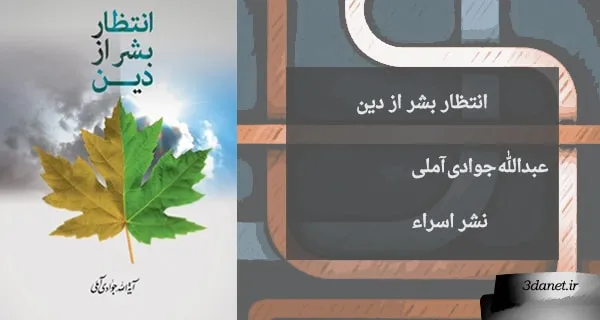
Human Expectations of Religion
The Relation between Religion and the World
Velayat-e Faqih: The Guardianship of Jurisprudence and Justice
Mafatih al-Hayat
Woman in the Mirror of Beauty and Majesty
The Philosophy of Human Rights
An Exposition of the Proofs for the Existence of God
The Etiquette of Annihilation of the Close Ones
The Wisdom of Worship
Islam and the Environment
Shams al-Wahy Tabrizi