In their times
Open in the Timeline of ThoughtInfluenced2


Influenced by2


Teachers2


Critics2


Contemporaries10


Life and Thought
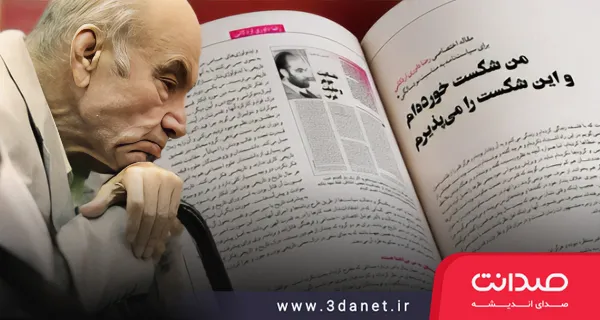
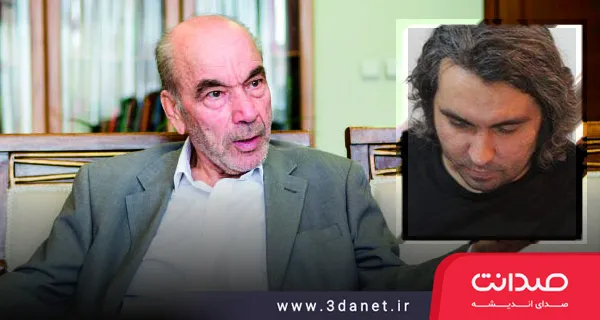
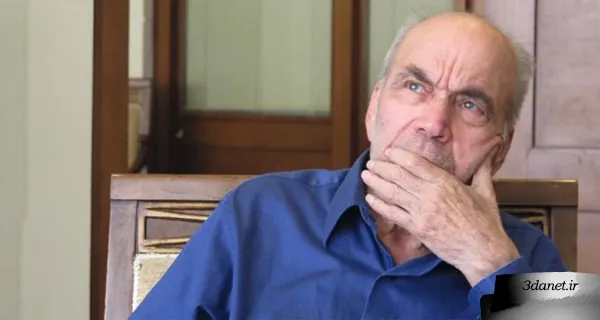
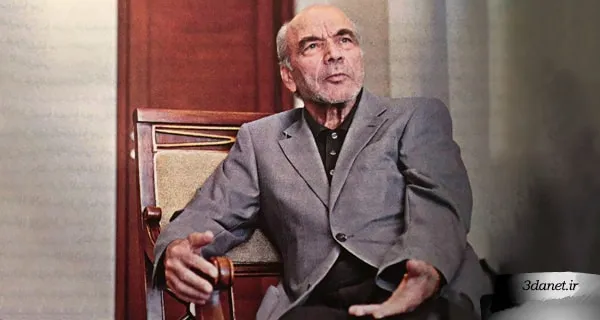
Reza Davari Ardakani (born 1933) is a philosopher and distinguished professor at the University of Tehran who served for many years as the president of the Academy of Sciences. He is one of the influential figures in contemporary Iranian philosophy and has published numerous works on the West, modernity, and Islamic philosophy.
Reza Davari Ardakani, born on June 5, 1933, in Ardakan, Yazd, is a philosopher, distinguished professor, and retired faculty member of the Department of Philosophy at the University of Tehran, and one of the influential figures in contemporary Iranian philosophy. He has been a permanent member of the Academy of Sciences since 1989 and served as its president from 1998 until August 2023.
Davari completed his primary and secondary education in Ardakan and Isfahan, and for a time became acquainted with the preliminaries of seminary sciences at the Sadr School in Isfahan. He then entered the University of Tehran to study philosophy and defended his doctoral dissertation in 1967, titled "The Practical Wisdom of Plato and Aristotle and Its Influence on Farabi's Political Philosophy." His thesis advisor was Yahya Mahdavi, and during his studies he was influenced by professors such as Badi'ozzaman Forouzanfar, Gholamhossein Sedighi, Seyyed Kazem Assar, Mohsen Hashtroudi, Ali-Akbar Siasi, and Ahmad Fardid.
He attained the rank of full professor at the University of Tehran in 1983 and also pursued study and research at the Sorbonne, Cambridge, and Johns Hopkins universities at various times. Davari has published over sixty to seventy books on philosophy, culture, the West, development, science, the history of Islamic philosophy, Farabi, and Iran's relationship with modernity, and many have called him the "Philosopher of Culture."
Davari Ardakani's thought revolves primarily around several axes: our relationship with the West, the question of modernity, the possibility of thinking in Iran, Islamic philosophy, the historicity of science, development, politics, and the state of the humanities. He is among the philosophers who do not view philosophy as merely an abstract discussion, but rather consider it a way to understand the historical condition of a society. For this reason, his works, rather than constructing a systematic and closed apparatus, are engaged with the question: "Where do we stand in history?"
Davari Ardakani has also been a controversial figure in Iran's intellectual sphere, particularly in relation to the debates of the 1990s concerning Heidegger, Popper, science, freedom, development, and modernity. However, in a philosophical introduction to him, more important than these polemics is his role in shaping the inquiry into the West, development, and the possibility of thinking in contemporary Iran.
Davari can be considered a philosopher whose central concern is the "historicity of thought." He asks whether it is possible to think about Iran's future without understanding the history of the West, modern science, technology, development, and our own relationship with them. In his view, the West is not merely a collection of countries or institutions, but a form of history, rationality, science, politics, and life.
In his works, Farabi holds a special place. Davari regards Farabi not just as a commentator on Greek philosophy, but as a thinker foundational to Islamic philosophy and civil thought. On the other hand, through his reflections on Heidegger, Davari has sought to raise the relationship between philosophy, history, technology, and modernity within the Iranian context.
In June 2023, on the occasion of his ninetieth birthday, a conference titled "Davari in the Scales of Judgment" was held, focusing on a re-reading of his works and views, and subsequently a book with the same title about his philosophical and social thought was prepared for publication.