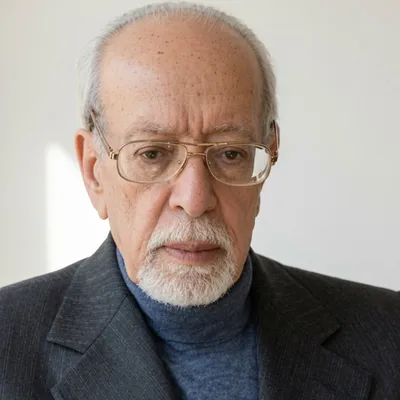
Westoxification means becoming alienated from oneself, forgetting one's own history and culture, and instead taking Western history and culture as the origin and foundation.
In their times
Open in the Timeline of ThoughtInfluenced9


Influenced by4


Students1

Critiqued1

Critics2


Contemporaries3


Life and Thought
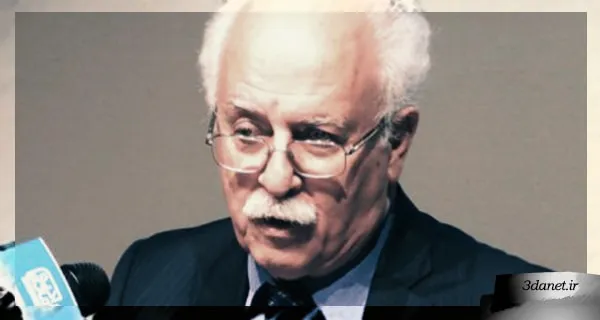
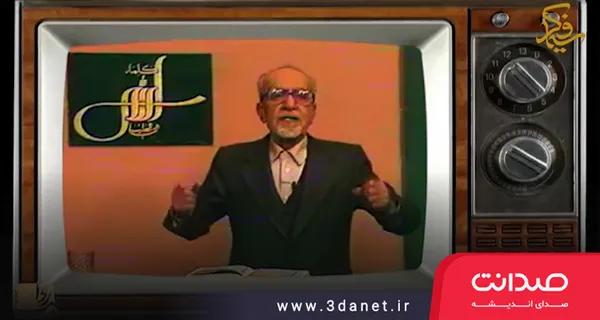
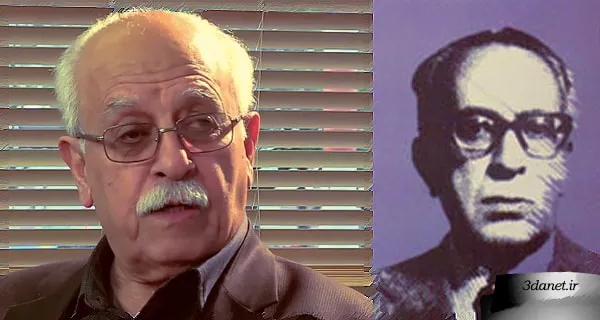
Seyyed Ahmad Fardid (1910–1996) was a contemporary Iranian philosopher and interpreter of Heidegger. He is known for coining the concept of 'Westoxification' and as a critic of modernity, and he had a significant influence on Persian philosophical terminology.
Seyyed Ahmad Fardid, originally named Seyyed Ahmad Mahini Yazdi, was born in 1910 in Yazd and died on August 16, 1996. He was one of the controversial figures of contemporary Iranian philosophy and is best known as an oral interpreter of Heidegger, the originator of the concept of 'Westoxification,' and a critic of modernity.
Fardid began his primary education and French studies in Yazd before moving to Tehran. He studied at Dar ul-Funun and the Higher Teachers' College, and for a time also became acquainted with seminary sciences and Islamic philosophy. He later traveled to France and Germany to study contemporary European philosophy, particularly existentialism and the philosophy of Martin Heidegger, but did not obtain a specific academic degree from that period. After returning to Iran, he taught philosophy at the University of Tehran and was a prominent presence in intellectual circles and the media during the 1960s and 1970s.
The central axis of Fardid's thought was the critique of the West, modernity, metaphysics, humanism, and technology. Drawing on a particular reading of Heidegger, he viewed the history of the West as the history of the oblivion of Being and the dominance of metaphysical thinking. The concept of 'Westoxification' in his thought did not carry a purely political or cultural meaning, but rather an ontological one: the dominance of acquired knowledge, human self-foundation, and the forgetting of the truth of Being.
Fardid was also interested in etymology, Islamic philosophy, mysticism, ancient languages, and the relationship between Iranian-Islamic thought and Western philosophy. Many Persian philosophical terms that became common in Iran's intellectual sphere were directly or indirectly influenced by his suggestions and coinages.