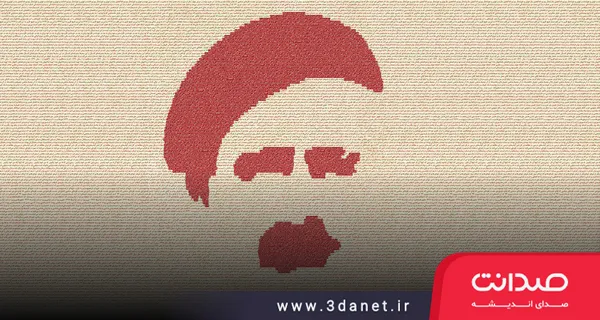
Iranian thinker
Jalal Al-e-Ahmad
Jalal Al-e-AhmadLiterature and Social ThoughtIranian1923–1969
I say Westoxification like catching cholera... No, that's not right. Let's say like heatstroke. But no, that's not it either. Westoxification is one of those two-legged things. That is, one leg is in the West and the other is in us.


Life and Thought
Jalal Al-e-Ahmad (1923–1969) was an Iranian writer, translator, and social critic. With his book Gharbzadegi (Weststruckness) and his sharp, critical prose, he is considered one of the most influential figures of Iranian intellectual life in the 1950s and 1960s.
Jalal Al-e-Ahmad (1923–1969) was an Iranian writer, translator, essayist, and social critic. He was born in Tehran into a religious family, received religious instruction for a time, and then gravitated toward literature and political and cultural activism. Al-e-Ahmad graduated from Tehran’s Higher Education Institute in Persian literature in 1947 and worked as a teacher for many years. In 1950 he married Simin Daneshvar, the prominent Iranian fiction writer.
Al-e-Ahmad is one of the most influential figures in contemporary Persian prose. His work falls into three main areas: social fiction, critical essays, and travel writing/ethnography. His prose is sharp, concise, colloquial, and tense, and it typically addresses issues of intellectual life, education, tradition, religion, colonialism, the village, oil, Gharbzadegi (Weststruckness), and Iran’s relationship with modernity. The concept of “Gharbzadegi” was first formulated by Ahmad Fardid, but Al-e-Ahmad’s book Gharbzadegi turned it into one of the central terms of Iranian intellectual discourse in the 1960s.
Bibliography
Writings and transcribed lectures24 titles
Visits and Revisits
On the Suffering We Endure
Setar
The Superfluous Woman
The School Principal
The Story of the Beehives
Nun va al-Qalam
A Stone on a Grave
The Curse of the Land
Five Stories
Seven Articles
Westoxification
A Three-Year Record
Hasty Evaluation
On the Service and Treason of Intellectuals
One Well and Two Pits
Orazan
The Tats of Zahra Bloc
Kharg Island, the Orphan of the Persian Gulf
A Straw in the Miqat
Journey to the Realm of Azrael
Journey to Russia
Journey to the West
Trip to America

.webp)
.webp)