Philosophy
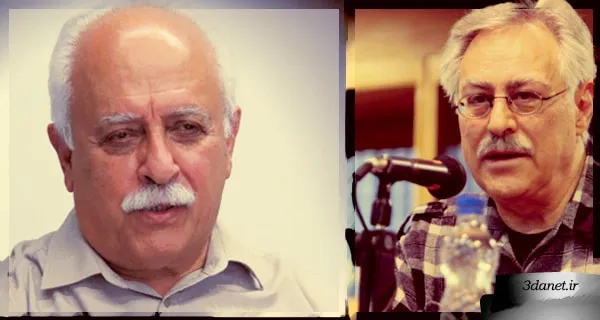
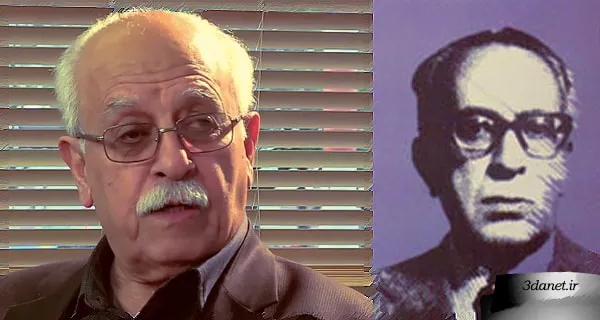
The Myth of Philosophy Among Us, an essay by Dariush Ashouri
Dariush Ashouri sees Fardid's thought as an amalgam of Heidegger and mysticism that, rather than advancing theoretical knowledge, served an ideological function in support of despotism and reduced philosophy to myth-making.
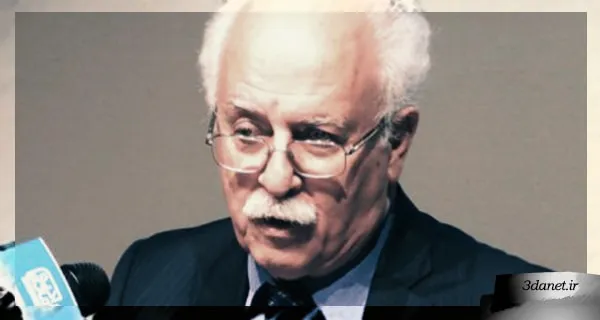
This file contains a collection of talks by Dariush Ashouri about Seyyed Ahmad Fardid, a contemporary Iranian thinker and philosopher, focusing on Ahmad Fardid's views and an examination of his theory of Westoxication.
Abstract: Ahmad Fardid (1910–1994) was a professor of philosophy at the University of Tehran, and despite having few written works, through his influence on his students, he shaped one of the intellectual currents of recent decades in Iran. In this article, the author examines two recently published collections of his talks and critiques his theories. The author's most important criticism is that Fardid, by combining the ideas of Heidegger, Muhyiddin Ibn Arabi, and Hegel, has created a hodgepodge that possesses neither internal consistency and harmony, nor is it built upon a specific intellectual foundation, nor does it yield a clear result.
Fardid, as a philosopher, introduced a new concept into the Persian language that acquired a very significant historical destiny, and that was the concept of "Westoxication" (Gharbzadegi), which I believe he must have arrived at in the late 1950s. What drew attention to Fardid and his ideas was the publication of Jalal Al-e Ahmad's book *Westoxication* in 1961. But Al-e Ahmad's account of the concept of Westoxication had no connection to Fardid's ideas; rather, it stemmed from the learnings he had acquired in the Tudeh Party and the Third Force, involving a superficial familiarity with Marxist history, sociology, and economics. Fardid, however, propounded the category of Westoxication in a complex and bombastic language, from a philosophical-mystical perspective, in private gatherings and his classes at the Faculty of Literature. From Fardid's viewpoint, turning away from the West, its Westoxication, and its "nihilism" means returning to the embrace of the East and its spirituality, which must be sought in theoretical mysticism and the culture of Sufism, which itself considers itself the esoteric truth of Islam.
Another reason for Fardid's appeal was the spirit of the age, which was on the verge of introducing, alongside the radical and revolutionary leftist discourse—which saw its main enemy as Western imperialism and capitalism, and its qibla as Eastern socialism—another discourse that attacked the materialism, nihilism, scientism, and technomania of the West from the front of Eastern spirituality, the clergy, and mysticism. This front, eager for a return to the self and its Eastern and Islamic authenticity, emerged under the influence of the French intellectual "Third-Worldism" atmosphere in the first half of the 1960s, with Al-e Ahmad's Westoxication and the passionate, hurried writings of Ali Shariati. Gradually, a ground was prepared for this discourse to transcend socio-political language and enter the arena with Fardid and his philosophical-mystical language. In the following years, two students of Henry Corbin, namely Seyyed Hossein Nasr with his fervent Islamism and Dariush Shayegan with his mystical inclinations, joined this orchestra of "Eastern spirituality" with the book *Asia Against the West*. Finally, as the cause gained momentum and the market grew ever hotter, the sociologist Ehsan Naraghi also entered the fray with one or two collections of articles, "That Which You Yourself Had."
The question is what, and to what extent, was philosophical in these discourses. What truly serious and original question did these philosophers pose that could draw us from the superficial world of politicized intellectualism into a deeper and more substantial realm of thought? I believe that a serious critical assessment of his role and words can more or less clarify in what world the highest echelon of our intellectuals—who laid claim to philosophical thought, and of a very original and indigenous kind at that—lived and what ideas they disseminated during the period from the 1340s to the mid-1350s and the threshold of the revolution. As a patient and inquisitive student in the presence of these masters, I listened attentively to everything they said and, with the intention of learning, read carefully everything they wrote—I had even edited the entirety of Dariush Shayegan’s book—yet from the very beginning I sensed that somewhere this story was fundamentally flawed and contained a kind of fantasy-making or, in some cases, trickery. In other words, these talks were ideology-making and had nothing to do with “authentic Eastern culture.” In truth, looking back now, I see that this “Eastern spirituality” and the philosophizing and wisdom-weaving surrounding it added nothing to our theoretical knowledge and shed no light on any issue; rather, its highest value lay solely in its political consumption; and, as we witnessed with our own eyes, each of the two systems, the monarchical and the Islamic, for their own specific reasons, were buyers of this “spiritual wisdom.” The most important reason for this is that the proponents of this wisdom, by embellishing and staging a spirituality that had lost its historical context, made something of it whose sole function was ideological support for despotism and political repression. The Mohammad Reza Shah’s dictatorship was a buyer of this spirituality because it suffered from an ideological vacuum. This regime, despite its economic development policies and the dreams and fantasies it harbored for industrializing Iran—policies and dreams that demanded a congruent ideology and propaganda program—due to its fear of leftist ideologies on the one hand, and the delusions it nurtured about “authentic national culture” and its preservation on the other, in that atmosphere of political repression and suffocation, considered ideologies tinged with religion and mysticism a refuge for itself and gave them free rein.
With the victory of the revolution, Fardid, with a one-hundred-and-eighty-degree political turn, threw himself into the fray of the revolution, and in the highly charged and forceful emotional atmosphere the revolution had created, gathered a large number of young revolutionary Muslims around him. The stage of his real political and ideological influence began here. But the arena he created with the Islamic Revolution, and the attention aroused by his anti-West and Westoxification spiritual wisdom, led to his house being purchased after his death and turned into the Fardid Foundation, to serve as a center for collecting and publishing his works. Now, thanks to this endeavor, we have in hand the book Didar-e Farrahi va Fotuhat-e Akhar al-Zaman, a collection of Ahmad Fardid’s lectures.
Those acquainted with Fardid will recall that the name of the German philosopher Martin Heidegger was never far from his lips. Initially, he considered himself a commentator on Heidegger; but lately, he regarded himself as his interlocutor. He was influenced by the later Heidegger, the period of the “Turn.” It was based on this philosophical understanding of the “history of the West” and its “historical destining” that Fardid sought to explain our current historical situation under the concept of Westoxification. But this most original Fardidian concept and thought not only described our historical situation as a Westoxified or alienated people, but also, following and imitating Heidegger, sought to outline and give meaning to the entire history of the world from a philosophical perspective. However, bearing this point in mind, several fundamental differences between Fardid and his primary model, Martin Heidegger, must not be overlooked; first, Heidegger was a very serious and disciplined German, nurtured in the glorious tradition of philosophy in Germany, and a great, recognized professor of philosophy. Fardid’s lectures were a confused, Sufistic “Heideggery” that was never elaborated or expanded upon. Yet, through endless repetition, it was recounted always and everywhere. His words, in terms of the method of presenting the matter and drawing conclusions, bore no resemblance whatsoever to the standards of our traditional wisdom and philosophy and the etiquette of its lessons and discussions, nor, especially, to European philosophy. The premises and conclusions of the spiritual wisdom were, in truth, nothing more than a few sentences. Those few sentences, as we shall see, are also invalidations of incompatible things in a stuttering language. Fardid, in imitation of Heidegger, was the anti-philosophy philosopher and the divine sage claiming a monopoly on thinking.
Fardid’s most fundamental point, which is the basis of all his “divine wisdom” and “philosophy of history,” is derived from Muhyiddin Ibn Arabi’s theory of the science of divine names; that is, the temporal and historical manifestation of the “Names of God” in the “world of witnessing.” In Ibn Arabi’s theoretical mysticism, the Names are the “intelligible archetypes” or the quiddities of things, which reside in the divine knowledge in the unseen world and then, according to divine decree, appear in the form of things in the sensible world. If we overlook the dialectic or the logic of historical movement in Hegel’s philosophy, the theory of the historical manifestation of the Names in Ibn Arabi’s theoretical mysticism is not dissimilar, at least outwardly, to the theory of the historical unfolding of the Idea in Hegel’s philosophy. Although Fardid is a disciple of Heidegger and holds no reverence for Hegel, through modern historicism, he brings the theory of the manifestation of the Names into the arena of world history and then blends it with Heidegger’s critiques of the history of Western thought as the history of metaphysics. From Hegel’s perspective as well, the Idea or universal truth, in its essence, unfolds itself in pursuit of self-consciousness across historical periods and civilizational contexts, until it finally reaches the perfection of self-consciousness in the modern era and in his metaphysics and philosophy of history.
This is Fardid’s first pretext for constructing a “philosophy of history” in his own name. However, Ibn Arabi’s science of divine names rests upon a religious historiography within the realm of the “history of the prophets” in Islamic civilization, where the history of the emergence and unfolding of truth begins with Adam and ends with Muhammad. But Fardid pours this science of divine names into the mold of world history and, with his own division of world history (in a manner we shall see), sees each period of it under a Name, which in his view is precisely the manifestation of the Names of God. Then, this mixture of Ibn Arabi and Hegel is fused with Heidegger and his theory of the history of metaphysics, and in the midst of this, another ingredient is added to this hodgepodge; namely, the two concepts of “form” and “matter” in Aristotelian physics. Fardid also introduces these two concepts into his “philosophy of history”; in such a way that he drags the relationship between form and matter, which Aristotle introduces to explain changes in the natural world, into the arena of history and says that with the transformation of the preceding historical form, the Name of which that history was the manifestation becomes the matter for the subsequent form and Name. Just as with the emergence of the “West” and its modern historical form, under the “Name” of humanity(1), the “East” and its history, and the Name that represented the East and its history, become the matter for the history of the West and its Name. In this way, the history of the East is subsumed under the history of the West, and the history of the East’s “Westoxification” begins. This, of course, is also an incorrect use of the concept of form and matter; because form, in the Aristotelian sense, can never become matter, which is pure formlessness.
To this patchwork of Ibn Arabi plus Hegel’s philosophy of history and Aristotle’s form and matter, as we mentioned, one more thing must be added to complete this philosophy of history, and that is Heidegger’s “history of Being” and his understanding of the history of Western thought as the history of metaphysics or the history of the “oblivion of truth.” On this basis, historical and civilizational forms, in Fardid’s language, become the forms of the manifestation of “Being” and the “destining of Being” (in the translation of the Heideggerian term(2)).
These few sentences, which are the gist of his discourse, aside from never being expressed with any order, also never receive any theoretical elaboration. One of the reasons for Fardid’s inability to write is the tangled skein of his thought. Philosophical discourse, even the discourse of theoretical mysticism which discovers the logic of myth and gives this discovery a semblance of the formulation of philosophical understanding and language, must be readable in itself, follow its own logic correctly, and not connect irrelevant and incompatible things. The apparatus of Ibn Arabi’s theoretical mysticism is readable in itself, as are the thought systems of Hegel and Heidegger; but mixing these together, that is, leaping from Aristotle to world history—which is the achievement of the modern historical and cultural sciences of the nineteenth century—and then vaulting again from world history to myth, results in precisely the misshapen figure that Fardid cobbles together.
Heidegger does not turn to myths; rather, what replaces philosophy and philosophical conceptual thinking is poetry, the poetic experience of Being, and poetic language. Heidegger believes in the intrinsic historicity of the human being, but he does not lose the thread of history in myths; instead, his view of world history is based on this very modern historiography—that is, the division of history into ancient, medieval, and modern periods. He has no concern with the past of history, nor does he pay attention to the Judeo-Christian creation myth as the beginning of history. He considered the return to the past, to the spirituality of the European Middle Ages, including the turn toward Eastern spiritualities common in the West, to be futile and impossible; for he held that, according to historical logic, escape from the destining of history is not possible, and Western metaphysics must, from within itself, through thinking(3), not philosophizing(4), overcome itself so that the horizon of the lost spirituality may appear once again.
For Mohyeddin, history is spiritual history, and he traces it in the sacred narrative of creation, that is, within the text of the Divine Word and in religious reports and traditions. His spiritual history has no connection to the concept of "world history," which is an achievement of the modern historical sciences. World history for Mohyeddin is the history of the prophets, and he proceeds logically, based on his fundamental belief, from Adam to Abraham, Moses, Jesus, and Muhammad. But Heidegger does not step outside modern historiography, that is, a historiography that links human history and the historical past to the history of nature and the evolution of life, and does not deny the animal origin of the human being either. Fundamentally, Heidegger pays no attention to the mythological or modern scientific genealogical perspective, that is, the search for origin(5) as a cause; rather, by passing beyond any religious or scientific genealogy and etiology, with his phenomenological method learned from his teacher Husserl, he seeks to reach the essence of the human being through "eidetic intuition," which, in his view, is precisely existence or presence in the realm of understanding the meaning of Being and the history of Being. Heidegger's entire attention is directed toward the givenness of European history: from Greece and Rome to the Christian Europe of the Middle Ages and then the emergence of modernity. His entire effort is to illuminate the essential nature of the thought of this history and its relation to the primordial openness toward Being, a relation he refers to as the history of the decline of truth. In his view, the first "openness" at the beginning of history is in the language of poetry, which has yielded its place to philosophy and the language of philosophy, which is "metaphysics." In his belief, the history of philosophy is the history of the forgetting of Being.
Note
Fardid's thought has so far been introduced more through the statements of his students than through his own works, and this article is among the few writings that directly report his ideas. The first half of this piece is mostly devoted to settling scores and dealing with Fardid's personality, and at times takes on a tone of bias and contention.(6) But in the second half, it addresses the substantive aspects of Fardid's theories. It would be far better if such articles confined themselves to intellectual and scholarly discussions, and left political and psychological analyses, which are largely not based on documented evidence, to be raised elsewhere. If the aim is to exhume graves and scrutinize the personality and life history of individuals, others will find much to say about the life of Mr. Ashouri and his like-minded colleagues(7), which will undoubtedly cast a shadow over the critique and analysis of opinions and ideas, and the main goal, which is cultural and spiritual growth and elevation, will not be achieved. In any case, regarding this article, we note a few points:
1. There is no doubt that Fardid's thought has influenced the past two generations of our educated class and intellectuals; but one should not exaggerate the scope and extent of this influence. Perhaps expressions such as "Westoxication," "the destining of history," and the like were popularized by him, but one should not assume that everything said in criticism of the West and Westoxication in these years, or similar themes that have been raised, are all the result of the propagation of Fardid's ideas. On the contrary, it must be said that the contexts created by Western culture and the passivity of Iranian society in that period facilitated the acceptance of such ideas and simultaneously nurtured many other thoughts within itself.
2. The obscurity of this intellectual current has meant that its themes are not widely known, and therefore, alongside its positive points, its serious shortcomings have also not been identified. Apart from the fundamental critique mentioned in this essay—which points to the discordant conflation and combination of Eastern and Western ideas without a clear foundation—one must note the predominance of negative aspects in this perspective; negations and denials that, among his students and those influenced by him, often ultimately turn into a despairing nihilism and passivity. Whereas the critical stance of the Islamic Revolution toward the West is rooted in the affirmative aspects of Islamic thought and clear, path-opening ideas for solving the problems and predicaments of human civilization, centered on religiosity and spirituality.
3. By exaggerating the Fardid circle, Mr. Ashouri considers his view to be the shared ideology of the monarchical regime and the statesmen of the Islamic Republic, engaging in philosophizing to attribute this thought to the Islamic Republic. It is clear that Fardid's thought, due to its outward characteristics of being religious-oriented and anti-Western, naturally attracted supporters from the faithful and committed strata, and perhaps some mid-level officials of the system also showed interest in it. However, a cursory examination can demonstrate that the main officials and leaders of the revolution were neither familiar with his thought, nor can any serious similarity be found between them. In any case, the more and better these intellectual currents are elucidated, and their strengths and weaknesses are correctly and scholarly distinguished from one another, the more beneficial it will be for Iran's scientific and cultural community, preventing emotional and sentimental reactions and intellectual deviations.

Discussion0 comments
No comments yet; let yours be the first voice.