Philosophy
On the Virtues of “Wordplay”: Dariush Ashouri’s Response to Seyyed Javad Tabatabai
In response to Seyyed Javad Tabatabai's critique of his translation of The Prince, Dariush Ashouri calls the reliance on an outdated edition and the disregard for revisions unethical—a critique that, instead of scholarly engagement, resorts to 'wordplay' and discrediting the translator.
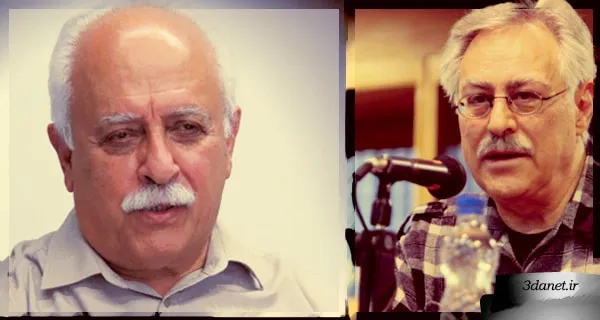
Mr. Seyyed Javad Tabatabai, through prolific output and the publication of several books, has claimed the title of “political philosopher” in the world of Persian letters and thought, and has made a name for himself in the press. Renown, of course, is the right of anyone who does notable work in the realms of science, literature, art, politics, and the like. But it is regrettable that the greater part of his renown is due not to lofty thought or the art of writing, but to the controversy stirred up by the assaults he launches, in the domain of political thought and philosophy, against Persian-language writers, sparing neither the living nor the dead. As these onslaughts suggest, in his view everyone is illiterate and ignorant, as if the sky had suddenly split open and a peerless thinker had been hurled into the dark realm of our world of ignorance and illiteracy to deliver our world from the darkness of ignorance through his scientific and philosophical illumination—and, of course, by rubbing everyone’s nose in the dirt!
He has, among other things, on several occasions made references to me, both direct and indirect, with the barbs and insinuations that are the “exigency of the nature” of such a disposition. However, although I have read three or four of his books and have been astonished by their intellectual rawness and vapidity and the confusion of their language, on the one hand, and his boundless self-aggrandizement, on the other, and had even jotted down notes in the margins of those books, I never sought a polemical engagement with him. For it seemed to me a futile and controversy-stirring endeavor, though it would never have been a difficult task for me. He has, for instance, in a series of lectures titled “Reading Machiavelli,” latched onto my translation of Machiavelli’s The Prince and, under the name of criticism, found fault with it with an intent that is nothing other than to discredit me and my work in the eyes of the youth. In any case, as I will demonstrate, the proper name for his undertaking is precisely this “latching on” with the intention of inflicting moral harm, not the critique of a work according to a sound scholarly method while observing the ethical principles of such an undertaking.
This series of “lectures” (this word, too, is a product of the workshop of, as he puts it, my “wordplay”) has been on the internet for several years. I, too, have often come across it while browsing the web. But I passed it by with a sneer, for I saw in it the “exigency of nature.” However, the publication of an abridged version of them in the magazine Mehrnameh (Tehran, no. 12, Khordad 1390) was a fresh encounter with it for me, which prompted me to offer this response. Because in it, aside from those vapidities and laughable statements, I also see a thick vein of fraud and immorality that others may well not discern. On the other hand, my intention is that the young people who are supposed to learn the art of thinking in his presence, including the young writers of our Mehrnameh—who emblazon the banner of such an article on the front page of their magazine—become more alert to what they are doing.
Tabatabai, without initially mentioning the name of the translator of The Prince, has based all of these “lectures” on the first edition of my translation of that book. There is no doubt that writers of opinion have the right to critique my translation, like any other book. But it is truly astonishing that someone who is intent on teaching how to read that book correctly with his own commentaries should, instead of translating the text in his own pen and language, base his interpretive pronouncements on a text that, by his own account, has no credibility, and consequently must constantly pick at it and “critique” it! At the very outset, he mentions “these Persian translations,” all of which are incorrect and baseless, and the translation of this book is among their number. In his view, Machiavelli’s “very precise” text is, of course, not something that can turn out well “with our literature and the literary dabbling of our translators, who are mainly wordplayers and not genuine translators of thought.”
Although he uses the plural “translators” and tars them all with the same brush, by saying they are “mainly wordplayers” it is clear whom he is pointing to. For among our translators no one is more renowned for “wordplay” than I am. I ask again: why should the interpretation of a philosopher as esteemed as he be based on a text written by a “wordplaying litterateur” who is not a “real” translator of thought? For reasons I shall give, the cause is nothing other than the drive of “natural exigency” in him. Otherwise, with a little manipulation of phrases and words—as is often done among us—he could have claimed the translation as his own, so as not to be compelled to find so much fault with it. Yet even with my translation, he has merely “fastened” onto a few coinages in its vocabulary, and that is all. And it seems he has no objection, or not much of one, to the translation of the text itself. Now let us see what category these objections fall into:
The objections, as I said, are based on the first edition of the translation of The Prince, published in 1987. But this book was substantially revised twelve years later, and the third edition has now been on the market for three years. Therefore, the basis of his critique should have been the second and third editions of this book, which contain the final text from my pen, not the first edition. Among Professor Tabatabai’s objections to this translation is why I did not translate the word virtù, which is a key concept for understanding The Prince, as “honar” (هنر). And he has even adduced evidence from Ferdowsi: “The Iranians possess honar, and that is all.” This objection is, of course, correct. But one might ask: where did Mr. Tabatabai grasp this, and how did he arrive at this Persian equivalent? In my preface to the second edition of the translation of The Prince, I have stated that, in the first edition of the translation, based on three English translations, I was not aware of the central place of this concept in the text. Because the English translators did not take it very seriously, and lacking a fully adequate equivalent in that language for this concept in its Renaissance Italian sense, they substituted, according to the meaning in the sentence, an English word they deemed fitting wherever they encountered it. Following them, I did the same in Persian. That is, I used several Persian words for this concept.
However, some time after the translation was published, by reading Quentin Skinner’s book Machiavelli, I became aware of the fundamental nature of this concept in the text of The Prince. The book’s discerning translator, Mr. Ezatollah Fooladvand, had in one place also used “honar” (هنر) as the equivalent for this word in his translation, which is a correct and meticulous choice that elegantly solves the problem of this concept in Persian translation. It was after this that, in order to revise my translation, on the one hand, I set about tracing the concept of “virtù” in other translations and commentaries, and among other things, I also “gropingly” searched the original Italian text of the book—with the help of the kinship between Italian and French. On the other hand, I undertook an extensive inquiry into the concept of “honar” in the Shahnameh and other texts of poetry and prose in classical Persian. The result of this search appears in the eleven-page preface to the second and third editions of the book, with abundant evidence from those texts.
Therefore, how can Mr. Tabatabai still level this objection at a text that has been so meticulously and extensively revised? He might well say that he has not seen the second and third editions of the book. But what does he do with this “tell-tale sign” that sticks out from the folds of his shawl? For in quoting from the sixth chapter of The Prince (Mehrnameh, ibid., p. 146, paragraph 2), he writes: “Men who in this way [in the original translation: such that] rise to princedom through their art, acquire it with difficulty but hold it with ease.” This sentence and its continuation are quoted from the second or third edition of the translation (p. 81). For in the first edition there is no trace of the word “art,” and the sentence there read: “Men such as these who acquire princedom by the strength of their own arm…” Nevertheless, in a long and obscure passage (p. 145, paragraph 3), he again seizes upon the first paragraph of this same chapter in the Persian translation and deems the absence of “manly arts” (virtù) an error, whereas in this very paragraph, in the second edition, the equivalent “art” for “virtù” appears three times, twice for man and once for the bow.
His other objections are of the same ilk. Among them is why I used “padeshahi” instead of “shahryari” in the translation. It is clear that these two words are synonymous in Persian and can be used interchangeably. But I, too, in the second edition, in keeping with the word “Shahryar” for the book’s title, replaced “padeshahi” with “shahryari.” Now, since his own article testifies that he has seen the second edition of the book and even quoted from it, what can this kind of trumpeting and fraudulent pedantry be called but ill-tempered malice?
But this political science professor’s definition of the word “padeshah” (p. 144, paragraph 2) also warrants pause: “… the padeshahi (shahanshahi) system is a system in which there are multiple shahs and at its head there is an empire.” Leaving aside the brokenness of this sentence and its grammatical feebleness, which is a small sample of the brokenness and feebleness of his writings in general, of which numerous examples can be drawn from this article alone. But taking “padeshahi” and “shahanshahi” as synonyms is another sign of his neglect of “wordplay.” For “wordplay,” whose proper name is linguistic knowledge, enables one to better recognize the correct and precise meaning of words and their semantic nuances and, consequently, to write more accurately. Padeshahi is a Persian word synonymous with saltanat in Arabic. And its meaning is the placement of a single person at the apex of the pyramid of command in a state, whose power—or its ceremonial position—is inherited and passes from them to their kin.
When we speak of the padeshahi of the Netherlands, Belgium, Sweden, and Spain, it never means shahanshahi (equivalent to empire), but rather holding a place at the apex of the pyramid of command in a modern nation-state unit. Shahanshah is a word surviving from the era of the Achaemenid and Sasanian empires. In those times, since within the vast geographical and ethnic expanse under the command of the padeshahs of those dynasties there were many vassal rulers, they were called “shah of shahs.” After Islam, this title appealed to the taste of certain padeshahs—first, it seems, to Mardavij of the Buyids—and they revived it. But many of those who liked to be called “shahanshah,” or whose panegyrists bestowed this title upon them, were never “shah of shahs,” for they did not possess a vast realm. Just as Hafez refers to the padeshahs of the Muzaffarid dynasty, Shah Shoja and Shah Mansur, who held a relatively small territory in a corner of Iran’s ancient empire, with the title “padeshah” (“Come, for the banner of Mansur the Padeshah has arrived…”). Yet in an ode, he also calls this same Shah Mansur “the exalted-starred shahanshah,” which is mere panegyric and courtesy, nothing more.
One of the detriments of being deprived of “wordplay” is that one does not recognize the styles and the wisdom of the stylistic use of words. As Mr. Tabatabai has faulted me for using words such as “blade” and “arm” in place of weaponry or martial force and army. But those who are familiar with classical Persian literature know full well how abundantly blade and arm have been used in our literature as metonymy for army, martial force, and the power of warfare. Since I wished to translate this text, five centuries removed from the time of its writing and considered one of the beautiful ancient works of the Italian language, into a language possessing the eloquence and flavor of classical Persian, I embedded such words in that text, as befits its style. Now, for his edification, I offer a few examples of their usage in ancient Persian literature:
Blade:
A king without a blade is a garden without a cloud; the guardian of faith and realm is the blade (Sanai)
The blade is a good helper to the realm; a realm without a blade is like a sickness (Sanai)
By the power of this blade, he seized… other kingdoms. (Beyhaqi)
A man has become renowned who possesses blade, instruments, and men. (Beyhaqi)
Arm:
Beware lest you take pride in arm and treasure, for the transient abode will come to an end upon you (Ferdowsi)
Such kings who are nurturers of the faith, by the arm of faith carry off the ball of fortune (Sa’di)
We have not taken the realm of well-being by army; we have not placed the throne of sultanate by arm (Hafez)
Following this same pursuit, he has written: “ ‘The prince took them by his own blade’ … has been translated incorrectly. In the text [which text?] it says Army.” Of course, since Machiavelli does not write in English but in Italian, in the Italian text he wrote armi, which shares a root with the English word. Tabatabai continues: “army… here he means army, troops, and not blade; rather, here it is used in the sense of weapons.”
army in English means military force, but armi in Italian means weapons. Weapons and army are two interconnected concepts that, depending on the text, can also substitute for one another. Therefore, according to the evidence we have provided, “blade” in ancient Persian is a correct substitute for it and encompasses both concepts together. Tabatabai’s futile effort to present himself as very meticulous and subtle leads the matter to these misplaced objections.
In the sentence, “Principalities are either inherited, father in father, or are new,” in the second edition, principality was changed to monarchy. He has quoted it in the same way (p. 144, paragraph 3), which again indicates that he has seen the second edition of the translation. But I do not know why “father in father” has been rendered there as “from father to father.” Perhaps he wished to correct my phrase. In that case, he should have written, “from father to son.” Because “father in father” is an established Persian idiom meaning generation after generation in the male line of kinship. “From father to father” is meaningless here.
Another Fraud:
I would like to address just one instance of his clumsy pilfering of other people’s ideas—of which there are many examples—and then move on. I have written an article entitled “From Icon to Image,” which is an analysis of the transition in Renaissance painting from the two-dimensional icon-making of the Middle Ages to painting that represents the third dimension (depth) through geometric techniques of perspective showing the distance and proximity of objects relative to the painter’s viewpoint, and the use of chiaroscuro to realistically depict space and time on the canvas. In that article, I have tried, briefly and concisely, to explain the importance of this transition in laying the groundwork for the scientific revolution in Western Europe through an approach to observation in the empirical world. There, among other things, I also discussed Machiavelli and his way of looking at political events from a historical perspective, and I argued that this historical observation in Renaissance culture originates from the painters’ transition from the world of iconography, or the representation of the idea of objects in the ideal realm, to their depiction in the empirical world. And in this way, the modern historical sciences are founded. To clarify this point, I quote a passage from my article:
The astonishing power of the new techniques in Renaissance painting is the same power that gradually manifests itself in all other fields as well, and from its heart modern science and technology and the Industrial Revolution are born. …Apart from the achievements of the Renaissance in the natural sciences, the modern humanities were also founded in the same era. When Machiavelli fixed his sharp eyes on the scene of political action and turned to the study of history to understand its real meaning, he, in fact, founded the modern science of politics by freeing the understanding of political life and behavior from the prison of medieval icon-making and its moral judgments. This science, instead of approaching the moral icon of political behavior and its ideal model—which we see in mirrors for princes and “Nasihat al-Muluk”—approaches its reality, based on empirical findings or historical data, and seeks the meaning of things that have truly occurred on the stage of society and history.
But look at this very point in his own words in the same article (p. 142, paragraph 3), where no source is mentioned:
… now why can Machiavelli speak like this? One of the reasons is that he is at the beginning of an important transformation taking place both in the realm of science and in the realm of art, which was the issue of Perspective that appears for the first time. The one-dimensional [!] medieval paintings undergo a transformation and become new [?!] and it is here that Machiavelli, whose mind is in fact filled with new developments [!], realizes that it is the same way in the realm of politics [!]…
I have nothing to say about the linguistic mishmash of these “purloined” utterances. But I would remind this professor-philosopher, who wants to teach young people how to think and how to read a text, that what he has taken from that article and referred to as “one-dimensional [!] medieval paintings” is precisely two-dimensional icon-making, which gives way to three-dimensional-representational painting. That is, what, in his words, “undergoes a transformation and becomes new”!
In any case, if I were to extract and dissect every single hollow and nonsensical statement and sentence in this article (as a handy sample of a major portion of his works, of course), I would have to fill at least ten to fifteen pages, which is not worth the trouble and the time. I will only address a few of his “interpretations” and pass over the rest.
The tradition of rambling speech and writing, tangled in endless sentences and chaotic, meaningless words, has deep roots in Persian prose stretching back several centuries, an inheritance that has come down to us. On this subject, more than thirty years ago, I wrote an article titled “Dari Persian and Darivari Persian,” in which I examined the historical course of this language’s corruption; it appears in the essay collection Rethinking the Persian Language. This chaos, in its encounter with the French language—as the language of the modern world and all its achievements—enters a new era of rambling writing and semantic and conceptual confusion that has more or less continued to this day. For the Persian language had to engage and adapt, through translation from French, to new linguistic and conceptual needs with which it was unfamiliar. Although in recent decades the state of the language has gradually improved, becoming more refined and polished through the efforts of serious and talented writers and translators to express modern ideas and scientific and cultural achievements, yet nonsense writing and meaningless translations are still not rare in this language.
I must say that Mr. Tabatabai’s writings, for all their “scientific” and “philosophical” bluster, are, in my view, by no means free of these afflictions. His manner of confrontation and his bluster are not unlike those of Ahmad Fardid and his mode of speech. But I say this with regret. For Tabatabai is an industrious man, and to write so many works, some of them voluminous, he expends great time and effort. But, alas, despite all my attempts to view them positively, and despite all the press clamor they occasionally stir up, I see nothing lasting in them. For creating lasting works requires a passion and a personality with other qualities, among them magnanimity, truthfulness, fairness, and gratitude—not a mere desire for self-display at the cost of disparaging others on any pretext. In any case, let us turn to a few pieces of his interpretive remarks on The Prince, which, in my opinion, are but a drop in the ocean of his writings.
To show that “Machiavelli is neither easy to read nor such an accessible figure that anyone can know him through these Persian translations and, before that, through very elementary writings… like the masters of political thought,” Tabatabai begins the lectures with an assault on others and then pours out a sample of his boundless ocean of erudition and knowledge on the subject—such that if one reads with a meticulous eye and is also a bit of a “word-player” and a seeker, one will be astonished by their incoherence and rambling.
The Temptation of Wordplay
Although Tabatabai dismisses “word-players” as worthless, he himself is not immune to the temptation of wordplay. But since he is not skilled at it, he falls into clumsy errors, an example of which is this (p. 142, paragraph 2):
The Latin word Governare [sic in the original!] from which the English Government, meaning rule, is derived, is taken from this word, which is in pictorial form [?!] meaning to command or, in Arabic, to rule [!]
In this single sentence there are several errors: first, the Latin original of this word is gubernare. Nor is government in the English language the same as that Latin word. The equivalent of gubernare in English is to govern, from the same root. Government is also not directly derived from that Latin word; rather, the Latin word entered Old French as gouverner, and then its derivative gouvernement was taken from gubernamen in Medieval Latin. The English language borrowed this word as government (which, according to him, “is in pictorial form”?!) and its verb from French. Another point is that, as we know, the word “hukumat” (rule) entered Persian from Arabic, but “hukumat kardan” (to rule) is a Persian compound verb, not Arabic!
gubernare in Latin originally meant steering the rudder of a ship or piloting, and then acquired the figurative meaning of administering and managing affairs, including running the apparatus of government. Its root word (etymon) was the Greek kubernan, with the same meaning. This figurative sense has become established as the primary meaning in French and English in the verb gouverner/to govern and its nominal derivative gouvernement/government. He goes on to add that this word, that is, gubernare (not Governare!) “was used primarily in the Christian period and especially before this period in reference to the governance of the human soul [?], meaning this word was primarily the governance of the soul and not the governance of the affairs of the city and the polis…” The first point is that, if this word was used “especially” in the pre-Christian period, then its usage in the Christian period must be secondary, not “primarily”! Of course, such elementary errors in the logic of writing, which are countless in his works, must presumably, as the ancients would say, be chalked up to their “eloquence of tongue and grace of expression”! Let it pass. But the fact that “governance of the soul”—the meaning of which is by no means clear—has been pinned to the root of this Latin word without providing any source for it is highly suspicious. And then linking this “governance of the soul” to the thought of Farabi and his virtuous city and discovering the cause of the “stagnation of political philosophy in the Islamic world” on this basis, with those convoluted, obscure sentences, is a discussion I leave to the experts in Islamic philosophy.
But with my wordplay-obsessed scruples, I cannot pass over these two sentences: “the word tadbir is primarily [?] from the triliteral root [!!] ‘d-b-r’ meaning back and outcome. Tadbir means contemplating the outcome of affairs, that is, contemplating the afterlife”! Tadbir in Arabic, and hence in Persian, means devising solutions and organizing affairs. For instance, in the translation of Aristotle’s oikonomia into Arabic, it is used as “tadbir al-manzil” (household management), but never in the sense of “contemplating the outcome” equivalent to “contemplating the afterlife”! All the incoherent ramblings he engages in following this story are based on this fabricated meaning for tadbir.
The Story of Dialectic
Mr. Tabatabai, owing to his attachments to Hegel’s philosophy, likes to bring up the concept of dialectic, aptly and inaptly, and extract a “highly complex” meaning from simple speech, holding forth on the subject in his broken, halting language. For instance, in the discussion Machiavelli has about the relationship between “virtù” (skill) and “fortuna” (fortune), he sees a “highly complex dialectic” and writes:
…Machiavelli, through a highly complex dialectic, will show [!!] this man and woman, the goddess of fortune and the skill of manliness, the young prince founds a new state [?!]. In other words, the founding by the newly risen prince is based on a logic that will be obtained [!!] from the dialectic among the complex relations of Fortuna and virtu, and it is here that the newly founded state will be established [!!].
Again, I will not concern myself with the incoherence and confusion of these formulations and wish only to remind this esteemed “dialectician” of one point. And that is, wherever a relation and connection is established between two things, it is not a dialectical relation in the Hegelian sense. For a dialectical relation in Hegel’s logic is established between opposites, of the kind of the contradiction between being and nothingness, or spirit and nature. And each stage of it is a progression toward the perfection of the Absolute Spirit. But the relationship between “fortune” (fortuna) and “skill” (virtù) is not of the type of dialectical contradiction and synthesis. For the opposite of possessing “skill” is skill-lessness, and the opposite of possessing “fortune” is misfortune. Machiavelli also says that these two, in the task of attaining princedom, are complementary and necessary to each other, and with one without the other, the task will not succeed, although they also exist separately and the existence of one is not the negation of the other. There is no “complex dialectic” at work here whose discovery requires a “Hegel scholar” and dialectician. Any reasonable person knows that for success in any endeavor and reaching a goal, the innate talent of people (skill) is not enough; rather, suitable conditions for it, or that same “fortune,” must be present. Ferdowsi, too, spoke of this point five centuries before Machiavelli, without being a dialectician or a “Hegel scholar”:
Such was the answer given: that fortune and art are like a pair, joined together,
Just as body and soul, which are companions and paired; the body visible, the soul concealed.
Greatness comes not through effort alone, unless good fortune be its guide.
With all the scrutiny I have given to their incoherent ramblings, I do not wish to leave this point unspoken: it is a meaningless statement they have made, that “Machiavelli is the beginning of the Italian language.” (p. 143, paragraph 4). First, no individual can be the “beginning” of any language. For language is a collective phenomenon, formed and transformed within a dialogical space. They probably mean that Machiavelli’s writings are the origin of the written and literary Italian language. This is also incorrect. For the origin of the written language of modern Italian literature is universally acknowledged to be Dante, who lived a century before Machiavelli.
Créteil, France
July 2011
i This article was first published several years ago in the journal Negah-e No in Tehran. It is now available in my collection of essays titled Parseh-ha va Porsesh-ha (Wanderings and Questions), as well as on my blog, Jostar, in the “Jostarak” section under the title “Return to Class: From Icon to Image.”
ii See:
Oxford English Dictionary, Second Edition, Oxford University Press 2002.
LE ROBERT, Dictionnaire historique de la langue Française, Paris 2000.
iii In all citations, their “orthography” has been meticulously observed as it appeared in Mehrnameh.
.
.
Dariush Ashouri's Personal Website | On the Virtues of “Wordplay”
Dariush Ashouri's Response to Seyyed Javad Tabatabai | August 16, 2011
This article was also published in the August 2011 issue of Mehrnameh magazine
.
.

Discussion6 comments
جناب آشوری این نقد را که چند سالی از آن می گذرد را خواندم، مجددا به مواردی که شما در نقد به آن اشاره داشتید، برگشتم و مورد ارزیابی و بررسی قرار دادم. جای تعجب دارد که از نویسنده و محققی چون شما، که به قوانین نقد و نگارش انتقادی آگاه است، منتقد یک موضوع، حتی 1 درصد از متن و موضوعی که می خواهد نقد کند را مطالعه نکرده باشد. مواردی که مطرح کردید ارتباطی مستقیمی به اصل موضوع و متن ندارد. بلکه برداشت های شخصی افرادی است که اطراف شما هستند و بواسطه ی آنها شما از موضوعات تحصیل اطلاع کرده اید. البته این دایره ی شکل گرفته میان شما و آقای فکوهی کاش وقتی می گذاشتند و متون اصلی را مطالعه می کردند و آنگاه این نقدها اعتبار بیشتری می یافت و راهگشاتر بود. اما این نقدها آنقدر متعصبانه نوشته شده و سوءگیری در آن وجود دارد که آنها را برای محققین فاقد اعتبار می سازد.
برخی ایراد های جناب آشوری درست نیست. ایراد های نگارشی محلی از اعراب ندارد . چون اصلا این نوشته نیست بلکه گفتاری است در کلاس درس. بحث gubernare در دیرینه شناسی فوکو مطرح شده و طباطبایی نیز با اشاره به فوکو به این بحث می پردازد.بنده تصور نمیکنم خود طباطبایی این درسگفتار را پیاده کرده باشد. در مورد دیالکتیک ویرتو و فورتونا به نظرم ایراد آشوری درست است. این بحث ها برای جامعه علمی ایران ضروری است. به این دلیل که به از میان رفتن غول مرجعیت کمک میکند. بهتر است جناب آشوری و دیگران به جای این که از این بحث ها فرار کنند به آنها بیشتر دامن بزنند.از دل این بحث ها مفاهیم روشن تر می شوند .
خرابیِ این جمله و سستیِ دستوریاش به کنار، که نمونهای ست کوچک از خرابی و سستیِ نوشتارهایِ ایشان در کل، که از آن تنها در همین مقاله نمونههایِ فراوان میتوان آورد.
جای آن بود که قبل از آوردن نظر آقای آشوری، همان نوشته هایی را از آقای طباطبایی می آوردید که آقای آشوری را به نوشتن این مطلب پر از حمله، برانگیخته، آن هم به طور کامل می آوردید، و بعد بلافاصله، همین پاسخ مفصل آقای آشوری را! ________________________ اما خودمانیم! راستی که جماعت کارگر فکری ی ایرانی، دایما حکایت چهل درویش و گلیم و دو پادشاه و یک اقلیم را به یاد آدم میارند. یاد اینیاتسیو سیلونه (در مکتب دیکتاتور ها) بخیر، از دست جماعت قلم زن و اهل فکر، و گند دماغی و کبر ویژه ی شان، خیلی «شکار» بود. این جدل ها کم نبوده، میان کسانی که باید مرجع و الگوی رفتاری ی روشنفکران درجه پایین تر و بعد عامه ی مردم باشند. و طبعا با همین نمط است که «در» باز هم ممکن است سال ها و یا حتی قرن ها، بر روی همان پاشنه ی تاریخی بچرخد. در واقع، هر کس، هر آدم «دوم» ی که آلوده ی این بحث های نفرت آور می شود، بازی را باخته است. اوست که شانس بردن دارد، اما از دستش می دهد. اولی، به هر دلیل درست یا نادرست، ادعایی را عرضه کرده یا بازی ی نفرت آوری را شروع کرده که قطعا ممکن است پاسخی بگیرد یا نگیرد. اما دومی، هنوز فرصت دارد که وارد بازی ای تحمیلی نشود، که برحق ترین دلیل اش، دفاع از خود است، دفاع از خود همان، و آلودگی به این بازی مهوع، همان. مجید محمدی، جامعه شناس و نویسنده ی ایرانی، در «جامعه ی نشدنی ایرانی»، نمونه هایی از نوشتار و گفتار چهار روشنفکر برجسته ی ایرانی می آورد، سه تا قبل از 22بهمن و یکی بعد از آن. بدبختانه، یکی از دیگری خراب تر حرف می زنند و می نویسند. «فراوانی» ی آماری ی خشونت کلامی نسبت به «دیگری»، آن چنان بالاست که نگو و نپرس! علت: «ذات نایافته از هستی «بخش» ، کی تواند که شود «هستی بخش»! مایی که تربیت « لیبرال»ی را به خواب هم ندیده ایم، چطور ممکن است تاب نقد یا فحاشی ی «نقد نما» را بیاوریم؟ دوستان، اگر اسم آن چهار بزرگوار در این جا بیاید، واقعا شرم راه می افتد که نگو.و.نپرس، چون همه مان ممکن است سال ها آن خشونت ها را از آن محبوبان مان خوانده باشیم و از هضم رابع مان هم رد کرده باشیم، اما نه تنها که روو دل نکرده باشیم، بلکه مرادمان را هم تحسین کرده باشیم. (بهتر آن که به خود کتاب «جامعه مدنی ایرانی» نگاه شود.). این چنین است که: «و ما تکرار می کنیم شب را و روز را، هنوز را!» کمترین، کشانی www.Ghkeshani.com
مایه علمی سیدجواد قبلا هم با نقدهایی که به کتابهای دکتر مجتهدی درباره هگل نوشت و جواب های کوبنده دکتر مجتهدی مشخص شده بود
اعتبار و متانت جناب آشوری بر همگان مبرهن است. اما مایل ام به جناب آشوری بگویم: به قول آرتور شوپنهاور در هر هنر و عرصه ای یک سری علف هرز رشد می کنند. اما نهایتاً این دست تاریخ است که این علف های هرز را از ریشه برمی کنَد. آنکه جاودان خواهد ماند، عباس زریاب خویی ها، عبدالکریم رشیدیان ها و داریوش آشوری هاست. نه این فیلسوف مآبانِ مورد پسند دولت و حکومت که با پشتوانه های دولتی و تبلیغات تلویزیونی، نامی برای خود اخذ می کنند.