Philosophy
Another Remembrance of Fardid, by Dariush Ashouri
Nasrollah Pourjavady's publication of his student notes from Fardid's classes offers a moderated view of the man; in response, Dariush Ashouri examines Fardid's character and his influence on the intellectual mentality of two generations.
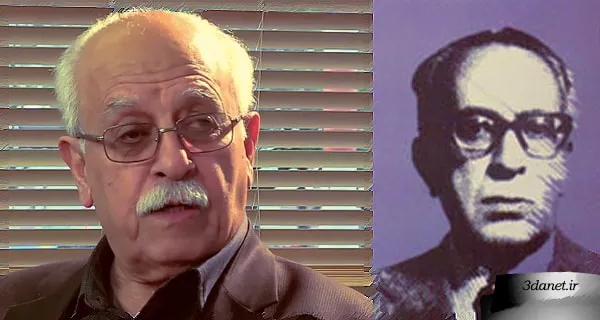
For some time now, Nasrollah Pourjavady, professor of philosophy and an assiduous, inquisitive scholar in the field of Sufism and mysticism, has found a new enthusiasm in his later years and stepped into the arena of Facebook, where he publishes astute and readable notes. I have known Pourjavady closely since his tenure as head of the University Press Center. This institution, which had been established to publish university books, aimed to set aside the old method of publishing such books—a legacy of the University of Tehran Press, which issued books raw, unedited, and without a plan—and to adopt modern methods. The revolutionary fervor of the early years had opened new horizons of hope and expectation for young, progressive forces and called for ambitious undertakings. One of these ambitious individuals was Nasrollah Pourjavady, who, with sound and devoted management and by assembling experienced staff, strove to raise the level of university publishing in Iran in both quantity and quality, and, among other things, to publish books using modern editorial methods. And he succeeded. After Homayoun Sanatizadeh and the Franklin Publishing House, which was the pioneer of fundamental modernization in the organization, technology, and methods of publishing in Iran, Pourjavady and his University Press Center played a significant role in entrenching the achievements of the Franklin Publishing House.
It was through his efforts that, in those very first years after the revolution, two seminars were held on the Persian language and its problems, which were unique of their kind. Papers were presented by experts, some of which truly contained new ideas and perspectives. Pourjavady wanted to hold the first seminar under the title "An Examination of the Problems of the Persian Script," but in a consultation he had with me, I suggested that he title it "An Examination of the Problems of Scientific Language in Persian." And he accepted. In any case, I also participated in these two inaugural seminars with two papers, which were later published in two collections. As long as I was still in Iran, I would occasionally contribute an article to the journal Nashr-e Danesh, which was founded through his efforts and published under his management. I also collaborated with the scientific terminology compilation group at the University Press Center, at the invitation of Dr. Reza Mansouri, and attended its meetings. One of my memories from that era is that at that second seminar, I read a paper—the second paper—that nearly got Pourjavady and me into trouble. For in it, I had respectfully mentioned Ahmad Kasravi and his theories, and this had offended certain "brothers" present at the session, and apparently they intended to beat me up. But with Pourjavady's intervention, and his defense of me before the "higher authorities," the incident ended. As a memento of those seminars, he has also posted a photo on Facebook of me, Hamidian, and Sadeghi on a panel, which revived for me a memory of those youthful days. But my motivation for writing this article is something else in his writing. And that is his treatment of Ahmad Fardid. But it also became an opportunity to speak well of this honorable man.
Pourjavady, in this time of retirement, has found the opportunity to review his old notebooks and papers. And recently, among them, he found a notebook from his student days containing his notes from Fardid's classes. This "archaeological" discovery led him to write an article about his memories of being a student in Fardid's classes, which, like any piece about Fardid, had repercussions among a circle of his acquaintances, near and far. The journal Andishe-ye Pouya also printed it. In that article, Pourjavady discussed at length an article I had published seven or eight years ago on the chaotic personality and mentality of Fardid and his nonsensical ravings, and he deemed my general view of Fardid correct, calling him a charlatan. However, relying on those notes from his student notebook, he opined that Fardid's charlatanism pertains more to the post-revolution era, and that in the pre-revolution era, not all of his talk was chaotic and nonsensical, and that occasionally, amidst this incoherent talk, he would say things that indicated a theoretical subtlety and a philosophical flair.
The publication of this article prompted the editors of Andisheh-ye Pouya to approach me and ask me to join this discussion. However, a trip I had ahead of me caused this task to be delayed by a couple of months. Although I was not particularly inclined to do this in principle and did not want the arena of Fardidology to flare up again, I nonetheless felt it necessary, from another angle, to enter this field once more. Because, regardless of everything that Fardid himself was and whatever he did to whomever, the reflection of his thought and words in two generations of the youth of our time—of which I myself have been one—indicates the existence of a person "of consequence," that is, an influential one. Pondering the whys and wherefores of his words and behavior and their widespread negative and positive reflection in the mentality of a segment of the intellectual and enlightened figures of two generations, and the meaning of this reflection from various perspectives, is of such importance to someone who is given to contemplating the affairs of their own time that one cannot easily pass over it. As a result, I could not overcome the temptations of the nafs-e ammāra (the commanding self)—by which Fardid himself was sorely afflicted—and took up the pen, which has now turned into a keyboard or, as some experts say, a "page-key."
Fardid brandished the club of knowledge and erudition most of all in two areas. First, in the field of the history of Western philosophy, albeit with the understanding he had gained of it under the influence of Martin Heidegger's interpretation. And second, a wondrous and terrifying display of his knowledge in the field of several living and dead languages. Among the living languages, the most important and theatrical was his knowledge of German, French, Arabic, and Persian. Tracing words back to their roots in many languages to prove the existence of the language of the "Single Community" (Ummat-e Wāḥida), according to the Quranic narrative, was his constant refrain in his discourses. Of course, the origin of this story also goes back to his engagement with Heidegger's writings and his particular method of hermeneutic engagement with language. But Heidegger never made Fardid's claims in historical linguistics and never stepped beyond the circle of German, Latin, and Greek historical linguistics. From those notebooks of his on this subject, which he spoke of, nothing seems to have surfaced. For his house, along with his library and what remains of his writings, has been purchased with municipal funds and turned into a center for philosophical education and research. However, as far as we know, neither has any sustained and serious work been done there in terms of education and research, nor has anything substantial been unearthed from the treasure trove of philosophical writings in Fardid's library and papers by those seeking them, apart from some marginalia in certain books.
As to how much Fardid knew of Sanskrit, Greek, and Latin, of which he boasted, nothing true, correct, and comprehensible can be gleaned from what has been published of his lectures, especially those after the revolution. However, a fragment of a translation from Nietzsche remains from him, which I believe can indicate the extent of his knowledge of German. And of course, considering his boundless devotion to Martin Heidegger and his "intimacy" with Heidegger's works, ostensibly in the original language, and the fact that Heidegger's name was never off his lips, this surviving translation fragment is worth pondering.
The original text of this fragment, titled “The Madman” (der tolle Mensch), appears in Nietzsche’s The Gay Science (Die fröhliche Wissenschaft), Book Three, section 125. Fardid would read this translation in his classes. After the revolution, he gave talks in special gatherings, drawing to himself with fervor a crowd of revolutionary youth of the Twelver Shia persuasion who were advocates of “absolute guardianship,” because he spoke words that were to their liking. Some of them soon joined the ranks of his devoted and zealous admirers and formed circles under Fardid’s banner. These same individuals published this translation in a “cultural-artistic yearbook” called Mowqef (Year 1, Issue 1, Shahrivar 1382 [September 2003]), together with its German text. This text can be found on at least one of his admirers’ websites. Aramesh Dustdar also translated this fragment and, along with a Heideggerian commentary, it first appeared in 1356 [1977] in the Journal of Philosophy, published by the Philosophy Department of the Faculty of Literature, and it can also be found on Dustdar’s website. I, too, have translated this fragment with a commentary on it, which was published in Bukhara magazine (Issue 82, Mordad-Shahrivar 1390 [August-September 2011]) and is also available on my blog, Jostar.
But what greatly astonished me upon reading Fardid’s translation was how crude, clumsy, and sloppy it is in its correspondence with the German text. Although the original text is narrative and simple, spanning no more than a page and a half, and has no linguistic complexity, how much misunderstanding, omission, and incoherence there is in this translation! Anyone with a moderate knowledge of that language, like myself, understands it easily, while his disciples and devotees, for all their posturing of knowing German in that same magazine, did not realize what a blunder their master had committed; otherwise, they would not have published such a thing with such enthusiasm. In any case, so that this claim does not remain unsubstantiated, I will present excerpts from Fardid’s translation alongside the German original, followed by my own translation:
The very first sentence of the text in Fardid’s translation has an ambiguity that does not convey the meaning correctly: “Have you not heard a word of that frenzied man” (Habt ihr nicht von jenem tollen Menschen gehört…). A more accurate and expressive translation should be: “Have you not heard the story of that madman…?” Three lines down, “So he has childishly taken to flight” is an incorrect translation of Hat er sich verlaufen wie ein kind? The correct translation is: “Did he lose his way like a child?” And following that are two more questions that are omitted in his translation, which in my translation read: “Or is he hiding? Or is he afraid of us?”
Order hält er sich versteckt ? Fϋrchtet er sich von uns?
Fardid is not faithful to the text in this work and alters it arbitrarily. For instance, he translates Markt (marketplace) as “tumultuous bazaar” and, two lines further down, stuffs it awkwardly into the text where it does not exist in the original.
Fardid’s translation: “Thus it was that the people of this tumultuous, topsy-turvy bazaar were screaming and shouting and bursting into loud laughter…” Original text: so schrieen und lachten sie durcheinander
And my translation: “Thus they laughed uproariously among themselves.”
But the catastrophe lies in the following few lines, which are full of omissions, misunderstanding, and incorrect translation:
Aber wie haben wir diess gemacht ? Wie vermochten wir das Meer auszutrinken? Wer gab uns den Schwamm, um den ganzen Horizont wegzuwischen ?
Fardid’s translation of these three sentences is such that he has dropped the first sentence and mutilated and rendered meaningless the second and third: “How can we cleanly wash the sea of this carnage? Who is it that can give us a cloud so that we may cleanly wipe away the entire shore with it?”
My translation: “But how did we do this? How were we able to drink up the sea? Who gave us the sponge to wipe away the entire horizon?”
In this translation, Fardid indulged his taste and sought to render it into pure Persian. Consequently, among other things, he fell into the egregious error of translating horizon (Horizont) as “کناره” (edge). Beyond this, he stuffed it with several words that are, I suspect, Dasatiri, such as “فرنافته,” or from Pahlavi, like “مرگیمیدار” and “اهرای,” which are in any case not Persian and have been used meaninglessly and out of place. I pass over other passages of this translation, in which the faults of omission or misunderstanding are not few, and only wish to note that Fardid, with his habitual carelessness and haste, incorrectly translated two pronouns in this sentence, which I have indicated below in bold letters.
Diese That ist ihnen immer noch ferner, als die fernsten Gestirne--- und doch haben sie dieselbe gethan.
Fardid’s translation: “This great deed is even farther from us than the farthest stars—and yet you yourselves have performed this great deed.”
My translation: “This deed is still farther from them than the farthest stars—and yet they have done it.”
Must it not be said that he did not know the written and semantic difference between ihnen and Ihnen, as well as sie and Sie—that is, a basic written rule of the German language—and thus erred in understanding the text in this way?
In any case, German is a language that, given Fardid’s attachment to German philosophy and all that sense of theoretical affinity with Heidegger (who insisted we write: هَیدگر), he ought to have known well. But this document shows the contrary. Can one not, on this basis, gauge his claims to linguistic knowledge regarding Greek and Latin and whatnot? As Pourjavady has also said, in my view too, Fardid was a liar and a charlatan. Were my objections to his bombastic linguistic pretensions and his delirious etymologizing incorrect? And, as has been claimed, was the sin of publishing them on the head of Mohammad Madadpour, who brought them to market unedited? And now that his talks are being brought to market (at government expense) with editing, to what extent are they being tampered with to cover up their errors and absurdities?
I will not enter again into the discussion of his philosophical knowledge, for I have said what I had to say in the previous article. I only wish to repeat once more that translating Heidegger’s thought into the language of our native Sufism is entirely incorrect. But Fardid did this. And perhaps the reason was that the traditional language of our culture was his mother tongue and his language of education, and he knew it well and was intimate with it, but his acquaintance with the language of the other side was patchy.
That he, in explaining the meaning of “thinking” in Heidegger, repeats this verse by Jami a thousand times in every class and gathering (as Reza Davari also does), shows, in my opinion, his fundamental misunderstanding of Heidegger’s anti-metaphysics:
Thinking is going from the false toward the Truth / Seeing the absolute Whole within the part
The foundation of this verse is nothing other than that same Greek metaphysical ontology, especially Platonic, which divides existence into two parts, the intelligible and the sensible, grants existential authenticity to the intelligible, and considers the sensible as its shadow, making it contemptible, worthless, and inauthentic. This same duality, when it enters the realm of Christian and then Islamic theology, causes the two-part existence of Greek metaphysics to acquire a moral and religious-supernaturalistic weight and, as seen in that verse, is divided into “Truth” (حق) and “falsehood” (باطل). And this is precisely the opposite of Heidegger’s ontology, which seeks to distance itself strictly from Greek metaphysics and Christian theology, and in which truth and falsehood, in the religious sense, have no place. To understand the principal roots of Heidegger’s ontology, one must look to his relationship with Chinese mysticism (Daoism) and Zen Buddhism, where the absence of a personal God creates a fundamental difference between them and the mysticism of monotheistic religions. And this is a story that has been the subject of serious studies, especially after Heidegger’s death. Fardid’s understanding of these issues, based on Ibn Arabi’s unity of being and the discussion of the science of names, is, as it happens, thoroughly “Greek-struck” and un-Heideggerian!
Returning to his notes from Fardid’s class, Pourjavady assesses him thus: before the revolution, although his language was incomprehensible and his lectures disorganized, he still had things to say. It is after the revolution that he becomes a complete charlatan and sacrifices thought and philosophy at the feet of the new oligarchs. An example he gives of Fardid’s remarks in class concerns Husserl’s phenomenology being essentialist and Heidegger’s existentialist. Of course, as far as I too have been able to read about Husserl and Heidegger, or from them, it does not seem an incorrect statement. But the problem is that in this very quotation from Fardid, as always, his main argument does not extend beyond a sentence or two and receives no elaboration, as befits a philosophical lecture, of which Heidegger was a peerless master. Instead, without any relevance or logic, in the second or third sentence he jumps to Sadegh Hedayat and a judgment on his character and disposition, and its continuation is very likely a disparagement of Mohammad Ali Foroughi or whoever else he happens to recall at that moment. (It would be good if Pourjavady published all those notes so that we might have another document of Fardid’s sayings and his manner of speech.) Fardid’s main attraction for revolutionary youth with Islamic roots and origins lay in the fact that, in that feverish atmosphere, with his verbal sorcery, he stitched together Heidegger’s thought on the end of metaphysics—of course, in Fardid’s own understanding and narration of it—with the myth of the Shi‘ite apocalyptic expectation in such a way that it greatly appealed to those youths. So much so that a group of them have become lifelong devotees of his school and have set up several websites on the internet in his name, either to gather his “works” or to attack his “enemies,” funded, among others, by the “Basij” and other overt and covert apparatuses.
Nevertheless, regardless of whatever we may say in criticism of Fardid and his character and conduct, in the history of our intellectualism, which is an era of encounter with the West and modernity under the pressure of European colonialism, he is an influential and significant figure. To understand the meaning of his life and his place within the context of this history, one must pause beyond his psychology and see his place within the context of the history of our modern “intellectualism” and the collective psyche of it, in which, as a result of historical upheaval, a metamorphosis emerges in the mentality of the intellectual and cultural elites of our society. This metamorphosis, in my view, is the product of the history of the descent from the “East” to the “Third World.” The result of this descent is entanglement in the grip of ressentiment; a ressentiment that seeks a reason for its helplessness and the humiliation it suffers in this power relationship. Providing reasons with a view to the historical horizon is, of course, the philosopher’s task; whether we seize upon the collar of the Arabs and Islam as the ancient cause of our helplessness and abasement and bear resentment toward it, or toward the “West” under the title of Westoxication, of which Fardid was the standard-bearer. Perhaps a fundamental philosophical question among us is this: in such a smoke-filled historical atmosphere, in the “Third World,” how can one be a philosopher, and on what subject can one philosophize? In other words, in Kantian language, to think about the conditions of possibility for philosophy among us. Fardid, with all his talents, maladies, and misconduct, was the first prominent and original representative of these conditions of possibility among us. Among all the academic philosophy professors in our midst, one notable distinction must also be granted to Fardid. And that is that in his chaotic lectures, within the tangled skein of his endless pedantry, he also posed a fundamental problem that held an attraction for young, searching, and dynamic minds. And that was that beyond the engineering-like formulations regarding our underdevelopment vis-à-vis the developed world, or the Marxist-Leninist formulations regarding the relationship between imperialism and the colony, the foundation of which is likewise these obstacles to development, with the formulation of our subjective historical condition as “Westoxicated” human beings, our problem acquired an existential-philosophical dimension. And this is the very problem that has preoccupied the minds of some, including mine, over the course of these many years. And for this, I consider myself indebted to Fardid.
Anyway, this is a discussion that requires another occasion.
.
.
Another Remembrance of Fardid, Dariush Ashouri
This article was published in Andisheh-ye Pouya Magazine, Tehran, Issue 12, Second Year, Azar and Dey 1392 (December 2013 – January 2014).
.
.
Related Content:
An article by Nasrollah Pourjavady titled Fardid's Charlatanism
The article The Myth of Philosophy Among Us by Dariush Ashouri
Video documentary on Seyyed Ahmad Fardid
.
.
Discussion1 comments
عالی بود کاش نوشته دکتر پورجوادی هم بازنشر بشه ممنون از زحماتتون