Philosophy
An Essay by Nasrollah Pourjavady Titled 'Fardid's Charlatanism'
Nasrollah Pourjavady accuses Ahmad Fardid of charlatanism: a philosopher who possessed genuine philosophical understanding before the revolution, but sacrificed it to politics afterwards, and that 'no one has done more to disgrace the Islamic Revolution than Fardid.'
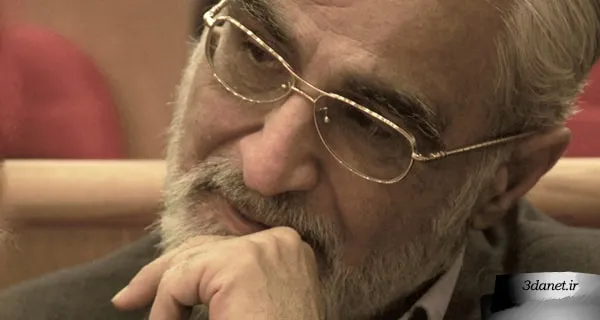
In the ninth issue of Andisheh Pouya, Nasrollah Pourjavady, in a critical essay titled “Fardid’s Charlatanism,” compared Ahmad Fardid before and after the revolution. Nasrollah Pourjavady wrote this essay based on his notebooks from Ahmad Fardid’s classes in the years 1970 and 1971, when he experienced being a student of Ahmad Fardid during his master’s degree in philosophy at the University of Tehran. At that time, he was a classmate of Gholamali Haddad Adel in Fardid’s classes and recalls that Reza Davari, Abolhassan Jalili, Reza Baraheni, Dariush Ashouri, Mohammad Reza Jowzi, and others would also occasionally attend these classes. Following Dariush Ashouri’s essay, published nine years earlier in critique of Ahmad Fardid, Pourjavady’s essay is a similar critique but from a different position and perspective on that oral philosopher; with the difference that Ashouri analyzed the post-revolution Fardid in continuity with the pre-revolution Fardid, and through his critique, sought to place a dominant mentality in Iranian intellectualism under the microscope of criticism, but Nasrollah Pourjavady believes that the pre-revolution Fardid was very different from the post-revolution Fardid and had a good familiarity with the language of philosophy in Persian. Unlike Ashouri, Pourjavady believes that Fardid had considerable philosophical understanding and insight, but after the revolution, he sacrificed this philosophical understanding and insight to politics. In this essay, describing Fardid’s classes, Pourjavady points out that in his classes, “he would say things that clearly had thought behind them. But on the whole, his classes were boring,” and “the number of participants in his classes decreased each time.” Ultimately, relying on the positions of the post-revolution Fardid, Pourjavady judges that “if one word in the fullest sense applies to him, that word is charlatanism.” According to Pourjavady’s account, “after the revolution, the old man had laid out a spread of a bunch of curses and insults that he showered upon Muslim and non-Muslim intellectuals,” and “he spoke of revolutionary purification, but if power had fallen into his hands, he would not have lagged behind Pol Pot in Cambodia, no, but he would not have lagged behind Mussolini.” In comparing Fardid before and after the revolution, Pourjavady also wrote that “the most obvious aspect of the difference between the two Fardids, that is, the pre-revolution Fardid and the post-revolution Fardid, was his fervent Islamism and revolutionary zeal after the revolution,” and “Fardid sometimes had something to say, but after the revolution, he sacrificed what he had before the politics of the day and at the feet of the powerful.” In this essay, the former student of Ahmad Fardid says that after the revolution, Fardid “introduced Bazargan, who had fought against dictatorship his whole life and been imprisoned, as a defender of liberalism and ‘reaction,’ meaning counter-revolution. The supporters of Bazargan, that is, the Freedom Movement, were, like Bazargan himself, in ‘the final and filthiest stage of reaction and defense of the commanding self.’ No one can claim philosophical thought with this language and expect anyone to listen to him. The revolutionaries, too, should be ashamed to have such a defender of the revolution in their midst. It can be boldly said that no one has disgraced the Islamic Revolution as much as Fardid.” Below, you will read the first part of this essay, as quoted from the ninth issue of Andisheh Pouya:
**** In the academic year 1970–71, I was admitted to the master’s program in philosophy at the Faculty of Literature and Humanities of the University of Tehran and began my classes in October of that year. One of the courses I had to take was Existentialist Philosophies with Dr. Ahmad Fardid. At that time, I had no knowledge of Fardid. Nor was I aware of his standing among intellectuals and writers. I found it interesting that in the first few days, about twenty or thirty well-known figures from the faculty and some intellectuals from outside the university would come and attend his class. The students officially enrolled in that class numbered no more than four or five. The rest were, in fact, auditors. I said “the first few days” because it was not long before the class emptied out, and from the third or fourth day onward, there were no more than two or three people attending as auditors. The reason for this was clear. Fardid’s teaching was such that I myself, had I not been obliged to take that course, would have given up going to his class from the second or third session. My biggest problem in Fardid’s class was that I could not properly understand what he was saying. Fardid did not speak fluently. It seemed he had a cleft in his upper lip that prevented him from speaking clearly. The terms and expressions he used were also unfamiliar to me. My education in philosophy had been entirely in English, and I did not properly understand philosophical terms in Persian. Moreover, the things Fardid said were not material I had ever heard presented as philosophy. In his talks, Fardid would mention philosophers whom I recognized as belonging to non-English European philosophy (Continental Philosophy). He mentioned Heidegger more than anyone else, and I had read nothing by him. As for Nietzsche, Sartre, and Bergson, although I had read a few things in brief (with the exception of Sartre, of whom I had only read his novels), I did not have much knowledge of them. Beyond all this, it seemed to me that Fardid did not have an orderly, organized mind and constantly jumped from one subject to another. When I also saw that the number of participants in his classes was decreasing each time, I said to myself that my failure to understand Fardid’s words was not, then, due to my weakness in Persian philosophical language or my ignorance of the philosophers he named. Yet, with all this, the question still remained for me: why did this man have so many participants in just those first one or two days? This question was not without an answer for me. In those very years, Fardid’s name had been pinned to Jalal Al-e Ahmad’s book “Gharbzadegi” (Westoxification). Jalal Al-e Ahmad’s name was well-known, and his book “Gharbzadegi” had caused a stir in the mid-1960s. Fardid also knew that the mention of his name in the introduction to “Gharbzadegi” had, to some extent, brought him fame among the readers of that book. I myself had obtained and read that book four or five years earlier, when I was still living in America. Whenever Fardid found an opportunity, he would refer to this book and say: Yes, Al-e Ahmad took this term from me and made it the title of his book; but he did not understand what I meant. What I meant by Gharbzadegi was something else. That is correct. What Fardid meant by Gharbzadegi was something different from the understanding Al-e Ahmad had of this word. Fardid would say that Al-e Ahmad had not understood what he wanted to say. But in any case, Al-e Ahmad’s understanding and the material he wrote in his book under the title of Gharbzadegi was far more influential than what Fardid wanted to say. With a philosophical look at Western culture, Fardid had issued a judgment about this culture and the thought that was its foundation. This judgment had a philosophical aspect, whereas Al-e Ahmad had politicized the issue and, with a thought born of the colonial era of the nineteenth century, had looked at the relationship between East and West; a superficial and shallow view that later was also able to pave the way for a kind of anti-Western ideology in our country. In fact, it was this very property of giving direction to a future ideology that made not only the title of Al-e Ahmad’s book, but also the coiner of this title, into a somewhat famous figure at a time when the ideology arising from it had gained dominance. And Fardid, whose characteristic was opportunism, not only offered no resistance to this prestige that the concept of Gharbzadegi had brought him, but by removing his tie and growing stubble, he hastened to welcome that not-so-honorable prestige. The title of Fardid’s course was Existentialist Philosophies, and he had chosen this title precisely because he wanted to say that in this particular class, he would not speak of Sartre’s philosophical doctrine.
Fardid wanted to speak of Heidegger’s thought and believed that this thought, although it concerns existence, does not seek to speak of existentialism, which is yet another -ism alongside other -isms. The distinctive feature of Fardid’s lectures was that he employed a special language to express Heidegger’s thought and, more generally, the history of Western philosophy. In this language, he tried to use both the terminology of Islamic philosophy and the terminology of Islamic mysticism and Sufism. Fardid believed that the tree of Islamic wisdom had essentially been irrigated by the mystical experience of the great Sufis, and for this reason, he saw the Sufi language as more suitable for expressing the philosophy of existence. Of course, Fardid did not hold a favorable view of the practical and social aspects of the Sufis. What was valuable and worthy of respect to him were the theoretical aspects of Sufism and the utterances that arose from Sufi states and ecstasies; states and ecstasies that the Sufis had attained as a result of the relationship they had established with the Divine Truth. The greatest figure who, in Fardid’s view, possessed such states and ecstasies was Hafez, whose poems he constantly quoted in his classes.
***
The biggest problem with Fardid's classes was that his teaching was limited to his lectures alone; lectures that seemed to be delivered extemporaneously. Fardid claimed to be speaking about material found in Heidegger's books, but it was never clear where or in which book that material was located. He would mention Heidegger's Being and Time, yet he never directly quoted anything from it. Nor did Fardid refer to books written about Heidegger or other philosophers. He himself had written nothing to provide to his students. He was incapable of writing, and this incapacity had become a complex for him. Deep down, he felt a sense of envy toward those who had the ability to write; a touch of inferiority as well. Like most people with a traditional education who had only learned to read, Fardid possessed only the literacy of reading and a lust for "lecturing." He would lecture, and in his lectures, he never used notes. On the whole, the memory I have of Fardid's classes over four years is not a pleasant one. I do not mean to say his classes were entirely useless; no. Sometimes, Fardid would suddenly open a window for his students and listeners, dispelling the fatigue of enduring an hour of rambling from their minds. Fardid would say things that clearly had thought behind them. But overall, his classes were tedious. For this reason, even those who accepted Fardid and his thought had little desire to sit in his classes. After the revolution, his classes apparently became well-attended. The reason for this was that Fardid had politicized his views and was using his ideas to justify the Islamic Revolution. If one word is entirely true of him, that word is "charlatanism." A word etched on his forehead, and the one he used as much as possible to attract listeners, was gharbzadegi [Westoxification]. Dariush Ashouri, in a sharply critical review he wrote of him several years ago, compared him to the old odds-and-ends man in Sadegh Hedayat's The Blind Owl. After the revolution, the old man had laid out a spread of curses and insults, which he showered upon Muslim and non-Muslim intellectuals alike. Nihilism, self-centeredness, and taghut-strickenness never left his lips. When he wanted to speak ill of Abdolkarim Soroush, he would curse Karl Popper. When he wanted to belittle the late Hassan Habibi, he would accuse Gurvitch of being Jewish. He would speak ill of the National Front and Dr. Mosaddegh to present himself as a defender of Imam Khomeini. He considered the work of Western civilization to be finished. He never hid his hatred for America. Perhaps one of the reasons leftists sought him out was precisely this anti-Americanism of his. Whomever he wanted to tear down, he would call a Jew, a Zionist, and a Freemason. He did not critique anyone's thinking. If he disliked someone, he would call them feeble-minded. When he felt he should speak ill of humanism, he would say the ugliest things about it in the name of God and the Prophet. Behind this vilification of humanism lay not ignorance and stupidity, but malice of nature and wickedness. For some, he spoke of revolutionary purification. If power had fallen into his hands, he would not have lagged behind Pol Pot in Cambodia, no, but not behind Mussolini. The old odds-and-ends man had left no honor for the people of philosophy in this country. After the revolution, due to his political stances, he was subjected to merciless and insulting criticism, and these criticisms were mostly directed at his personality. And he deserved it! I myself, had I found the opportunity, would have leveled this kind of criticism at him. His repulsive political games after the revolution had swept away the last vestiges of the reputation he had as a professor of philosophy at the University of Tehran. With these vulgar and deceitful antics, he had ensured that no one would take seriously the few sensible words he did have. Sensible words? Fardid and sensible words? If there were people who agreed with some of his statements in certain respects, they dared not express it for fear of the dishonor and contempt his personality had generated. I, naturally, did not wish to side with Fardid, his revolutionary antics, and his words, and whenever the opportunity arose, I would dissociate myself from him.
***
This was the case until a few months ago, when, by chance, I suddenly came across a notebook among my old books and papers, a notebook that contained my notes from Fardid's classes on the philosophies of existence during the 1970–71 academic year. These notes date back to seven or eight years before the Islamic Revolution, at a time when the Shah had crowned himself and was holding his 2,500-year celebration ceremonies and, in short, was at the height of his power. There was no sign of the collapse of that monarchical system. Fardid's political criticisms were directed at that very Shah's regime. In those same years, Fardid would speak ill of Zionism, Freemasonry, and Judaism. (I never heard him speak ill of Baha'ism.) He would speak ill of America, speak ill of humanism, and call Jean-Paul Sartre a "dajjāl-cheshm" (antichrist-eyed) who would remain at the end of time. He spoke of the great Sufis with respect, and in his view, the greatest Persian-language poet was Hafez. Verses of Hafez were constantly on his lips. He did not look favorably upon Mulla Sadra. He sometimes criticized Ibn Arabi and considered his mysticism to be trapped in metaphysics. I heard him say himself that Ibn Arabi blinded one eye of Sufism, and Mulla Sadra blinded the other. At that time, I did not like anyone judging Ibn Arabi in this way. Years later, when I saw that Fardid had been somewhat right, I was surprised to see that he himself had been drawn towards Ibn Arabi. What could the reason be, except that Imam Khomeini had once taught the "Fuṣūṣ al-Ḥikam" and written books under the influence of Ibn Arabi? After the revolution, the cult of Ibn Arabi had found great flourishing in Iran, and Fardid's practice was always to trim his sails to the prevailing wind. When I compared the notes from 1970–71 with Fardid's post-revolution speeches, as they appear in the book "Dīdār-e Farrahī va Futūḥāt-e Ākhar al-Zamān" (The Farr-bearing Encounter and the Revelations of the End Times), I saw that the Fardid who, wearing a tie and clean-shaven and sometimes in a state of illness, had uttered these words, was different from the Fardid who, after the revolution, had removed his tie, grown a stubble, taken up a staff, and set out after humanists, historicists, Popperians, and self-founded, feeble-minded Westoxified individuals, rallying the youth behind him and inviting them to revolutionary self-purification. The most striking difference between the two Fardids—that is, Fardid before the revolution and Fardid after the revolution—was his fervent Islamism and revolutionary zeal after the revolution. Of course, even before the revolution, he spoke well of Islam. He spoke with respect of the Prophet of Islam (PBUH), the Quran, the Imams, and especially of mystics and mystic poets; but he did not chant revolutionary slogans. He did not constantly speak ill of Taghut (idolatrous tyranny) and Greece afflicted by Taghut. Before the revolution, his preoccupation was not Marxism, the Right, imperialism, liberalism, the National Front, or nationalism. Fardid stood a step higher and called both the Left and the Right Westoxified. Marxism was as vile and Westoxified to him as liberalism. The West he cursed was not the geographical or political West. Hence, both the political East and West were condemnable to him. However, the hatred he showed towards America, he never showed towards Russia. Fardid was always foul-mouthed and severely criticized specific individuals. But before the revolution, he did not attack Muslim intellectuals; occasionally in class, he would speak ill of Bazargan and Dr. Shariati. But after the revolution, he explicitly cursed some Muslim revolutionaries and portrayed them as captives of their carnal desires, while he himself was drowning in carnality and his commanding self (nafs-e ammāra) was stronger than anyone's. In the early days of the revolution, he mocked the clerics and said: "The clergy cannot run the country." He used the foreign word "clergy" instead of akhund or ruhani. Later, when the Islamic Republic was established, he became a supporter of the clergy. In short, Fardid before the revolution was closer to philosophy and further from political maneuvering, whereas after the revolution, he had changed color, turned to politicization, and distanced himself from philosophy. In my notes from Fardid's classes, he speaks of the 'yāft' (finding) of the mystics or existence, and this itself is one of the most important thoughts of Fardid before the revolution, and its place is absent in his post-revolution discourse. The term 'yāft' in the sense of existence does not even appear in the index of the book "Dīdār-e Farrahī." Instead, it is filled, as much as you could want, with pseudo-philosophizing and Ibn Arabi-esque pseudo-mysticism about history, the historical appointed time (miqāt), and the historical science of divine names. After the revolution, Fardid was faced with a dilemma that he could only conceal. Until before the revolution, he considered our entire history and that of Europe to be Greece-stricken and Westoxified.او اگرچه پيغمبر(ص) و قرآن را قبول داشت، تمدن اسلامی را هم غربزده میدانست. درواقع، نگاه او به تاريخ ما، نگاه يک اروپايی بود و آن اروپايی هم هايدگر بود. هايدگر شناختی از اسلام نداشت که بخواهد برای آن در تاريخ يونانزدۀ غربی، حسابی جداگانه باز کند. فرديد هم تابع او بود و با همين ديد به تمدن و فرهنگ اسلامی نگاه میکرد. فارابی و ابنسينا و ملاصدرا همه غربزده بودند. اما بعد از انقلاب، او به اين راحتی نمیتوانست تاريخ تمدن اسلامی را غربزده و طاغوتزده معرفی کند. آمدن اعراب به ايران و سرنگونی حکومت ساسانی را پيروزی حکومت الله بر حکومت طاغوت میدانست. اما باز همين اسلام را هم که بهدست خلفا افتاده بود، غربزده میدانست: «دسپوتيسم اصلاً يونانی است و رومی و دسپوتيسم شرک است و فرعونيت غربزدۀ دورۀ ساسانی. اسلام میآيد که اينها را به نام خدا، پس بزند؛ به نام بقيۀالله و پسفردای ساعت. ولی با پيشبينی اوليای دين که هر روز وضع عالم اسلامی بدتر خواهد شد، دسپوتيسم غالب میشود، اسلام ترقی پيدا میکند و ترقیاش متلازم تدانی است. از قرآن بُعد پيدا میکند، از قرآن غربت پيدا میکند و به آخرين مرحلۀ تاريخ که زمان فانی است، قرب پيدا میکند. نهفقط در دورۀ اموی و عباسی، بلکه در قرن بيستم، در انقلاب مشروطه هم ما دچار غربزدگی بوديم. دورۀ مشروطه را ببينيم. زمان فانی اصالت پيدا کرده است. متافيزيک هست و بحثهای فلسفی و کلامی و تصوف هست و حکمت اشراق و بعد اصوليين هستند و اخباريين. البته هنوز درد دين هست يا دين هست، ولی متافيزيک هم آمده آن نسبت يونانی ـ رومی ايران قديم مخلوط است. حالا اين نسبت، انقلاب پيدا میکند و آن دوره ممسوخ میشود. مشروطه میآيد. استبداد کمال نقصان پيدا میکند. دموکراسی اصلاً عين استبداد است. اصلاً، امامت کفر است. در دموکراسی، هرکس خودبنيادانه امام بشود. هرکس بايد با پيشبينی که نيچه کرده است، خدا بشود. کدام خدا؟ خدای نفس اماره، خودش با نفس اماره يکی بشود» (ص۱۹۶). بدينترتيب فرديد سراسر تاريخ ما را در دورۀ اسلامی، دچار طاغوتزدگی میانگارد. ولی فرديد يک چيز را ناديده میگيرد. او تاريخ عرفان و تصوف را گويی نمیبيند. فرديد ازسويی میپذيرد که بزرگانی در عرفان اسلامی بودهاند، مانند حافظ و مولانا که غربزده نبودند، طاغوتزده نبودند و امثال حافظ کم نبودند. از حافظ بلندمرتبهتر هم بودهاند. هايدگر را نمیتوان ملامت کرد بهخاطر ندانستن تاريخ عرفان اسلامی. ولی جهل فرديد را نمیتوان بر او بخشود. او میخواهد سراسر تاريخ معنويت اسلام را سياه و غربزده جلوه دهد، درحالیکه اينطور نبوده است. از اوايل قرن سوم هجری، نهضت عظيمی در عالم اسلام پيدا شد و آن، پشتکردن به يونان و خرد يونانی بود. محنه درواقع، مبارزه با همان چيزی است که فرديد غربزدگی میخواند. اهل سنت و حديث مگر چه میخواستند؟ میگفتند ما با عقل يونانی و محصولات آن مخالفيم. با علومی که از يونان و روم آمده بود و آنها را «علوم دخيله» میخواندند، مخالفت میکردند، چون آنها را غيراسلامی میدانستند. من نمیخواهم از مذهب اهل حديث و سنت دفاع کنم؛ ولی واقعيت تاريخی اين است که اهل حديث دقيقاً ضد همان چيزی بودند که فرديد و کوچکابدالهايی که دور و بر او را گرفته بودند، غربزدگی میدانستند. در قرن سوم و چهارم، فارابیها و ابنمسکويهها و ابنسيناها بودند؛ ولی بايزيدها و جنيدها هم بودند و تعداد اين عرفا و صوفيان و حکيمانی که ضد فلسفۀ يونانی بودند، دهها برابر فلاسفه بود. اهل حديث فقط بر فلسفه و مذهب اعتزال نبود که پيروز شدند، در اکثر زمينهها قدرت به دست آنها بود. در کتاب «احياء علوم الدين» غزالی که چند قرن، مهمترين کتاب دينی بهشمار میآمده است، يک کلمه از آنچه فرديد غربزدگی میخواند، ديده نمیشود. حتی در ادبيات هم نهتنها يونانزدگی نمیبينيد، بلکه درست برعکس، ضديت با غربزدگی و فرهنگ يونانی است که مشاهده میکنيم. اين نکته درخور تأمل است که چرا مسلمانان بهسراغ ادبيات يونان و روم نرفتند. حتی در علومی هم که اقتباس میکردند، دقت داشتند که همهچيز را ترجمه نکنند. در ميان فلاسفه هم سراغ هرکسی نمیرفتند. بنابراين، در تاريخ فرهنگ ما، همواره نوعی آگاهی از يونان و خرد يونانی وجود داشته است و بهخصوص ايرانيان سعی میکردند اصالت معنويت اسلام را حفظ کنند. هايدگر به اين جنبه از تاريخ معنوی ما واقف نبوده و فرديد هم واقف نبوده است. من با ابنعربی و عرفان کتابی او که بعد از او در بعضی از مجامع تدريس میشد، کاری ندارم. با فرديد هم موافقم که او يک چشم تصوف اصيل را کور کرد. با علمالاسماء ساختگی او و فلسفۀ تاريخ قلابیای که فرديد خواسته است از آن بسازد کاری ندارم.
همين شاعرانی که فرديد از آنها پيوسته شعر نقل میکند، يعنی حافظ و مولانا را درنظر بگيريد و ببينيد چقدر هشياری و بيداری نسبتبه حفظ اصالت عرفان اسلامی و پيام معنوی پيامبر اسلام و اولياء الله در اشعار ايشان ديده میشود. تازه اين دو بزرگوار خود را دربرابر دهها و صدها حکيم و عارف بزرگی که در شهرهای مختلف ايران در قرنهای سوم و چهارم و پنجم ظهور کردند، قطرهای میدانستند دربرابر دريا. فرديد تاريخ معنويت اسلامی ايرانيان را نمیشناسد و نمیخواهد بشناسد، چون در آنصورت سيستمی که او خواسته است براساس نظريۀ غربزدگی موهوم خود بنا کند، فرومیپاشد. فرديد با طرح نظريۀ غربزدگی خود و اطلاق آن به تاريخ معنويت ايران، بيش از هرکس به تاريخ ما ظلم کرده است. کتاب «ديدار فرهی» پر است از اين پريشانگويیها، پر است از تناقضات و مهملات. من نمیخواهم بگويم فرديد هميشه اينطور سخن میگفته است. من قبلاً گمان میکردم که فرديد نمیتواند راجعبه يک موضوع دهپانزده دقيقه حرف بزند و رشتۀ کلام از دستش بهدر نرود. از قول دکتر سياسی نقل کردهاند که گفته بود فرديد مانند کتابی است که شيرازهاش در رفته باشد و کسی اوراق آن را به هوا پرتاب کرده باشد. ولی يادداشتهايی که من از کلاس درس او تهيه کردهام، اين نوع پريشانگويی را نشان نمیدهد. دو درسی که من در اينجا نقل کردهام، نسبتاً منسجم است. در هر يک از آنها، فرديد توانسته است خود را در چارچوب يک بحث و يک مطلب نگه دارد. ولی در سخنرانیهای بعد از انقلابش، اينطور نيست. قصد او در سخنرانیهايش اين است که بگويد انقلابی است و با هرکس که فکر ضد انقلابی دارد، مخالف است. او غرب و امپرياليسم غرب را بزرگترين دشمن انقلاب اسلامی میداند. در دورۀ ساسانی، ايرانيان تحت جباريت و فرعونيت يا دسپوتيسم شاهان ساسانی بودند و اسلام آمد تا بساط دسپوتيسم را برچيند. ولی درحقيقت نتوانست. دسپوتيسم برگشت. چرا؟ برای اينکه متافيزيک يونانی آمد و «متافيزيک، مستلزم خلافت و ولايت است. يعنی عقل و شرک يونانی، ارادۀ يونانی و اهوای نفس يونانی و ايرانی و رومی» (ص ۱۹۶). فرديد ساسانيان را غربزده میداند. مشروطه هم انقلاب حقيقی نبود. فقط انقلاب اسلامی است که حقيقتاً انقلاب است. اين مطالب را فرديد نه در سالهای پيش از انقلاب میزد و نه حتی در سال اول انقلاب. او زمانی به گفتن اين حرفها پرداخت که متوجه شد قدرت به دست کيست. زمانی که فهميد «کلرژی» قدرت را بهدست گرفته است. بعضیها فقط به قدرت نگاه میکنند، ادعای تفکر دارند و خود را متفکر میانگارند؛ ولی وقتی به قدرت نزديک شدند، تفکرشان تابع جهتی میشود که قدرت در آن جهت است. آنها فلسفه و تفکر را هم در پای قدرت ذبح میکنند. فرديد دستش بهکلی خالی نبود. گاهی حرفی برای گفتن داشت. ولی بعد از انقلاب، آنچه داشت دربرابر سياست روز و در پيش پای قدرتمندان قربانی کرد.
.
.
Fardid's Charlatanism, a critical essay by Nasrollah Pourjavady comparing Ahmad Fardid before and after the revolution | The Ninth Issue of Andisheh Pouya
.
.
Related Content:
The Myth of Philosophy Among Us, an essay by Dariush Ashouri
Another Remembrance of Fardid, Dariush Ashouri
Video Documentary on Seyyed Ahmad Fardid
.
.

Discussion6 comments
فردید قبل ازانقلاب دربرنامه ای باشرکت سیدحسین نصر ودکترنراقی درتلویزیون بود . فردید خیلی خودپسند وپریشان گو وعصبی وحرفایش هم بسیار ضدونقیض بود!
قبل ازانقلاب برنامه باشرکت نصر وفردید ونراقی بود فردید دراظهارنظر بشدت پریشان گووهتاک وعصبی بود وبه هیچکس فرصت صحبت نمیداد!
فردبد هر که بودمحتوا تولید کرد
تشکر در صورت امکان دیدگاهای موافق در خصوص اندیشه های فردید ارایه تا امکان قضاوت مناسب تری فراهم اید .البته موضوع تیوری نخبگان وبرگزیدگان وارتباط آن با سلسله مراتب هستی شناختی در عرفان ریشه دیرینه داردو به سادگی نمیتوان مورد قضاوت قرار داد .
تشکر فراوان برای بازنشر این مقاله انتقادی. بحری که عده ای خوش دارند برای مقابله با تحول خواهی و کثرت گرایی از آن سیراب بشوند، چنان بحر شیرین آب و عطش کشی نیست، همه اش لجن است و فرومایگی و ذوب شدن در کینه. رونوشت به کوچک نوچگان فردیدی چنبره زده بر دانشگاه ها.
عالی بود ممنون از زحمات دوستان صدانتی