Political Science
Javad Tabatabai's Series of Articles Titled “The ‘National’ Revolution in the Islamic Revolution”
Javad Tabatabai argues that imported theories such as Régis Debray's 'Revolution in the Revolution' turned the 1979 revolution into an anti-national movement—ideas that infiltrated leftist and religious groups and, with no understanding of national interests, destroyed the country.
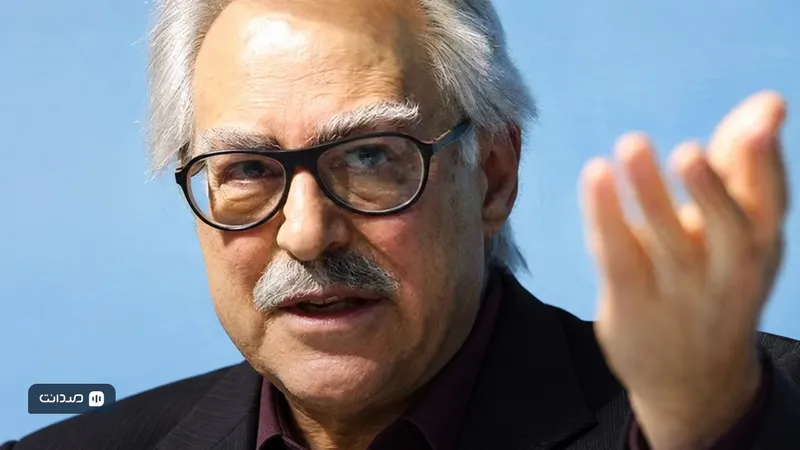
Seyyed Javad Tabatabai
AuthorThe “National” Revolution in the Islamic Revolution
Part One
Javad Tabatabai
“Revolution in the Revolution” was the title of a book written in France by a French intellectual, Régis Debray, who had accompanied Che Guevara in Bolivia, shortly before El Che’s death, and it was immediately translated into other languages. I remember the story of the arrival of copies of the pocket-sized English translation of this book. I think it was the year 1966 when, one afternoon at the Faculty of Law and Political Science, the news spread: “What are you all sitting around for, copies of Régis Debray’s book have arrived in Tehran.” The closest place to the university where such books would arrive was a bookstore on Shahreza Street, just before Ferdowsi Square, which imported English books. The few who had learned some English would sometimes drop by there. I think the shop owner was an Armenian compatriot. Groups from the faculty secretly headed toward Ferdowsi Square and, at the cost of two or three tomans—that is, twenty or thirty rials, the common currency of the Protected Domains, equivalent to the price of a coupon for the cheapest university meal—bought a copy of this masterpiece, while looking around, hid it in their pockets, and rushed to the back rooms of their homes to water the sapling of their revolutionary spirit with the nonsense of a French aristocrat. My mind at that time had not yet become so defective as to want to be among the first to buy that masterpiece and read it if I could. A few years passed before I set foot in Paris. In the interim, Régis Debray had been released from prison under pressure from the French government and, after a stay in Allende’s Chile and Pinochet’s coup, had returned to Paris and was organizing guerrilla operations on the Left Bank of the Seine, while also becoming acquainted with the “hidden charms of the bourgeoisie.”
I read “Revolution in the Revolution” in French during my very first months as a student at the University of Paris. This political manifesto, as its title suggests, explained that the era of classical revolutions had passed and that through guerrilla warfare and by creating “many Vietnams,”[1] to use the phrase Che Guevara had employed in an article, the back of imperialism could be broken and it could be overcome. The Cuban Revolution was the first of these revolutions, and El Che, who like all revolutionaries was naive and idealistic, left Fidel Castro and went with a group to the jungles of Bolivia, of which Régis Debray was one. Everyone knows the story of the capture of Che Guevara and his comrades, and there is no need to repeat it. This story is not unlike our own “Siahkal Epic,” which was an imitation of it and a repetition of the same experience doomed to failure. In both cases, the comrades were captured with the help and effort of the very people whose liberation they had set out to achieve. Régis Debray, as a French citizen, had not risked much. The Bolivian government sentenced him to life imprisonment and, under pressure from the French government, also released him. From then on, Debray, like many revolutionaries who become aware of their mistakes, did not exactly “give up,” and with the rise to power of François Mitterrand and the French Socialist Party, he joined his advisors and, through Danielle Mitterrand, the president’s official but “decorative” wife, established links between liberation movements and the French government. Under Mitterrand’s rule, France had an official government run by the president and the old socialists. This official government was a continuation of the same French state as a former colonial power. There was another “government” within this government that acted in a revolutionary manner and had ties with the backward elements of all Third World countries, who operated under the guise of liberation movements. While Mitterrand enjoyed himself at the expense of the French nation with his “fix,” his official wife gambled on liberation with the revolutionaries at the expense of the Third World nations.
If the theory of “revolution within a revolution” posed any danger, it pertained to the very countries for whose “liberation” it had been formulated. Theories of backwardness—or wretchedness—are harmful in countries that are backward, and these theories themselves are among the factors of backwardness in those countries. Latin America is a clear example of this compounded backwardness during a period when theory was exported to them from France, and once these manifestations of backwardness disappeared, or the people gained some sense, there was no longer any need for the “rejection of the survival theory” of intellectuals who themselves had no belief whatsoever in their own nonsense. The appeal of Régis Debray and the circle of Daniel Mitterrand’s leftist cronies—whose son, Jean-Christophe, as his father’s advisor on African affairs, was involved in arms trafficking to Angola and was repeatedly tried and even convicted on bribery charges—held no sway with the French nation, which is not easily fooled, and it gradually expelled all these disgraced groups through the digestive tract. The danger of the hodgepodge of backwardness theories lies in the countries for which they are cooked up. It was in a country like Iran that “revolution within a revolution,” through Masoud Ahmadzadeh’s broken English and Amir-Parviz Pouyan’s political manifesto, became the theory of “armed struggle as both strategy and tactic” and the “rejection of the theory of survival,” and when, in Lenin’s words, this “theory penetrated the masses” of fools led by the likes of Shokrollah Paknejad, Bijan Jazani, and, at a lower level, Farrokh Negahdar, Massoud Rajavi, and other mental defectives, it “became a material force” that turned into the destruction of the country. That “revolution within a revolution” was a theory for the bankruptcy and wretchedness of the Iranian people, and it succeeded catastrophically in Iran in ’57. It was the Iranian people’s terrible misfortune that such an event, which could have happened in very few countries, occurred in Iran, and today, after four decades, it can be said that it has so devastated the country that even if the current course were to change, it would take decades for any reform in affairs to become possible.
The “revolution” within the ’57 Revolution, as understood from Régis Debray down to the Iranian guerrillas, could not have been anything but an anti-national revolution. The “penetration of this theory” into religious groups—from shamefaced religious adherents like the National Front to the Freedom Movement, and from imprisoned “political” clerics who knew nothing of politics to the People’s Mojahedin, who, under the influence of figures like Ali Shariati, presented a guerrilla-totalitarian reading of Islam—added to its anti-national character: if we disregard a few exceptions within the National Front spectrum, it can be said that none of these groups had any conception of Iran and its national interests. The two major blocs, the left—led by the Tudeh Party and its satellites—and the religious groups, even if they professed otherwise verbally, had no conception whatsoever of the national question. One need only glance at the declarations issued by each of these groups from the beginning of the revolution until the shameful occupation of the “den of espionage,” and read the news about the free-for-all feasting in front of that very “den of espionage,” which is accessible in cyberspace. Such a person will understand how theories of liberation were part of the strategy of that very imperialism for the wretchedness of nations that had irreconcilable internal enemies, who, at a perilous moment, joined hands to destroy Iran with an anti-national “revolution.” That same Régis Debray, all of whose faults I have recounted, also had the knack of palming off the “Kurdish people” onto Madame Mitterrand. Earlier, the United Nations had provided special facilities for “nations without a state.” To include the “Kurdish people” in this category and allocate special privileges to them, Danielle Mitterrand was called the “mother of the Kurdish nation,” and Gilbert Mitterrand, another son of that same Daniel, delivered a speech in the “Parliament of the Kurdistan Region.” It is obvious that neither mother nor son had heard anything about the Kurdish people before it was decided to redraw the map of the Middle East, with the guidance of the French far-left, from Jean-Paul Sartre to this same Debray, and the self-sacrificing efforts of their local lackeys, but France’s interests required that certain events take place in the region, and they did!
With the “ideological” ashes that the Al-e Ahmads and Shariatis had been blowing into Iranians’ eyes for years, many of them had become blind or dim-sighted, and when they were pushed under the banner of the “Ummah-Khalqha,” they could not see under which banner and bloc they were beating their chests. What neither the spectrum of leftist groups nor the spectrum of religious groups knew was that the “revolution” in their revolution had taken place in a country with a long-standing national state, and that it was possible that one day another revolution would occur within their “revolution.” Such a revolution, had it happened, or if it happens, could mean the final defeat of both these spectrums. For decades, this event had been occurring underground, but two kinds of blindfolds – the blindfold of God and guerrilla ideology, which is the anthrax of the human mind and consciousness – did not allow it to be seen. In my view, even God, at some point, leaves “His inheritors on earth” to their own devices, meaning, if one may say so, that divine providence does not operate ideologically so as to support all the foolishness of its inheritors. That revolution which had to occur within the “revolution” is, these days, in Iran, taking place. In the events of recent years, it was clear to anyone with eyes that “clearing them from the streets” is the worst possible solution. If I were to speak in the language of the people of “clearing,” I could draw their attention to a verse from Surah Al-e-Imran.[2] The attempt to transform one of the most ancient nations into an Ummah-Khalqha was the greatest mistake that the two religious and anti-religious spectrums of the ’57 Revolution committed. All the events of recent days – and the months and years before them – are evidence of this tremendous transformation in the country, that the Iranian nation has carried out a “national” revolution within the revolution and is advancing it. This “national revolution” was possible only in Iran, and now that it has become possible, it is advancing. This national movement requires an explanation that I will provide in the continuation of the text.
The “National” Revolution in the Islamic Revolution
Part Two
Javad Tabatabai
The evolutionary process of a people – or peoples – becoming a nation is a complex and convoluted process, and once a people has historically become a nation, it cannot be turned back. Conversely, the Ummah is not a historical matter; a community can, at a time, and under specific conditions, take the form of an Ummah, endure for a while, and thereafter vanish into thin air like smoke. Every Ummah is dependent on a person who possesses divine charisma, and with his decline it is destroyed, because the Ummah is not a historical matter; it is spiritual. Moreover, the formation of the Ummah was possible in the pre-modern period, and with the beginning of the new era, its time has passed forever. It goes without saying that in countries that have not yet entered the new era, remnants of the reality of the Ummah can exist, but the existence of these pre-modern elements can only hinder the full realization of the process of modernity. Most countries situated outside the gravitational field of the West are, to varying degrees, still grappling with these remnants of the Ummah, and its categories and discourses. The remnants of elements of the Ummah system act as obstacles to modernity and its thought, and as long as a thorough reckoning with these obstacles has not been carried out, the path to the realization of modernity will not be smoothed.
In Iran, with the victory of the constitutional movement, a new era for Iran began. As can be seen from the deliberations of the first parliament, this very first parliament served as a site for formulating a theory for Iranian modernity. The first thing that emerged in this parliament, as I have explained elsewhere, was the “national matter,” and it was the logic of this “national matter” that determined the other affairs of the country, with the drafting of the constitution and the system of laws – or the rule of law – at the forefront. In Iran, this national matter was a historical matter. Unlike many countries of the Islamic world, and even Western European countries, which were regions of the great Christian or Islamic ummah, Iran was able to preserve its “national” independence and, moreover, something that has received little attention until now, formulate a “narrative” for this “national” independence. We know that Iranians, in whatever manner, “became Muslims,” but, to use an expression I have employed elsewhere, they “did not embrace the faith.” I do not mean that Iranians were not Muslims, but with this very Islam, they formulated and advanced their own narrative of history and their “identity.” The prime example of this narrative is what appears in the Shahnameh, which is the expression of the historical “memory” of Iranians.
We know that Iranians, in the Islamic period, very quickly turned to historiography and tried to open a place for their historical past in “universal” history, but the formulation of this historical “memory” did not encompass the entirety of Iran’s history. One of the sources of these early histories was the “Khwaday-Namag” of ancient times, but Ferdowsi utilized these Khwaday-Namag in a different form and, based on that historical “recollection,” presented a narrative of the historical “memory” of Iranians. One of the distinguishing features of Iran from other countries is this dual legitimation based on “recollection” and “memory.” The origin of what I call the “national matter” is this twofold legitimation. The gradual transformation of the Iranian people – and peoples – into a nation from the most ancient times became possible under such conditions. The Iranian people – and peoples – who were never part of any ummah, were able, based on this “national matter,” to create an order of a historical reality that in the modern era has been interpreted as the “nation.” This ethnic “order” in Iran was created by relying on the distinction between the two aspects of legitimation and, in its historical evolution, transformed into the nation.
Iranian nationality, like the “national matter” that is its foundation, contrary to what I said about the ummah, is a historical matter, meaning it has developed historically and in history, and Iranians have been able to water its sapling with the “memory” they have found of it: “From this hidden fire that is in our breast…”! The key to understanding most of Hafez’s poems lies in this “breast of the ‘we’ that is us.” The reason we both understand and do not understand Hafez lies in this subtle point. In a “national” sense, “we” have all, intuitively, been Hafez, are Hafez, just as Hafez has been us; this “national matter,” that “hidden fire,” we have all held in our breast and still do. Any historical matter can, in its historical evolution, suffer serious damage, but if the evolutionary process of the nation has reached perfection, it cannot undergo collapse from within. An ummah collapses from within with the “departure” of the person possessing divine charisma, and its renewal is impossible, whereas a historical nation, in the words of Richard Frye, is like a cypress that bends with every wind but does not break. I do not wish to go into details here, but rather try to provide the basic preliminaries so that we can understand how suddenly “in the blue sky” of the ummah-orientation of the Islamic Republic, “the thunderbolts of the national revolution began to roar.” For more than two decades, with the understanding I had of the history of the “national matter,” I had been drawing attention to this rising of the “Phoenix of Iran from its ashes” – an expression of Zarrinkoub in The History of the People of Iran. In a piece I wrote earlier in this same place about the precious statements of one of the vice presidents who had said: “We fundamentally have a problem with the state and the nation,” I wrote that this “state” has “passed from noble persons to you, ignoble ones”; this braying of your asses, too, shall pass! Why? Because those greater than your asses have also dominated this country and ruled, but neither the Arab, nor the Turk, nor the Mongol, nor the pre-Taliban Ghilzai had ever dared to have a problem with “our” nationality. One may ask: Why? My answer is this: because even they knew where they were ruling.
The current national revolution is that very historical “national matter” of Iran which has suddenly reared its head from beneath the ashes of the Islamic Revolution. The problem of governance with the Ahmadinejads and the Raisis, in a monolithic government, has this flaw: they appoint a blind man to lead other blind men, never imagining what a terrifying precipice lies ahead. Elevating the dwellers of hovels is the easiest path to rule, but these people must be able to govern in a time and place that is the new era and the age of nationalities. The dwellers of hovels, as their name suggests, are beings who have no homeland, and because they have no homeland, and do not know what a homeland is, they destroy it. Ibn Khaldun, who was himself a pure-blooded Arab and in his time there was nothing about the Arabs he did not know, said that the Arab is not an urban creature and does not know what a city is, and when he comes to dominate cities, in order to survive, he destroys the city. It is obvious that the complete destruction of cities was never possible anywhere, and it was these very cities that endured and took their revenge upon the Arabs: they corrupted them, and Arab asabiyyah was destroyed. Ibn Khaldun wrote the Muqaddimah to his history to explain this decline of asabiyyah. We have not yet been able to explain what the dwellers of hovels have done to Iranian nationality, but is this national uprising not that very explanation in practice? I think it is. This astonishing consensus of all the individuals of an ancient nation indicates that in the age of nationalities, one can silence the logic of the national matter for a time, but overcoming it is impossible.
The “National” Revolution in the Islamic Revolution
Part Three
Javad Tabatabai
Iran's “national” revolution is one of the characteristics of Iran, as Iranshahr, some aspects of which I have tried to point out over the past two or three decades. The Iranian peoples, from the most ancient days of this country's history, have found a unity under the banner of its encompassing culture, which in recent centuries has been interpreted as a nation. This “national” unity, as a cultural unity, despite the tensions it has continually experienced as a community, has also had this fundamental and important characteristic: in critical periods of Iran's history, it has separated itself from the “state” and preserved its ethnic foundation. The collapse of Iran during the Afghan invasion, the shelling of the parliament, and the attempt to reconquer Iran relying on Russian soldaty are examples of this nation's disregard for a state order that was not national: if the state lacks the ability to maintain national unity and defend the rights of the nation, there is no necessity for the people to waste their blood preserving the state's agents. It is no wonder that when Shah Sultan Husayn fell and Nader appeared to defend the national community, a large part of the people who had turned their backs on the Safavids joined his troops and abandoned the shah to the mercy of a mad Afghan in order to defend the country's territorial unity. For this joining of the common people to Nader, too, a time was destined, and when Nader's work turned to adventurism, one night they cut off his head, and the next day that head was being kicked about under the feet of children. One of the characteristics of this emergence of a nation is that this “nation” does not consider every state a “national” state. If one may say so, every state is a “national” state only so long as it bears the duty of securing the rights of the nation. It is a characteristic of Iran's history that the national community has been a more fundamental matter than its state. Most of the donkey-drivers who have ruled over Iran did not know that the Iranian considers himself the guardian of the “defense of the national community,” not cannon fodder for adventurist states! One noteworthy example is the public's enthusiasm for going to the fronts at the beginning of the war and their turning their backs on the fronts once the country's soil had been liberated, but the adventurism of the Islamic Republic, for reasons that are not the subject of my discussion, wanted to continue the war as a “blessing.” Before the conceptual distinction between state and society appeared in political thought and the new social sciences, Iranians have continually possessed a kind of awareness of the distinction between the state and the national community.
In Iran, this awareness of the “rights of the nation” has a long history, although anti-awareness currents have never been few, currents that on every occasion clung to the skirts of “shaykhs and maraji‘” to advise the state—of which they themselves were a part—to secure the people’s rights. It is obvious that these new words I am using here are all recent coinages, but nothing new exists that does not have a precedent in the old. Every era has had its own level of self-awareness, and, in Iran, culture has been the most important instrument for contending with the state’s ideological system. In Iran, “national” unity has always been “national” cultural unity at the level of the society of the nation, but it was first in the constitutionalist movement and with the victory of constitutionalism that a new form of self-awareness emerged. With constitutionalism, culture appeared in the form of the demand for law. That Iran lacked a proper legal system until the victory of constitutionalism requires an elaboration that cannot be undertaken here, but I will merely point out that the custodians administering a large part of the country’s legal system were those same “shaykhs and maraji‘” who interpreted the law of the Shari‘a according to their own desire and understanding, that is, they sacrificed the system of the society of the nation in the service of their own interests and for the preservation of the state. Earlier, in the ancient period of Iranian history, when Iranians lacked the necessary instruments to contend with the undesirable consequences of this legal system, Persian literature was a site of struggle against the “shaykhs and maraji‘,” but with the beginning of the modern era, and Iranians’ acquaintance with new concepts, the struggle for rights took the place of Persian literature. The constitutionalist movement was, in this respect, the beginning of the modern era of Iranian history, as it placed a new instrument at the disposal of the nation so that it could secure its rights. With this very system, Iranian law entered its modern era, the foundation of the unified “nation” was consolidated, and the nation reached the maturity of self-awareness. The new legal system was the most important achievement that the Iranian nation attained, but all the forces of the darkness of the middle centuries, which had retreated with the victory of constitutionalism and the execution of the martyred Shaykh, once again entered the arena.
The Islamic Revolution was the revenge of the “shaykhs and maraji‘” upon the system of the rule of law. This revolution, at the outset, was able, by scattering the ashes of the leftist-Shari‘ati ideology in the people’s eyes, to deprive them of sight. In the first one or two decades after the revolution, it was insinuated that the time of nation-states had passed. This was an effort to administer a local anesthetic to a nation that had been seized by the dizziness of the revolution. The effort to transform the nation into an umma—and ultimately a part of a larger umma—composed of identityless, scattered, primitive communities and, above all, hostile to the Iranian nation, was doomed to failure from the very beginning, but the leftist-Shari‘ati ideology had not only deprived the people of the blessing of sight; the architects of that ideology were themselves victims of their own ideology and could not see upon which hill of shifting sands they were seated, and when the storm began to blow, they would no longer find their location and direction. That in recent years the process of popular protests, by people who have become aware of their lost rights, has gained greater momentum, while the rulers have become more bewildered day by day; that no sound is raised from the august house of Shari‘ati and the Shari‘ati-ites, and the sinister alliance of the homeland left—all this is a sign of that lamentable reality of Iran’s contemporary history: that the agents and actors of political transformations were composed of groups of the mentally backward, from the Fada’i, Mojahed, Peykar, Tudeh to the religious sectlets, all of whom were pickaxe in hand, ready to destroy the country, the foundation of its nationhood, and the nation-state, yet lacked even the ability to lay one or two bricks on top of each other. In my view, beyond all the explanations that can be given for the current failure of the I.R., this point is of greater importance: that the approach of its officials toward Iranian nationhood was an invitation to our collective suicide. It is obvious that such an invitation, in a country with such a historical record and national self-awareness, could not be answered in the long term. I suspect that the officials of the I.R. have no program for governance other than this one invitation. My conclusive proof for this claim also lies in this reference to the Guardian Council’s renewed invitation, as if they “insist on the implementation of the rulings of the Shari‘a.” Is not this very “insistence” also a kind of invitation to the suicide of the I.R.? The officials themselves know best!
Recent events clearly show that from the multitude of all those organizations, groups, and splinter groups nothing has emerged but thoroughly mediocre “political activists” and “analysts of Iranian affairs” that no longer exist. In many other revolutions, from France to the October Revolution, leaders have emerged who could reflect on how their revolution went astray; the activists of Iran’s leftist and religious organizations, who, as we have plainly seen over the past forty years, are each more backward than the other, have pulled a blanket over their heads in the tradition of contemporary Iranian politics and live in their fantasies of days when they could brandish a Che Guevara in the streets of Tehran and Foucault would write, “I have no doubt that these hands raised so high cannot fail.” Out of sheer stupidity, Foucault, and those who fell for his coquetry, could only fail. Neither Foucault nor those seduced by him knew what kind of country Iran is and what kind of nationality Iranian nationality is. This country and this nation, which they have tried very hard to explain never existed, because it was both a country and a nation—and it does not matter what sophistries the new social sciences can spin about them—has now unraveled all their threads. Iran’s national revolution is underway; it can be understood, but one can also continue to “insist.” It is obvious that in that case the revolution will go its own way. Once the wheel of the revolution is set in motion, no “insistence” will be able to avoid being crushed beneath it.
No! This snow has no intention of stopping anymore!
The “National” Revolution in the Islamic Revolution
Part Four
Javad Tabatabai
The national revolution, despite what its opponents of every stripe wish to insinuate, is a revolution for securing the rights of a historical nation. Fortune favors Iran and the Iranian nation, for on every occasion the “national matter” appears in a different form and is like the guardian angel of our national existence. A nation, as a civil society, has demands in the modern era. In democratic countries—not “mob rule,” which, as Plato says, is the domination of the rabble over society—parties and civil society institutions represent these demands and, within the relationship of existing forces, secure part or all of those demands. Modern civil society is an association of groups engaged in dialogue and bargaining, and it is precisely this permanent openness to dialogue and bargaining that prevents every tension from turning into a crisis in the depths of society and destroying it from within. What is happening in Iran today, and I can say has astonished not only Iranians themselves but the whole world, can be understood with reference to this point in modern political thought and philosophy. In the first parts of these notes, I have referred once or twice to the scattering of leftist-Shariati ideological ashes in people’s eyes and the temporary blindness of the Iranian people. Earlier, in one or two recent treatises, I had also said that in Iran, from centuries ago, the “national matter” had been taking shape, and there too I had explained that the first place where this “national matter” appeared in a new form was the first constitutional assembly, and on the basis of this same “national matter” the legal system of a nation was codified, and this transformed Iran into a modern country, “among the constitutional states.”
In this sense, Iran's first “national revolution” was the Constitutional Revolution, which, with the drafting of the first constitution, brought Iran “into the ranks of constitutional states.” We know that the constitutional decree was issued by Mozaffar ad-Din Shah, who ordered the formation of the National Consultative Assembly. Up to this point, a large part of the people's demands had been achieved through dialogue and negotiation. At this stage, the constitutional movement of the Iranian people was of the kind that political philosophers have called “revolutions for the establishment of freedom.” In Iran, such a revolution, which one writer of the constitutional era called a “white revolution” and said that with Mohammad Ali Shah's coup and the shelling of the parliament “it turned into a red revolution”—meaning the door to dialogue and negotiation was closed and the roar of cannons overshadowed the demand for rights—was a great step toward establishing a system of the rule of law. However, the old and worn-out forces of the Qajar monarchy and the ossified clergy, who had nothing to do but patch up their tattered cloaks, gave a new array to the army of ignorance and darkness so they could bring the water back to the stream, which they could not, and even the aid of the Russian soldiers did them no good. Thus, Iran's first “national revolution” triumphed, and the people were able to reclaim the rights that had been taken from them centuries before.
Considering the events that occurred thereafter, there has sometimes been talk of the failure of the Constitution in Iran. This expression, in its absolute application, is not correct, because once rights are obtained, taking them back is not easy, and is even impossible. Moreover, rights are never obtained once and for all; obtaining rights is a long process and its path is a rocky one, because rights are not of the category of utopias that might, perhaps, be realized once and for all in their entirety, and of course, be entirely lost all at once. Rights are among the hard realities of human society and the outcome of the relationship of forces; they are obtained at the appropriate time and place, and sometimes all or part of them may be suspended, but what is important in the process of acquiring rights is the awareness of them, which is not destroyed by the possible decline of all or part of the rights. The agent of historical transformation is not those rights, it is this self-awareness! Understanding this point is not easy, or even possible, for the people of ideology and the guardians of the old order. In the history of Iran, the two individuals who were the embodiment of such ignorance were indeed Sheikh Fazlollah and Mohammad Ali Shah. If they paid a heavy price for this “insistence” on their ignorance, it was because they were not content with taking back only a part of the people's rights and imagined that even accepting a part of the people's rights could create a breach in the worn-out pillars of the “two branches of despotism,” religious and political (an expression of Mirza Naini from that very time). When only the constitutional decree had been issued, the relationship of forces in Iran and the region was such that it was still possible to keep the scope of rights limited, but when the roar of cannons rose and, with the general mobilization of the people, the barrels of the people's cannons were arrayed against the barrels of the despotic forces' cannons, there was no doubt that despotism was doomed to defeat.
At any rate, today, nearly one hundred and twenty years after the triumph of Constitutionalism, the rights of the Iranian people, and the people's awareness of their rights, have become an indivisible whole. The ideological illusions of the Islamic Revolution's ideologues, from Al-e Ahmad and Shariati to the professors great and small that universities filtered through the Cultural Revolution have delivered to society, should not deceive us—and certainly not the authorities—into believing that the people have many duties but no rights whatsoever. The constitutionalist movement of the Iranian people was a national revolution to reclaim the nation's rights from the “two branches of despotism.” The major victory of that movement, despite what befell it and its supporters, was the creation of a legal system and its institution, the judiciary. Contemporary history has shown that the Iranian people have never forgotten the results of this victory. In this case as well—especially in this case— “silence is no proof of oblivion.” Statesmen who know nothing of the state, nor have a clear understanding of the nature of the collective memory of the nation they rule over, vainly imagine that every silence is proof of oblivion. One of the most fundamental features of the modern era is that the obligated human being has become a human being with rights; the essence—or nature—of the human being of the modern era, about which philosophers theorized for centuries, is his human rights. The human who in the past was “a wolf to man,” through rights, in a lesser-known phrase of that same Thomas Hobbes, has become “a god to man.” To take these rights from the modern human being is to transform him from a “god” into a “wolf.” Once the rights of the people have been given—that is, the people have taken their rights, as they did in Constitutionalism—they can no longer be taken back. “Deception” in such circumstances is not a sign of cleverness; it is evidence of ignorance of the nature of modern society and the new human being. A people who have become self-aware of their rights—and a century has passed in the formation of this self-awareness—is an invincible nation; one can converse with them on equal terms—and bargain—but one cannot pull the wool over their eyes with “deception” and take away their rights.
The “National” Revolution in the Islamic Revolution
Part Five
Javad Tabatabai
I said that the national revolution is the “revolution within the revolution” of a historical nation to reclaim historically lost rights. This “revolution” is a movement in the opposite direction of the revolution that had previously caused the loss of the nation's rights. The national revolution, in the sense I employ, in its older usage in early twentieth-century Europe, is the revolution of a nation, and also a movement for the rule of law. In Iran, as I have said many times, the origin of the nation, in its new sense, was the “old national matter,” and it was this same “old” national matter that, with Constitutionalism, took on a new form and brought into being the “new” nation of Iran, which has been a complex matter since the most ancient times. This nation, from those same most ancient times, was a unity of multiplicities, and it remained so in its historical evolution, reappearing on every occasion in a new form. I have said many times before that the First Constitutional Assembly, according to the text of its proceedings, was the very site of the emergence of this discursive order of the nation, one in its multiplicity. It was at that historical time and geographical place, during the constitutionalist movement, that the Iranian nation found external embodiment and breathed its spirit into the “body politic” of Iran. At that time and place, the historical unity of “us” was realized and, in a mysterious way, endured. I have also explained before that the constitutionalist movement, unlike some other revolutions of the modern era, was not based on a theory or a discursive order, but with the victory of that movement and the formation of the First Assembly, it was formulated “in practice.” I repeat these words because this current movement bears similarities to the first “revolution” of Constitutionalism, and the most important of those similarities is that, since it is a national revolution for reclaiming rights, it is fundamentally non-violent. The reference I made earlier to the words of one of the writers of the Constitutional era, to the effect that “Iran's white revolution turned into a red revolution,” pertained to this one crucial point: that the national revolution for reclaiming rights is fundamentally incompatible with violence, unless violence is imposed upon it.
In the current movement, the Iranian “nation,” being law-seeking, knows this instinctively, and has known it since the victory of the Constitutional Revolution. The events of the Constitutional Revolution showed that Mohammad Ali Shah did not know; I suspect many of today’s rulers do not know either. Therefore, if this “White Revolution also turns red,” history will write the responsibility for it in their record. I deliberately make these complicated words even more complicated in order to say that Iran’s national revolution is everything except what media analysts and, worse still, celebrities claim. These individuals themselves may be respectable as citizens of the country, but their opinions are by no means so—unless one among them says something worth considering. Groups of these people, in the public sphere, are composed of the most dubious individuals. For example, when a singer claims to be apolitical and then, on another occasion, suddenly becomes political, he is a charlatan who lives off the public’s pocket according to the fashion of the day; neither his former statement has any value, nor, a fortiori, this current breast-beating for the people! Iranians, despite claims they sometimes make, also have a great fondness for the approval of others—especially foreigners. It is obvious that we should be very grateful when others support us, but their support, if their words carry no credibility, has little value or validity, and we should not repeat on every occasion what nonsense some so-called celebrity, who has trouble sleeping and so on, is spouting. Our current task is to understand from within the event that is taking place. My explanation that the current events constitute a national revolution within the revolution is in no way an imposition of a “theory” upon an ongoing practice, but rather, on the contrary, casting a light on the “practice” of the nation in order to illuminate some angles of the event that is taking place, so that we do not wait for saviors like Chomsky and Žižek to come to our rescue. Any theory that can be proposed about the current events is a hypothesis for understanding an event that has been taking place in Iran for over a hundred years. A coherent theory will be formulated once the event has occurred and reached its conclusion.
For instance, when a certain Žižek claims that he is learning from Iran and knows that the same thing will soon happen in America and Poland, it must be said that this single claim demonstrates the philosophical rank of this “buffoon of philosophers.” Previously, a more serious philosopher than this clown fell prey to another delusion and made claims on behalf of the Iranian people, but the astonishing thing is that the first casualty of the Islamic Revolution was Foucault himself. If Iran’s “national” revolution has only one lesson, it is the refutation of the theory of “revolution” held by that same Žižek and his partners inside the country. Moreover, what is happening in this current Iranian revolution that is supposed to happen in both America and Poland? It seems this buffoon, like his domestic imitators, thinks that what is happening in Iran is against neoliberalism, which is also, or should be, the common denominator between America and Poland. Why every so-called celebrity permits himself, amidst his many other preoccupations, to also offer an opinion about Iran is unclear to me, but one point is clear: Iranians make history, yet they wait for anyone who cannot tell chalk from cheese to confirm that they have done something important. The ugly term celebrity, which I use out of necessity, applies—even if he were a philosopher on the level of Foucault or a mediocre person like Žižek—to someone for whom everything serves his fame and who opens his mouth and lifts a finger only to increase that fame. That this same worthy person has now become a supporter of the Iranian woman or youth makes it obvious that this advocacy adds a few more to the number of his idle followers, and this generates income. The important event does not happen in “theory”; theory is subordinate to practice, and understanding this current practice is impossible, before it has concluded, for anyone except those whose practice creates a transformation in history. People like Foucault and Žižek are professional chaos-seekers, and nothing is more alien to a national revolution for reclaiming the nation’s rights than chaos-seeking. The fact that Žižek and his comrades drag America and Poland into the matter means they do not know what is happening in Iran. These people seek the overthrow of the rule of law in America and Poland, just as Foucault did in Iran, and this has nothing to do with Iran’s national revolution, whose most important goal is the establishment of the rule of law.
The “National” Revolution in the Islamic Revolution
Part Six
Javad Tabatabai
The first Constitutional Revolution, like the current national revolution, was a movement without leadership. Leadership emerged when that revolution was suspended by the shelling of the National Assembly, and reclaiming it required another revolution. In this second revolution, where the nation and the National Assembly stood against the cannons of the king who was a pawn of Russia, the need for leadership arose because political power resorted to violence and imposed it upon the people. Although Mohammad Ali Shah claimed that he had obtained the signature for the Constitution from the late Shah and considered himself its guarantor, he had no belief in such a system. He was the protégé of a Russian tutor, and the expanse of his country did not extend beyond the confines of the Zargandeh embassy. What he did not understand about the new politics was that Russian cannons are only effective as long as the people have not decided to resist. Against the resistance of the people, “as a single body” – en corps in the parlance of political writers – cannons cannot be effective. In a confrontation between a nation, “as a single body,” the nation has chosen its weapon, which is initially weaponlessness, because the struggle for its lost rights is the most important and supreme “weapon.” Once the confrontation begins, the choice of weapon lies with the political power, and it is this very political power that imposes upon the nation the weapon with which it will reclaim its rights. This choice of weapon is also the government’s final choice! If political power is in the precise sense of the state, it never allows a crisis to deepen unprecedentedly and lead to this final choice. Although Max Weber said that “the state has a monopoly on the legitimate use of violence,” political power that is the state never resorts to this “monopoly” of its own and always keeps the door open for dialogue and negotiation, because once the cannons of both sides begin to roar, the probability of the political power’s defeat is greater than the probability of a nation’s defeat. I do not mean victory in the first battle, but in the battle of “destiny.” In other words, I want to say: a nation, even if it is defeated, is victorious!
The national revolution, in the sense I employ, is the movement of a nation to reclaim its national rights. In this revolution, the people, or the nation, as “a single body,” have no need for leadership, because everyone, as “a single body,” is a leader. Scattered groups of individuals need leadership to guide their actions and thereby organize them into “a single body.” When I say that the “national” revolution is the revolution of a single historical nation, it refers to this crucial point: that the Constitutional movement had no leadership other than the unified nation, and in the current movement, the miracle of the renewal of national unity and awareness of it has occurred and made the nation aware of its rights. This national self-awareness and consciousness of national rights in a way holds the leadership of the movement. Political power can impose the final choice of weapon, an “other” leadership, upon the movement, but it can also, at this stage, recognize all the rights and freedoms of the nation.
This is the most fundamental point that must be considered to understand the nature of current events. The reason that the far-left and far-right groups outside the government, as well as the “elites” within the regime, can say nothing of use to the system is none other than that they are all equally alien to our idea of “national unity” and its nature, and therefore, knowingly or unknowingly, they are also opponents of this national unity. Regarding the left and right opposition groups, no explanation is needed, but for at least a decade I have said that within the governmental system, from universities and research institutions to all governing bodies, these very anti-national elements have representatives and have infiltrated all of them. This is not a discussion I can open here – in the public square – but I will merely point out that when the capital of commitment to the system is an agate ring, a three-day stubble that can be grown over the weekend, and a shirt worn over the trousers, from the Khavaris to the late Talebzadehs slither through its cracks and crevices, and in such conditions, when the atmosphere is stifling, they become the theoreticians of something they never believed in.
The problem with Iran's current political power is that, because it has never been a national power, it is ignorant of many of the subtleties of the history of the national development of the nation over which it rules, and now it inevitably finds itself in a field whose geographical coordinates it cannot conceive. Our history is a national history, and it is impossible to rule over it with the illusion of an ummah that is, and always will be, trapped in the yoke of obedience. The nation that, after the Islamic Revolution, had forgotten this point in our national history due to being beguiled by the ideology of the ummah, now knows that it has been a neglected nation. The political power can understand that the nation has stepped beyond the limits of the ummah ideology, and turning it back into an ummah through Shariati-esque talking cures is not possible. The political power, in its ummah-based illusions, has dragged the nation into a battlefield where it has no possibility of victory; it can now find a rational solution through dialogue and bargaining with the nation, but it can also impose the choice of the final weapon upon the nation.
——————————
Postscript: Gathering a few individuals who hold the title of university professor by "governmental decree," many of whom are not even professors by the standards of the Islamic Republic, to find a solution, indicates that the political power has no will to find a rational solution. I bite my tongue to keep from letting their names flow from my pen. The majority of this group of "professors" are dependents of this political power and have no place outside of it. Many of these same professors have held important positions and are themselves the agents of the current situation. In such a critical situation, finding a solution cannot be reduced to the formality of gathering a few dependents. The gentlemen must know themselves that the majority of these professors are their own creations and are considered nobodies outside the "mother" university.
——————————
The "National" Revolution in the Islamic Revolution
Part Seven
Javad Tabatabai
I said that the political power can impose the choice of that "other" weapon upon the nation, but no political power, whatever power it may have, provided it possesses even a modicum of the wisdom of governance, will exert all its effort to prevent the crisis from deepening to such an extent, to avoid the nation and the state standing face-to-face, and to keep the door to dialogue from closing. In the modern era, every deadlock in a system of government is to the detriment of the political power and to the benefit of the nation. The rulers of the Islamic Republic know neither "their own" history nor "our" national history! My meaning of "our" history is clear; we Iranians have been a nation since ancient times and have remained a nation. It is obvious that this is not a political slogan; on the contrary, it is a historical fact. By the "own" history of the rulers, I mean the history of Islam. They do not know that history either, and they imagine their history is the same fantasies they have "themselves" fabricated. These fantasies are the only capital they possess, and for centuries they have inculcated these fantasies into the people, and the common people, in conditions where those fantasies did not conflict with their interests, have been beguiled by their coquetry. One of those fantasies, which has also become one of the axioms of Shia history, is the anti-tyranny stance of the turbaned masters throughout history, for which we find no evidence anywhere. In religious teachings, tyranny has no "clear and obvious" social meaning, and since the meaning and content of tyranny are unknown, the turbaned masters could not have been agents of struggle against it. Moreover, since the turbaned masters know neither "their own" history nor our "national" history, they have no share in political science, nor can they have any. Their ultimate political knowledge, historically, in most cases, has been praying for the health of His Supreme Majesty and, in rare instances, in cases where a weak-willed king ruled the country from the Qajar era onwards, opposing him within the limits of their own interests, but what was common to both cases of agreement and opposition was their "non-political" nature.
Explaining this point with regard to the past two centuries requires a detailed discussion that cannot be undertaken here and is not the subject of my present argument, but a glance at the spurious science of the “History of the Struggles of the Clergy,” with which students have been brainwashed for four decades, shows that what groups such as the God-Worshipping Socialists, the Ummah and Movement group, the Freedom Movement of “Iran,” the People’s Mojahedin of “Iran,” and very mediocre writers like Al-e Ahmad, Ali Shariati, from Morteza Motahhari to Hossein-Ali Montazeri, have in common is precisely their ignorance of politics. An examination of the political statements of those groups and “political” organizations and the writings of this latter group shows that there is no such thing as “Islamic politics.” All of these organizations and writers, to varying degrees, were inevitably shamefaced Marxists, and because they did not understand politics, they never realized that they were “Islamic” Marxists. If we look at this ideology with some distance, what is seen is its undigested and dominant Marxism, and nothing of Islam is visible in it. This Islamic Marxist compound, if properly understood, is something of the order of the “devotional-political” compound. Any believer who has a non-ideological understanding of Islam will find not a trace of Islam in anything “devotional-political.” An interesting case in our time is the entirely eclectic writings of Morteza Motahhari. We know that among the various odds and ends woven together about sociology, moral philosophy, philosophy of history, education in Islam, etc., there was also a work on political economy which, immediately after the manuscript was found and published, was collected and its copies were pulped, and to this day, apart from a few copies in private collections, it is not available. The reason for this was that even the officials of the Islamic Republic, who knew nothing of economics, understood by leafing through its first pages that the late Motahhari, since he did not know economics and Marxism was the chosen creed of the time, had delivered a great deal of Marxism to the believers coated with a thin veneer of Islam. Before him, a scholar like Mohammad Baqer al-Sadr, who knew modern Arabic and had thereby gained some familiarity with certain sources of modern science, had realized that economics in its scientific sense cannot be formulated in Islam, which is a religion. Motahhari, in his intense religious-ideological fanaticism and in the delusion that Islam is a “comprehensive” religion and that “there is nothing, wet or dry,” for which its ruling is not contained therein, imagined that the scholars before him had not attained this degree of knowledge.
Motahhari fell victim to the substance of that French proverb which says: “Choose your enemy well, for you will become like him!” Out of excessive enmity toward Marxism, he had become a Marxist in certain discussions, but his religious fanaticism did not allow him to know that with a medieval understanding of religion one cannot contend with the ideologies of the modern era. An even more interesting case is Hossein-Ali Montazeri’s voluminous book on the Guardianship of the Jurist, which was dictated as lessons in the early years after the revolution, and from those lessons a detailed book was produced in Arabic and Persian. Montazeri, like all the “political” activists of the clergy during the Shah’s time, was active in implementing religious rulings, and if he had been asked at that time what an “Islamic government” was, he would presumably have answered: well, government is what exists everywhere, and Islam is what I know and you, as emulators, do not know, but what is this government that exists everywhere? The answer is unclear! With the victory of the revolution, it became clear to the gentlemen themselves that there was no plan. There was something called government in Iran, but the goal of the revolution was its destruction, and preserving it could be nothing more than a contradiction of purpose. Montazeri, the “Exalted Jurist,” since he was an Exalted Jurist, had the duty to prepare a plan for an Islamic government, in the form of a “republic.” That series of lessons was meant to tell us what the government for which we had made a revolution was and what plan it had for running the country. But a governmental plan is not a heavenly table spread descending from the sky. All governmental plans are the product of human reason throughout history, and no one can create a plan out of nothing by negating all human experience. Montazeri, as an “Exalted Jurist,” knew that there was nothing about government in his jurisprudential books. Formulating a plan in a vacuum was also impossible.
The Sunnis, who did not believe in the Shiite theory of “tyrannical” government, had turned their minds to governance centuries before the Iranian revolutionaries and had written treatises on government. These treatises were of two kinds: treatises entitled al-Aḥkām al-Sulṭāniyya, which two Shafiʿi and Hanbali jurists had written to counter the claims of the Buyids, and another important treatise entitled al-Siyāsa al-Sharʿiyya by the vehemently anti-Shiite Hanbali scholar. Shiite scholars considered this latter work impure, owing to its deeply offensive anti-Shiite character, and as far as I could ascertain from searching Tehran’s reputable libraries in the early years of the revolution, no copy of it existed in Iran at that time. The first two treatises, especially that of the Shafiʿi jurist Abu al-Ḥasan al-Māwardī, could have served as a model for a jurisprudential government program. A few copies of this very treatise were available in Iranian libraries, but the publishing house of the seminary decided to reprint both al-Aḥkām al-Sulṭāniyya treatises in a single volume so that they would be easily accessible to students and perhaps to Montazeri himself. The model for Montazeri’s Islamic government program is precisely these al-Aḥkām al-Sulṭāniyya treatises, which are treatises on Islamic despotic monarchy and were written to justify the Abbasid caliphate in opposition to the Buyid theory of government. Everyone knows the rest of the story: shortly before his death, the author of the Islamic government program unraveled all his threads and said in brief that he had been talking nonsense. Of course, the cost of the broken crockery of this theoretical experimentation remains on the nation’s hands, to be paid one day!
The Islamic government program was a plan to transform a nation into a part of an ummah. Implementing Islamic government in one country was something of the order of Stalin’s socialism in one country. Islamic government, if it did not wish to be of the type of despotic monarchies in the Arab countries, had to formulate a program for the Islamic ummah (we know that Montazeri’s office was one of the centers for exporting the revolution). Thus, exporting the revolution was placed on the agenda. In this plan, the national dignity was stripped from the nation, and Iranians were turned into a branch of the Muslim ummah, tasked with bearing the costs of the revolution in other countries of the region and, if things progressed, with turning the “White House” into a ḥusayniyya. I have said before that the ashes which the Shariʿati-leftist ideology scattered on the face of the Iranian nation blinded them for a time. The current “national” revolution is the awakening, in the depths of the conscience of “all” Iranians, to their historical national dignity. The reason that all political-religious groups are equally tongue-tied when speaking of current events is none other than that they have all been equally under the illusion of the death of nationalities, and perhaps they still think that, with globalization, the age of nationalities is over.
The “National” Revolution in the Islamic Revolution
Part Eight
Javad Tabatabai
The national revolution is the revolution of consciousness and the revolution in self-consciousness. This revolution is of the type of revolutions of the modern era and, as I said before, a revolution for the “foundation of freedom.” This current national revolution, like the Constitutional movement, is a revolution for freedom and the rule of law. In the four decades that have passed, the Iranian nation fell into the trap of the Shariʿati-leftist ideology to the same extent that the leaders of the Islamic Republic became enamored of that ideology, and now they are inevitably paying the price for not understanding the requirements of governing a historical nation. The Shariʿati-leftist ideology, as an ideology, was cosmopolitan and lacked the conceptual apparatus necessary to explain the characteristics of a historical nation. Shariʿati, like his leftist comrades, did not know history, and what he compiled under the name of Islamology was the ahistorical, imaginary Islam of his ideology and had nothing to do with any of the “actually existing Islams.” That “ideological Islam” was an eclectic mix of vulgar Marxism of the guerrilla-Tudeh type, and its sole aim was revolution, which was victoriously achieved, but what was absent from that ideology was its national aspect. An ideological revolution has the characteristic that, because it is formulated in “thin air,” it gathers all or many political groups together, but since this ideology is “hot air,” once that “air” empties after the victory of the revolution, the revolution loses its instruments for gaining legitimacy, and with the “fizzling out” of the former revolutionaries, the only instrument that remains is the exercise of violence to retain power.
The Islamic Revolution, with the aid of Shariati’s-leftist ideology, was able to create a deceptive “unity of word.” A kind of unity of word had existed throughout Iran’s history and among all its people, but the aim of this “unity of word” was to settle accounts with it. If the leadership of the revolution had possessed even a modicum of understanding of political science, it should have known that such a unity of word, brought about by relying on the “passing breeze” of Shariati’s-leftist ideology, could not serve as a stable foundation for governance through the exercise of violence, but nothing was as remote from the jurisprudential knowledge of the revolution’s leaders as political science. They did not know Iran’s history, to know that that unity of word had existed since the beginning of Iran’s history and cannot be destroyed. Shariati’s-leftist ideology was the source of the revolution’s leadership’s power in victory, but that ideology was nothing more than “a disposable trifle.” It had triumphed once, but this victory could neither be repeated nor could it serve as a guide for governing the country. If the revolution’s leadership had any understanding of politics, it should have immediately thrown that ideology into the dustbin of history after the victory, because embedded within that destructive ideology was also the ingredient that would dispatch its users to the dustbin of history. The most important feature of that ideology was to blind, but it did not cure blindness. Its creators of ideological eclecticism, from Al-e Ahmad and Shariati to the dwarfs of the guerrilla organizations and the charlatans and spies of the Tudeh Party leadership, were all, to an equal degree, enemies of Iran in the guise of friends, and they harbored the delusion that they could, through “deception,” remove the turban from the head of the revolution’s leadership and replace it with a hat. The revolution triumphed in another direction, but since the revolution’s leadership knew nothing about politics and had no conception of the destructive features of the eclecticism of Shariati’s-leftist ideology, it fell into the pit it had dug for itself. Shariati’s-leftist ideology claimed that the age of nationalities was over; this was a trap that ideology had set on the path of the ummah-oriented leadership of the revolution. What this leadership did not know was that if the revolution wished to remain standing after victory, it had to bid farewell to those “deceptions” with which it had hoodwinked the people. One can make a revolution through deception, but governing with it is impossible, and governance requires a knowledge of which everyone from Mehdi Bazargan and Taleghani to the fossils of the Hidayat Mosque circle, to Al-e Ahmad and Shariati, and to all the native leftist organizations were utterly devoid; the situation of the clerics, who had learned nothing but the Islamic legal manuals, is also clear!
Claiming political leadership without possessing the knowledge of politics is impossible, and of this knowledge, there was nothing in Bazargan’s “Wind and Rain,” nor in Taleghani’s “Ownership in Islam,” nor in Bani-Sadr’s “Tawhidi Economy,” nor in the chatter of circles like the National Front, from whom nothing was issued after Mosaddegh but certain declarations against global imperialism, nor in the Islamic Marxism of brother Rajavi, nor in the treatises of Ahmadzadeh and Pouyan, nor in a letter from Imam Kashif al-Ghita. The current national revolution is a belated response to this ignorance of the revolutionaries regarding the national dignity of Iranians. The revolution’s leadership had forty years to learn that it rules over a country that is a historical nation-state, and this nation possesses a deep awareness and even self-consciousness regarding this national dignity of theirs. History has handed us all the documents of the existence of this national dignity of Iranians. One can come to terms with it, but one cannot transform it into a part of the ummah and destroy its historical identity. The historical self-consciousness of the nation is the greatest strength of the people who have long gathered in this land and forged a single destiny for themselves. Before, from Alexander to the Arabs, from the Turks to the Mongols and the cannibalistic Ghilzai, they have looked upon this country, but they have not been able to inflict the slightest damage upon the foundation of national and territorial unity, and, more than that, upon “that hidden fire which is in our breast.” The national revolution is the revolution of national consciousness and, in this respect, is invincible, even if it is defeated! I will return to this revolution of national consciousness again.
The “National” Revolution in the Islamic Revolution
Part Nine
Javad Tabatabai
We must settle accounts with the illusion of the last four or five decades that the age of nations and nation-states has come to an end. In countries like Iran, which have continuously existed as nations in various forms, the nation does not die; rather, it transforms its outward form through historical developments. The reason nations do not die in such countries is that among ancient historical nations a kind of consciousness—that is, national self-consciousness—develops, and once such consciousness permeates an entire nation, as the youth say, “bullets, tanks, and firecrackers” have no effect on it. This is not a slogan that supposedly comes from “the streets” and, because it comes from the streets, can be “swept away.” In the modern era, a nation is defined by its human and national rights, and the first thing a political power must know—if it does not wish to learn at an exorbitant price and a crippling cost, or be indicted—is that, perhaps, in certain periods people can be deceived in various ways, especially by exploiting people’s beliefs and fabricating an ahistorical “Islamology,” but they cannot be deprived of their rights for long. Freedom, the possession of human rights, and equality in rights are, as the scholars say, among the “independent dictates of reason.” The meaning of the independent dictates of reason in this usage is that human reason perceives them without the aid of the Sharia—in the old sense—or, in Rousseau’s new formulation, without any external authority. In the modern era, freedom and equality in rights stand at the head of these independent dictates of reason. The “Sharia,” meaning an interpretation of the Sharia that the official clerical institution has fashioned for itself, can rule contrary to this and, like Sheikh Fazlollah, claim that in the public sphere the people are under interdiction and require a guardian to manage their current affairs, but this is the place to say, “Such flies merely expose their own honor and trouble us.” In the Sheikh’s view, the mentor and exemplar of Al-e Ahmad, this guardian in the public sphere was none other than Mohammad Ali Shah, who shelled the parliament, and by the Sheikh’s fatwa “swept the people from the streets,” but was himself swept away and cast into the dustbin.
The Sheikh, with all his knowledge of the Sharia and not half a dram of practical political knowledge, did not know that national rights cannot be “swept from the streets.” National rights do not flow in the streets so that they can be swept away; on the contrary, these rights flow in a place that no instrument of force or “deception” can reach and sweep away. Hafez, who was one of the most eminent guardians of the “hidden” dimension of our national matter, had said that it is that “fire concealed in our breast,” and from the Tayy Arabs to the Turks, the Mongols and the cannibalistic Ghalzais, to the Russian soldaty and Liakhov’s cannons, they have passed through this country and tried to lay hands on that hidden dimension, but this “arena of the Simorgh was no place for such flies”; this nation, the discoverers of the Simorgh, was the Simorgh, and has remained, while these cannibals are the same flies they always were. The reason for this, as I have pointed out, is the unequal struggle between rights and force. The modern era is the age of democratic revolutions, the rule of law, individual freedoms, and national rights. None of these revolutions, from the English, American, and French revolutions, despite their distinctions and with some reservations regarding the last, have failed. The anti-democratic revolutions, from the October Revolution to the Cuban and Islamic revolutions, especially those in Eastern Europe, and of course the French Revolution in one of its aspects, were formed on the basis of a different understanding of national rights, and all of them were more or less doomed to failure. The leaders of these revolutions were under the illusion of Marx’s misconception that considered rights the “ideological superstructure” of bourgeois society and imagined that with the disappearance of the relations that gave rise to bourgeois society, “its rights” would also undergo decay. These revolutions all, to one degree or another, turned their backs on the principles of modern political thought, from Machiavelli and Hobbes to Locke and Rousseau, who had, in various ways, highlighted the emergence of “the people”—or the nation in modern parlance—with their inherent and natural rights.
No political power can claim to govern without having a “clear and distinct” understanding of these new concepts. “Revolution,” in its old sense, or fitna, meant what in political thought is called “civil war.” This understanding of “revolution” must not be confused with the meaning of revolutions in the modern era, which are, in any case, national and for rights. If a political power in the modern era views the realities of social and political life through the dark glass of the old world’s concepts—that is, if it imagines that a “national revolution” is the same as fitna or civil war, and fails to understand that the “people” or the nation cannot wage war against itself—it will lose the ability to manage the crisis. All the aphorisms quoted from the country’s high-ranking officials during these critical days are examples of this confusion between the two systems of concepts. From the very beginning, they have not had a clear understanding of the relations of the new world, nor have they learned anything over the past four decades. Confronting the national consciousness and the human rights of all citizens with force is the most unequal confrontation possible. No force to date—the Soviet tanks in Berlin, Budapest, Prague, and so on—has been able to “sweep national revolutions from the streets.” On the contrary, it is these national revolutions that have swept away the “street sweepers.”
The “National” Revolution in the Islamic Revolution
Part Ten
Javad Tabatabai
One of the most important features of this “national” revolution, which has turned it into a “revolution” within the Islamic Revolution, is the emergence of the youth, as a part of the “people” in a social form, in place of the entire nation. This appearance of the youth from all the country’s provinces in political relations is an unprecedented and novel phenomenon in a historical and old country. Those who witnessed the days of the ’57 Revolution, or played a part in its events, might say, was it not so in the ’57 Revolution? At first glance, it seems it was also the case then, and the youth and women had a share in that revolution, but I believe there is a fundamental distinction between the two types of presence of the youth and women in the two revolutions, and that is that in the first revolution, the youth and women were instruments of degenerate political organizations and groups that misused them to advance their own goals, whereas in this current “revolution,” the youth and women are independent political agents striving to determine their own destiny and future. If I were to express this same matter using the terminology of modern thought, I could say that the status of the Iranian woman and youth has been elevated from the raw material of the politics of political groups, that is, from objet, to agent and subject, or the creator of politics, that is, sujet. The meaning of this statement is that a “revolution” with new subjects has taken place within that first revolution. Once again, I am compelled to repeat that this current “revolution,” without being a revolution or a “counter-revolution” in the common sense of these political concepts, is the “counter-” revolution in the opposite direction of that first revolution, and in order to be able to express its meaning succinctly, I said that it is a “national” revolution to reclaim freedom and rights. Just as the issue of freedoms and rights held no importance for the youth and women who were instruments, the objets of the first revolution, in the face of the revolution’s victory—because they were caught up in “bread and housing” and “freedom” was supposed to come afterwards, one of the revolution’s slogans being “discussion after the revolution”—the current subjects have begun with freedom and rights so that the “discussion” is not postponed “until after the revolution.” This current generation knows that after the revolution, there is no discussion; the victors of the revolution’s “sovereignty” impose it!
This point, which I have touched upon in passing, is, if one may say so, a philosophical discussion within the realm of political thought. The reason that neither the ruling political power, over the past four decades, has formed any conception of this “revolution,” nor has the “national academy,” goes back to this reality in governance and in the academy in Iran: that engineers and former political activists, with very average IQs, have become, or have been turned into, political “dignitaries” and members of the academy, and it is obvious that they can only see, if they see at all, what any living creature with two visible eyes can see; otherwise, they are in no position to enter a domain where perceiving its phenomena requires the “inner eye of knowledge.” A brief explanation of this remark is that sociologists might say that the youthfulness of Iran’s population and so on… is the same as it was in the first revolution. The proportion of today’s youth to the total population is more or less the same as it was in the first revolution. Just as, from the sociologists’ perspective, youthfulness could explain that first revolution, the current composition of the population can also explain these causes of current events. It is obvious that from the standpoint of demography and Iran’s population composition, this claim is not incorrect, but this claim, like all the achievements of the modern social sciences, does not go beyond the level of describing the surface of social phenomena and explains nothing. The question is why and how the youth—both men and women—have appeared as “a single body,” in the capacity of the entire nation? Or, to use an expression I employed earlier, how has this emergence of the new-fangled subject of politics occurred? In reality, revolution occurs at the surface, or better to say: in these depths of the mind, and the humanities, at the lowly level of the “national academy,” have no access to those depths. The fact that I had said decades ago that historical decline and the decay of thought in Iran have placed us in a condition of impossibility meant that under the conditions of the rigidity of tradition, understanding Iran’s transformations, in mind and in reality, would become impossible. Another interpretation I had used before, and which I am compelled to refer to again, is the problem of the quarrel between the old and the new, or tradition and modernity. The outcome of these discussions was that the boundaries and limits of old and new thinking have not become clear to us. The revolution of ’57, and its leftist, rightist, and religious theoreticians, with the eclecticism they had created from “intellectualism” and “religious,” managed to create this illusion that an “easy” combination of the old and the new is possible and that the “passage of well-being” is not as “narrow” as Hafez had mistakenly said.
That is, one can pass from the smooth path of “revolution for spirituality” to the expanse of revolution for freedom and rights. The youth and women of the first revolution, whose greatest pride was that they were the “imitators” of one of the organizations that had neither a proper conception of the old nor knew what the exigencies of the new era were, and, of course, most of these—may they be excused—political “dignitaries” who were strangers to nothing so much as politics, all, equally, had one foot in the mud of the old world and from afar pointed a finger at the new era. The transition from that to this required a “revolution” within the revolution, which, it can be said, has now occurred, meaning the new subject of politics has emerged in Iran. Any future transformation in Iran’s political relations requires an understanding of this emergence of the subject of politics. Until now, none of the political forces and organizations have had the capacity to understand this emergence of the subject, and for this very reason, they have been unable to play any role in the country’s political transformations. The ruling political power, drunk on the wine of victory and under the illusion that the force of repression can be the most important tool for maintaining power and curbing any protest, has closed off all paths to understanding this current “revolution.” The agents of any future transformation must be able to understand the meaning of this “national revolution” with the tools of modern knowledge. In my opinion, the “revolution” is walking its path on steady feet, and the political power and the pedestrian “dignitaries” have still not been able to distinguish the path from the byway, let alone set out on it!
The “National” Revolution in the Islamic Revolution
Part Eleven
Javad Tabatabai
Earlier, in one or two instances, I used the metaphor of the Shariati-leftist ideology throwing dust in people's eyes, and I said that for two or three decades after the 1979 revolution, the people of Iran were left with dust in their eyes and could not form a clear picture of the relations that had been established. The Shariati-leftist ideology was a combination of vulgar Marxism, at the level of the meager intellect of Shariati and his associates and the leaders of leftist organizations, and an Abu Dharr-style Islam, whose model was also the adventurism of the martyr Ernesto Che Guevara. The mind of the '57 generation, if it was political, was, at best, filled with a combination of these absurdities, which were incompatible with any common sense, but it goes without saying that no one makes a revolution with common sense. The common people, especially the youth, are seduced by these absurdities and participate in the revolution, and if a nation historically possesses a modicum of common sense, it remedies the event after it has occurred. In Iran, where in recent centuries mysticism and poetry have been the people's religion of choice, and where from the 1330s to the 1350s this mixed with a spectrum of anti-social theories, from the ideology of the Fadaiyan-e Islam to the guerrilla warfare theories of General Giap and Mao Tse-tung, 'reason suffered an unprecedented eclipse' and ruined the nation's socio-'political' understanding.
The fact that I titled these notes 'The “National” Revolution in the Islamic Revolution,' if properly understood, was not that a second revolution had to occur within that first one. The '57 generation, many of whom had been blinded by the Shariati-leftist ideology, lacked the ability to see the hidden angles of the new relations that were dragging the country backward. This same generation, with that degree of vision and that measure of social and 'political' consciousness, lacked the ability to understand the complex logic of this necessity for a 'revolution within the revolution.' The Shariati-leftist ideology, as an ideology, like any other ideological system, was formulated in such a way as to induce a kind of local anesthesia. The political consciousness of the majority of the '57 generation, who were seduced by this ideology, even many of the leaders of political groups, if I set aside hypocritical flattery, was at the catastrophic level of 'This lamb, Obeidollah, come here,' and remained at that same low level after the revolution. As far as I have observed individuals of the '57 generation over the past four decades, I can say that they, with this degree of 'political' consciousness, could never have carried out that 'revolution within the revolution.' Here, a rupture from the discursive system of the revolution had to be created, but there is no doubt that the agents of this rupture could not have been the '57 generation. The '57 generation, whatever virtues it possessed, was utterly devoid of the virtue of being national; that generation, from the nationalists to the extremist guerrilla organizations, was in the service of the struggle against world-devouring imperialism and was equally pouring water into the mill of the Ummah-homeland of socialism system. These people, in their chronic ideological dizziness, could never understand that the Ummah-homeland of socialism system had reached a dead end, had suffered a catastrophic defeat, and that the signs of the era of the renaissance of nations had also appeared on the horizon. It was in this chronic inability of the '57 generation that, two decades ago, a rupture emerged in the depths of the conscience of a part of the nation that had not made the revolution and, as the children of former revolutionaries, had witnessed the social inability and meager 'political' consciousness of their fathers and mothers—that is, had become aware of the point that their revolution was like drawing the plan of a magnificent palace on water. In all civilized countries, one of the duties of the academy is to examine these ruptures, but political power, in the delusion of eternal 'unity of word,' had no need for universities and independent research institutions, but rather wanted the 'inert mass' of professors, a handpicked sample of whom we saw on television a few days ago, and we were ashamed.
Among all the leaders of the revolutions of the modern era, from the French Revolution to October and Fifty-seven, there has existed this illusion that with that revolution a new era in history begins, and, with their revolution, the rules of previous social transformation have lost their validity. First, Robespierre had said that with the French Revolution a new era in world history had begun; after him, Marx, in the Communist Manifesto, claimed that world history up to his time had been the history of class struggle and with the victory of the socialist revolution there would be no more classes. Lenin also harbored this same illusion that the October Revolution was the beginning of a new era in world history. In all these cases, and many others, the problem was that historical transformation is not subject to the theories of political figures and theoreticians. Governments that rule with prefabricated theories can, sooner or later, realize their mistake, but in some cases this illusion is more enduring than that figures beguiled by ideology can become aware of their errors. The origin of the failure of both the French and October Revolutions was this very illusion of those revolutions being exceptional; it is fitting to say: the Fifty-seven Revolution as well! Governance is a historical matter and no political figure can, on the one hand, not know the history of the country over which he rules and, on the other hand, have no place in history himself. There is no theory that can be applied without any 'revision,' but there is no ideologue who does not consider revision of his theory the greatest enemy of his ideology. In this context, ideologies play two important roles: on the one hand, in the expression I used earlier, they cast dust in the people's eyes so that 'to spite the people' the revolution triumphs, but, on the other hand, by beguiling political figures with their illusions, they pave the way for the failure of that very triumphant revolution. Shariati's leftist ideology performed these two roles in the best possible way: it brought the anti-national revolution to victory, but with the rebirth of the nation and national thought, it also paved the way for its failure, because in that ideology there was no place for 'national consciousness.' The astute political figure is one who can benefit from ideology in the same way that Rumi said about the ladder:
Once you have reached the rooftops of the heavens, it would be futile to search for the ladder
Governance is not possible except by attending to realities and with realities. The illusion that political ideologies create, with the victory of the revolution, should it triumph, and in confrontation with realities, fades. If awareness of this matter cannot be achieved among the revolutionaries, and for securing their interests, its seed will, sooner or later, be sown among the opponents of the revolution and for securing their interests! The point of no return in the process of the revolution's failure is right here. The most important reason for the victory or failure of any revolution is recognizing the time of the appearance of this point of no return and its location. All other factors, especially seeking and finding a factor externally, are secondary to this law governing revolutions. Every revolution fails, or triumphs, from within and within. The first sin of the leadership of any revolution is not knowing when the ideology-ladder must be abandoned; the second sin, which borders on 'error,' is that when the system reaches the point of no return, it still persists in the 'error' of not understanding. [3] As the scholars of ancient natural philosophy had said: nature abhors a vacuum; consciousness also abhors a vacuum, and it is at this very point of no return that consciousness is transferred from the rulers to the station of the ruled! This is what has happened in Iran over the past two decades.
The 'National' Revolution in the Islamic Revolution
Part Twelve
Javad Tabatabai
With the end of the age of ideologies and the return of the age of nation-states, in the absence of astute and realistic statesmen, as I have previously noted, in Iran, national consciousness was transferred to the nearest locus where the primary void had been created. In both elements of the Shariati-leftist ideological eclecticism, there was no place for the nation, the state, or historical national consciousness; on the contrary, that ideology, as a revolutionary ideology, “had a problem” with whatever was historical, in the words of one of the vice presidents, and sought to create its own new model human being through “culture-building.” The Cultural Revolution was supposed to undertake the task of this grand “culture-building,” which has thus far been focused on insulting the women of the country and the “halim-eating” of its members.[4] No term demonstrates ignorance of the nature of culture as much as this “culture-building.” Culture is a historical matter, and a nation creates it in its historical evolution. To date, culture has never been custom-made in any country, because culture is not something that can be “built.” In countries that have tried to build it, such as China during the Cultural Revolution, the socialist camp, and so on, the result has been the opposite.[5] What we have learned from these historical experiences is that no culture-building has led to the “building” of a new model culture; on the contrary, it has created a terrifying void in the minds of the people, the consequences of which can endanger the very existence of any political system. This “non-cultural” understanding of culture entered the discursive system of the revolution through Shariati-leftist eclecticism. At Hosseiniyeh Ershad, Shariati himself had had a successful experience in “culture-building,” and this culture-building, whose negative aspect was very prominent, played a very effective role in the victory of the revolution, but in the discursive system of its important speakers, in positive terms, there was nothing that related to the administration of the affairs of the new world. Shariati imagined that in his eclectic blend of Islam and Marxist sociology there was an answer to all the questions of the new world, just as Motahhari also believed that all new sciences could be extracted from his Islam (I previously referred to his formulation of Islamic economics). All the forces that contributed to the victory of the revolution, from the right-wing Islamic spectrum to the extreme left, were nourished by the legacy of the “Cultural Revolution” and believed that the creation of a “new model Islamic or Marxist human being” was possible. Although the revolution triumphed at a time when the Cultural Revolution and “culture-building” had failed in various forms in all the countries of the leftist camp, from China and Albania to the Soviet Union and Eastern Europe, the victors of the revolution, in the throes of victory and with the corpse of power left in their hands, lacked the capacity to understand the causes and reasons for such a failure. The principle was that the revolution had to be administered, but the absence of figures like Shariati and Motahhari, who had paved the way for seizing power, meant that the victors had to administer a complex country empty-handed. I have also said before that even figures like Montazeri began thinking about formulating a theory for it after the revolution’s victory.[6] This administration of the country in the void of a coherent theory of government led the officials to commit the same mistake that the leaders of the leftist camp had committed, namely, to provide a palliative of “culture-building” for the void in governmental theory. The Islamic Republic, besieged by the forces participating in the revolution and their claims to share in political power, was compelled to turn to the Shariati-leftist ideological synthesis and put “culture-building” on the agenda. That ideological synthesis, as I have also pointed out before, was an ahistorical assemblage, and imposing it on a country that has always been historical and whose people have always had a complex understanding of their historical destiny was the greatest mistake the Islamic Republic committed. The more intense this imposition became, the greater the reaction to it, but here too, the proponents of “culture-building” committed the same mistake that the advocates of the “Cultural Revolution” in the socialist countries had previously committed: the more the signs of socialism’s failure became apparent, the more they intensified the Cultural Revolution, and this very matter also fueled resistance to the existing socialist system.
In Iran, as a historical country with a ritual-intellectual system that is the product of its complex history and historical national unity, rulers who have been cultivated in a laboratory outside of history – one may refer to the words of Kachouyan, a university professor and member of the Supreme Council of the Cultural Revolution – could have no conception of the transformations in the depths of the people's minds, especially its youth. The squandering of the country's material and spiritual resources in the path of “culture-building” had no result other than the creation of a new rentier “class” that had no belief in the principle of “culture-building” – Haddad Adel eating halim, which I mentioned earlier – but was willing to defend its interests as much as possible. In the age of media, where everything is accessible to everyone, the more the officials' lack of belief in their responsibility grew and was put on display, the more the people's lack of belief in them accelerated. The terrifying rifts between the people, especially the youth, and the officials were among the consequences of this mutual lack of belief. The monolithic government, which was supposedly to bring about uniformity in all affairs of the country, was a purgative that added to the bile, but since, apparently, among uncultured classes “a man's word is one,” officials are not supposed to know where they have gone astray. Now, two unbeliefs have lined up against each other: the compact ranks of a people who have no belief in the system, and the scattered ranks of excused agents who have no belief even in “themselves.”
The “National” Revolution in the Islamic Revolution
Part Thirteen
Javad Tabatabai
I said that in the crisis conditions of the past four decades, especially in the last two decades when the crisis deepened further due to the inefficiency of the ruling hut-dwellers, the Iranian national consciousness was in search of a new refuge. With the victory of the anti-national revolution, Iran's national consciousness, which had lost its main dwelling, was, if one can say so, in a long migration in search of a refuge. Education, the university system, radio and television, and all the vast propaganda apparatuses of the I.R. made tremendous efforts to empty the minds of the new generations of national consciousness and replace it with the official Shariati-leftist ideology. They thought that by this method they would be able to solidify the foundations of their rule. At that time, the experiences of socialist countries, and the failure of their cultural revolutions, were available, which I alluded to earlier, but the revolutionaries of Iran, like all revolutionaries, thought that the experiences of others were of no use to them and that with much propaganda one could “disrupt all global equations.” For all those who had the slightest conception of human beings, especially the Iranian human being, the result of such brainwashing was predetermined. Iran is a historical country, and all its national affairs have naturally evolved over the course of long centuries. The reason that none of the previous uncultured Arab, Turk, and Mongol rulers had resorted to such extensive brainwashing was, perhaps, that even they knew instinctively what country they had conquered. It can be said that these non-Iranians had also realized this fundamental point in national history: that if they learned from “us,” they would be the winners, because they had nothing to offer a nation that has a history behind it and has learned many lessons from history. They had the fortune that their minds were not contaminated by the delusions of the Shariati-leftist ideology of the newly-arrived rulers. The ideological religion of the new rulers had this major flaw: it was neither pure religion nor an ideology whose logic of transformation could be explained and its misdirections diagnosed. The dual logic of ancient religion and modern ideology ruled over this ideological religion, and the combination of that logic was a lion without a mane, tail, or belly, the understanding of which was impossible even for its creator, Shariati. Shariati was a young man with extremely little knowledge and an individual with many ulterior motives who had assumed the role of the “apprentice mentor” of snake charmers; he knew the incantation necessary to bring the snake out of the bag, but he did not know the incantation needed to return the snake to the bag, that is, he had not learned it, because he had no teacher and, like all backward people, had discovered everything himself.
The faction that, with the victory of the revolution, had come to dominate the propaganda and brainwashing apparatuses was all, more or less, infected with the virus of this same Shariati-leftist ideology; many of them were also Muslim engineers who knew nothing of engineering and, as bad engineers, had no religion. All of them were so infected with the virus of “nationalism is blasphemy” that no treatment would work on them. Thus, they all imagined that by accelerating the work of ideologization they could reach the desired result. They, like all people of ideology, were captive to the delusion that their ideology was invincible, but what they did not know, as the anti-Iranians within the borders, was that they were ruling a country all of whose affairs are national, and naturally national. The example of the propaganda apparatus of the Islamic Republic in all its offerings was that of the “apprentice snake-charmer” who had only learned half the tricks of snake-charming. For instance, the education system successfully managed to empty the minds of the country’s adolescents and youth, but it had nothing with which to fill that void. When those in power took notice of this void, like “apprentice snake-charmers,” they put forward a view that made it clear they had been incapable of diagnosing the ailment. The government had completely and successfully emptied the minds of adolescents and youth of whatever was national culture, but it had nothing to offer them, and, since it was not to be that we were at fault, we had to find an enemy upon whose shoulders all the blame could be placed. Such a perception of the situation that had been created, which was itself the very essence of incomprehension, also had this merit: the skirt of “our” majesty remained unsullied, and a scarecrow was found against which one could boast for a lifetime, even fight it in a Don Quixote-like manner without suffering any casualties. Unaware of what the Muslim engineers had brought upon them, those in power, for many long years, fought with the rusty sword of the “cultural invasion” theory on a front where no enemy existed. This war had the merit that victory in it belonged to “us,” because it was the very creation of “us.” The problem was very simple: the slum-dwellers, in the solitude of their own culturelessness, did not see the cultural void they themselves had created, but they saw their own self-made imaginary beings, and the more they fought on the empty front of “cultural invasion” with their self-made fantasies, without suffering any casualties, the more they prided themselves as “living martyrs.” What was happening on the real battlefield, and which no one was supposed to see, was the ever-deepening of the void, because when an army fights on a front that is empty, the “enemy” advances on another front. The more those in power fought on that enemy-less front of “cultural invasion,” the deeper the cultural void became on the other front, but, as I have pointed out before, the problem is that the realm of culture, like nature, abhors a vacuum. What has happened in the last two decades is that adolescents and youth have been able to develop a deep awareness of the cultural void. Gradually, in an underground struggle, they have been able to make a thorough, fundamental reckoning with everything that has been imposed upon them. As the dizziness from the blow of the revolution’s Shariati-leftist ideology passed, contrary to habit, they filled the void with the culture that was supposed to leave no trace with the rise of the new generation. It was here that national thought filled the created cultural void. While those in power imagined that the new ideology would enter through cultural invasion, the specter of national thought was standing at the threshold of the door of a large portion of Iranian adolescents and youth. This specter remained hidden from the eyes of those in power for several reasons. First, the proponents of conspiracy theory are constantly searching for conspiracies in far-off places. Second, this very national thought, as an important part of Iranian culture, was interwoven with all the affairs and manifestations of this culture, and distinguishing all its parts was impossible for the slum-dwellers in power. They had built barricades around the White House and were dreaming of the final victorious battle that would turn it into a Hosseiniyeh under the imamate of a congregation led by Hassan Abbasi. All the preconditions for the eruption of the volcano of the national consciousness of adolescents and youth were ready. What has emerged so far as a proposition is a tiny part of the immense blaze of general discontent, the obliviousness of officials, and national consciousness.
I will speak about this emergence of national consciousness among adolescents and young adults, and its characteristics, in another section, but here I must say that one of the consequences of the chronic ignorance of the governing authorities was that all their efforts to create a new Islamic "model human" have been so utterly wasted that no stratagem can recover those lost opportunities, and it would be better for the authorities to refrain from repeating this failed experiment. It has long been said that "man is prone to error and forgetfulness," yes! Once, but a second mistake is a sign of chronic incomprehension.
The "National" Revolution in the Islamic Revolution
Part Fourteen
Javad Tabatabai
It was as if the national consciousness in search of shelter had also understood that no hope could be placed in the majority of the generation that had made the revolution. The revolutionary ideology had ravaged the spirit and body of the revolutionary generation too much for any hope of its salvation to remain. One pitiful example of this inert mass of revolutionaries is the remnants of the two major leftist and religious organizations: the latter group consists of a community with an average age of over sixty, all of whom suffer from deep depression and live in a hive where their women do not even have the freedom to choose the color of their headscarf or how to tie it. These historical depressives, like the North Korean masses, all laugh together and all cry together and, as Forugh said, like "the walking dead meet one another, and then the sun will judge their ruin": lives wasted on their own stupidity and the leadership's ambitions within the organization, fantasies accompanied by horrific nightmares, deeply depressed masks, empty of all humanity, as if in eternal anticipation of the advent of the absent Messiah! Conversely, the former group, with a degree of stupidity in the opposite direction yet equal in measure, had the fortune that the "Soviet comrades," in the permanent paranoia of the fearsome intelligence apparatuses of the socialist camp, from the day the "Organization" moved to the homeland of the Soviets, according to the tradition of that homeland, considered them spies and brought such calamity upon its members that many of them forgot socialism. Fortune favored them again in that capitalism had not yet collapsed, and it was possible, as an instance of the saying that in hell there are snakes from which one flees to take refuge with a dragon, to find a place in that corrupt system and, from within, struggle for its overthrow.
At any rate, my point in referring to the wretchedness of the comrades and brothers is not to throw their virtues in their faces; on the contrary, I want to say that the “national revolution” had to be postponed until the rise of another generation, which was their “negation” and not the “enemy” of those two groups that our “national” history consigned to the dustbin. Many Iranians, and even foreigners who had some notion of Iran, have asked and continue to ask: How was it possible for the Islamic Revolution to triumph in Iran, and to endure for forty years despite all this incompetence? Here, then, is one of those reasons! I have repeatedly pointed to the ashes of the Shariati-leftist ideology; this ideology had turned the minds of both large groups of imbecility in the years before and after the revolution into such a salt marsh that nothing grew there but camel-thorn. It was contrary to custom that the dominance of the revolutionaries postponed the “national” revolution. The vast apparatus of education, the institutions of higher learning, and the various official state mass media had deployed their efforts to make the rising generation detest the Shariati-leftist ideology, but the remnants of the dominance of organizations supporting imbecility did not allow a replacement for that ideology to be found. Two decades had to pass for a generation to arise that had lived through and experienced the decadence of both groups of rulers and the wretchedness of the organizations. This generation had managed to transfer itself outside the hollow hive of the government and the organizations, but since both groups of rulers and organizations could not conceive of the expanse beyond their own delusions, the newborn generation was able to conceal itself for a long time in the interstices and gaps of the “system” and, at the appointed moment, enter the arena from the blind spot of the “system’s” radar. Saadi had said, “Do not suppose any corner is empty / For a leopard may be sleeping there!” The problem with totalitarian systems was that they did not know that no society, and no power however absolute, exists in which all its “corners” can be kept under surveillance. I do not wish to cite an example from the theorists of the Abode of Unbelief, lest it offend the eminent scholars, but I cannot refrain from mentioning the text of the thirteenth-century Christian theologian saint who, in the gentlemen’s parlance, said: There is no compulsion in religion; if there is compulsion, people will profess faith in one thing, but act upon another! This is the threshold beyond which the decline of any government begins. The knowledge necessary for governance is precisely this knowledge of the interstices and gaps, or Saadi’s “every corner,” and no government can afford not to know what transpires within them, but the difference between governments possessing real authority and a hollow government claiming “authority” is that the claimants of this “authority” think they can close all those interstices and gaps, whereas governments of the first type, with “authority,” keep them under surveillance, but, because they know political science, they do not block them, for they know that no society exists in which all those “corners” can be closed; there is always the possibility that “the leopards will find other, more hidden corners.” The rulers neither possessed the science of governance, nor did they learn it after four decades.
It is obvious that, in their own imagination, they have created a university with many committed professors, which was supposedly meant to serve for a rainy day, but here too, as usual, the gentlemen have skirted the main issue; they did not know, nor did their source of emulation Shariati know, that every scholar is committed to his own science, not to the politics of rulers! When the criterion for selection is commitment to “an agate ring, a rosary, and a keffiyeh,” the result is that, on that rainy day, a group of these very elites—two or three university chancellors, two or three deans, one minister, one or two former deputy ministers, several distinguished full professors, and one or two professors who have eaten at the trough—are brought together to devise a solution, but “these burnt souls reached their end, and no sound came forth.” Nothing in the rulers’ reaction to the current situation is more indicative of their bewilderment than this gathering, and the remarks of the gentlemen and ladies: a kind of spitting into the wind, and even worse than that!
Another lesson in the new politics is that this current “protest,” which is the product of the accumulated result of contempt for the people and its echo in their minds over many long years, cannot be cured by the half-baked measures of the “immobile masses” of these professors and similar gatherings; no problem has arisen that these half-baked measures could resolve, because many of these very people are among the agents of the politics of insulting human dignity. On the contrary, with these measures, “protest” turns into insurrection. This current “protest,” considering what I have also said in previous sections, is a “national revolution” and its backing is the accumulation and crystallization of national consciousness in a generation that has grown up outside the hive of the rulers and organizations, and whose eyes have not been blinded by the ashes of Shariati’s-leftist ideology (it is not for me to explain how such a thing happened. God willing, the regime’s consultants will explain). The theoretical possibilities of politics in the Islamic world, if such a thing exists, lack the capacity to understand and explain all these novel concepts and events. In the ideology of the rulers and organizations, there is nothing that can shed light on the corners of this novel situation. In this regard, over four decades, every possible effort has been made; it is unlikely that any sound will henceforth be heard from these casualties of dark history. In today’s nation-states, even in those that are neither state nor nation, there is no place devoid of national consciousness and demands for the rights of the nation. At the beginning of the revolution, the rulers paid no attention to these subtle points in the new politics; the comrades and brothers of those organizations who were forced to sit on the sidelines and chanted “trip him up,” at least their leaders, had such decayed minds that they were never going to form a conception of a world that was being renewed. The common denominator of all of them, in opposition and agreement, was something on the level of “monotheistic worldview and economics,” that is, the manifesto of their own defeat and a catastrophe for the country. Now, this manifesto, and its program, has been realized. In the words of Akhavan, the corpse of a martyred country on our hands, and the living, vibrant body of a generation armed with national consciousness face-to-face with the gentlemen! “Never did anyone rise so grievously to kill himself as [the gentlemen] sat down to life!”
The “National” Revolution in the Islamic Revolution
Part Fifteen
Javad Tabatabai
I explained how, decades after the victory of the Islamic Revolution, national consciousness found shelter in the youth, in a generation that had not made the revolution but had grown up in the Islamic Republic. For anyone with even a slight grasp of the science of modern politics and the logic of the nation-state, it was more or less clear that an existing ancient historical nation cannot be transformed into part of an imaginary ummah. What appears contrary to habit and astonishing at this stage of its evolution and external emergence is that “national” consciousness, unlike in many other countries where national—or better to say: nationalistic—tendencies have appeared in the form of xenophobia and even racism, is also global—I will return to this issue in some detail. This emergence of global national consciousness seems contrary to habit because the official ideology of the Islamic Revolution, over the past four decades, has been aimed at exporting the revolution and “disrupting global equations.” Both of these claims, if they were not mere lip service, were meaningless in theory and doomed to failure in practice. As I have repeatedly said before, those mounted on the throne of power did not know politics, nor did they have any knowledge of the requirements of such claims. On the one hand, in their policies, they had not advanced beyond the tribal relations of early Islam and, on the other hand, because they did not know politics, they had entrusted their fate to a few political activists from abroad and a group of engineers, imagining that these people had mastery over all the sciences of the world. Among the first blunders these very engineers committed in the direction of exporting the revolution and disrupting global equations was the occupation of the United States’ “den of espionage” and the taking of that country’s diplomats hostage, which showed that the gentlemen—with the cooperation of a certain lady from whose face and demeanor stupidity rained, and still rains—not only knew nothing of politics, but also had no clear conception of the size and weight of countries. It seems, in committing this supreme stupidity, the Muslim youth had not looked at themselves in the mirror to know what puny creatures they were and what consequences picking a fight with the giant of the age could have.
The clergy, who had negotiated with America and paved the way to power, could have, had they possessed reason and even a slight understanding of the logic of international relations, put the meddlesome youth in their place. But reason among the revolutionaries, as Descartes put it, was something that was “equally distributed,” meaning all of them, from the sheikh to the youth, were equally devoid of practical reason. The reason for this was, I repeat, that the clerics did not know politics, and the young Muslim engineers were also so poisoned by a combination of Shariati’s leftist ideology and a bit of “wind and rain in the Quran” that nothing came of them, just as nothing has come of them to this day. All their knowledge of politics was that novel theory of “pressure from below and bargaining from above.” This theory explained everything about the Islamic Republic, but the problem was that it had no meaning in politics, which I will not go into. However, what the theorist and his supporters did not know was that between that above and this below, i.e., the Naziabad ummah, there was also a middle that the revolutionaries had no clear conception of. I have said that the Islamic Revolution was the antithesis of the Constitutional Revolution, which ushered Iran into the modern era, and one of its features was the emergence of a middle class that had grown over more than seven decades and had created its own customs, behavioral patterns, tastes, sensibilities, and culture. This middle class, which, due to a “deception,” thought the revolution would fulfill its demands, played a significant role in the revolution’s victory, but from the very beginning, and especially with the rise of the slum-dwellers, it was pushed aside.
One of the goals of the occupation of the United States embassy, whose ringleaders were those very “Naziabad kids,” was to pave the way for the rise of these very slum-dwellers, although they could not have guessed it at the time of committing the crime. That foolish action was a complete failure in every respect, especially the struggle against imperialism! When the officials of the Islamic Republic were forced to enter negotiations to resolve the hostage crisis, the regime did not even have one competent—meaning trustworthy—jurist who could appear before the American negotiator and defend the indefensible position of the “Students Following the Imam’s Line.” Nor was there any credibility left among nations to find a worldly intermediary; inevitably, they turned to Algeria, which was considered a “progressive” country because it was one of the hideouts for terrorists like Carlos and Anis al-Naqqash, the later murderer of Shapour Bakhtiar, and was the only country with a ruling body whose officials rivaled our own Behzad Nabavi in backwardness.[7] A country that had made a revolution to sever dependency, and its eminent scholars, due to the ignorance of a group of young people who, with great leniency, could be called moronic—if we do not wish to say they were played—under the banner of a friendly and brotherly country, turned the country into the slave of a backward country and its terrorist officials. I will only refer to one confession from one of the leaders involved in terrorism and the editor-in-chief of the official newspaper El Moudjahid, who in recent years was Algeria’s ambassador to the United States. Reza Malek, in an interview with a French television network, confesses with great astonishment: “The Iranians had complete trust (with emphasis on this word: cooooommmmplete) in us, to the point where they would ask us in every matter, ‘What should we do?’” Of course, what does not appear in this translation, but is felt in the ambassador’s tone, is the desperation of that questioner asking, “What should we do?” and that person must have been the “old guerrilla,” Engineer Behzad Nabavi.
In my view, the Algerian revolutionaries, and their later cadres, many of whom were educated at the University of Paris, were the most backward of the North African Arabs, and it was with the help of those same “progressive” brothers that a hat was pulled over the head of the “old guerrilla,” and of course the Iranian nation, as one senior American official later admitted that “we brought such a calamity upon the Iranians that no one else would dare do such things again.”[8] At any rate, the embassy takeover had many consequences for the regime, one of the most important of which was the suffocation of the middle class, as the class that carried modernity, and it was decided that, until the emergence of the new class of slum-dwellers, “not a single hair of one” of them would be given for the whole of that corrupt middle class. The coup that was carried out by engineers ignorant in politics against the middle class removed a large, moderate social class from the country’s political arena for decades. The eloquent brothers and sisters, for the services they had rendered, attained affluence at the cost of the country’s misery and the impoverishment of large groups of people, and still enjoy the legal benefits of those services, but with this crime they committed, they not only betrayed the people, but also tuned an instrument for the regime whose sound has been gradually heard for some years now. It may be asked what the current situation has to do with the embassy takeover and hostage-taking? The answer can be given by considering the catastrophe that occurred at that time: the ruling clergy of the country knew nothing of politics and the logic of international relations and was intimidated by these very young engineers who carried a baggage of Shariati-esque-leftist ideology with a seasoning of “wind and rain in the Quran.” For some of them, this hostage-taking was a “blessing,” because it removed some rivals from the scene; others perhaps did not believe in such adventurism, but did not imagine that “our committed youth” could pull such a wide hat over their heads and opportunistically did not say “no.” Thus, for decades, a large social class was sidelined and the rulers breathed a sigh of relief, but I must repeat once again that, since they did not know the country they ruled over and had no conception of the logic of the evolution of the Iranian nation-state, they could not know upon what seemingly dormant volcano they were sitting, and that this volcano could one day become active again. On such a day, the scant knowledge of the Muslim engineers, which in politics is reduced to a little bargaining at the top and some pressure from below, would be of no use to them, just as it is of no use. That class, which had been repressed for four decades and which the rulers thought they had “made” defeated by the slum-dwellers, has now raised its head and displayed the “real authority” of a country.
The “National” Revolution in the Islamic Revolution
Part Sixteen
Javad Tabatabai
All the actions and measures of the Islamic Republic, of which I have only briefly mentioned a few, were aimed at a kind of "brainwashing" – or in the parlance of the domestic Cultural Revolution: "culture-building" – to erase national consciousness and shackle the Iranian spirit of freedom, and it was at the critical juncture of this anti-national "culture-building" that all that culture-building failed. My repeated references in almost all the preceding sections to the historical and natural character of Iran's national, cultural, and territorial unity, and that the rulers did not know where they were ruling, stemmed from this fundamental point: that Iran is a country different from all the political units surrounding it, a country that defies convention. One should not be deluded by a smattering of imported social sciences, especially of the Shariati-leftist ideological variety, which considers humans to be the product of changing conditions and labors under the illusion that by changing conditions, humans can also be transformed. One of the differences between Iran and all the countries surrounding it is that its territorial unity and national consciousness are historical and natural matters, and historically, its people changed all the immigrants, but were not themselves changed. Everyone knows the story of the "short-term" or "makeshift" society, and since it is among the self-evident truths of the science of domestic universities – whose science is identical to their politics – the lay followers of domestic scholars also promote it as the theory of "Enduring Iran," but no one asks: if Iran, with its two-thousand-five-hundred-year-old society that has withstood Alexander, the Arabs, the Turks, the Mongols, the Afghans, the Russians, and the British, is a "makeshift society," then what should be said of all the countries surrounding Iran and many other countries in Europe, Asia, and Africa?[9] Iran, for all its flaws, is a historical country and all its aspects are natural, and for this reason, overcoming it has also been historically impossible. I do not only mean the victory of foreign enemies over it, but especially internal friends and enemies as well. Iran can be overcome, it can be conquered, but continuing this rule and administering it has never been an easy matter accessible to every "donkey-driver." One of the things that defies convention in ruling in, and over, Iran is that a stable government cannot be established there without a deep understanding of its pervasive culture. Even the Ghaznavid and Seljuk Turks knew this and acted upon it as much as they could. None of the invaders were able to rule Iran by relying on their own doctrinal system or "ideology," and they endeavored to learn Iranian etiquette and customs from them. One of the most important errors of many current rulers was that they thought – and still think – that with a bit of Shariati-leftist composition one can rule Iran and, as I quoted earlier from one of the president's deputies, "had a problem with the state and nation of Iran." Destroying the "bedrock" of Iran, as Gobineau had said, is an impossibility, and no one can – as history has shown – "have a problem" with it without losing their honor. Iranians, historically, in the Islamic period, except in some instances, have not been great warriors, but they have been good guardians of their country. As philosophers of history have said, nations with a "pervasive culture" are not good warriors against barbarian tribes. Primitive peoples, the Arabs, Turks, and Mongols, who had no culture, have constantly overcome cultured nations on the battlefield, but except in rare cases, they have not turned out to be good rulers. Iranians, from the very beginning of ancient history, and also in the Islamic period, have been a "self-conscious" people and have historically perpetuated this self-consciousness. Therefore, it can be said that Iran's survival has been made possible by relying on this very self-consciousness, and if, despite migrations and invasions, an Iran still exists, which also enjoys a measure of pride, it is thanks to this national self-consciousness. It goes without saying that pointing to this aspect of Iran's survival is not a nationalistic slogan with no basis in historical reality, but a datum of our national history. If Iran does not die, the reason is that the spirit of national consciousness has been breathed into its body. That self-consciousness is not mortal; otherwise, the body of Iran, like any other country, would be mortal, just as in certain periods, significant parts of it have been separated from the main homeland, but Iran has not died. Self-consciousness is the foundation and bedrock of the social life of any nation, and Iranians have possessed this since ancient times. In this respect as well, Iranians are an ancient, historical, and natural nation. The national continuity of Iranians is not a category in modern social sciences. The historian of the early Islamic period, Muhammad ibn Jarir al-Tabari, had said that “the history of the Iranians has been a history possessing continuity.” Tabari believed that this continuity was an exceptional case among ancient peoples.
In all likelihood, he, as a historian of the Islamic period, supposed that the time of this continuity had come to an end with the advent of Islam, but even he could not grasp the significance of the continuity of Iran's national self-consciousness. The historian of the early Islamic period, as a historian, could not conceive of this phoenix-like nature of Iranian nationality, its spirit of freebornness and self-consciousness. In that very third century and the beginning of the fourth century AH, the phoenix of Iran had already been born from its own ashes, but the theological method of Tabari's historiography did not provide him with the conceptual system for understanding the history of Iran.
Nevertheless, in a sense, one can say that Tabari was right, because all the other peoples whose history he wrote were absorbed into the Arab Caliphate and vanished, but Iran not only endured, it also became the center of the renaissance of the Islamic period. This reborn self-consciousness, in the ancient era, continued up to the Naseri era and the preparation of the groundwork for the constitutional movement, and with the first acquaintance Iranians had with the idea of modernity, it reappeared in a new form, one of the consequences of which was the triumph of constitutionalism and the establishment of the first rule of law in an Islamic country. The history of this continuity of self-consciousness is a complex history, and I only allude to it to say that no one has the right to "have a problem" with this national self-consciousness of this country. With the government of Ahmadinejad and his companions, the "hovel-dwellers," an unprecedented and significant effort was made to completely fetter Iran, but what no hovel-dweller, whose homeland is in a hovel—that is, who is without a homeland—can know is that fettering the body of Iran is a possible matter; the spirit of Iran cannot be taken captive. It is this very free spirit that has now, in this national revolution, been set in motion.
The "National" Revolution in the Islamic Revolution
Part Seventeen
Javad Tabatabai
The origin of Iran's national revolution is the renaissance of the national consciousness and self-consciousness of its people. As I said earlier, one of the characteristics of the people of Iran, as a historical nation, is this very self-consciousness of theirs, which took shape long ago and has flowed through all cultural aspects in all historical periods of this country. In fact, the history of Iran, as a country contrary to custom, is the history of the periods of the emergence of this self-consciousness, and it is this very emergence of national self-consciousness and its continuity in the history of this country that has guaranteed its survival. With the beginning of the new era of Iranian history, the ancient tradition of historiography also lost its validity, and a new method of historiography replaced it, which was like a province within modern European historiography. The first Iranian historians were, at best, imitators of European historians.[10] Thus, although a kind of nationalist historiography was compiled at the beginning, the history of national consciousness was never written. Iran, from the beginning of its historical era, has had two "Epochs," ancient and modern, and two great historical "periods," the ancient period and the Islamic period. These historical periods in the ancient epoch can be divided, in terms of national consciousness, into three periods: Achaemenid, Parthian, and Sasanian. In each of these three historical periods, Iranians found a conception of unity within ethnic and cultural plurality, and in each period, they renewed that unity. In the final period of the ancient epoch, despite Iran's military defeat, a collection of sources of the traditional system, which had been compiled in the Sasanian period, was transferred to the Islamic period. This transfer of sources to the Islamic period was an exceptional case in the spread of Islam in other regions of the empire and created the possibility for Iran to free itself from the gravitational field of the Caliphate and the system of the Umma. The meaning of this transfer of the sources of national history to the Islamic period is that Iranians were able to transfer the consciousness of the ancient period to the Islamic period. The fact that I previously said that Muhammad ibn Jarir al-Tabari had highlighted Iran's historical continuity was important in this respect because, although he was writing his history three centuries after the emergence of Islam, his theoretical apparatus, as a theological historian of the Islamic period, did not permit him to understand the meaning of the transformation he himself was witnessing in the history of Iran. He did not pay attention to this important point in the history of Iran: that the Iranians, and only the Iranians, were able to preserve their ancient continuity beyond the rupture that had been created in the Islamic period.
This continuity in the Islamic period is significant because, as Tabari himself stated, the Iranians were the only ancient people who had a continuous history. This continuity in the Islamic period was, if one may say so, the very continuity of the ancient continuity. If I were to express the meaning of Tabari's view in modern language, I could say that Islam was unable to create a rupture in the national consciousness of Iranians because, during the period of ancient history, Iranians had a profound awareness of their own self and their situation in the ancient world, and that awareness had penetrated so deeply into their soul and spirit that no wind or rain could harm the "bedrock" of Iran and the national consciousness of its people. It was during the period of the Iranian Renaissance that an effort was made to fortify the foundations of this very consciousness. Bal'ami writes in his history that the Prophet of Islam had said that ultimately "the Arabs took their revenge on the Persians"; Iranians knew that they had lost a battle through military defeat, but they had also gained the awareness that with the "victory of the Arabs over the Persians," a greater war lay ahead, that is, in Bal'ami's expression, "the Iranians had to take their revenge on the Arabs." The fact that only the Iranians were able to take revenge on the invaders—the "divans," as Dinawari says in al-Akhbar al-tiwal—was because the Iranians were the only people who, for more than a millennium prior, had created a system of national consciousness. The institution of the Caliphate, from the very beginning, had a conception of "the Arabs' revenge on the Persians," and when it could not perpetuate its dominance over Iran, it imposed the Turkish slaves who served the Caliphs upon Iran, but with the conversion of the Turkic migrants to Iranian letters and customs, the Iranians were able, once again, to perpetuate their national consciousness, and, with the end of the rule of Iranian dynasties from the Tahirids and Samanids to the Buyids, another period in the expansion of ancient national consciousness began and continued with transformations until the groundwork for the constitutional movement was laid. In the midst of this, the role of the Safavids was significant, because their rise coincided, especially with the consolidation of another Caliphate in Eastern Rome, as well as the emergence of new national and political powers in Europe, and the Safavid kings were able to elevate Iran to the status of a power between Europe and the Ottomans. This new form of national consciousness continued until the Iran wars and Iran's defeat, and, as I have explained in detail elsewhere, two centuries ago, in Tabriz, the ground was prepared for a new kind of consciousness-raising, which is the form of Iranian national consciousness in the modern era. The victory of constitutionalism and the establishment of the rule of law provided a firm foundation for Iran to stand on the threshold of the modern era.
Iranian historiography has not yet been able to write the history of the periods of this continuity of national consciousness, but, nevertheless, a kind of historical and natural awareness has managed to persist, despite all the good and bad historical events. This national consciousness, with a long history in Iran, and the fact that the Iranian nation has been able to continue it naturally, is not something that governments can overcome or adapt to the goals they pursue. Iran stands like granite upon this national consciousness, and it cannot be destroyed. All governments that, especially in the last two hundred years, have tried to divert it from its natural course and exploit it for their own ends have failed. An important point in this development of Iranian national consciousness in the last two hundred years is that this consciousness has also acquired a universal dimension. The Islamic Revolution, and its Shariati-leftist ideology, was a reaction to this new form of modernizing Iranian national consciousness. A generation that, between Shahrivar 1320 and the forties and fifties, had still not been able to acclimate to this new form, 'rose up hideously to slay itself,' but very soon realized that the combination of Shariati-leftist ideology was incompatible with its historical national consciousness. Nevertheless, as I have pointed out before, even if that ruined generation could understand in theory how 'hideously it had risen to slay itself,' little could be expected of it in practice. It was here that, to use an expression I employed earlier, national consciousness found a new shelter. The hearts and souls of women, and the youth in general, were the locus of this very shelter. The fundamental difference between the generation that had grown up in the last decade, in 'these strange times,' and the generation before it was that it did not have so much illusion as not to know that 'upon the fire, lily and jasmine, the canary they roast.' This generation knew, had learned from its fathers, that 'light must be hidden in the pantry of the house.' Now, this generation has come to the fore; these are the 'Sarbedaran' of our time, and they have no head upon which a hat can be placed. This generation, unlike its fathers who lived 'in practice' in the modern era but rejected it 'in theory,' and in the latest model car yearned for a 'return to the plow,' lives 'in the present,' in an era with which it is truly 'contemporary.' For the first time in the contemporary history of Iran, the new generation is not in longing for the many Karbalas of the past, but rather, 'a cup of wine in one hand and the beloved's tress in the other,' has come to the center of the arena and is ready to dance with joy. What is astonishing in this emergence of the new generation, and of course makes confronting it difficult, is that its universal and modernizing dimension has not prevented the expansion of the dimension of its national consciousness. A different generation of Iranians has stepped into the arena; wonders will emerge from it; what I can say is that it will not leave the arena!
The End
.
[1] This article was translated at the time into a broken, fragmented Persian and published in the magazine Negin, under the editorship of Mahmoud Enayat, brother of Hamid Enayat.
[2] The text and Persian translation of the verse I am referring to is as follows: 'And let not those who disbelieve ever think that [because] We extend their time [of enjoyment] it is better for them. We only extend it for them so that they may increase in sin, and for them is a humiliating punishment.' وَلَا یَحْسَبَنَّ الَّذِینَ کَفَرُوا أَنَّمَا نُمْلِی لَهُمْ خَیْرٌ لِّأَنفُسِهِمْ ۚ إِنَّمَا نُمْلِی لَهُمْ لِیَزْدَادُوا إِثْمًا ۚ وَلَهُمْ عَذَابٌ مُّهِینٌ. Verse 178, Surah Al-e-Imran.
[3] I cite this usage of 'mistake' with a reference to a remark by the French political figure Boulay de la Meurthe, who, upon hearing the news of the murder of the Duke of Enghien, a close associate of the executed French king, said: 'It is worse than a crime, it is a mistake!' c’est pire qu’un crime, c’est une erreur — meaning in politics, a mistake is worse than a crime. This remark has also been attributed to others, including Talleyrand.
[4] Just recently, everyone witnessed one of the Leader’s representatives on the Supreme Council of the Cultural Revolution, who is also a senior professor of social sciences at the country’s flagship university, offer a brilliant “analysis” of the protesters’ slogan, saying: Woman, Life, Freedom is nothing but the freedom of prostitution for women! In another image that emerged from a meeting of the same council, we saw one of the turbaned masters delivering a speech while the exalted president of the country’s Academy, with complete disregard for the speaker, was consuming haleem with such voracity as if he were one of the homeless from the Zenbourak-Khaneh pit. Apparently, the ladies and gentlemen of the council were supposed to devise a solution for the protests and engage in “cultural engineering”!
[5] In 1975, I visited Poland with a group of French humanities students. The days we were in Warsaw coincided with the Christian Easter. On the eve of the holiday, as Poland was celebrating the thirty-sixth year of building socialism, we also went to see a ceremony held at the city’s cathedral with the participation of the archbishop. The temperature was more than ten degrees below zero, but the new-model Polish human, who had been subjected to brainwashing for nearly four decades, shivering like a willow in the cold, had queued for kilometers outside the church to reach the altar and the archbishop and pay their respects. With the collapse of socialism, the people also returned to their historical religion, because “socialism left, they remained, and even laughed!”
[6] One of the founders of Hosseiniyeh Ershad was Dr. Abdolhossein Aliabadi, the Tehran prosecutor and one of the most prominent professors of criminal law at the Faculty of Law. His conception of Hosseiniyeh Ershad was to steer the youth away from “tendencies toward materialism,” not to pave the way for the victory of the Islamic Revolution. After the revolution’s victory, he held no position and remained at home. He knew as much about politics as many other law professors at the same faculty, headed by Karim Sanjabi, who knew as much about politics as Aliabadi, but unlike him, was not a significant jurist!
[7] In this case, as in many others, after four decades, no significant change has occurred. The I.R.’s senior negotiator in the “JCPOA” talks knows neither a foreign language nor has any grasp of the science of diplomacy, to the point where he cannot even express his own country’s position to reporters—I mean in Persian, with the help of an interpreter—but there is one major difference between that first negotiation and this one, which is that the Russian representative has replaced the Algerian representative. This Russian representative has the great virtue of negotiating both for the interests of his own country and, to the detriment of Iran, for the interests of his own country, which is itself one of the manifestations of the country’s “authority” and a kind of unprecedented innovation in the diplomatic arena and international relations.
[8] In an interview conducted by the “Rah-e Dana” information network with Mahmoud Kashani, a law professor, upon hearing the criticisms leveled against the Algiers Accords, the interviewer asks Kashani: “Surely a first-year political science and law student wouldn’t sign such an agreement?” Kashani replies: “Yes, that’s correct! They did not consult with any jurist at all, and within their own group, they had no competent jurist. In these unequal negotiations, contrary to all international rules, by creating a one-billion-dollar account, they accepted the presumption of Iran’s guilt in this arbitral tribunal in advance.”
[9] Considering what is happening in Iran these very days, one can grasp the significance of these theorizings and the solidity of their foundations, which, though only a few years have passed since their issuance and the “death of the author” has not yet arrived, the stubborn reality of Iran’s history refutes them so thoroughly that no theorist of nonsense would dare to speak anymore. It is one of the wonders of Iran’s history that even many foreigners had formed a more precise conception of it than the Iranians themselves. One noteworthy example is the view of Arthur de Gobineau, who said that Iran is a granite rock that will suffer no harm from wind and rain. It seems it is that granite rock of Iran that now, once again, with the passing of wind and rain, has stood firm to be a shelter for its children.
[10] If there is such a thing as modern Iranian historiography in the university shaped by the Cultural Revolution, this historiography is not even European, but rather the products of the junk-dealers of American leftist historiography, which is the lowest form of historiography. I have previously referred to the case of Ervand Abrahamian and the translations of his books, which are also among the most important academic textbooks. These translations, which in some cases are translated by the very professors who passed through the filter of the Cultural Revolution and are then imposed on students and the university, are conclusive proof of the failure of the Cultural Revolution and the effort at “culture-building”; since its claimants have no “culture” with which to “build” the people, they are forced to turn to the most uncultured historians. One of the primary goals of the “cultural” revolution of the current national revolution must be to settle accounts with this brainwashing of the youth and with the professors who are spokesmen for foreign anti-national currents.

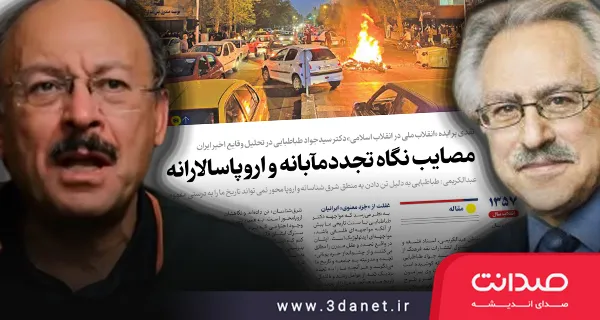
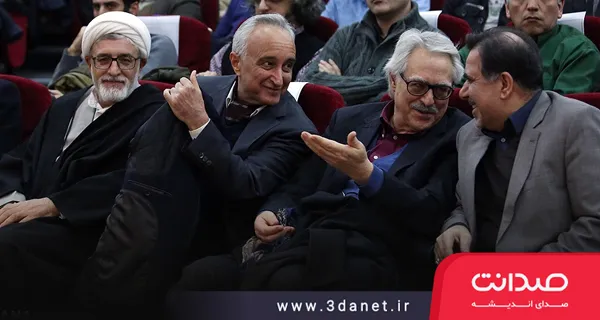
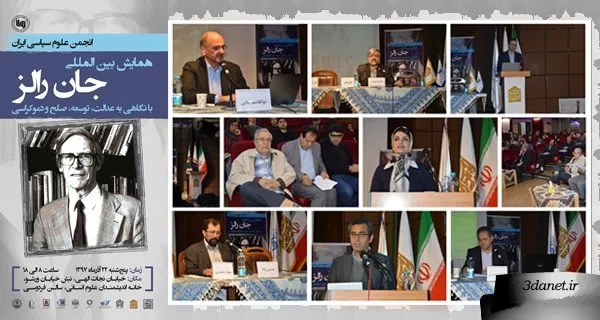
Discussion13 comments
ایشان در این مقاله دن کیشوت وار به همه و همه جا حمله کرده و بدون اینکه ماخذی و آدرسی برای سخنانش بیاورد همه را محکوم کرده هرچند که ای ایشان امروز در میان ما نیستند ولی از کسانی که خودشان را پیرو راه او میدانند میخواهم این سوال را بپرسم که شریعتی چه نسبتی با مصباح و یزدی علم الهدی دارد که ایشان وضعیت امروز ما را تقصیر شریعتی میداند
لاتین نه انگلیسی. جالب است که متوجه می شوید که متنی انگلیسی(نه لاتین!) هم می تواند خطا باشد. همین برای من کافی است که فردی prowest در ایران را اینقدر متوجه کنم که نحوه بیان صدق به همراه ندارد. خوب اگر به سطحی بالتر برویم ، اتوریته فلسفه غرب را هم بهش فکر کنید آنوقت هدف من که به فکر انداختن شماست برآورده شده. بهمان علتی که شما فرمودید ، این که کسی از textbookهای "معتبر" دانشگاه معتبر quote بیاورد و یا تحصیکرده غرب باشد و یا فلسفه یا تاریخ غرب بگوید ، نباید باعث غش کردن شما بشود. بشین فکر کن عزیزم ! من بد! professionalism ارائه شده به نام ساینتیسم (نه دانش) را بشناس.
این همه واژه، عبارت و جملههای انگلیسی ترجمهپذیر به کار بردن در متن فارسی چه دلیلی به جز فضلفروشی و ژرفنمایی دارد؟ البته شاید هم تسلط کافی به زبان فارسی نداشته باشی، و مثلاً بزرگشدهی خارج باشی، که در این صورت موضوع قابلفهم است و من عذر میخواهم. اما اگر این زبانپریشی تعمدی است، فکر نمیکنم این حرکات در جهانی که هر نوجوانی تا حدی انگلیسی بلده فضیلت به حساب بیاد.
ناامید شدم آقا جان! ادامه بده جانم! ادامه بده!
authority مرجعیت باصطلاح علمی به جای معرفت ، دانش، مطالعه ، مشاهده و اندیشه نشسته. لحن سخن و intensity جهت گیری و موضع سخنش می تواند نشانگر عدم پایبندی سخنگو به انصاف، دانش و تعمق باشد. یک آکادمیک می تواند فحاش باشد و می تواند اهل مداقه و شنیدن باشد. صرف این که کسی post-doc است (که در مورد طبطبا یی این گونه نیست) در ایران برابر با صدق موضع او گرفته می شود. حال گیریم در علوم طبیعی ان هم در مورد گزاره های مشاهدتی و آزمایشی موردی و تعریف شده در مورد اشیاء این گونه باشد (که نیست) ، یک تحصیلکرده human sciencesبر چه مبنایی توهم صدق و علمی بودن ادعاهای پر از هتاکی اش را دارد؟ طباطبایی را از سطح خود خارج و در نظرگاه فلسفه علم و فلسفه تحلیلی ارزیابی بفرمایید . هیچ از او نمی ماند. با نگاه انصاف و عقلانیت به او بنگرید، ضعف هایش نمایان میشود. منطق جاری در کلامش را دنبال کنید ، بی دقتی و خطاهای بیشمار از آن بیرون می زند.
دوست گرامی آوردن کلمات لاتین در بین شطحیاتی که می بافید باعث موجه شدن و علمی شدن ادعای شما نمی شود.لطفا ادعاهای خود را بی پیرایه و واضح با زبان شیرین فارسی بیان بفرمایید.
موضع آقای طباطبایی در سطحی بالاتر از ارائه نظر و در مقام ارزیابی منطق بیان و شواهد مؤید و شواهد مبطل اشکالاتی دارد: اشکال 1: ملی گرایی طباطبایی قادر به ارائه موضعی قابل قبول و موفق نیست. ملت ایران و ملل دیگر در صورت اتخاذ نگاه و منش و روش برآمده از نگاه طباطبایی در سطح روابط بین الملل دچار تعارض و درگیری می شوند. اشکال 2: طباطبایی تکیه بر صدق و موجه بودن نگاه مللی دارد که با ایران در تعارضندو به ایران در تاریخ تهاجم کرده و باعث صدمات و خسارات سنگینی بر ملت ایران شده اند. به گونه ای سخن می گویند که گویی روابط بین الملل مبتنی بر حسن همجواری است. در صورتی که رئالیسم موضع رایج international relations روابط بین کشورهاست و بسیاری آن را مبتنی بر power politics می دانند. ادعای ملی گرایی با تأیید نگاه نژادی متخاصم با ایران و ایرانی ناسازگار است. اشکال 3: وقتی حتی از رسانه های غربی به راهپیمایی هوادارن حکومت نگاه کردیم باز یورش هواداران مذهبی و یا ملی مذهبی ایرانی ، در کشور دیده شد. دوم، حکومت روحانیون علیرغم تصویری که ژورنالیسم غربی به من و امثال من ارائه می کند دوام پیدا کرد. به نظر نمی رسد جوانانی که پرچم کشورشان ا آتش می زنند و فحاشی می کنند و یا خشنونت علیه سربازان کشور خودشاتن نشان می دهند از سر آگاهی و اندیشه رو به رفتار این چنینی آورده باشند و یا این رفتار manifestation تجسم آگاهی ملی باشد بلکه ظاهرا شواهد ضد ملی در رفتار آن ها دیده می شود.
غیر ایرانی و ضد ملی و شیفته دیکته اینترنتی بودن cause هدف افرادی که در چند ماه گذشته طبق حق آزادی اندیشه و اعتراض با حکومت کشور شما مخالفت کردند شواهدی دارد. نسبت ایرانی و ملی دادن به این cause از مصادیق وصله پینه کردن موضع غیر علمی و غیر منطقی تحصیلکرده های ایرانی است. این که آقای دکتر طباطبایی به یک پیامبر که اصل سخنش برابری همه انسان ها در پیشگاه خدا و نفی تفاوت سیاه و سفید و نژادهاست ، با یک جمله نقل قولی! نسبت انتقام گیری قومی از قومی دیگر می دهند ، نشان دهنده همان تعصب و عدم عقلانیت و بی انصافی دانشگاه ایرانی علیه خود، فرهنگ خود و پدران و مادران و ملت خود است. صدا نت منتشر نمی کند باشد که لااقل خود صدا نت بخواند. شاید احترام به فرهنگ خود و اندیشه پیشه کند.
اعتراضات اخیر را ملی خواندن یک misnomer نام غلط واضح است. آـش زدن پرچم ایران، فحش های رکیک دادن، رفتارهای hooliganism مجرمانه و قتل سرباز و شهروند ایرانی، تبعیت مطلق از رسانه خارجی ، نشانده ملیت است یا غیر خارجی بودن و ضدیت با ملت و کشور ایران؟ نگرانی شدید از وجود اینترنت در میان مخالفین حکومت روحانیون در ایران، آیا نشانه استقلال و اصیل بودن و ملی بودن Cause اعتراضات دارد و یا وابستگی مطلق به بیگانه؟ کوخ نشینان را که سرمایه یک مردم و کشور هستند را ضد ملی خواندن تنها از قشر دانشگاهی بی هویت جویایی شهرت برمی آید. کسی نیست از طباطبایی بپرسد در زمان اضطرار کی از مرزهای کشور شما دفاع می کند؟ نمی توان از طباطبایی انتظار داشت که در سطحی بالاتر یعنی meta-history , meta-politics بیاندیشد . اما برای این که ایشان کمی فکر کند ار ایشان می پرسم که آیا فقط ایران ملت و ملیت دارد یا کل ملل ملتند و ملیت دارند؟ حال اگر ملت داشتن مختص به ایران نیست چگونه با موضع و تعریف طباطبایی بریا ملت و کشور می توان روابط بینالملل موفق و صلح آمیز داشت؟ طبعا جهان نیاز به روابط بین الملل معقول ، حافظ حقوق بشر و صلح آمیز دارد ان چه از دایره تبیین طباطبایی بیرون می افتد صلح بین الملل است چون نگاه او در سرا فرا ملت به جنگ و مخاصمه می انجامد. مهمتر این که در مقابله ملت و امتی که طباطبایی با جهل خود نسبت به conceptualization درک مفهوم امت مطرح کرده باید دید کدام مفهوم معقول، سودمند و کاراست که قطعا امت کارا تر از ملت نظری و تئوریک طباطبا یی است.امت حاوی ملیت نیز هست و امت بود که صدام را کنر زد و کشور ایران را بریا ملت ایران حفظ نمود.
در مقابله ملت و امامت اتفاقا این ملت است که کارا و سودمند تر و معقول تر است و یک پارچگی کشور را می تواند حفظ کند و حتی سیاست های خارجی خود حکومت را نیز بعضا موجه جلوه دهد. این که ادعا می کنید امت صدام را کنار زد و کشور ایران را برای ملت ایران حفظ نمود مربوط به دهه ی ۶۰ و اول انقلاب است . اشتباه شما و طیف همفکران شما این است که فکر می کنید اکثریت ملت ایران همان ملت دهه ی ۶۰ هستند . اکثریت ملت ایران برخلاف دهه ۶۰ و قبل از انقلاب که مذهبی بوده اکنون اگر نگوییم بی دین و لامذهب اما عمدتا غیرمذهبی هستند و تعداد قابل توجهی از نسل جوان که بعضا حتی از اسلام خارج و مرتد شده و به مسیحیت ، زرتشتی و یا بی دینی روی آورده است . برای چنین مردمی و نسلی که اکثرا غیرمذهبی و بعضا لامذهب و بی دین بوده و چه بسا اصلا اسلام و یا هیچ دینی را قبول ندارند شما نمی توانی بر مفهوم امت که یک مفهوم دینی است تکیه کنی چون با آن نمی تواند ارتباط برقرار کرده و بپذیرد . چنان چه بخشی از طیف غیرمذهبی ها و حتی لامذهب ها که به اسلام اعتقاد نداشته و قبول ندارند گرد شخصی به نام امید دانا جمع شده و این طیف که خود را ایران گرایان نوین می نامند طرفدار جمهوری اسلامی و سیاست هایش در منطقه بوده و از آن به عنوان یک حکومت روحانیون دفاع می کنند چرا که آن را موجب اقتدار کشور و ایرانی و کشور ایران و باعث تبدیل شدن ایران به یک قدرت و مطرح شدن وی با سیاست هایش در جهان می دانند در حالی که بعضا نه به اسلام و نه به روحانیون کوچکترین اعتقادی ندارند که مخالف هم هستند . حال جمهوری اسلامی چگونه بر مبنای مفهوم امت این طیف ایران گرای بعضا بی دین و لامذهب اما طرفدار خود و سیاستهایش را می تواند بر مبنای مفهوم دینی امت دور خودش جمع کرده و هم چنان نگه دارد و توجیه کند ؟ به همین دلیل حتی خود حکومت و حاکمیت هم که در ابتدای انقلاب با برکشیدن مفهوم امت اسلامی و ضدیت با مقوله ملیت ایرانی و ملی گرایی بر سر کارآمد اکنون به جایی رسیده است که بر مفهوم امت و امت گرایی چندان تکیه نکرده و در گفتمانش به حاشیه رفته و اگر نه به طور صریح ولی ضمنی و تلویحی بر ملیت ایرانی تاکید می کند . کافی است که نگاهی به مناسبت های مختلف مثل راهپیمایی های حکومتی و انتخابات بیاندازیم که صدا و سیما چه قدر شعرهای وطنی و ملی و در باب ایران پخش می کند . یا کارگردانی مثل آقای مسعود ده نمکی که یک کارگردان ارزشی محسوب می شود و قبلا هم جز گروه انصار حزب الله بود در پایان فیلمی که می سازد ایرانیان و همین طور تیتراژ پایانی اش سرود ای ایران ای مرز پرگهر مرحوم بنان را که از آن به عنوان سرود ملی غیر رسمی هم یاد می کنند نمایش داده و پخش می کند نه سرود رسمی جمهوری اسلامی و یا مذهبی و انقلابی دیگر را ! یا در باب سوریه ته استدلالی که برای حضور و دخالت نظامی کشور ما و موجه ساختن آن برای اقشار مردم می آورند این است که اگر ما برای مقابله و جنگ به داعش نمی رفتیم اکنون باید در داخل کشور و شهرهای ایران با داعش می جنگیدیم و تمامیت ارضی کشور به خطر می افتاد . در این استدلال دیگر جای چندانی برای دفاع از مردم سوریه و نجات ملت این کشور و یا سایر مردم منطقه که جز همین امت اسلامی بوده از چنگ داعش اثری نمی بینیم بلکه در درجه اول دفاع و جلوگیری از به خطر افتادن تمامیت ارضی کشور و ملت و ملیت ایرانی برجسته و مطرح می شود . اینها نشان می دهد که همین حکومتی که بنا به گفته ی ایشان در ابتدا با ضدیت با ملیت ایرانی و ملت ایرانی و برکشیدن مفهوم امت و تکیه و تاکید بر آن بر سر کار آمد و جز سیاست هایش بود ؛ اکنون حال برخلاف تصور آقای طباطبایی دیگر بر همان مفهوم امت و امت گرایی تکیه نکرده و مبنا قرار نداده بلکه بیشتر بر همان ایران گرایی تکیه می کند چون می داند دیگر این امت اسلامی و امت گرایی که زمانی آن را در مقابل ملی گرایی و ایران گرایی برای کوبیدنشان و نفی برجسته کرده بود اکنون دیگر حنایش رنگی ندارد و برای توجیه سیاست های خود و همراهی اکثر مردم و ملت ایران بهتر است به همان ملی گرایی و ناسیونالیسمی که البته برخلاف دوران پهلوی ضد اسلام نباشد و وطن پرستی و همین طور ایران گرایی بچسبد تا امت اسلامی !
اتفاقا بر خلاف ادعای شما مفهوم امت قابلیت کشاندن دنیا به جنگ و مخاصمه را بیشتر دارد تا تکیه بر ملت و ملیت تکیه بر ملت و ملیت زمانی می تواند سبب جنگ و نزاع و درگیری شود که مثل فاشیسم و نازیسم مبتنی بر یک نژاد پرستی افراطی که بقیه ملت ها را مقهور و زیر دست خود بداند باشد . اتفاقا مفهوم امت قابلیت بیشتری برای به خطر انداختن صلح بین الملل و جنگ و درگیری و نزاع بین ملل و کشورها دارد . امت مفهومی فراگیرتر از ملیت و انترناسیونال و در برگیرنده ی ملیت ها و کشورها است تا یک کشور و ملت . لذا یکی اگر یک کشور قدرمتند که قصد توسعه طلبی دارد می تواند به بهانه امت فراگیر صلح بین الملل را به خطر انداخته و با کشورهای اطراف و منطقه ی خود جنگ و نزاع راه بیاندازد . مثلا یک کشور قدرتمند تر می تواند به بهانه ی این که ما امت اسلام یا امت عربی یا امت سیاه بوده و کشور متحده ی اسلامی یا عربی یا متحده ی سیاه باید تشکیل شود با همسایگان خود نزاع کرده و یا اقوام مرزی را تحریک به جدایی طلبی برای پیوستن به خود کند . در واقع با مفهوم امت نمی توان یک پارچگی ملی و اقوام را حفظ کرد . در چارچوب مفهوم امت اقوام می توانند بگویند ما نمی خواهیم جز این کشور باشیم و می خواهیم به همسایگان خود در کشورهای همسایه که قوم و هم زبان ما بوده بپیوندیم . مثلا بلوچ ها به بلوچستان پاکستان ، عرب ها به عراق ، آذری ها به آذربایجان ، ترک ها به ترکمنستان و کردها به کردستان منطقه برای تشکیل یک کشور مستقل می توانند ادعا کنند و شما با تکیه بر مفهوم امت که قادر به حفظ هویت ملی و جمعی کشور نبوده نه فقط که خلع سلاح شده که آب به آسیاب آنها هم خواهید ریخت . اما در باب ملت این گونه نیست . چرا که ملیت اگر چه ممکن است در برگیرنده ی اقوام مختلف باشد اما اگر مثل مثلا زمان پهلوی اول یا رضاشاه یا یوگسلاوی بعد از مرگ مارشال تیتو در چارچوب یک قومیت مثلا فارس ها یا صرب ها قرار ندهیم و نخواهیم اقوام دیگر و زبان آنها را نادیده بگیرم نه فقط تحریک به جدایی طلبی نشده که در قالب همین ملت و ملیت ضمن به رسمیت شناختن تمام اقوام در قالب یک ملت و ملیت مثلا ایران می توان یک پارچگی کشور را در قالب یک ملت و هویت ملی و تاریخی و حافظه جمعی مبتنی بر آن حفظ کرد .
جز فحش و کینه چیزی در حرف های آقای جواد طباطبایی ندیدم اهورا مزدای بزرگ به ایشان آرامش دهد و آثار خشم و نفرت انباشته در کلامشان، را از ایشان دور بدارد.آمین
جواد طباطبايي ، جدا از محتواي نظرات او ، به علت لحن پرخاشگرانه و پر نيش و خار منش او ؛ از عوامل افت فرهنگ گفت و شنود سنجيده در ايران بوده است .