Philosophy
Hossein Dabbagh's Article 'The Priority of Justice over Democracy'
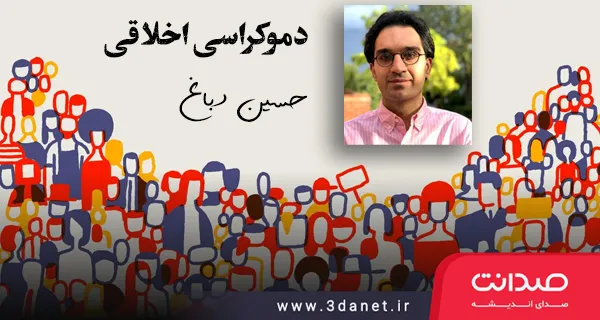
Democracy without justice can become a tool for entrenching injustice. Emphasising the primacy of justice, Hossein Dabbagh argues that ending repression is the starting point for redressing injustices and realising free, rational participation in an ethical democracy.

The Priority of Justice over Democracy
Hossein Dabbagh
Is democracy always valuable and desirable? I believe not. Imagine a society in which democracy is a means through which an unjust policy is repeatedly put to a vote and the majority votes for it. In fact, a group of people who have unjustly gained great influence in such a society can greatly affect people's votes, buy their votes, and persuade them to choose an unjust policy. For example, educated and wealthy men who have unjustly gained influence convince the majority that the rights of women and men should be different despite equal work, equal skills, equal education, and so on. On the surface, everything seems to be on the right track. People participate, vote, choose... but something is amiss somewhere. If those who have influence and affect people's votes have gained such influence through an unjust path and are using democracy for their own ends, is democracy still desirable?
There is desirable and undesirable democracy. Desirable democracy is, of course, acceptable and worth wanting. But what form of democracy is desirable? A democracy that is just, considers differences among individuals important and valuable, and is accompanied by debate, argument, and rationality. In such a democracy, which could also be called "ethical democracy," the mere participation of individuals is not necessarily important; the high percentage and number of people's votes do not matter much; because people can vote out of ignorance or participate out of stubbornness and spite. Not every participation is ethically important; participation is important when it is rational, free, recognizes the "other," and is accompanied by debate and argument. Such participation, since it takes the "other" seriously, seeks to include and involve everyone in the process of debate and argument. Involving "everyone" in this type of participation has a fundamental pillar: the poor and the rich, the educated and the uneducated, the irreligious and the religious, heterosexuals and homosexuals, men, women, and the third gender, different ethnicities, various races, and so on. Those who are different are strongly taken into account in this type of participation because justice demands it. Thus, ethical democracy requires just participation. Until justice is established and participation is just, ethical democracy will not be realized. This is the secret of why justice is a prerequisite for the presence and emergence of desirable democracy and has priority over it. If a society abandons justice to implement democracy, it will likely lose both. Even if it can implement democracy, without just and free participation, it will implement the worst and most undesirable form of democracy.
But you might ask, what is justice in the first place, according to which one can participate justly and make democracy more ethical? My answer is simple: just participation occurs when we eliminate injustices as much as possible. This seems like a tautological statement! But a subtle point lies at its heart. Seeking justice and providing a comprehensive theory of justice is an extremely difficult and arduous task. The diversity of theories of social justice is a testament to this: should we pursue "priority" and give priority to the oppressed and the needy? Should we pursue absolute "equality" and abandon prioritization? Should we abandon both priority and equality and pursue the "maximization" of the public good? Should we choose a middle way and both maximize utility and consider equality? Should we consider "luck and fortune" in the distribution of resources? Is it "sufficient" to take a fixed amount of good that everyone deserves as the principle? Should...
All these theories, despite their theoretical disagreements, share one thing in common: they seek to eliminate or control injustices. If this is the case, it seems that focusing on injustices is more imperative than providing a theory of justice. Thus, instead of creating a just environment, ameliorating injustices takes priority, and the question of how to manage injustices appears to be a more critical one. But you might object that managing injustices is inevitably dependent on a theory of justice, and in treating injustices we fall back into the trap of asking: what is justice? Yes, justice and injustice are two sides of the same coin and are tightly intertwined. Yet I suspect that one can begin treating injustices somewhere without having a comprehensive theory of social justice.
Injustices arise in the "relations" of people with one another and in the "relations" of states with citizens. Injustices have a here-and-now quality and are not abstract matters. For this reason, perhaps we can begin ameliorating injustices from one fundamental and basic thing: putting an end to repression and suffocation. To treat injustices, it is "necessary" for repression to end, even if it is not "sufficient." Repression takes various forms: political, economic, social, cultural, etc. When we end repression, the path opens for breathing a reasonable, free, and just participation. Such participation, occurring without suffocation and with reason, acquires moral significance.
Repression, suffocation, domination, and hegemony are among the key pillars of injustices. Wherever the trace of repression is found, the skin of justice is torn and the wound of injustices festers and becomes infected. Wherever repression takes root, the "other" is wounded, and "everyone," not being called to participate, becomes absent. The irony is that repression is compatible with undesirable democracy. Through repression, some can be called to participate, but a participation that is not necessarily reasonable or just. Such participation is, of course, not moral either. What makes justice frail and ailing is the repression of various strata of society, especially those strata and classes that are different and have no voice in society. Since they are not called to participate, they inevitably creep into a corner and become reclusive. Hafez understood well that justice has a close connection with inquiring after the condition of the "oppressed," and if this is not done, the fabric of justice will be lame:
If the king's justice does not inquire after the condition of the oppressed in love,
The recluses must cut off their hope for comfort.
I will be brief. First, desirable democracy has moral value insofar as it takes justice seriously and prioritizes it. For justice provides a moral reason to consider desirable democracy important. Justice makes desirable democracy rational and reflective, takes the differences among individuals and groups seriously, puts them to discussion, and takes those who are different into account. Second, for the growth of justice and ethical democracy, we must eliminate injustices. To begin, we must cease repression and suffocation. Repression squeezes the throat of justice but can still keep the path open for an undesirable democracy. Ending repression is a beginning for the growth of justice, and when justice grows, desirable and ethical democracy bears fruit.
.
.
Source: Koucheh Special Issue on the Occasion of World Day of Social Justice
.
.
Download PDF of this article from Sedanet server
Download PDF of this article from Academia
Download the complete PDF of the Koucheh Special Issue on the Occasion of World Day of Social Justice
.
.


Discussion0 comments
No comments yet; let yours be the first voice.