Philosophy
Hossein Dabbagh's essay, “Ah, that enchanting narcissus—what a ‘game’ it stirred!”
The world can be lived in two ways: the realm of reality, where an act is done for its own sake, and the realm of metaphor, where an act is done for some other end. Human suffering arises because the mind, through imagination, understands one thing in terms of another, and we are unwittingly caught in a game whose only purpose is the performance of the act itself.

Imagine a world in which people do everything solely for the sake of doing that very thing, and not for the purpose of something else. If they exercise, they exercise only for the sake of exercising. If they eat, they eat only for the sake of eating. If they engage in sexual relations, they do so only for the sake of engaging in sexual relations, and so on. In truth, they do not exercise, for example, to lose weight. They do not eat, for example, to experience pleasure. They do not engage in sexual relations, for example, to experience pleasure or to bring a child into the world. It is as if, in this realm, people resemble a computer whose brain, in performing any act, “intends” only the performance of that very act. The human brain in this realm is a brain without “imagination” that does not perform an act on account of another thing. Rather, like a robot, if they walk, their brain solely and exclusively “intends” the command to walk, and nothing else. Let us call such a realm, where every matter occurs purely as that very matter, the realm of Truth.
But in another world, very close by, people are not like this. The generality of their actions are performed not for the sake of the action itself, but for another goal. In this realm, if the generality of people swim, for example, they do not swim only for the sake of swimming, but swim for the pleasure of bathing in the water. If they build a house, they do not build a house only for the sake of building a house. Rather, they erect a building for the profit gained from its sale or to take shelter. If they play or listen to music, they do not do so only for the sake of listening to or playing music, but do so for the pleasure derived from it, and so on. In this realm, people live with the “imagination” of something else. It is as if their brain subconsciously “intends” another “thing” for performing various actions. For this reason, they perform actions not for the pure performance of the action itself, but on account of another matter that they imagine and depict. Let us call such a realm, where every matter does not occur purely for the sake of performing that very matter, the realm of Metaphor.
Now let us ask, which of these two realms imposes less suffering for living upon a person? Metaphor or Truth? Likely, if Hafez were alive, he would say:
I cast a design upon the water, from weeping, for now
Until when shall my “Metaphor” be paired with “Truth”
The world of Truth, although likely tedious, brings less suffering with it. It is as if everything is in its proper place. In this realm, one is not supposed to imagine another image in the mind for performing various actions and then become afflicted and sorrowful if it does not come to pass. A multitude of human sufferings in the present world is due to the fact that people, in performing action A, intend goal B, and because goal B is not attained, they become distressed. For example, the generality of people live in order to enjoy life. Few are those who live just to have lived. It is natural that when the goal of life is enjoyment (or the absence of suffering), at the time of suffering’s presence (the absence of pleasure), the individual becomes contorted. But if, from the beginning, the goal of life is the pure act of living itself, it is difficult to imagine suffering arising in its wake. The only time suffering might arise—if it arises—is when life is not; that is, death itself! Epicurus was right that death is not to be feared, for as long as life is, death is not, and when death is, life is not. Following in his footsteps, one can say that one who lives only for the sake of living has no suffering, and one who suffers is one who does not live only for the sake of living.
But in the realm in which we humans live, that is, the realm of Metaphor, suffering is found in abundance. Can one find the surrounding world empty of suffering? It is as if the warp and woof of this realm are woven with suffering. Suhrawardi had learned well from the Quran, “We have certainly created man into hardship,” when he states in the book Munis al-Ushshaq that the earth and the sky came into being when sorrow seized the collar of love! Suhrawardi, like the generality of Muslim philosophers, knew that this realm (of matter) has an “essential deficiency.” It lacks something, which makes it painful. But my claim in this essay is precisely the opposite of Suhrawardi and other Muslim philosophers: that, as it happens, this realm has something extra that creates suffering. That extra thing is our “imagination.” Now let us ask, how does imagination create suffering?
To explain: if we ask why most human beings suffer in this world, the gist of my argument is that we human beings suffer because our minds create suffering for us. How does our mind create suffering? “Imagination” makes our mind “playful,” and this playfulness sometimes afflicts us: “The peacock’s enemy is its own feathers”! But in what sense is our mind playful? Allow me first to clarify what I mean by play, and then it will become clear what playfulness means.
The characteristic of our human minds is such that, in categorizing concepts, it subsumes one thing under another in order to understand it. For example, most human beings understand and imagine the concept of “love” under the experience of “warmth”: “How warm we are, how warm we are from this love, like the sun”; or they conceive and imagine “life” based on the experience of a “journey”: “I am still traveling / I imagine there is a boat in the waters of the world…”. This characteristic of the mind reveals itself clearly in playing. Most human beings, while engaged in play, nurture a goal in their minds other than the mere performance of the play. For instance, when we play with a doll, or when we tell a joke, or when we play with a ball, or… we do not perform such acts purely for the sake of performing them. Generally, when human beings play, they nurture an end such as enjoyment and happiness in their consciousness. In other words, we practice and rehearse the concept of “pleasure” or “happiness” in terms of and through “playing.”
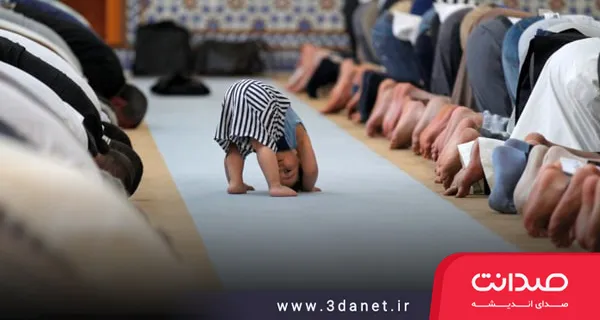
Games are not necessarily unserious or unimportant. As it happens, they form the very foundation of this world and our way of life. The characteristic of our human mind and our mode of cognition is play-oriented, and all our cognitive activities—including teleological thinking, categorization, imagination, and so on—are game-like. Without even knowing or being aware of it, we are playing. It is as if we play unconsciously and even play at playing. In truth, we human beings are playing all the times we are doing something and do not do that thing for the sake of doing it or merely to do it, but do it for another purpose. That is, we “pretend” when we perform act A, we are doing it for the sake of performing act A. Whereas most of the time, our goal in doing act A is something else, like B. For example, suppose someone is walking. They do not walk just to walk. They probably walk to find vitality or to maintain their health. As long as they do not walk purely for the sake of walking, they are playing. One can imagine various and diverse examples where we human beings do not perform an act purely for the sake of performing that act. But why is this so? The reason is that when we human beings perform an act purely for the sake of performing that act, we require mindfulness. But mindfulness is a laborious affair that most human beings cannot manage. Rare are those who can order all the acts of their lives in such a way that those acts are carried out only for the sake of performing those acts themselves. Suppose someone is eating food and does so not for pleasure, not for social presence, not to satisfy hunger, but only and purely for the sake of eating food. That is, when they eat, they do not “attend” to any of these purposes. In psychological terms, they are in a state of “mindfulness” and living in the “present.” If such a state is found, it can be said that such a person is not engaged in play.[1]
Mindfulness is above all a cognitive activity that requires considerable concentration and attention. It is natural that such a cognitive activity demands a great deal of energy from the brain, and this is why we humans cannot engage in our activities with one hundred percent focus and attention at every moment. If we consider the unconscious blinking of our eyes, we realize that nature has, as it were, “intelligently” left us a way of escape and relief so that we do not have to concentrate constantly and at all times. With this interpretation, it is natural that most people “prefer” not to expend such great energy on prolonged concentration, for if they did, they would not have enough energy for the rest of their daily affairs. One might say that over the course of evolutionary history, humans, inadvertently or deliberately, refused to expend such an energy-intensive activity for the sake of their survival and turned to play. In fact, most of our activities for preserving survival have the flavor and color of play. And this is not unique to humans. Animals, too, sometimes engage in playfulness for survival. Turning to play is important in that games provide the entirety of our suffering and joy. Games are not necessarily always joy-creating or always painful. Sometimes they are one, and sometimes the other.
The final word is that human imagination makes them playful. We humans have become addicted to playing, and of course, games bring both suffering and joy. If someone wants to be free from suffering, they must stop playing. This does not mean they must give up on life, but rather that they must cease being playful and experience a life without play. They must migrate from the virtual world to the world of truth. Consider robots.[2] Perhaps our future as humans will resemble them: a life without play, but without suffering!
.
.
[1] As an example, the Sufis were among those who, one might say, strove not to give in to “play.” Whether they succeeded or not, God knows best.
[2] In the worldview of the ancients, “angels” possess a quality similar to robots. When Hafez wrote, “The angel knows not what love is, O cupbearer,” he may have had such a meaning in mind.
.
.
PDF file of the essay “Ah, that enchanting narcissus—what a ‘game’ it stirred!”
from academia.edu | direct link
.
.
Ah, that enchanting narcissus—what a “game” it stirred!
Hossein Dabbagh—Institute for Cognitive Science Studies
.
.




Discussion4 comments
فرضاً کسی بخواهد خارج از بازیکردن زندگی کند، میشود بفرمایید غذا خوردن به صرف غذا خوردن چه معنی میدهد؟ چگونه میتوان شنا کرد فقط محض شنا کردن؟ منظورم این ست که آنچه شما فرمودهاید ربط دارد به مسألهی معنا،،، افراد نمیتوانند پیادهروی کنند فقط برای اینکه پیادهروی کرده باشند،، چنین چیزی بیمعناست. انسانها تلاش میکنند از خلال کارهایشان جزء به جزء، زندگی معنی ببخشند. حالت آگاهی تفطن به این معناست که افراد بدانند از انجام یه فعل خاص چه چیز را تخیل و مراد کردهاند و آن را به بوتهٔ نقد درونی بگذارند. هکذا آنچه فرمودهاید در باب زندگی خارج از بازی نیاز به قدری جرح و تعدیل،، و با توضیح روشنگر دارد.
دوست عزبز اینکه می فرمایید برا معنا بخش لازم هست خب کسی که در حال زندگی میکند یعنی کاری را به صرف ان کار انجام میدهد خب لاجرم زندگی را هم به صرف زندگی می زید پس دنبال چبزی یا هدفی ورای زیستن ندارد که بخواهد به زندگی معنا بدهد
نوشتار زیبایی بود. به قول حافظ: گفتم که بر خیالت راه نظر ببندم گفتا که شب رو است او از راه دیگر آید. عالم خیال , عالم محاکات است. کار قوه خیال, بازیگری است..
با درود و سپاس نوشتار مفید شما، من را یاد نقل قولی از بودا انداخت که توسط استاد ملکیان در درسگفتارهای « اخلاق کاربردی » بیان شد: بودا در پاسخ به معترضان چرایی بیرون آمدنش از آیین پیشین گفته بود : دستاورد بزرگ آیین نوین من اینست که : وقتی غذا می خورم، فقط غذا می خورم؛ وقتی می خوابم، فقط می خوابم؛ وقتی سخن می گویم، فقط سخن می گویم و ... اما از استاد دباغ می پرسم ، سرشت زندگی مومنانه که همواره بر غایت اندیشی در زندگی تاکید دارد و آدمی را به انجام امور « برای » رسیدن به غایتی دیگر سوق می دهد؛ چگونه با توصیف جنابعالی از زندگی « ربات گونه »، قابل جمع است؟