Political Science
Bijan Abdolkarimi’s Critique of Seyyed Javad Tabatabai’s Idea of a “National Revolution within the Islamic Revolution” in Analyzing Iran’s Recent Events
Bijan Abdolkarimi critiques Tabatabai's idea of a 'national revolution within the Islamic Revolution,' arguing that his analysis of recent events is captive to a Eurocentric logic that overlooks Iranian spiritual reason; the current situation is not a revolution, but the emergence of nihilism and a civilizational rupture.
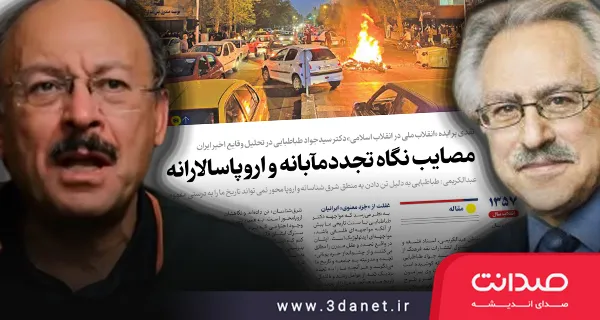
A Critique of Dr. Seyyed Javad Tabatabai’s Idea of a “National Revolution within the Islamic Revolution” in Analyzing Iran’s Recent Events
The Afflictions of a Modernist and Eurocentric View
Abdolkarimi: By Succumbing to Orientalist and Eurocentric Logic, Tabatabai Cannot Properly Conceptualize Our History
Published in Iran Newspaper, Issue 8129, February 15, 2023
While respecting the scholarly character and theoretical efforts of Dr. Seyyed Javad Tabatabai, I endeavor to raise a few points regarding his statements on the recent events and unrest, and his proposal of the idea of a “national revolution within the Islamic Revolution”: It seems that Dr. Tabatabai’s encounter with our historical tradition is more ideological than philosophical. He, in fact, absolutizes modernity and modern reason, viewing our society and history from the perspective of Greek wisdom, modernity, and modernization, considering whatever brings us closer to modernity as a factor of growth and flourishing in our history, and whatever distances us from it as a cause of our decline. In reality, Dr. Tabatabai has succumbed to the logic of the Orientalists, and his view is Eurocentric. For this reason, despite the respect I hold for his monumental efforts, I must state that he cannot properly conceptualize our history nor correctly approach the nature of Iranian wisdom. In this vein, he considers all the components that constitute Iranian identity and wisdom, including a spiritual interpretation of the world, mysticism, and Iranian religious wisdom, as factors of decline. Dr. Tabatabai has been utterly unable to approach the truth that Iran is one of the spiritual centers of the world. Indeed, if we remove this spiritual wisdom from Iran, nothing of Iranianness remains. It is because of this very neglect of the specific, spiritual Iranian wisdom and identity that he subjects great cultural and social assets like Shariati or Fardid, or the understanding of thinkers like Henry Corbin of Iran as a grand historical tradition and a kind of ontology, to the harshest and most bitter attacks, following the populism prevailing in society. In my opinion, undoubtedly, Corbin, Shariati, and Fardid, despite the many criticisms one might possibly level against them, have understood Iran as one of the greatest spiritual centers of the world and are closer to Iranian wisdom and the Iranian essence.
Unfortunately, dear Dr. Tabatabai’s modernist, Orientalist view and Eurocentric logic also manifested themselves in his analysis of recent issues. I can be aligned and sympathetic with Dr. Tabatabai that a new society is taking shape in Iran and a new Iran has been born. However, I believe we are facing our second civilizational rupture, meaning that if our socio-historical consciousness was fractured by the encounter with modernity at the dawn of the Constitutional era and before, and the ramparts of the fortress of traditional faith collapsed upon the emerging modern Iranian subject, today, with the emergence of the postmodern world, we are facing our second civilizational rupture. Alongside the new generations, our second historical and civilizational rupture and break from heritage, tradition, the traditional lifeworld, and our national and historical identity is being experienced. Of course, today we are not only witnessing a kind of historical rupture and break, but a kind of rage, resentment, hatred, and rebellion against our socio-historical identity, heritage, and achievements has emerged. With the 1979 Revolution, which was supposed to be a kind of return to the self, unfortunately, due to many internal factors such as the dominance of a culture of ignorance and religious superficiality, religious exclusivism, an ideological interpretation of religion in official readings of the religious matter, the material embodiment of great esoteric and spiritual values, a failure to understand the truth of Iranian wisdom, and the alignment of these indigenous factors with global factors like the emergence of the postmodern world, the expansion of metaphysical subjectivism, and the second industrial revolution—that is, transformations in information and communication technologies and the formation of global networks—we are witnessing the emergence of a kind of self-harm and rage and hatred towards everything that belongs to us, a rage and hatred that is completely understandable socially and psychologically, but is in no way confirmable metaphysically and historically.
Here, I must point out that none of our intellectual and social currents—including the seminaries, the discourse of the Revolution, the political establishment, as well as the universities, intellectuals, and our opposition, among them Dr. Tabatabai himself and his ideas—have been or are in any way prepared to confront the crises of modern Iran. Unfortunately, our opposition and the vast majority of intellectuals, including the esteemed Dr. Seyyed Javad Tabatabai, who has always striven, unlike other intellectuals, to engage with issues philosophically and distance himself from superficial, ideological approaches, have fallen captive to an emotional and ideological confrontation with Iranian society, surrendered entirely to hyper-reality in the Baudrillardian sense, and submitted to the media constructs of the apparatus of the empires of lies tied to the global system of domination.
Dear Dr. Tabatabai, throughout these decades of scholarly and theoretical activity, like many of our intellectuals and opposition forces, never opened his eyes to the reality of the nihilism of the new era and, consequently, in the recent events, was also unable to see the expansion of nihilism on a global and national level. Am I seeking to defend and justify the country's current situation? Not at all! Not at all! Not at all!
In my belief, we are captive to two kinds of nihilism: theological nihilism, which has paved the way for the expansion and eruption of modern nihilism—and how beautifully Shariati grasped that "the old stupefaction has always paved the way for the growth and spread of the new stupefaction." Therefore, our society today is captive to a dichotomy and embroiled in a conflict between two kinds of nihilism, traditional and modern, and neither of these two poles can resolve the current impasses of our society or answer the crises that modern Iran will face.
Dr. Seyyed Javad Tabatabai, under the influence of media atmospheres, saw Iran's conditions as revolutionary, oblivious to the fact that, firstly, the phenomenon of revolution was an eighteenth-, nineteenth-, and up to the first three-quarters of the twentieth-century phenomenon, and in our time, in the twenty-first century, the phenomenon of revolution has been erased from the lexicon of human culture. Revolution is a phenomenon belonging to the era of early modernity, and we are living today in the era of late modernity (the post-industrial and postmodern world), and unfortunately, most of our intellectuals, opposition, and political and social activists still breathe in the atmosphere of the early modern era, unaware that the rules and terms of the game have fundamentally changed. In our time, especially with the extraordinary empowerment of the world's armies through new technologies, and also due to the expansion of individualism, the atomization of human beings, and the collapse of value and ideological systems, the phenomenon of revolution is fundamentally and in principle impossible.
Even if we disagree with this premise and consider the phenomenon of revolution possible, Iran's current conditions are not revolutionary, and what was displayed in cyberspace and on networks such as Iran International, BBC, Manoto, and the like—and which, unfortunately, the great Dr. Tabatabai also fell captive to—was merely a media construct. I do not wish to say that the protests had no domestic roots, or that we do not have domestic problems and crises, and therefore domestic protests and demands, nor do I wish to portray the protests as mere riots, as the political establishment does, but to consider the country's current conditions as revolutionary is a grave mistake. Another critical point for my teacher, the precious Dr. Tabatabai, as a thinker who has always thought and continues to think about the national cause and the idea of Iranshahri, is this: Has he ever contemplated the crisis and calamities resulting from a power vacuum? Does he know of a reliable and real alternative to the current political establishment that could safely deliver the country from the crisis of a power vacuum? Has he, like some of the common people, pinned his hopes on the Mojahedin-e Khalq, or does he wish to grant a mandate to Prince Reza Pahlavi?! At present, is there any power in the country other than the discourse of the Revolution and its affiliated forces that can defend the national cause? Although this statement does not mean endorsing all the positions of the discourse of the Revolution in every arena, especially domestically. I have cried out many times that the discourse of the Revolution created a masterpiece on the international level, but domestically, due to a lack of understanding of the modern subject and a proper confrontation with it, it created a catastrophe.
Here, I say plainly and without embellishment to all friends and supporters of the discourse of the Revolution: we face immense dangers, and our national security is at risk. If they are unwilling to listen to the heartfelt and compassionate criticisms of the national forces, we will undoubtedly confront a great national catastrophe—namely, defeat before the West and submission to all its oppressive results and consequences. Yet from this side as well, my request to all opposition forces, intellectuals, and even a great man like Dr. Tabatabai is to pay attention to the complexity of the historical situation, not to simplify the country's problems in a reductionist manner, and not to imagine that if our country extends a hand of friendship to the great world powers, they will warmly clasp our hands and bring freedom, development, and prosperity to our nation. Dr. Tabatabai, more than many other intellectuals, is familiar with the history of Iran over the last three centuries and knows well what the great world powers have done to our people, how they have always sacrificed the destiny of our people and our national interests for their illegitimate ambitions, and how, with this very media empire, they have always—as in past experiences—directed the social and historical movement of our people in their own interests and at the cost of sacrificing our national interests. And our people, how easily and simply, due to the dominance of an emotional and affective atmosphere, both in the past and in the present, have fallen captive to media-driven atmospherics. Therefore, I expect him and all genuine Iranian intellectuals not to play on the ground of the global hegemons and the destroyers of the lives of multiple generations of our people.
Our protesting youth have a negative dimension more than a positive one. This dimension of negation and rejection of the existing situation, which is a global characteristic of our time, indicates the existence of great pains, sufferings, and crises present in society. Hence, by virtue of protesting these pains and discontents, I stand with the youth and am in sympathy with them, and like them, I too cry out in protest against my own society. However, regarding "what is the positive path?" I think we must act somewhat more patiently, more logically, and in a more path-opening manner. We are faced with an equation of multiple unknowns, and my grievance with intellectuals and the youth, including dear ones such as Dr. Tabatabai, is that they should understand that there is no structural alternative to the existing situation, and political revolution is poison for this society. We need a structural revolution, but the realization of this structural revolution is by no means achieved through a political revolution. Today, "change" has become a "national demand," and taking the second step of the Revolution is possible on the path to realizing this national demand. If the discourse of the Revolution wishes to resist this demand, it will lose all the great values it has created so far and will further prepare the ground for a part of society to slide into the West's playing field. Undoubtedly, national forces like Dr. Seyyed Javad Tabatabai, compared to the ruthless and criminal global and regional powers, are far more compassionate and aligned with our country, the Revolution, and our national interests. I hope that by forming a united front of all sincere and genuine forces of the discourse of the Revolution and the national forces, we can defend this dear country and its national interests at this dangerous juncture and navigate its historical straits safely and at a lower cost.
Discussion16 comments
مطالب نابغه ای به اسم عبدالکریمی جالب توجه است .ایشان با چند تا واژه قلمبه سلمبه عاریتی دزدیده شده مانند فرزندان گفتمان انقلاب و..که خودش هم نمی داند دست به کاهدان زده تازگی هافضل فروشی می کند و نسخه روشنفکران دینی و سکولار را همه پیچیده است وبه دلیل کم اطلاعی از مباحث جامه شناختی جنبش اصیل زن زندگی آزادی را به دلیل نداشتن گفتمان جایگزین فاقد اصالت می داند ...کودکی ناکرده دشنام درست کتابخانه هفت ملت بشست
اتفاقا، عبدالکریمی نگاه ایدئولوژیک دارد نه طباطبایی. شریعتی یکی از شخصیتهای سخیف و پرت و پلاگویی تاریخ ایران معاصر است که درکی از تاریخ ایران ندارد.
متهم کردن برخی مواضع از سوی افراد ناآشنا با فلسفه با توجه به ناآگاهی نسبت به حضور latent پوزیتیویسم و یا شکست قطعی این stance در حدود 1950 شاید از سوی recreational reader قابل انتظار باشد. پوزیتیویسم اکنون یک term of abuse توهین محسوب می شود. ایدئولوژیک خواندن مواضع رقبا pejorative است. این توهین به مواضع دیگر به سبب ناتوانی موضع مدعی آن است. پیش فرض ای افراد این است که خود از واقعیت علمی سخن می گویند و هر نگاهی غیر پوزیتیویستی ای خلاف و یا ناسازگار با امر واقع است. این به سبب جهل نسبت به naiive realism و شکست پوزیتیویسم و ادعای مطابق واقع بودن ا» است و نگاهی متعلق به حدود 120 سال پیش و منسوخ.
بیژن عبدالکریمی جوری داد معنویت می زند و فریاد کانون معنویت بر می آورد که هر کس نداند می پندارد ایران زادگاه آل ابراهیم و آل عمران است و میراث دار آنها.نه عرفان هندی مآب ایرانی و نه مذهبی که بدان تحمیل شد و نه فلسفه ای که با خرد یونانی درآمیخت جای افتخار ندارد. اگر غرب خود را پرچمدار تمدن نوین و به اصطلاح مدرنیته میداند،چون مدرنیته دستاورد طغیان و عصیان انسان غربی علیه سنت پوسیده ایست که دیگر به وصله کردن هم نمی آمد و از هم گسسته بود. دارایی شرق همچون غرب همان سنت کهنه ایست که دل کندن از آن برای شرقی سخت و توان فرساست و -شاید این ریشه در احساسات لطیف شرقی دارد-،به ناچار دست به وصله پینه اش میزند،این پینه دوزی به وسیله دستاورد های غرب و بعضا در تقابل با مدرنیته غربی رخ میدهد و سالهاست که به مدد ابزار های تفکر مغرب زمین شرق پوستین چهل تکه سنت را به تنش می آویزد و عرض اندام می کند. خوانش های التقاطی سنت شرقی مشکلشان این است که زایشی ندارند و عقیم هستند.مدرنیته هر لحظه آبستن اندیشه ایست و چون چشمه میزاید اما سنت شرقی کجاست؟بر بالین جسدش بی جانش نشسته و با روز های خوش گذشته اش چون اقبال و کربن و شریعتی و ... تنفس مصنوعی میدهد به این امید که مرده را زنده کند. بی خیال!،این گزاره های آمیخته به احساسات و به رنگ ادبیات، تاریخ مصرفشان وقتی سر رفت که به قول خود عبدالکریمی پشت هم از مدرنیته و پست مدرنیسم سیلی(اگر نگوییم لگد) خوردیم و نوابغی چون اقبال و شریعتی هم نیست تا زخم هایمان را مرهم نهد،به جای اینکه به خودمان بیاییم و عمق فاجعه را درک کنیم،میکروفون گرفته ایم که بگوییم "پدر های پدر ها چه نسیمی چه شبی داشته اند".
در سطح بینالمللی یک شاهکار خلقکرد اما در سطح داخلی به دلیل عدم درک سوبژه مدرن و مواجهۀ درست با آن فاجعه آفرید. پس از خواندن این عبارت تنها یک چیز می توان گفت: " گیرم گلاب ناب شما اصل قمصر است؛ اما چه سود حاصل خون های پر پر است! آخر سیاست داخلی زه وار دررفته چه گونه می تواند در سیاست خارجی شاهکار کند.
discourse مخالفین مردم دیندار و روحانی در ایران ، discourse استعاره، شعر، تشبیه، تمثیل است. همان که رسانه های حاکم بر اذهان Masses j توده ها آن قدر با زرق و برق و منطق مغالطه آمیز و چهره های زیبا و sound effect و تکنیک های رسانه ای تکرار کرده تا باورشان شده. تا به حدی که جوان ایرانی چشم دارد اما دیده خود را باور ندارد اما تفسیر special interestافرادی با منافع متفاوت را به دیده خود حاکم می کند. گوش دارد اما معتنی شنید بلافصل خود را دور نمی اندازد و به مغالطات و تحلیل های معوج و به ظاهر پیچیده اما oversimplified و fallacious یک فرد در هزاران مایل دور از وطن و خانواده خود باور میکند. اما به گوش خود اعتماد ندارد. با این می گویند metamorphosis .
درباره عدم وجود گفتمان جایگزین با دکتر عبدالکریمی موافقم و علت آن را هم سرکوب نخبگان فکری و یکدست کردن تفکر در فضای نخبگانی کشور بالاخص دانشگاه ها و همچنین تدوین برنامه های آموزشی بر مبنای تفکر حاکم و عدم توجه به تنوع فکری و طیف های مختلف فکری می دانم،یک نمونه را شما در جامعه شناس خوب و استاد سابق دانشگاه تهران دکتر سعید مدنی میبینید و نمونه ها بسیار است که سبب کوتوله شدن دانشگاه و نظام آموزشی تحمیلی و ناکارامد شده و می شود(شاید آغاز این تحمیل تفکر را در انقلاب فرهنگی بتوان جست). اما در خصوص اصلاح ساختاری بدون انقلاب سیاسی پرسشی هست،چگونه؟مطالبه ی اقتصادی که از اعتراضات فرهنگیان شروع شد و دخالت خارجی هم نبود اعتراض به وضعیت اسفناک اقتصادی این قشر بود،به کررات به خشونت کشیده شد و بسیاری دستگیر و زندانی شدند،اگر مطالبات اقتصادی سبب چنین برخوردی می شود قطعا مطالبه ی سیاسی و اصلاح ساختار قدرت برخورد هایی بسیار تند تر از جانب نظام حاکم در پی خواهد داشت،جناب دکتر توجه کنند که ما با ساختار سیاسی متشکل از احزاب مواجه نیستیم که اصلاح ساختاری به سادگی در چهارچوب حزبی که به قدرت می رسد شکل بگیرد ما با نظام مطلق تک حزبی و با چهارچوب ثابت و غیر قابل تغییری مواجهیم،برای نمونه حذف شورای نگهبان به منظور اقدامی برای نیل به سوی دموکراسی واقعی،به طور قطع امکان پذیر نیست چون اصلی اساسی در ساختار حزب سیاسی که به عنوان حاکمیت مطلق است،در نظر گرفته می شود. تشکیل حزب های مستقل از حاکمیت به منظور رقابت عادلانه در فضای سیاسی ممکن نیست چون حزب حاکم در خطر افول قدرت قرار می گیرد و بسیار موارد دیگر که ایشان بهتر می داند،اصلاحات یا اصطلاحا انقلاب نرم در نظام های سیاسی مطلقه تنها به اراده سیاسی نظام حاکم بستگی دارد وگرنه ملت ناگزیر به مواجهه سخت با ساختار قدرت خواهند شد.
خدا به داد ایران و ایرانی برسد متاسفانه روزبروز حاکمیت فضا را برای مردم و جامعه جوان تنگ میکند وانها را به رادیکالیسم سوق می دهد
حکومت در صدد است اوضاع را آرام کند . دمیدن در کوره خشم و نفرت خواست و برنامه حکومت نیست . دارند به حکومت تحمیل می کنند به خیال این که اگر خشم اوج گیرد ، حکومت فرومی ریزد . نتیجه این خیالات تاکنون فقط افت اقتصادی ، کاهش هوشیاری سیاسی ، واگرایی اجتماعی .... و تضعیف کشور بوده است . در این روند با توجه به ترکیب میدان داران در اپوزیسیون و فرهنگ سیاسی غالب ، حکومت شانس بیشتری برای بقاء دارد اما در مجموع ایران افت می کند . مسئولیت این وضع فقط بر دوش حکومت نیست . هر یک از طرفین می کوشند مسئولیت را از خود سلب و تماماً طرف دیگر را مسئول معرفی کنند . مسئولیت گریزی ویژگی مشترک بازیگران سیاسی در ایران است .
اگر رسانه ها و بی بی سی دلسوز و ایران دوست نبود اگر ملکه انگلیس را نداشتیم کی این واقعیاتی که شما با انصاف و میهن دوستی و بدون تکیه بر دول بیگانه بیان می کنید به گوش ما می رسید؟ خدا بیامرزد ملکم خان و آخوند زاده که می گفتند باید از موی سر تا نوک پا ایرانی بود!!واقعا شجاعت روشنفکران در جبهه های نبرد جنگی و صداقت هنر پیشه هایی مانند آن زنان مدروز دنیا قابل تحسین است. اگر هم در ویلاهای لس آنجلسی زندگی می کنند برای دفاع از فقرا ست. جان خودشون رو دارن به خطر می اندازن!!!
چرا؟
حکومت چاره ای جز انقلاب سیاسی نگذاشته. بی توجهی به وعده های 57 بی توجهی به قانون اساسی بی توجهی جغرافیای سیاسی کشور و نابودکردن منافع ملی به خاطر علایق شخصی در جنگ با روسیه. بی توجه به حقوق اولیه افراد و نسبت دادن اون به قانون تو کشور بی قانونی مثل ایران برای مسائل شخصی قانون وضع میشه طرف نمیتونه آقازاده خودشو جمع کنه ولی میخاد 80 میلیون نفر رو بفرسته بهشت
حکومت در صدد است اوضاع را آرام کند . دمیدن در کوره خشم و نفرت خواست و برنامه حکومت نیست . دارند به حکومت تحمیل می کنند به خیال این که اگر خشم اوج گیرد ، حکومت فرومی ریزد . نتیجه این خیالات تاکنون فقط افت اقتصادی ، کاهش هوشیاری سیاسی ، واگرایی اجتماعی .... و تضعیف کشور بوده است . در این روند با توجه به ترکیب میدان داران در اپوزیسیون و فرهنگ سیاسی غالب ، حکومت شانس بیشتری برای بقاء دارد اما در مجموع ایران افت می کند . مسئولیت این وضع فقط بر دوش حکومت نیست . هر یک از طرفین می کوشند مسئولیت را از خود سلب و تماماً طرف دیگر را مسئول معرفی کنند . مسئولیت گریزی ویژگی مشترک بازیگران سیاسی در ایران است .
mobile head وقتی که ذهن از دنیای اطراف خود بریده شود و در چاروچوب افکار special interest جمعی با منافع خاص محدود شود همه بدیها را در مخالفین آن گروه می بیند. جالب این که منافع انحصاری آن گروه با منافع خودش هم یکی نیستند. اما باز توان بیرون زدن از القایات فکری مخالفان یک دسته خاص را ندارد. آنهایی که قشر طرفدار انقلابرا در ذهنت demonizeکرده اند شاید خیلی بدتر از آن باشند که به شما نمایانده اند. آیا منتقدین را می شناسی؟ من به شما بگویم که بسیار بدترند و biasedتر.
طباطبایی سرچشمه خشم و نفرت است و لحن ملایم و دوستانه و حتا شاگردانه آقای عبدالکریمی برای او نه قابل فهم است و نه قابل اعتناء .
بسیار عالی و دقیق بود.