Political Science
Javad Tabatabai: A Critique of Mohammad Khatami’s Remarks on the Necessity of Federalizing the State in Iran
Javad Tabatabai considers Mohammad Khatami's remarks on federalism to be ill-considered and unqualified, sacrificing the nation's interests for factional gain; a critical note on the former president, accusing him of playing with words and demanding a retraction.
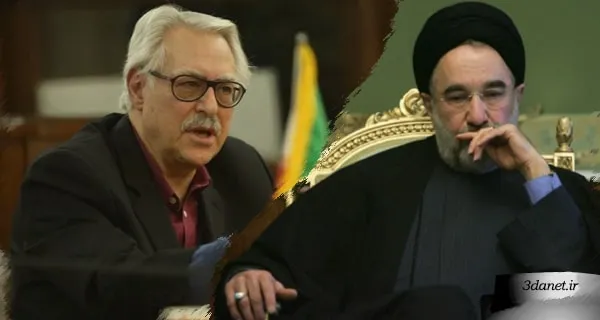
Like many others, I read with great astonishment in the media the remarks of Mr. Mohammad Khatami, the former president, regarding the desirability of a federal model for Iran, which were delivered at a gathering of city council members. In those remarks, it was stated:
One of the most significant failings of the large groups who, in various periods of Iran's history, have ruled over its land and people has consistently been that they knew very little about the characteristics of the country they were ruling. In Iranian history, there has been no shortage of "donkey-drivers" who became emirs, or "sons of the sword" who, through murder and plunder, ascended the throne and, until the rise of another donkey-driver and son of the sword, inflicted every indignity upon their subjects within their power. Yet it is also one of the astonishing features of Iranian history that many of these very donkey-drivers, upon becoming emirs, would, to the best of their ability, learn something of Persian letters and the customs of administering this complex country. As I have explained elsewhere, drawing on the words of Ata-Malik Juvayni, Iran was constantly exposed to the blowing wind of God's indifference, and it often happened that there was no possibility of orderly speech, yet the cypress of Iran would bow its head before these winds but would not break.
Uncultured Arab, Turk, and Mongol Migrants
Iran's paradoxical situation was such that it was as if Iranians had the duty of teaching Persian letters and customs to the uncultured migrants—Arab, Turk, Mongol, and Afghan—who were plundering this land. It has often been the case that Iranians have been defeated militarily, yet they have consistently been the cultural victors. This is a remarkable and astonishing point, and no one who wishes to rule this land in any form can afford to forget this lesson of Iranian history. If I were to state the essence of the matter in one sentence, I could say that for forty years this lesson has been forgotten. If, over the past four decades, and even long before, a space for dialogue had existed in the country, perhaps some would have reminded the current rulers of this lesson, but it goes without saying that if there is no ear to hear, what comes to nothing is the cry. I will return to this point.
The Former President, a Verbiage-Monger
In this short note, on the occasion of the former president's remarks regarding "federalism being the most desirable method," I wish to say that those who, in recent decades, have assumed the guise of the country's political figures knew very little from the outset about what Mirza Abolqasem Qa'im-Maqam called the "practice of the chancery," and in these four decades, many of them have learned nothing. Most of these individuals, if they knew anything, possessed, in the phrase Mirza Ali Amin al-Dowleh used about Seyyed Jamal, the "faculty of memory and loquacity," and the possessors of this faculty have remained professional verbiage-mongers. In the realm of politics, the former president, who in my opinion knows very little about Iran, is one of these verbiage-mongers.
Speaking Baselessly Based on the Faculty of Loquacity
One instance of this verbiage-mongering is when, even during his presidency, addressing a great multitude of heads of Islamic countries, most of whom had come to power through a coup, he concocted a rhymed parallel between civil society and the City of the Prophet, providing conclusive proof to his admirers that their beloved president knows nothing of politics. Before the descent of the Islamic president of the time, and his entourage, into postmodernity, no one had committed such a lamentable error, but in any case, politics based on the "faculty of memory and loquacity" has its requirements, one of which is speaking baselessly.
The Astonishing Incident of Removing the Adjective "National" from the Parliament
A noteworthy case in the indiscriminate use of concepts is the astonishing incident of removing the adjective "national" from the Parliament, which has also had corrupt consequences in some instances. All parliaments in the world are "national" in the sense that in these countries, the era of feudal systems has ended, and the state and sovereignty derive from the nation. If we remove this national attribute from the parliament and its government to highlight a transnational ideal, what befell the eleventh Parliament will befall that parliament, and representatives like Qazipur claimed they were representatives of Turkestan. Of course, if this crisis had not been resolved behind the scenes, the representatives of Greater Kurdistan would undoubtedly have brought a referendum bill for the independence of Kurdistan to the parliament, and the political science professor from the mother university, as an eternal and everlasting advocate of human rights, would have approved their action, and perhaps would have even taken up arms to defend them!
When they play with the concepts of a complex science like politics the way we have done so far, and when university professors are the mothers of what they are and the same people also serve as advisors to the country’s political figures, there is no need to say that the country falls into the wrong path it has fallen into. If professors of constitutional law were not the tongue-tied employees of the state, one of them should have said that, until further notice, representation in the parliament in Iran is national; anyone who claims to be the representative of the “Turkic people” has rendered his own credentials null and void.
All of Khatami’s Claims Are Incorrect
The former president’s claim that federalism is the best method of governing the country, despite its deceptive appearance and being correct in some instances, contains nothing that is correct in terms of political science in the way the former president has expressed it. In another note, I will say that this claim is fundamentally incorrect and meaningless in the case of Iran, but first, I draw the reformist leader’s attention to the ruling of one of the most important theorists of federalism.
We, the Rightless Non-Citizens
Those interested in the theory of federalism must have heard the name John Jay, one of the Founding Fathers of the United States, who was among the authors of the Federalist Papers and, after the ratification of the United States Constitution, was the first leader of the Federalist Party and the first Chief Justice of that country. In the second letter of the Federalist Papers, he wrote: “It appears as if this country and this people were made for each other, and it seems as if it was the design of Providence that an inheritance so proper and convenient for a band of brethren, united to each other by the strongest ties, should never be split into a number of unsocial, jealous, and alien sovereignties.” John Jay addressed this phrase to the people of the United States, with this explanation: “On every occasion, we were one nation. Every citizen, wherever he went, enjoyed the same national rights, privileges, and protection. As a nation, we made war and peace; as a nation, we vanquished our common enemy; as a nation, we entered into alliances, signed treaties, and entered into various contracts and conventions with foreign states.” This article was written in October 1787, shortly after the drafting of the United States Constitution, when only a small number of states had joined the union, yet John Jay speaks of a single American nation. The former president knows better than I do that we have consistently lacked privileges and rights and have never been citizens, but as a nation, we have persevered against common enemies—our Arab, Turk, Mongol, and Afghan brothers. Can one be more of a single nation than we have been?
The Necessity of Abandoning Fantasies for a Utopia
We, the rightless non-citizens! Would it not be better, instead of fantasizing about a utopia whose location is unknown, to think a little about a people more than half of whom live below the poverty line in a wealthy land? The possibility of realizing federalism in Iran is no greater than the possibility of realizing a parliament and a republic! If we had any illusions, they were dispelled with Ahmadinejad as president and the Qazipurs as representatives of the people! This inappropriate talk of federalism, while a deep crisis has shaken all the pillars of the country and threatens the very foundation of the nation, can only pour water into the mill of those who have queued up to receive a “two-hundred-dollar” coupon (see WikiLeaks documents) and can, of course, earn the speaker a bit of respectability, but even if the defense of federalism is for the sake of God, it will have no result other than the further loss of “citizenship” rights and sinking deeper into the quagmire below the poverty line. A poor nation lacking rights cannot make a correct decision about its higher interests.
The most important flaw in the views of federalism advocates, and other theories about decentralization, is that the proponents of such theories do not know Iranian history and do not speak with regard to Iran’s historical experience.
Many of those who prescribe various remedies for Iran’s ailments are, at best, political activists and representatives of particular interests that must be examined closely. Until two decades ago, the concept of federalism was largely unknown to these very political activists, and it did not occur to many of them that federalism could serve their separatist agenda.
Until then, many still believed that changes could be made to the country’s administrative system. From the time the earthly bounty of oil money also flowed into the Baku Republic, with the rise to power of the neo-caliphate Islamist movement in Turkey, the emergence of new Arab coalitions against Iran in the region, the material strengthening of regional powers, the rise in the economic growth rates of these same powers, the fruition of intelligent reforms in Saudi Arabia to become a regional power and the claim to leadership by the sheikhdoms with their immense windfall wealth—which brought about changes in the depths of the balance of forces—and, on the other hand, Iran’s gradual weakening domestically due to officials’ disregard for the relationship between domestic policymaking and foreign policy, the notion that the country’s borders must be defended beyond those borders, the perspective based on defending the Islamic Ummah and securing the happiness of humanity, the subject matter of Articles one hundred and fifty-two and the two subsequent articles, especially the disregard for the crucial principle that a policy yielding no desirable result domestically cannot succeed beyond the country’s borders in the long term, all led officials to be unable to form a clear picture of the significant transformations occurring within the borders.
Until a decade ago, Iran still had opponents inside or outside who could be considered Iranian forces, but following the changes in the balance of forces in the region, and more so globally, other opposition currents have also emerged that cannot be called political “opponents” in the strict sense of the word. Every citizen has the right to oppose the established government, to form a group for opposition, and to have a program for change or fundamental reforms. But fighting against the very foundation of a country is not political opposition; it is a war to destroy the country, within which alone political opposition can become possible.
It is obvious that no country, meaning its people, can, under the pretexts of progressivism and being avant-garde, allow groups, as opponents of the governmental system, to destroy its foundation. The primary duty of every country’s institutions is to defend its existence.
The governmental system of any country is not its principal foundation; governmental systems are transient, while the country is permanent. Any struggle for reforms and the implementation of different programs is only possible within the bounds of the country. This struggle for reforms and the implementation of new programs is called politics, in the strict sense of civic relations, whereas the effort to eliminate the foundation of the country, or to dismember it, is a declaration of civil war, that is, a return to the state of nature! Thus, any “political” action that seeks to destroy the historical foundation of the country, as is the ultimate goal of the proponents of federalism, the Turkestani, Kurdistani, Arabistani, etc. separatists, can be considered a declaration of civil war.
On the other side of this chessboard stands the governmental system of any country, which must be able to provide a favorable space for the expansion of civic relations and the securing of citizens’ rights so that national political groups can compete to manage the country. One of the most fundamental reasons for the radicalization of political forces domestically and their gravitation toward centrifugal forces is the absence of this very favorable space, which brings about a vicious cycle of violence and radicalization. In my view, the Constitution of the Islamic Republic was written under the influence of Abolhassan Banisadr’s confused thoughts, on the horizon of the concept of global “dominion,” and this very fact has caused successive governments to neglect domestic affairs.
Federalism, in principle, is a system for creating a strong central authority in order to transfer parts of that authority to provinces and states, whereas in a country that lacks such authority with its requisite legal institutions, as the advocates of federalism more or less seek, no transfer of authority will be possible. In the absence of such a central authority with its legal institutions, any transfer of authority, as the case of Iran in recent decades has shown, will be a regression to a feudal system. Such systems typically oscillate between an autocratic central authority and a feudal system. Iran, before undertaking such a reform aimed at transferring authority to provinces and states, must first establish a legal system so robust that the country's collapse into a feudal system is impossible. Only under such circumstances can one contemplate a decentralized mode of administration.
The first and most important objection to the former president's statement that "the most desirable form of popular government is federal administration" is that none of the concepts used in this sentence has a clear meaning. In fact, I cannot quite grasp what "popular government" is. Given the premises that the reformist leadership has accepted over the past four decades, on the basis of which it attained the presidency and governed, "popular government" can have no meaning.
Being Popular or Not Being Popular
If I go beyond the surface of this claim, I can say that we have many governments that are ostensibly "popular," but there is no relation among them. Countries such as present-day communist China and Enver Hoxha's Albania, as well as Cambodia, Bulgaria, Zanzibar, North Korea, Angola, and Mozambique were or are all "people's republics" or "popular" governments, and all are also considered among the most undesirable forms of government, yet in the official titles of today's free countries—England, France, Switzerland, Germany, the Scandinavian countries, etc.—the adjective "popular" does not appear, but all of them are popular governments, meaning sovereignty derives from the people and the government is responsible for securing the people's interests and the nation's welfare.
The Substance of the System, Not the Adjective of the System
The reason for this is that "popular" is not an adjective describing a form of government, i.e., a formal criterion, but rather the substance of governmental systems. This is a point that Aristotle explained two thousand four hundred years ago, and the entire history of political thought has been nothing but commentaries on this discussion, and it is obvious that one cannot enter these debates without understanding these subtle points. In this regard, countries that bear the title "popular government" are, in fact, to varying degrees, neither government—that is, the sphere of securing the people's interests—nor popular!
The Lack of Connection Between Federalism and Efficiency
On the surface, "popular government" should mean a government arising from the people and for securing the people's interests, a characteristic which, of course, none of the governments that claim to be "popular," some of which I mentioned by name, possess. If we take "popular government" in this latter sense, then federal administration will not be "the most desirable form of popular government." Some free countries with democratic systems are administered through one of the types of federal systems, and some are not! The meaning of this statement is that the principle in governments is what is called the "rule of law," and the rule of law can be administered federally or non-federally.
The Importance of the Rule of Law System
There are countries such as the United States, Germany, and Switzerland that are administered through one of the forms of federalism, but the desirability of their government does not stem from federalism; rather, their foundation and basis rest on the rule of law, and it is this rule of law that has made the federal administration of those countries possible, not the other way around! Therefore, the debate is not about the federal nature of the governmental system, because this same federal system can be a desirable method within a rule-of-law system and an undesirable method within autocratic systems. As I have also pointed out earlier, in my opinion, given the weakness of the foundations of the legal system in Iran, a federal system can only collapse into feudalism.
The important question is this: where, and under the historical, political, social, and economic conditions of which country, can “popular government” and federalism be realized? It is obvious that the peoples of countries such as Switzerland, the United States, India, Mexico, Nigeria, Germany, and others—all members of the World Federal Assembly of Federal States in Ottawa—do not bear much resemblance to one another, and, therefore, it is unlikely that implementing the principles of federal government in Nigeria would yield the same desirable results as in the United States and Switzerland!
Thus, the proposition of the proponents of federalism, while it may be a correct statement, is also a vain and idle one, for it lacks any practical utility. This statement descends from idleness into meaninglessness especially when we imagine that from this general, useless, and meaningless proposition we can draw the even more idle conclusion that Iran, too, would be better off governed in a federal manner! The similarities among countries governed by one of the varieties of federalism, from Switzerland to Nigeria, are of the same order as the similarities among monarchies like Sweden and Brunei, or republics like the friendly and brotherly countries, Venezuela and “Azerbaijan,” France and Finland!
In my view, unless we have surrendered to the profoundly erroneous narratives of the various leftist and rightist separatists and the advocates of the “Disunited Ethnic-States of Iran,” it is difficult to find significant similarities between Iran and the federal countries I mentioned earlier. Iran has its own long and particular history, and comparing Switzerland, the United States, Mexico, and Nigeria, on the one hand, with Iran, on the other, can be nothing more than a false analogy. There is nothing specific in the history of these countries that can be compared with Iran.
It is obvious that in generalities, all countries share similarities with one another, but this is not the case in particular matters. Iran, like all other countries, has a territory, a people, a system of government, and so on, but the history of its people bears little resemblance to the history of the people of the United States, Switzerland, Mexico, and Nigeria. Therefore, proponents of federalism must be able to state whether their intention in implementing a federal system in Iran is of the Nigerian type of federalism or the Swiss type! In Iran, federalism is the political slogan of groups that often do not understand the meaning and subtleties of that mode of governance, but they know enough to realize that with such slogans, one can create a disruption in the foundation of the country’s unity!
It is possible that many of those chanting these slogans are simple people of good intentions; what I know of Iran’s history does not permit me to be so simple-hearted, for the primary question for me is this: in whose interest is the disintegration of Iran? The proponents of federalism, however simple and well-intentioned they may be, are now, with this slogan, capable of aiding those whose interests would be served by the disintegration of Iran.
It is possible that the proponents of federalism are, in the best case, among those who pave the road to hell with their good intentions, and know not what they do, but there is no doubt that many of them are recipients of “two-hundred-dollar coupons,” even if they do not receive their own coupon! I have no doubt that there are many flaws in the country’s current mode of administration, and many of these flaws have also become chronic ailments, but those who propose federalism as a cure for these ills are committing a historical error both in diagnosing the ailment and in prescribing the treatment. This failure to diagnose the ailment and the incorrect prescription of treatment, in the current critical conditions, can only fuel a chaos that ends at the precipice of disintegration.
As I will discuss in another note, every country has problems that can only be understood, and solutions found for them, through a correct understanding of that country’s history and culture. Iran, in periods when it had a more or less reasonable system, has always been a centralized yet simultaneously pluralistic country. In my view, as long as the rule of law does not exist, neither will a stable central authority be established, nor will conditions arise in which pluralities can establish free and equal relations with the center.
Under such conditions, a federal system can only pave the way for a return to a feudal system. Countries governed by the rule of law are systems with centralized power, and the greater the concentration of power, the more power can be devolved to the periphery under the rule of law. The United States, Switzerland, Germany, and France, to varying degrees, benefit from the rule of law, and to the extent that the foundation of the rule of law is more solid in them, they have been able to give greater latitude to pluralities in managing their own affairs. Switzerland more so, France less so!
My opposition to federalism is opposition to a political slogan that political activists, and certain dubious elements, occasionally inflame, each, of course, pursuing their own specific goals. The first assumption of those activists, and these dubious elements, is that Iran has a highly centralized state that has deprived all peripheral peoples of their rights. This assumption is as mistaken as the assumption that federalism is the cure for all the country's ills! Iran has consistently been a country with a centralized state, but, in periods when it had proper management, within the limits of the old autocratic systems, it was also a
Thus, Iran, contrary to what is said, is not a “short-term society,” but, on the contrary, a long-term and complex society whose internal forces have overcome all factors of disintegration, and Iran has preserved the foundation of its nationhood and territorial unity. Of course, some of the governments that have ruled over the people of Iran have been short-term governments, and the reason for this has been that those governments were not compatible with the requirements of a long-term and complex society and the depth of its people’s aspirations.
Iran’s situation, as a society with complexities that have at least twenty-five centuries of recorded history—meaning it existed twenty centuries before the conceptual apparatus of modern social sciences was formulated—requires a complex explanation as well. Thus, as I have repeatedly said over the past three decades, Iran cannot be explained without a historical account and without considering the materials of history and the history of thought in Iran. In this regard, Iran’s historical unity is not of the “union” of disunited countries type, but rather a unity whose foundation has been targeted in recent decades of mismanagement by attacks whose arrows have been furnished by the fabrication of history based on fanciful and illusory data.
It is no wonder that the cold breath of this despondent crowd has no effect on the granite bedrock of Iran. Previously, Arabs, Turks, and Mongols, when they set foot in this land, learned through experience that Iran would not take on their color. Of course, one should not think that those Arabs, Turks, and Mongols lacked the will for this; on the contrary, they possessed enough wisdom to realize very quickly that in order to stay, they must take on the color of Iran.
There is no doubt that the current claimants, as spokespersons for powers bent on Iran’s destruction, lack the foresight of their ancestors. There is no doubt that the era of autocratic central governments is over, but as I have said in one of my previous notes, this is only possible within the bounds of the rule of law and through national dialogue. Solutions for the decentralization of Iran are possible through an understanding of the nature of centralization based on Iran’s historical unity. No imported solution can be a solution for Iran.
Therefore, the proponents of “neo-racist” theories, especially Kurdish, Turkic, and Arab, who outwardly repeat half-digested “progressive” words learned in exile, but employ these half-digested notions in the service of defending backward ideas that can serve no purpose other than serving foreign powers, have no connection whatsoever to Iran’s history, but rather serve as a defensive shield to conceal the whetted blade of separatism.
In Iran, there has never been such a plurality outside of “unity” that would necessitate the creation of such an artificial “union.” Iran, more than being a political “unit,” which present-day Iran is, was, from the very beginning, a cultural “unity” that we call Greater Cultural Iran, and, as I have explained many times, all the units that were part of Iran in some periods and separated from it, or were separated from it, in other periods, possessed a cultural unity—that is, a unity higher than political unity. It is obvious that, in certain periods, external and internal factors disrupted this unity, but what is usually not properly understood is the renewal of that unity, which has become possible with the disappearance of those factors that created separatism.
Thus, Iran, contrary to what is said, is not a “short-term society,” but, on the contrary, a long-term and complex society whose internal forces have overcome all factors of disintegration, and Iran has preserved the foundation of its nationhood and territorial unity. Of course, some of the governments that have ruled over the people of Iran have been short-term governments, and the reason for this has been that those governments were not compatible with the requirements of a long-term and complex society and the depth of its people’s aspirations.
The situation of Iran, as a society with complexities that have at least twenty-five centuries of recorded history—meaning it existed twenty centuries before the conceptual apparatus of modern social sciences was formulated—requires an equally complex explanation. Thus, as I have repeatedly said over the past three decades, Iran cannot be explained without a historical account and without considering the materials of history and the history of thought in Iran. In this regard, Iran's historical unity is not of the "union" of disunited countries, but a unity whose foundations have been targeted in recent decades of mismanagement by attacks whose arrows are forged from the falsification of history, relying on fanciful and illusory data.
It is no wonder that the cold breath of this despondent crowd has no effect on the granite of Iran. Previously, when Arabs, Turks, and Mongols set foot in this land, they learned by experience that Iran would not take on their color. Of course, one should not assume that those Arabs, Turks, and Mongols lacked the will to do so; on the contrary, they possessed enough wisdom to realize very quickly that to stay, they had to take on the color of Iran.
There is no doubt that the current claimants, as spokesmen for powers bent on the destruction of Iran, lack the foresight of their ancestors. There is no doubt that the era of autocratic central governments is over, but as I have said in one of my previous notes, this is only possible within the bounds of the rule of law and through national dialogue. Solutions for the decentralization of Iran are possible through an understanding of the nature of centralization based on Iran's historical unity. No imported solution can be a solution for Iran.
Therefore, the advocates of "neo-racist" theories, especially Kurdish, Turkish, and Arab, who ostensibly repeat half-baked "progressive" words learned in emigration, but employ these half-baked ideas in the service of defending backward thoughts that can only serve foreign powers, have no connection to the history of Iran, but are a defensive shield to conceal the whetted blade of separatism.
. . .
.
.
A Critique of Mohammad Khatami's Remarks on the Necessity of Federalizing the State in Iran
Author: Javad Tabatabai
Washington. 28 Ordibehesht 1398. 18 May 2019
.
.
Discussion5 comments
طباطبایی دشمن اتحاد ملی و دیدن دیدگاه های تکثر گرایانه است. 1. طباطبایی توضیح دهند: 1. پان ترک کیست؟ رهبرشان کیست؟ و برنامه شان چیست؟ 2. برنامه شان برای اق.ام ترک، کرد و لر و بلوچ و اینها چیست؟. طباطبایی عزیز، وقتی حضرتعالی در سنگفرش های پاریس و فرنگ قدم می زدید همین ترک ها و کردها و بلوچها از این خطه دفاع می کردند.
نمیدانم اندیشمندان امروز واقعا اطلاع ندارند یا ... و نگاه جامع ندارند. عزیزان من تا زمانی که قدرت نداشته باشید حاصل اندیشه های شما یعنی هیچ چون تاثیری نخواهند داشت. وقتی نظریه ای باعث تشویق به عمل به آن نمیشود یعنی فاقد حُسن ارتباط با مخاطب است و در نتیجه کارایی لازم را ندارد.
استاد جواد طباطبایی با شجاعت و آگاهی بی مانند به اهداف قبیله گرایان و پانطرکان که در شخص دیگری من سزاغ ندارم، بدون تعارف با این دشمنان ایران سخن میگوید! دیوانگان وطن فروشی که صبح تا شب با سریالهای ترکیه روز میگذرانند و از جنایتهایی که در این سرزمین انجام داده اند هیچ سخن نمی گویند . از کشتار ایرانیان در زمان کوچ و تهاجم سلجوقیان ترکمن، تا کشاندن جنگهای قومی قبیله ای طرک و مغول به داخل خاک ایران، از کشتار و غارتهای مغول و عثمانی ها و تا بیست هزار چشمی که آقا محمدخان قاجار از کاسه چشم ایرنیان کند که ین رفتار این بیابانگردان بیشتر تاریخ ایران را شبیه تونل وحشت کرده است. وقتی ما ایرنیان حساب این جنایتهای این وحشیان را در طول تاریخ نپرسیده ایم و نوانسته ایم برای قربانیان این مردم ایران هیچ مراسمی بگیریم، کار امروز بجایی میرسد که متجاوزین دیروز امروز زبان درازی کرده و خاک ایران را طلب کنند. ما به طباطبایی های بسیاری نیاز داریم تا ایرانی که این قبیله گرایان از ریل خارج کرده اند دوباره به ریل خود بازگردانیم...
اصلا و ابدا وارد اصل بحث فدرالیسم یا برعکس آن نمی شوم. فرض می گیرم که نه محمد خاتمی را می شناسم و نه جواد طباطبایی را. بلکه فقط همین کلمات بالا را سند می گیرم: زبان و لحن و شیوه شناسیِ این کلمات، فقط به سیاستِ «حذفِ رقیب یا دشمن» در گفتگو اشاره دارد، گفتگویی که هنوز شروع نشده، باید خاتمه یافته تلقی اش کرد. یادِ زبانِ تبلیغاتی روزنامه های ایزوستیا و پراودا ی مسکو در محاجّه با جنبش همبستگی لهستان می افتم.
به نظر بنده نظریات این آقای به اصطلاح فیلسوف که معلوم نیست سر در آخور کدام ویرانگری دارد بشدت احساسات قومی گرایانه در استان ها را افزایش و ایران را بیشتر در معرض تجزیه قرار می دهد. نمی دانم ایشان دوست نادان ای مرز و بوم هستند یا آگاهانه این جریان را رهبری می کنند؟؟ الله اعلم