Political Science
Critical Remarks on Seyyed Javad Tabatabai's Stance on Language Policy
Seyyed Javad Tabatabai considers the teaching of local languages a threat to national unity and the Persian language; this piece shows how his desired unity consumes linguistic diversity and overshadows his interpretation of Article 15 of the Constitution.
Mahsa Asadollah-Nejad
Author
Hesam Salamat
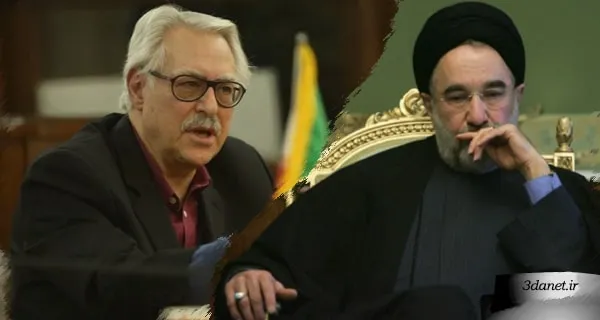
AuthorRecently, Mr. Seyyed Javad Tabatabai, in a Telegram note addressed to Mohammad Khatami, the former president of Iran, has rebuked him for not realizing what a dangerous statement he is making when he advocates for a federal system of government, and what seeds of "corrupt consequences" he is sowing. In Tabatabai's opinion, Khatami does not recognize the "supreme interests of the country" and, as an ordinary citizen, is not qualified to speak on a subject about which he knows nothing. At the end of his note, in the style and manner of writers of advice literature, Tabatabai recommends that Khatami retract his ill-considered remarks and also forbid his associates from entering into such discussions.[i] On this occasion, the professor refers to an article of his own, written in Mehr 1395 [September/October 2016] in the journal "Iranshahr-e Emrooz" (Today's Iranshahr), in which he warned of the dangers and threats that the establishment of a department of Azeri Turkish language and literature at the University of Tabriz poses to "national unity."[ii] In the professor's view, the hasty proposal of a federal government in Iran and the plan to teach ethnic languages in the country's universities are practically of the same kind: both endanger the foundations of Iran's territorial unity. According to Tabatabai, teaching the Azeri Turkish language at the university was merely pure political propaganda to attract the attention of Pan-Turkists, oblivious to the fact that such populist schemes are bent on threatening the "supreme interests of the country." Raising the relevance of a federal government in Iran is, in the same vein, the hasty proposal of a theory that fundamentally has no relevance to Iran and merely weakens the hitherto robust roots of the tree of Iran's unified nation-state.[iii]
It is a valuable opportunity to use Tabatabai's recent note as a pretext to assess the caliber of his critiques of teaching local languages and to examine to what extent his dissenting views, which always proceed by invoking the "interests of the country," "national interests," and "territorial unity," reveal a political ideology that understands the nation not as, to borrow from Tabatabai's own Hegelian language, a dialectic of "unity-in-diversity" and "diversity-in-unity," but as a kind of "total unity" in which diversities are completely dissolved. It goes without saying that this note is written not from the perspective of defending Khatami's positions, but from the standpoint of criticizing Tabatabai's positions. Therefore, the issue here is not about taking a defensive or critical stance towards federalism. We have preferred, instead, to keep the discussion at the level of teaching local languages in order to demonstrate, through this channel, Tabatabai's monolithic formulation of the concept of the nation.
Unity (Ultimately) Consumes Diversities
Let us begin with a simple question: Why does Tabatabai think that any form of mother tongue education, even at the higher education level, will inevitably puncture the walls of the nation-state? The answer is more or less clear: the coherence and durability of Iran's nation-state relies on the Persian language as the carrier of Iranian culture and literature, and, by this virtue, Iran's territorial integrity and national unity depend on preserving Persian as the "standard language" and preventing any rival that might claim its absolute sovereignty from emerging. Anything that weakens the authority of this language and its uncontested centrality, in any way, has encroached upon Iran's highest national interests. In this respect, fueling local languages – whether by relying on the liberalism of the "right to mother tongue education," or by invoking the "minoritarianism" of pluralist postmodernism or the leftist internationalism advocating the "autonomy of peoples" – tears apart the interwoven fabric of the national spirit and sets the stage for Iran's territorial fragmentation by disempowering the Persian language. Iran's becoming Iran is through the Persian language. The enfeeblement of this language is tantamount to the enfeeblement of Iran.
As is evident, Tabatabai's positions on the Persian language and its relation to local languages lead directly to his political theory regarding Iran as a nation-state. When Tabatabai speaks of Iran as a
In the guarded domains of Iran, there have always been groups and forces, and as has been said, in reality, Iran's unity has always resulted from the multiplicity of these very groups and forces. If we wish to once again follow the logic of Hegel's statement about Iran as the unity of multiplicities, we must, necessarily, also understand it in a Hegelian way, because from the perspective of Hegel's philosophy, in reality, one must speak of the "unity of unity and multiplicities." If the unity of multiplicities is not correctly understood, it will mean the dissolution of multiplicities into unity, that is, the dominance of unity over multiplicities and its complete sovereignty over them. This dominance is what theorists like Carl Schmitt have interpreted as the "total state [totalitarian]." If we understand and explain unity in multiplicity as the "unity of multiplicities," we will arrive at a theory that is precisely the theory of the totalitarian state. In Hegel's dialectic, the meaning of unity in multiplicity is not the dissolution of multiplicities into unity; rather, multiplicities, as one side of unity, like the other side, which is unity itself, are not a part in its conflict with the unity that is universal, but these multiplicities themselves, in order to be able to enter into the higher unity of the unity of multiplicities, must be able to "remove the sandals of particularity" from their feet and elevate themselves to the level of the whole. Hence, Hegel, rather than speaking of unity in multiplicity, introduces the far more complex concept of the "unity of unity and multiplicities," and brings multiplicities as a whole into the unity of the whole.[v]
Here, Tabatabai explicitly exonerates himself from the accusation that he harbors ambitions for something like a "totalitarian state." He contrasts "unity in multiplicity" with the "unity of multiplicities" to claim that in the former, unlike the latter, multiplicities are not only not dissolved into the whole but remain within its heart. With these descriptions, it seems we are merely faced with an avoidable contradiction between Tabatabai's theoretical position and his journalistic stance: while in his Hegelian formulation of Iran he emphasizes the necessity of preserving multiplicities within the whole, in his political stances from the early 1390s onward, he explicitly or implicitly attacks the right of multiplicities to particularity and sees it in complete conflict with the transcendent necessity of preserving national unity. Nevertheless, as we will show, there is no contradiction in Tabatabai's position. He acts precisely according to the requirements of his Hegelian method. The issue is not at all that he recognizes the share of multiplicities in the unification of the whole in one place and sacrifices them for the whole in another. These two are in fact two sides of the same coin. Let us advance the discussion with greater precision. Contrary to what Tabatabai says, Hegel speaks not of the "unity of unity and multiplicity" but of the "unity of identity and difference" in the Logic[vi] and the "unity of the universal and the particular" in the Elements of the Philosophy of Right.[vii] The difference and, of course, the commonality of these terminologies in the discussions of both books are important, but since it does not directly relate to our subject, we will not dwell on it. The logic of Tabatabai's argument, however, is clear: multiplicities are preserved in unity (here, political unity) but only on the condition that, in relation to the whole, they relinquish their particularity and elevate themselves to the level of the whole. With these descriptions, in Tabatabai's Hegelianism, multiplicities must abandon their otherness and sublate their difference in the higher identity of the state as the manifestation of political unity. Multiplicities enter the whole only as a version of the whole, that is, on the condition that they "remove the sandals of particularity from their feet," and are recognized within its boundaries. In other words, the difference that is supposed to be preserved in identity is a difference that is no longer different but is one of the "same." Therefore, Tabatabai, despite his effort to provide a plausible account of the Hegelian "concrete totality" that does full justice to its parts, "in the final instance" ends up with a kind of abstract and hollow totality in which particularities, multiplicities, and differences are merely in the capacity of colors and embellishments for decoration, so that from afar it might appear what a colorful unity, what a beautiful totality!
In this respect, the professor's Hegelianism merits all the radical critiques that have deemed the Hegelian dialectic ultimately incapable of giving due weight to otherness and difference, from Kierkegaard to Levinas, from Adorno to Derrida, from Lacan to Butler and many others. Tabatabai's Hegelian narrative of the dialectic of unity and plurality shares in all of Hegel's weaknesses without partaking in any of his strengths. One of the reasons Tabatabai is not even Hegelian enough is that he lacks insight into the fundamentally determining role of intermediaries and mediations in connecting particularities to the universal. It is as if the issue is merely that particularities must be sufficiently mature and sensible, and must, of their own accord, trim their own excesses to fit into the whole. That is why he writes:
In Iran, as the Guarded Domains, the center-universal should not be understood in contradiction with the peripheral peoples-particular and local cultures-particular, and these should also not define themselves as universal and therefore centrifugal matters. The peripheral peoples and local cultures must be able, in relation to the center, to elevate themselves from the particular to the universal; that which is peripheral and local is a part of the whole, these parts must be kept within the whole and as a part of the whole.[viii]
A Hegelian methodology, however, must clearly understand that it cannot speak directly and without mediation of the "elevation of the particular to the universal." Tabatabai, who here and there passes himself off as a seasoned Hegel scholar, surely knows better than we do that Hegel, in the Elements of the Philosophy of Right, in the chapter on "Civil Society," brings into play a set of social institutions and organizations to explain how individual persons, through membership in these organizations and institutions, attain the status of rightful citizens and, via the recognition of their right to pursue their particular interests in civil society, become bound to the universal life of the state. Hegel knew better than Tabatabai that only those citizens can be called upon to fulfill their duty toward the state as the realm of the universal whose right to citizenship in civil society has been recognized. Right and duty are simultaneous, and citizenship (being free, having rights) and subjecthood (being obedient, having duties) are concurrent. As far as Hegel is concerned, the fundamental deficiency of pre-modern states was that the right of particularities (i.e., individuals) to subjective freedom did not exist. The state merely demanded that its subjects sacrifice their individuality at the feet of the whole, of which the state itself was the plenipotentiary representative. In political modernity, however, in a Hegelian formulation, it is the duty of every particular entity to attend to its right to pursue its own specific interests and attachments.[ix] In the simplest terms, particularities, at the same time as having duties toward the state, also enjoy rights against it. As far as Tabatabai is concerned, the rights of particularities are utterly lost in his narrative, and all that remains is the duty to "cast off the sandals of particularity" in order to gain the worthiness to rest in the secure shade of the universal. The issue is not merely that, as Tabatabai says, there is no contradiction between center and periphery in Iran, or that the national language and local languages are not in conflict. The point is that Tabatabai conflates contradiction with inequality and discrimination. Between center and periphery, if not contradiction, there exists inequality. The national language enjoys rights of which local languages are deprived. And this is violence itself. Because Tabatabai has no conception of justice, and justice is fundamentally not an issue for him, he cannot contemplate this violence arising from discrimination and inequality. Of course, the situation is no better in Hegel. Despite recognizing the right of particularities, Hegel speaks of the state as both an "external necessity and a power higher than them" and at the same time their "immanent end."[x] Hegel's struggle for the "unity of the universal and the particular within the state" compels him to define the state in relation to individuals as both external and internal: the state is both an external power demanding obedience from the individual and an internal end that reconciles the individual's particular interests with its own universal purpose. That being the case, for Hegel, the freedom of the particular is recognized only to the extent that it harmonizes with the universal ends of the state. And this is precisely the point at which we must abandon the Hegelian dialectic, for the simple reason that in the matter of the relationship between the national language and local languages, we are not dealing with a dialectical problem, namely the step-by-step "sublation" of particular languages into the universal language. Here, the discussion is about bilingualism. One cannot think about bilingualism unless one openly affirms the generative tension of the relationship between the national language and local languages.
Tabatabai writes about non-Persian languages and their relationship with the national language:
In Iran, in all historical periods, only one language [the Persian language] has been able to become the standard scientific and cultural language, but all other languages, according to the capabilities they possessed, have created a kind of literature specific to themselves. All these languages and their literatures are forms of the languages and culture of Greater Iran, and it is obvious that efforts must be made to preserve them, but one must not weave fables and fantasize about them. The national language must remain the language of knowledge and culture in this country. In Iran, other local languages and their literatures are not comprehensible except within the national language and literature, and one must not fabricate a history and origin for them.[xi]
Even in what is probably the most sympathetic passage we have from Tabatabai regarding non-Persian languages, he misses the fundamental point. The issue is by no means a debate about the "capabilities" of ethnic languages compared to Persian, or the etymology of their historical origins. Such linguistic discussions are of the slightest importance compared to the main point, which is precisely the "right" of local languages to emerge and express themselves freely. The issue here concerns the recognition of the right of languages, not their value, history, antiquity, prevalence, or power. Tabatabai, however, draws a political-legal conclusion from his discussions about the history and inferior status of these languages: the historical marginality of local languages in relation to the centrality of Persian requires that these languages remain on the margins of the center and not gain more power than a certain limit. Teaching local languages and offering them in universities acts, to a lesser or greater extent, as a measure that leads to their strengthening and, in this way, reflects their voice with a more resonant echo; and this very matter, inevitably, draws these languages from the margin to the text and expands their sphere of influence from the natural language level of the street and bazaar to the organized level of the educational system. And this is not something Tabatabai can come to terms with.
In Tabatabai's small world, the empowerment of local languages is equivalent to the weakening of the national language. Therefore, one should not be surprised that despite considering the necessity of preserving non-Persian languages and literature "obvious," not only does he have no measure in his bag for actualizing this obviousness, but he also dismisses any measure that is conceived as the excessive demands of pluralities. By pushing the civic demand for teaching local languages to its extreme frontiers, Tabatabai delegitimizes it. Mother tongue education in schools or the teaching of ethnic languages in universities, in Tabatabai's policing discourse, takes on the terrifying shape of separatism and is branded with the stigma of independence-seeking so that it appears absolutely illegitimate and seems excessive, because in this case, the order to silence it can be easily issued. Tabatabai simply believes that the time for pluralities has not yet arrived. The necessity of the present time demands a full-fledged defense of national unity. As long as a powerful state that guarantees the provision of national interests has not been established in Iran, any form of insistence on the rights of pluralities – for instance, by fueling local languages – only adds grist to the mill of separatism and severs the threads of territorial unity. In Tabatabai's own words:
As long as a consensus has not been reached on the actual data of Iranian history, as the fundamental national unit, one cannot discuss and reach a conclusion about the reforms [emphasis ours] that must be undertaken to recognize the status of pluralities. Those who consider themselves the custodians of these pluralities, in order to have a share in this national dialogue, must first and unconditionally accept national unity.[xii]
As is evident, Tabatabai himself implicitly and tacitly accepts that "reforms" must be made regarding the "status of pluralities," but the time for reforms only arrives when national unity has been consolidated by relying on a strong state. Before the quote we cited above, Tabatabai claims that only the "most powerful national states" can "tolerate certain instances of decentralization."[xiii] With this description, Tabatabai's position is clear: "reforms in the status of pluralities" must be postponed until the foundations of a strong national state are secured. Until then, any claim regarding the rights of pluralities, whatever it may be, is at best misplaced and at worst, a betrayal of national sovereignty.
Tabatabai's political conservatism – this is the most neutral expression one can use for him – stems directly from his being fear-stricken. The issue is not at all that a "strong national state" has not taken root in Iran and that, in this respect, the articulation of ethnic minority demands would inevitably lead to the collapse of territorial unity. The issue, instead, is that in Tabatabai's view, Iran is exposed to the "tempests of accident," is "in serious danger," and breathes within the context of a "crisis" that "will probably erupt in the future," and precisely for these reasons, one must abandon the peripheries and become wholly preoccupied with "defending the homeland, by name or by disgrace." As Tabatabai himself acknowledges: "My current talk is indicative of my fear. Just like a person who is afraid and screams. These words should largely be taken this way."[xiv] Thus, Tabatabai is ultimately another ideologue of the discourse of the "current critical juncture," a discourse that, by producing a kind of state of emergency through highlighting danger, crisis, the precipice, and the enemy, assumes the guise of a sovereign rhetoric whose first decrees include the suspension of the nuisance of rights-claims and the demands for justice by multiplicities in favor of the silent establishment of a monophonic unity under the shadow of a strong state. It is no coincidence that in recent years, Tabatabai has sunk into the posture of a dutiful police officer who hunts day and night for the "enemies of the nation," those who, inopportunely and unforgivably, speak of something like "reforming the status of multiplicities." The professor's police games are deeply connected to that sovereign rhetoric. It is precisely here, face to face with this deafening clamor, that one must assert: the right of multiplicities, here and now. If there is to be any unity, it can only emerge from the free play of multiplicities that speak simultaneously in their own language and in the language of the other: an absolutely inclusive, polyphonic unity that leaves no multiplicity out. The fitting form for this true unity-in-multiplicity is nothing other than radical democracy, including linguistic democracy or democracy in language.
The Demand for the Mother Tongue and the Right of Multiplicities
Let us pursue our discussion by relying on empirical evidence. The findings of the "Survey of Iranians' Values and Attitudes" are directly relevant to the subject of this essay and, in this respect, can be helpful in advancing the discussion. In the second wave of the aforementioned survey, conducted in 2003, respondents were asked, "What language do you speak at home?" In response, 35 percent chose the option "Persian" and about 66 percent chose "local and ethnic language and dialect." In response to the second question, "To what extent can you speak Persian?" 73 percent of respondents claimed "a lot," 17 percent "to some extent," and 10 percent "a little." Finally, the responses to the third question, "To what extent do you consider it your duty to teach your ethnic or local language to your children?" are as follows: 62 percent "a lot," 20 percent "to some extent," and 18 percent "a little."[xv]
These questions were repeated in the third wave of the aforementioned survey, which pertains to 2015. Let us review the findings: in response to the first question, which asks, "What language do you speak at home?" 51 percent answered "in a local and ethnic language," and conversely, 49 percent chose the option "Persian language." Therefore, in the 12 years since the second wave of the survey, the Persian language, in terms of everyday use across Iran, has become at least 15 percent more widespread. The responses to the second question, which asks, "To what extent can you speak Persian?" are as follows: 60 percent "a lot," 27 percent "to some extent," and 13 percent "a little." The responses to the third question, "To what extent do you consider it your duty to teach your ethnic or local language to your children?" are striking: 72 percent "a lot," 21 percent "to some extent," and 7 percent "a little."
That said, the demand for “instruction in local languages” was noticeably more widespread in 2015 than in 2003. Naturally, this demand is greater in provinces where non-Persian ethnic groups are in the majority and the mother tongue of the inhabitants is not Persian. The statistics presenting the responses to the third question broken down by province clearly demonstrate this fact. For example, in the provinces of East and West Azerbaijan, Khuzestan, Sistan and Baluchestan, Zanjan, Qazvin, Kurdistan, Ilam, and many other provinces where the local language is not Persian, over 70 percent of respondents considered teaching their ethnic language to their children to be their “duty.”[xvi] In light of this, parallel to the spread of Persian language use in daily life, the demand for mother tongue instruction has also grown. This must, at least in part, be explained within the context of the social perception of ethnic discrimination.
Let us return to the 2015 “Survey of Values and Attitudes.” Thirty percent of respondents disagreed with the statement “The government does not discriminate or differentiate between different ethnicities,” 35 percent “neither agreed nor disagreed” with this statement, and 35 percent agreed with it.[xvii] Thus, nearly half of society does not believe in the existence of ethnic justice in the country’s mode of governance. Tabatabai’s sensors, however, are fundamentally mute before the concrete experience of injustice. In his Iranshahri-ism, there is essentially no space for thinking about inequalities, discriminations, and oppressions. None of these have become a problem worthy of critical thought for Tabatabai and his associates. We know the reason for this “numbness,” of course. Tabatabai considers the virtue of his theory to be that, unlike the social sciences which deal with the “issues” of Iran, his Iranshahri-ism confronts Iran as a “problem.” He, in his own words, thinks about the conditions of possibility for “Iran” as a cultural continuity:
A “national” understanding of Iran must now, of necessity, be based on a theory of “Iran” as a “problem.” In past centuries, Iran was a subject of reflection in Persian literature, and in recent decades Iran was an “issue” in the social sciences. The time has come for us to be able to pose Iran as a “problem” in new thinking.[xviii]
Setting aside the ambiguity in the distinction between issue and problem, Tabatabai’s point is more or less clear: Iran should not be understood in terms of its social issues. That is the work of the social sciences. Once the issues are resolved, these sciences also lose their validity. Iran, instead, must be posited as a kind of “complex truth,” and its territorial unity, cultural continuity, and national foundations must be explained through the channel of “Iranian historiography” – which, of course, has yet to be properly established. The lofty dignity of the “theory of Iran” and its even loftier theorist is too exalted to waste time on such lowly issues as, in his own example, “Iran’s state of development, the class system and class configuration, unemployment, social harms, human resources,” and so on and so forth. But it is precisely from here that the entire Iranshahr system envisioned by the professor collapses. When we speak of “issues,” we speak of rifts, fault lines, and fissures that render the constitution of any homogeneous whole – whether it be called a country, homeland, nation, or society – impossible. You cannot have “Iran” constantly on your lips day and night, speak incessantly of national unity, and prattle on about territorial integrity, while remaining indifferent to the discriminatory mechanisms that fragment society from within, to the inequalities that consolidate relations of dominance and subordination, and to the oppressions that exclude a multitude of people as non-citizens.
The issue is not why Tabatabai takes no stance on such problems and passes over them in silence. The issue, more than this, is that the very fabric of his Iranshahri-ism unravels through its blindness to these issues. In more technical language, a “whole” cannot close its eyes to the schisms and fissures that disperse its constituent parts, setting them against one another as contradictions and antagonisms, and thereby negating, or at least rendering difficult, the possibility of their solidarity.
For the coexistence of parts and the solidarity of multiplicities, something more than “Persian literature” must be at stake. Cultural commonality cannot paper over inequalities, cause injustices to be forgotten, or sweep discrimination under the rug. The presence of any one of these is enough to make the formation of a cohesive whole impossible and to fuel all manner of centrifugal tendencies. Tabatabai does not take seriously the structural consequences of ignoring these “issues” for his Iranshahri project. That is why, for instance, when he speaks of identity-seeking separatist currents, it merely occurs to him to rail against the treason of a handful of deluded domestic elements, or the machinations of a foreign enemy, or cosmopolitan ideologies—as if the promotion of extreme identitarian tendencies were not always, at least to some degree, rooted in center-periphery inequality and discrimination against multiplicities.
Tabatabai reproduces this discrimination and that inequality at the level of linguistic rights as well. He wants to glue the unequal fragments of “Iran” together with the adhesive of a shared Iranshahri culture and, indifferent to their disparate dignity and unequal standing, forge them into a single whole whose sweet melody of “unity of expression” can be heard from afar. Yet the parts of a whole only take the form of a cohesive unity on the condition of equal participation in constructing the whole itself and sharing without discrimination in its common space. It is clear that we are speaking here, in a positive sense, of a democratic whole that must be built through policies of inclusiveness. But a whole can also take shape through mechanisms of exclusion and procedures of assimilation. In the first, we are dealing with a whole that constitutes itself as a kind of monolithic totality by hostilely casting out a multiplicity of disruptive and troublesome parts—an Afghan, a queer person, a Baha’i, an apostate, a non-Shiite, a striking worker, a rebellious teacher, an unveiled woman. In the second, we are dealing with a whole that grants itself totality by drawing parts inward and forcibly identifying them with a single model, standard, or measure—“the Twelver Shiite, Persian-speaking, velayat-devoted man.” If the whole in the first is constructed through exclusionary othering, in the second it takes shape through assimilationist selfing. In practice, however, a combination of both mechanisms often exists: a totalizing whole generally resorts both to procedures of exclusion and employs mechanisms of assimilation. The production of monophony requires both. But as far as Seyyed Javad Tabatabai is concerned, his so-called whole proceeds more through the mediation of an assimilationist narrative that leaves nothing of the other’s otherness and reduces it to a version, albeit a counterfeit one, of “our self”:
Iranians, within the limits of the current political borders, whether they speak one of the Iranian or non-Iranian languages, express the themes of Iranian literature and culture. In this respect, Kurdish literature is as much a region of Iranian literature as Azeri Turkish literature. These local languages, both Iranian and non-Iranian—not only the languages spoken within Iran’s current borders, but even languages such as Urdu and Ottoman Turkish, which are not Iranian languages—have become cultural languages through the Persian language and under the gravitational pull of Iranian literature and culture.[xix]
In Tabatabai’s view, all the non-Iranian languages within the realm of greater cultural Iran, or Iranshahr, are ultimately Iranian. From the Iranianization of, say, the Kurdish or Azeri Turkish language, it is not a long way to the rejection and denial of the “right to difference” of these languages and their instruction as an “other” language, a different language, a non-Persian language. What we have termed the “Iranianization of these languages” is in fact a clever rhetoric for de-differentiating local languages and reducing them to subordinate subsets of a hegemonic culture and language. The assimilationist logic excludes the parts it draws into the whole—“Iranian culture”—through their transmutation, and steals their voice from them. Here we are dealing with something like inclusive exclusion (or exclusion through inclusion). Tabatabai speaks of Iran as a “unified plural nation” where all the peoples who migrated to it ultimately became Iranian, spoke Persian, and were dissolved and absorbed into Iranian culture.[xx]
This narrative of Tabatabai's, more than a recounting of a historiographical truth, is a kind of narrative game fundamentally designed to neutralize the otherness of multiplicities and disarm them: since all Iranian peoples have been Persianized to varying degrees and are subsets of Persian literature, "therefore" their emergence as differences demanding their right to otherness is no longer relevant. When the "other" is merely one of the variants of the "self," in comparison to the authenticity, centrality, and axiality of the "self," it is nothing but a margin, periphery, and shadow.
A crucial observation must be kept in mind here: that an uncritical insistence on otherness, difference, and multiplicity can lead to a kind of social solipsism, result in a form of cultural atomism, and drown in a sort of communitarian egoism. It is as if we are dealing with windowless, self-enclosed monads that have no way outside of themselves, each alone on its own private island. The way to confront the archipelagization of the world, however, contrary to the position of figures like Tabatabai, is not an abstract emphasis on national unity and cultural integration. Tabatabai's concern is political divergence and territorial fragmentation resulting from cultural self-separation. Anxiety for the "higher interests of the country" compels Tabatabai to speak of the priority of unity from the perspective of "reason of state" and warn that if atomistic stances take hold, the fabric of the country will unravel. The issue, however, should not be posed directly at a political level and viewed solely through a pragmatic, expedient lens. The issue, instead, is about demonstrating connections, relations, ties, dialogues, and friendships. Despite their otherness to one another and despite their differences, multiplicities interpenetrate, influence each other, connect with one another, engage in dialogue, become friends, and change each other. Despite their singularity, multiplicities are profoundly communal: they share in one another, borrow from one another, and become common with one another. There is no impassable boundary that, like an insurmountable barrier, separates multiplicities once and for all. There is no wall that cannot be leaped over. Nevertheless, inequalities, discriminations, and exclusions, through the production of fissures, chasms, and walls, separate multiplicities, sever bonds, and cut off connections, and this, in turn, is the beginning or at least the catalyst for separatisms and divergences.
Final Word: From Cultural Nation to Political Nation
Tabatabai's Iranshahr, as a monophonic nation-state, accommodates multiplicities within itself only insofar as they are voiceless or speak Persian. The moment multiplicities speak in their own language or emerge and manifest independently, they are silenced, like a discordant instrument disrupting the harmony of the "national unity" orchestra. By reducing "Iran" to a nation nurtured in the shadow of "Persian literature," Tabatabai discards all the political implications of becoming-a-nation. The gap between the cultural nation and the political nation remains entirely unthought in Tabatabai's work. Suppose, just this once, we go along with Tabatabai and accept alongside him that Iran has already been a nation culturally; we must immediately add that Iran is not yet a nation politically.
The political formation of the nation is the product of the consolidation of the fundamental rights of all individuals, without any exception, as citizens. Incidentally, Tabatabai himself, at the end of his Telegram note which we mentioned at the beginning of the present essay, speaks of "we, the rightless citizens." His point is simply that instead of talking about federalism, one must think about restoring the trampled rights of citizenship of every single member of the nation. The professor, however, forgets that the "right to language" is itself one of the "rights of citizenship." In this respect, the highest "supreme interest of the country" is nothing other than the recognition of the rights of all citizens as equal multiplicities. When we speak of recognition, we mean something more than formal respect for minorities and propagandistic pleasantries regarding the preservation of Iranian ethnic cultures. Recognition is itself a profoundly political project. We ask: which political form can fulfill the requirements of the equal recognition of multiplicities? Our answer, as a preliminary sketch of an idea that must later be expanded and clarified, is this: a democratic republicanism. It seems to us that only within such coordinates can one truly speak of the solidarity of multiplicities in the guise of a nation, and, through the greatest possible freedom in the right of multiplicities, hope for the emergence of an encompassing democratic whole and the construction of a "political nation." In the realm of language politics, bilingualism, as the simultaneity of the national language and the local language, is the fitting form of the future political nation.
.
.
Footnotes:
[i] You can read the aforementioned note at this address.
[ii] Seyyed Javad Tabatabai (2016), "The National Language and the Program for Teaching Local Languages." Iranshahr-e Emrooz journal, issue no. 3.
[iii] Let us acknowledge at the very outset that one can sympathize with Tabatabai's concern regarding the establishment of the Department of Azerbaijani Turkish Language and Literature at the University of Tabriz, but not from the perspective that such an innovation is a catastrophe for national unity and a betrayal of the Persian language and things of that sort. A fitting critique of the said academic department must be directed at evaluating its curriculum and course syllabi, assessing its resources, texts, and teaching methodology, and evaluating the qualifications of its faculty members. Based on experience, we know that the hasty inauguration of new academic disciplines in Iranian universities has generally yielded no result other than further inflating the misshapen body of the higher education system and fueling the crippled academic bureaucracy, aside from, alongside creating employment for some job-seeking graduates, leaving a multitude of hapless students bewildered. Not to mention that most of these newly established disciplines have arisen from rent-seeking deals and administrative lobbying, and in this respect are part of "academic corruption." Regardless of these issues, as far as the Department of Azerbaijani Turkish Language and Literature is concerned, its department head explicitly claims – and this should gladden Seyyed Javad Tabatabai's heart – that "Iranianness is the focal point of all our activities in the department."* Amir Farshbafian, contrary to Tabatabai's cries of "Woe to the language!," says the said department advances the teaching of the Azerbaijani Turkish language in its historical connections with the Persian language and within the cultural boundaries of Greater Iran, has no regard for the sources of Turkestan and Transcaucasia (the Republic of Azerbaijan), its alphabet is based on the Persian script, and its activities are entirely in opposition to the divisiveness of ethnic identity-seekers. As is evident from the evidence and indications, the policy of the Department of Azerbaijani Turkish Language and Literature at the University of Tabriz logically should not trouble Tabatabai's mind: the department operates within Tabatabai-esque frameworks. Nevertheless, these discussions are entirely tangential to the present essay. Here we will speak of principles, not of instances. We will use Tabatabai's positions as a pretext for a fundamental discussion about the right to education in local languages. It does not matter to us whether what Tabatabai has said about the said department truly applies to that instance or not (which, of course, it does not).
* See Amir Farshbafian's interview
[iv] "National Language and the Program for Teaching Local Languages," at the aforementioned address.
[v] Seyyed Javad Tabatabai (2016), Theses on Iran.
[vi] Hegel, Georg Wilhelm Friedrich (2010) the Science of Logic, Translated by George Di Giovanni, Cambridge University Press. P. 358
[vii] Hegel, Georg Wilhelm Friedrich (1991) Elements of Philosophy of Right, Translated by H. B. Nisbet, Cambridge University Press. Para. 361
[viii] Tabatabai (2016). Ibid.
[ix] Hegel (1991), ibid.
[x] Ibid.
[xi] Tabatabai (2016). Ibid.
[xii] Seyyed Javad Tabatabai (2016) Intellectuals Against Iran, Siasatnameh Journal, Nos. 4 & 5
[xiii] Ibid.
[xiv] Tabatabai in conversation with Hossein Kachouian. Revayat Journal. First Issue. Farvardin 1393.
[xv] Survey of Iranians' Values and Attitudes (2003), Office of National Plans and Social Observatory Center, Ministry of Culture and Islamic Guidance
[xvi] Survey of Iranians' Values and Attitudes (2015), Office of National Plans and Social Observatory Center, Ministry of Culture and Islamic Guidance
[xvii] Ibid.
[xviii] Seyyed Javad Tabatabai (2016), Theses on Iran. At the aforementioned address.
[xix] Ibid.
[xx] Seyyed Javad Tabatabai (2018) The Heart of Iranshahr, Siasatnameh, No. 10. p. 14
.
.
PDF file of this article
.
.
The Absolute Monarchy of the Persian Language (Critical Remarks on Seyyed Javad Tabatabai's Stance on Language Policy)
Authors: Mahsa Asadollahnejad, Hesam Salamat
Source: Problematicaa
.
.
Discussion4 comments
به نام خدا این سخن که دکتر طبابایی در یادداشتی فرموده بود را یگانه ادیب عصر ما دکتر شفیعی کدکنی نیز گفت ، گفت این زبان میراثی ندارد و کسی که برای این زبان زور می زند درواقع مقدمه ساز استعمار است و مثالهایی درستی بر این واقعه می زند همچون از بین بردن زبان فارسی و جایگزینی زبان اردو با آن در هند . آیا این حرف را واقعا نمی فهمید یا نمی خواهید بفهمید؟ اصل این حرف های صد من یک غاز را میری در دهان شما گذاشت، ولله بالله مگر چیست این زبان محلی مگر چه زیبایی دارد ؟ این زبان مگر چه دارد ؟ شاهنامه دارد؟ مثنوی دارد؟ نظامی دارد؟
جالبه واقعا توتالیترها و تمامیت خواهها هر کدام یک بهانه برای تقدم وحدت نسبت به کثرت استفاده می کنند و با همان بهانه تبعیض روا می دارند و صدا های متفاوت را خاموش می کنند یکی با اولویت مذهب مشترک و برتر دیگری با اولویت زبان مشترک و برتر. ضمنا یکی از حقوق بنیادین بشر، حق نوشتن و خواندن به زبان ماد ری است و هرگونه برتر دانستن یک زبان به زبان های دیگر نوعی تبعیض محسوب می شود.
ازهمه جالبتر متفکرین هستند که علیه totalitarianismسخن گفته و آثار نگاشته اند: بالاترین انحصار طلبی تاریخ را رقم زده اند. انحصار اندیشه و چپاول ملل دیگر
به نظر من حق با جناب دکتر جواد طباطبایی است که نگران تداوم زبان و فرهنگ ایران زمین باشد..نخست جای تاسف است که نویسندگان این نقد دستور زبان فارسی را نداسته و قید گاه را همراه با تنوین نوشته اند از همین رهگذر می توان دریافت دلنگرانی دکتر طباطبایی درباره حفظ زبان فارسی بسیار درست است..وحدت در کثرت بدین معناست که هر گونه ترکیبی باید دو سویه باشد همان اندازه که زبان و فرهنگ ایران در کلیت خود به کثرت های پیرامونی خود با دیده احترام و بخشی از خود می نگرد می بایست کثرت ها هم خود را جزیی از شخصیت حقوقی این کل بدانند..