Political Science
In Search of a Theory of Iran
Seyyed Javad Tabatabai argued for the necessity of formulating a new theory of Iran in light of regional developments. Distinguishing between political Iran and Greater Cultural Iran, he stressed the strategic importance of the Caucasus and the need to move beyond an ummah-centric perspective.
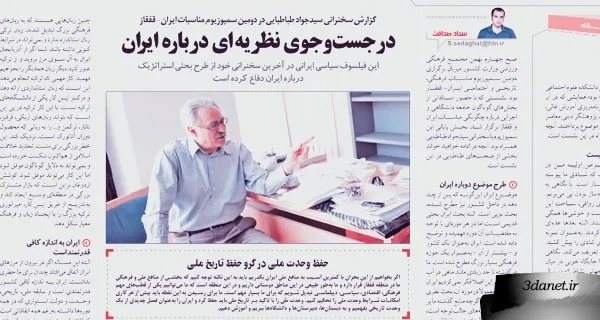
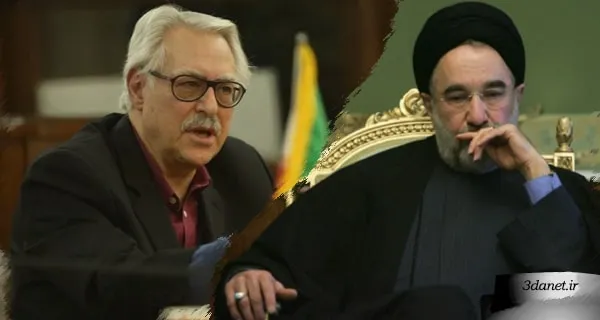
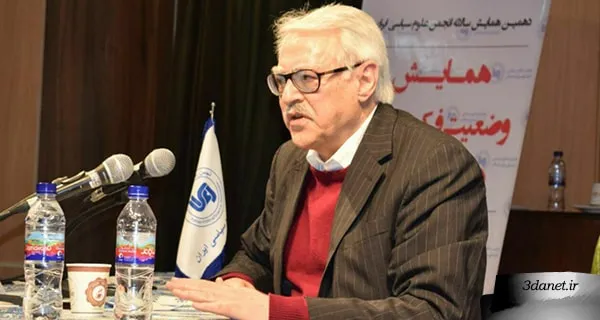
On the morning of 24 Dey, the Ministry of Interior’s Cultural and Sports Complex hosted the second symposium on Iran–Caucasus Cultural, Historical, and Social Relations. The gathering, attended by scholars from various sectors of the academic and executive community, addressed the nature of relations between Iran and the Caucasus. The final segment of the symposium featured a lecture by Seyyed Javad Tabatabai. What follows is a portion of Tabatabai’s remarks at this event. Raising the Question of Iran Once More The question of Iran, as it has been raised within the country itself after several decades, is a new discussion. Of course, the discussion of Iran is an old one, but in every era it has been understood and explained according to the exigencies of that era. Iran has been raised as a country and—more than that—as a vast cultural sphere. In the past we were, to a large extent, like fish in water, so we never thought about what Iran is and we have usually not engaged in any significant theoretical discussion about it. Although our past sources are full of noteworthy allusions and intimations, in recent decades and years events have occurred, both inside and outside Iran, that compel us to discuss once more Iran and why Iran needs a theory.
A Strategic Discussion of Iran My discussion here is not historical, cultural, or even political in the strict sense of the word, but strategic. Two developments concerning Iran are now underway: one outside Iran’s borders and the other inside Iran. Outside our current political borders—the lesser Iran that is political Iran, as distinct from the greater cultural Iran—important events are taking place. On the one hand, new forces have emerged to the east and west of the country that have encircled Iran from both sides and are its sworn enemies. In the perception of these forces, Iranian and Shi‘i carry almost the same meaning. These are events that have occurred in the region, and in recent decades we failed to grasp where their roots lie and to what extent they can be dangerous for Iran.
Umma or Nation? It is natural that after the Islamic Revolution our unit of understanding for strategic issues in the region was the unit of the umma, and our assumption was that beyond the multiplicities in the region there exists a unity that we call the umma. Therefore, in all our political assessments in the region, we had to take that unity of the umma into account, and it was to be the determining factor in this matter. In the past one or two decades, and after Saddam’s war against Iran—even if we had not realized it—we gradually came to realize that other things are happening in the region and that Iran is geographically situated in a place as though it did not belong there. The emergence of new forces more or less showed us that Iran cannot base its strategic interests and calculations on previous definitions. Saudi Arabia Against Iran Thus, today we are the primary target of an all-out assault. That Saudi Arabia is gradually turning into Iran’s major enemy in the region and is turning a significant portion of countries, explicitly or implicitly, into enemies of Iran, is an issue we have only recently understood, and consequently one can defend this view. There is, therefore, a center of enmity toward Iran in a Saudi Arabia that has, over the past decades and without our noticing, gradually mobilized forces against Iran.
Saudi Arabia Is Not a Country As a citizen, I can say more plainly that today’s Saudi leaders are highly adventurous and unrealistic. That is, they have fueled an issue and, in their enmity toward Iran, have unleashed forces that will one day ensnare them as well. Of course, it is possible for Iran to defend itself or ward off their harm, but for a large portion of the Arabs, led by Saudi Arabia, this possibility is far less than it is for Iran—meaning the danger of those forces is greater for Saudi Arabia than it is for Iran. Because Saudi Arabia is not a country, and Iran is a country.
Saudi Arabia and the Problem of the Nation Saudi Arabia has no state, but Iran has always had a state and is a nation; Saudi Arabia—at least for the foreseeable future—is not a nation. With Saudi money, al-Qaeda emerged in eastern Iran and ISIS on our western borders, posing a great danger to Iran. What we can do for the foreseeable future is to avert harm and understand how to defend the eastern and western borders. In the south of Iran, the important and influential country that can be more or less significant is Saudi Arabia, along with several appendages it has created in the Persian Gulf. What I said about Saudi Arabia and its officials applies a fortiori to a few islands and several newly fabricated countries that are mostly financial centers and could, incidentally, undergo fundamental instability overnight.
Cultural Iran on the Northern Frontiers But in the north of Iran, the situation is completely different. We can say that up to the border of China and parts of present-day Iraq lies the border of Greater Cultural Iran. When the collapse of the Soviet Union ended, we were unable to do anything significant with the former Soviet republics. I said at the time that we lost those former Iranian provinces for the second time. A significant part of the countries north of Iran, in the span between Iran's borders and Russia's southern borders, are considered part of Greater Cultural Iran. Parts of Iran are still settled there, and if we could have adopted a different conduct and policy, we might well have created a large region between ourselves and the southern borders of the Russians.
The Importance of the Caucasus for Cultural Iran The Caucasus is very important for Greater Cultural Iran. The borders of Cultural Iran are those that exist today, and it has no territorial claims regarding Iran's current borders, nor will it ever have. But the borders of Greater Cultural Iran were those that once existed. It seems we must be able to pursue a more active policy toward creating a kind of common market under current conditions with the set of countries located in the span between our northern borders and southern Russia. In the region, if we want to defend ourselves, we must enter into relations. The best region with which we can enter into relations is the Caucasus.
The Complex Relations between Iran and Turkey However, the matter is not so simple. For instance, we have historically had complex relations with Turkey, and to a large extent, we were mindful of these relations up until the Russo-Persian Wars, the Constitutional Revolution, and even afterward. But events are unfolding inside Turkey that are connected to what is happening inside Iran. When Turkey realized that the era of the Caliphate was over forever and had abolished it, it is trying, on other occasions, to revive the same thing. We sometimes call this policy Neo-Ottomanism in Iran, or, in my opinion, regarding a figure like Erdoğan, we somewhat misunderstand and think his effort is to revive the Ottoman-Islamic Caliphate. I believe this view is mistaken.
Erdoğan's Project Is Failing What Erdoğan is doing, however, is failing in religious terms and is more successful—if one can say so—in national terms: creating a large Turkic region, but its nature is something else. Now, in some Turkish universities, they have created something like a secretariat to bring about a great Turkic unity that would stretch from the borders of Eastern Europe to Chinese Turkestan. But why is this issue important for us? Turkey is seeking to create a great Turkic empire alongside Iran, and in fact, to be a bulwark for harming Iran. Of course, this is a difficult undertaking today. Because despite what is expressed within various separatist and centrifugal groups, such a thing does not exist, for the number of cultural languages in the region is very few.
Persian is the oldest new language in the world The Persian language is one of these languages and one of the oldest and most enduring. Persian is the oldest new language in the world, meaning we have been speaking and writing like this for a thousand years. Therefore, only such languages have become great cultural languages. The Turkish language does not have a standard form and cannot have one under current conditions. If you go from Iranian Azerbaijan across the border and travel through Turkey, you will no longer understand each other's language. An important task Turkey is undertaking is to provide a standard language, and the center for this work is one of Turkey's universities. Through this, Turkey seeks to bring Uzbek, Kyrgyz, Tatar, Turkmen, and other languages closer to the language that is a product of the Atatürk era. This is a great danger for us. The revival of the Islamic Caliphate has already failed and cannot succeed for various reasons, but this endeavor can succeed. Erdoğan's effort is to create a large common market in a vast region and, gradually through this, to form a Greater Turkish Empire by establishing a standard language and culture.
Iran is sufficiently powerful Of course, if this issue were happening outside Iran's borders, it would not pose much of a danger to us. Iran is a sufficiently powerful country, with a national and historical record, unity, and a stable state that it has maintained in all periods, despite all the events that have occurred. But this time, the homogenization of Greater Turkestan has representatives inside Iran to whom we have not paid much attention so far, and we have not realized what is happening internally. This danger exists for us in important parts of Iran and can be very detrimental to the country's unity.
The Iranian state is a nation-state The idea of Iran under current conditions is not a cement with which we can strengthen this structure that has been shaken. Our understanding of Iran is important. Until 30 or 40 years ago, the majority of media was in the hands of the state, but this monopoly has severely slipped from the hands of states, and maintaining this monopoly will not be possible. Every state is either a nation-state or it is not a state. The Iranian state is a nation-state. Saudi Arabia, because it is not national, is not a state. A nation-state has national interests, and the logic of being a nation and a nation-state imposes itself on whoever is at the head of that state.
Iran needs a theory My statement that Iran needs a theory, and that we lacked this theory and did not feel its necessity, stems from the fact that fundamental changes have occurred in the strategic relations of the region, relations we did not know and in which we were not situated. Iran was a theory that we had instinctively preserved and with which we thought, but today this matter has become a necessity, and the events in the region show that the crisis may deepen to Iran's detriment. Crises in the region are intensifying. One of those crises could have destructive effects internally on our national unity and our territorial integrity in a harmful way.
Preserving national unity depends on preserving national history If we want to get through this crisis with minimal damage to Iran's national interests, we must pay attention to the fact that part of our national and cultural interests lies in the Caucasus region, and we naturally have friends in these areas. It is in this region that we can become one of the important cultural, economic, political, and diplomatic poles, which is very important for us. To reach this point, we must, before anything else, strengthen the conditions for national unity. National unity must be preserved by emphasizing national history, and we must understand Iran as a new chapter of a historical unity and take this understanding to elementary schools, high schools, and universities to teach it.
.
.
pdf of the full lecture text in Farhikhtegan newspaper
.
.
Text of Seyyed Javad Tabatabai's speech at the Second Symposium on Iran-Caucasus Relations
In Search of a Theory of Iran
January 26, 2016
.
.

Discussion0 comments
No comments yet; let yours be the first voice.