Sociology
A Social Theory of Ethnocentrism in Iran
Ethnicity in Iran has two faces: a positive attachment to one's ethnic group is not incompatible with universalism, but ethnocentrism and discrimination are destructive. The solution lies not only in governmental reform, but in mobilising civil society and education to embrace difference in multi-ethnic Iran.
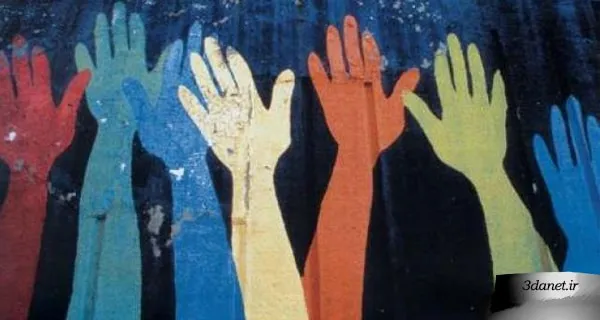
Ethnicity is a biosocial variable and, in societies composed of diverse ethnic groups, it is an influential variable. The presence of the element of ethnicity also constitutes the phenomenon of ethnocentrism. Ethnocentrism, too, is a multidimensional social phenomenon that can have both positive and negative social effects. The feeling of belonging to an ethnic group is not in itself a negative thing; indeed, it may well have very positive effects. Ethnocentrism in the sense of a positive attachment to one's ethnic group does not conflict with universalism.
A Social Theory of Ethnocentrism in Iran:
The Two Aspects of Ethnocentrism
Ethnicity is a biosocial variable and, in societies composed of diverse ethnic groups, it is an influential variable. The presence of the element of ethnicity is also constitutive of the phenomenon of ethnocentrism. Ethnocentrism, too, is a multidimensional social phenomenon that can have both positive and negative social effects. The feeling of belonging to an ethnic group is not in itself negative; indeed, it can often have very positive effects. Ethnocentrism in the sense of positive attachment to one's ethnic group does not conflict with universalism. However, ethnocentrism also has a negative aspect, which is a particularistic tendency wherein members of an ethnic group view their social life in opposition to, or even in conflict with, other population groups. In its extreme form, ethnocentrism means that everything belonging to one's own ethnic group is positive and valuable, and everything belonging to another group of people is negative, undesirable, ugly, worthless, or of lesser value. This phenomenon can be called ethnocentrism. Usually, as a result of this phenomenon, a kind of hostile and hate-filled history and memory is constructed against another population group or groups, and ethnic myths are invoked or even constructed to incite and reinforce ethnocentric resistance. In Iran, too, a distinction must be made between ethnic belonging and ethnocentrism. People belonging to every ethnic group have rights, and these rights must be recognized by everyone. Speaking the ethnic language, teaching the ethnic language, preserving ethnic culture, and matters of this kind are all among the indisputable rights of every ethnic group, and any government that ignores these rights must be criticized. Ethnic discrimination in contemporary Iran is, unfortunately, an old and sorrowful pain that causes the increasing alienation of Iranian ethnic groups from dear Iran. Therefore, we are all duty-bound to criticize and expose any form of discrimination against a part of the country's population, including the dear ethnic groups of Iran, and to highlight and discuss this issue to such an extent that defending the rights of each and every Iranian ethnic group becomes a universal and public discourse. A multi-ethnic, multi-religious, and multicultural Iran is a richer and more valuable Iran. A colorful Iran of ethnicities, religions, and sects is as beautiful and desirable as the beautiful face of a Persian carpet. An Iran composed of Turk, Baloch, Kurd, Arab, Gilak, Fars, Lur, Turkmen, Georgian, and others, and an Iran comprised of Shia, Sunni, Christian, Jewish, Zoroastrian, Sabian, Ahl-e Haqq, Ismaili, Baha'i, and irreligious Iranians is more desirable. An Iran where its people are each free to choose their own path, each preserve their ethnic and cultural heritage, stand together under an inclusive umbrella, and engage in cultural, social, and economic exchange is a richer Iran. Nevertheless, let us remember that ethnocentric currents (such as Pan-Turkism, Pan-Kurdism, Pan-Farsism, and other forms of ethnocentrism) are all anti-Iran, and people whose hearts are set on the prosperity of the homeland, the happiness of Iranians, the provision of security and freedom, and the safeguarding of the rights of each and every Iranian, and who dream of a thriving and developing country, must fight against all forms of ethnocentrism. There is no doubt that the government in contemporary Iran, by applying various forms of discrimination, has fueled the alienation of Iranian ethnic groups from the motherland. We are all duty-bound to counter these forms of discrimination to the best of our ability. But it is not acceptable to attribute all problems to the government. Part of the problem lies with those who promote ethnocentric ideas and tendencies in Iran and fuel the strengthening of such ideas and tendencies. Therefore, ethnocentrisms such as Pan-Turkism in Iran are in no way justifiable by reference to the government's discrimination in Iran. Pan-Turkists who construct an artificial opposition between Turk and Fars should not forget that experts know what detailed accounts the Kurds of West Azerbaijan provide of various forms of discrimination by Turks. I have personally sat and listened to some of these fellow Kurdish compatriots and heard accounts of these discriminations. Just as discrimination by a Fars against a Turk is ugly, vile, and inhumane, discrimination by a Turk against a Kurd is also ugly, vile, and inhumane. The desirable solution is to open our eyes, stare reproachfully at every form of discrimination throughout this country, expose all forms of discrimination, and reveal its ugliness.
I believe that although the government's inappropriate actions, its occasional unjust encroachments, and in many cases its discriminatory measures have provoked and strengthened forms of ethnocentric resistance, the formation and growth of ethnocentrism in Iran cannot be entirely explained and accounted for by the government's performance. Such an approach to this issue is a reductionist one. Likewise, the solution to ethnocentrism and the national alienation of ethnic groups should not be sought solely in the government's actions and performance. Although the government's role is very serious, one should not pin one's hopes on reforming its performance in the short term; rather, in my view, in this case as well, our gaze must be directed toward the positive and effective performance of civil society, national intellectuals, and ethnic elites. With the help of active forces in civil society, a kind of national awareness and popular mobilization against all forms of ethnocentrism in Iran must take shape, so that through it, the potential for ethnocentrism is further weakened. Furthermore, an educational movement must also take shape to teach our children, as the builders of tomorrow's Iran, that difference is a natural and valuable thing; discrimination is a social, unacceptable, and avoidable matter; and the elimination of the other is a crime against humanity. In other words, a two-pronged educational and cultural project must take shape within civil society, both for ethnic groups and ethnic rights and against ethnocentrism.
This is my own social theory of ethnocentrism. I have previously published a piece on the problematic performance of the Islamic Republic of Iran Broadcasting (IRIB) regarding Iranian ethnic groups, which I will republish here once I locate it. At any rate, the following text prompted me to write a summary of my views on ethnocentrism for the first time. This piece is a note sent by a respected reader for publication here. In recognition of the importance of this subject and out of respect for this esteemed writer, we reflect his words; although, as stated above, I do not agree with him on some minor points.
.
.
Author: Hassan Mohaddesi Gilvaei December 14, 2016
.
.

Discussion0 comments
No comments yet; let yours be the first voice.