Political Science
Mostafa Malekian's Critiques of Seyyed Javad Tabatabai (1): A Review of the Theory of Iran's Decline
Following recent controversies, Mostafa Malekian's critiques of Seyyed Javad Tabatabai's 'Theory of Decline' from a 2003 Yas-e No interview are being republished. Malekian addresses the difference between the tradition of critique in Iran and the West, and the characteristics of Iran's intellectual condition.
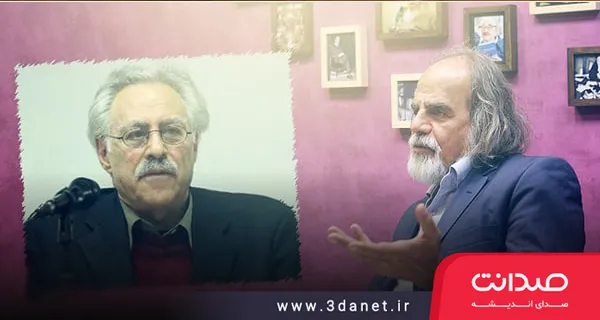
The publication of an interview of Mostafa Malekian with Hooman Dorandish about Dr. Seyyed Javad Tabatabai stirred controversies. In that conversation, his intellectual project was not critiqued, but Mostafa Malekian had previously critiqued Seyyed Javad Tabatabai's intellectual project, namely "Iranian Modernity" and the "Theory of Decline," elsewhere. We deemed it not inappropriate to republish these critiques in the current climate.
It is worth recalling that since these critiques were made over a decade ago, some of their points may no longer apply to Dr. Tabatabai, who has since expanded and occasionally corrected and critiqued his own views and theories.
The first critique of Dr. Javad Tabatabai by Mostafa Malekian is an interview conducted in 1382 (2003) with the Yas-e No newspaper and published in two parts. You can download this interview from here or read it below.
A Review of the Theory of "Iran's Decline" – Part One
A Conversation between Mehdi Niaki and Mostafa Malekian
Source: Yas-e No newspaper, Issue 172 – Year One – Saturday, 4 Mehr 1382 (27 September 2003)
Confrontation among thinkers is not a common practice in Iran. For it is a Western tradition for intellectuals to critique views with candor and clarity. In Iran, however, the interaction of elites seems to be a function of the prevailing public morality. For this reason, such confrontations either descend to the level of widespread disputes and inevitably decline from epistemological levels, or, in an elite disavowal by those uninterested in making relations contentious, they take on metaphorical and allusive aspects. The "Theory of Iran's Decline" (Seyyed Javad Tabatabai), both due to the seriousness of this project and the renown of its originator, provoked widespread reflection in the sphere of thought. This very broad resonance prompted a search for a theorist who would critique this theory. Dr. Mostafa Malekian, as the theorist of "Rationality and Spirituality," is one of the most suitable such persons. Malekian says he is psychologically introverted and then adds that he has no interest in grappling with others. Perhaps for this reason, he openly evades a question about the thought system of a certain Muslim intellectual. The professor emphatically insists that he will only accept the conversation on the condition that we do not publish a photo of him. We say this disrupts the main format of the page... But in any case, he does not agree; and of course, a conversation with Malekian is worth more than these things.
It seems that the theory of "Rationality and Spirituality" is preceded by a background of "anomaly" in the intellectual situation of Iran today; in such a way that proposing this theory serves as a way out of the state of excess in the domain of rationalism or the negligence often crystallized in mystical and religious domains. Do you agree with this view?
The theory of Rationality and Spirituality has been proposed and pursued as a way out of the excess and negligence that is evident not only in the cultural situation of Iran today, but also in the cultural situation of the world today. I mean to say that the problem this theory humbly attempts to resolve is not a problem specific to Iran today, but a general and pervasive one. Of course, there is no doubt that Iran today has unique characteristics which, on the one hand, neither existed in Iran yesterday nor will exist in Iran tomorrow, and on the other hand, do not exist in other contemporary societies either, and these characteristics cause the theory of combining rationality and spirituality in this society to face issues and problems different from those it encounters in other societies.
Incidentally, I am not very fond of the expression "excess in the domain of rationalism" either. What is indefensible in the domain of rationalism is for rationality not to attain adequate breadth and depth. In other words, what must be avoided is a rationality that is either "inconsistent" and therefore prevented from its natural and logical expansion, or a rationality that has not penetrated to the deepest layers of thought—that is, its deepening has been prevented. "Inconsistency" here means being truly rational in one domain or domains, while more or less evading rationality in other domains.
With that said, do you not take into account the specific indigenous situation in the domain of thought?
Of course, there are characteristics in the current situation of this land that perhaps, in their totality, are realized only in present-day Iran, and all of them have been considered in the design and pursuit of the theory of "Rationality and Spirituality." One of these characteristics is a fundamentalist interpretation of the Islamic religion, which has more or less serious proponents, and some either genuinely believe in it or behave as if they believe in it. The second characteristic is a kind of spirit of suggestibility, imitation, and aversion to reasoning that is still prevalent and widespread among a considerable portion of our people, and which itself has also caused the prevalence and spread of dogmatism and rigidity. The third characteristic is a kind of incorrect interpretation of "self" and "other," which is nothing but narcissism (regarding the self) and negative prejudice (regarding the other). The fourth characteristic is a kind of belief in the "primacy of politics," or in other words, a kind of politicization that has gripped many of us; by belief in the "primacy of politics," I mean the belief that the biggest problem, or the sole problem, or the root cause of society's problems, is the political problem of society, and this is a belief that, in my opinion, is completely wrong and must give way to a belief in the "primacy of culture." That is, we must believe that the root cause of our problems is a cultural problem. And finally, the fifth characteristic is the regrettable prevalence of a kind of "ethical materialism" (not philosophical or metaphysical materialism) among our people. In our society, few people believe that God or life after death does not exist, and therefore philosophical materialism is not very prevalent. What is completely widespread is ethical materialism. That is, we mostly live as if nothing exists but matter and material things.
Allow me to emphasize the word "anomaly" a bit. By "anomaly," I do not mean it in opposition to a well-ordered situation in the domain of thought; rather, we use it as a "situation" that has seemingly diverted the domain of thought from its norm, which is examining and finding the roots of existing problems and presenting implementable solutions. From this angle, can the theory of Rationality and Spirituality be a solution for returning the domain of thought to "its original path"? Is what you emphasize as the reasons for presenting your theory a sociological approach that stresses solving and eliminating the fundamental deficiencies of society, or a philosophical approach that sees itself as obliged to offer a path for the "anomaly" governing the domain of thought?
I do not precisely understand the meaning of "returning the domain of thought to its original path." What original path does the domain of thought have from which it has strayed or deviated, such that some might want to return it to that same original path? Of course, there is no doubt that, in my view, thought must be oriented toward action. Therefore, if the intellectual state of an individual or a society is such that it is either not directed toward solving practical problems (in the broad sense of the word), or fails to distinguish problems from pseudo-problems and occupies itself with pseudo-problems, then again, in my view, it is not a desirable intellectual state.
The synthesis of rationality and spirituality offers a path (even if not free of ambiguity, equivocation, and generality) for solving our practical problems, whether in the individual domain or the collective domain (that is, in the various spheres of social life). Therefore, its success or failure must also be examined from this perspective. That is, we must be careful, firstly, not to have mistaken problems for pseudo-problems, and secondly, if we employ evidence and indications, whether they are capable of solving our problems or not.
If we consider the primary mission of the sphere of thought to be the correct understanding and comprehension of problems, some believe that the sphere of thought has deviated from this path, and consequently, as you say, providing practical solutions is not possible; or if it is, because it is not based on an accurate understanding of the problems, again, as you say, it will not lead to a reduction of suffering. Overall, I would like to know what your description of the state of thought is? Do you accept this deviation or not? If yes, what model do you propose to explain it?
The mission of the sphere of thought oriented toward action is, on one hand, the correct understanding of problems, and on the other, finding ways to solve problems. In both parts, it is important to know whether human problems have a productive cause-and-effect relationship with each other, such that the mother of all problems can be considered one, two, three, or a few limited problems, or not. If the answer to this question is positive, then identifying that one or several problems is a very grand and important task. The state of thought is not orderly and desirable when it does not proceed in these directions[۱].
If by "deviation of the sphere of thought" is meant this sphere's lack of attention to the realm of action, or the failure to distinguish real problems from pseudo-problems, or the lack of success in the etiology of problems, it can[۲] be accepted that such deviations are more or less observable in our sphere of thought (as well); but if something else is meant, since I do not know what that other thing is, I have nothing to say, negatively or positively.
My point was also that in the sphere of thought, after a certain juncture (which everyone considers a specific point based on their own knowledge), a situation arose which you referred to as "the failure to distinguish between real problems and pseudo-problems," and I, in turn, referred to it as an "anomalous situation," as a situation in which an accurate understanding of problems is not possible. What are the characteristics of this situation from your perspective? Specifically, for such a predicament, which junctures in history do you have in mind?
For the predicament you refer to, I recognize neither a specific historical beginning nor a specific geographical expanse. No specific historical juncture has a clear causal rupture with its past so as to be considered a specific turning point in this regard; and no specific geographical region is so disconnected from other geographical regions that it can be considered the birthplace and origin of this predicament. In any historical juncture and geographical region, as long as a myth-oriented way of thinking, or one based on the authority and trustworthiness of a specific person or persons, or one devoid of precision and clarity, or non-argumentative, or utopian and escapist, or opposed to the deep biological, mental, and psychological needs of human beings prevails, to the extent of the prevalence of such ways of thinking, we are dealing with the predicament you refer to. All the concern and effort of genuine thinkers and intellectuals is directed at avoiding these six types of thinking, and I emphasize again that I recognize no specific historical juncture or geographical region as the birthplace or origin of this predicament.
I think this is a suitable entry point for reviewing the "Theory of Iran's Decline." From the perspective of the originator of the decline theory, a specific juncture is envisioned for the decline of thought and the rigidification of tradition, which he considers to be from the beginning of Safavid rule until the groundwork was laid for the Constitutional Movement in Iran. Considering what you said regarding the non-existence of a specific historical and geographical juncture, you must not agree with specifying this historical juncture?
Yes, I disagree with specifying a particular historical juncture, whether that juncture is the beginning of Safavid rule or any other. Just as, in my view, a specific geographical expanse cannot be considered the origin of this decline. Of course, I have no doubt that the rise of the Safavid dynasty inflicted immense cultural damage on the lands under its dominion. However, the emergence of this dynasty was not a sudden, accidental event unrelated to the past; rather, it was itself the effect of a series of cultural, political, and economic causes. Especially if favorable conditions for this dynasty had not arisen in the minds and consciousness of the people who came under its rule, the very emergence of this dynasty would not have been possible. In general, I believe that in the realm of human life, no objective (Objective) phenomenon appears without being preceded by the prior emergence of subjective (Subjective) matters. But regarding the expression "decline of thought," let me also make a point: if by thought is meant a mental product (Product) which can naturally be expressed in the form of a proposition, since, in my view, it is correct to say that thought, as a product, requires acceptability (Acceptability)[3]; that is, every thought can be expressed as a proposition. In that case, the decline of thought means nothing other than the loss of that thought's validity, and the validity of a theoretical thought means its truth, while the validity of a practical thought means its efficacy in achieving a specific goal. If by thought is meant a mental process (Process)—that is, thinking, reflecting, and contemplating—then the decline of thought means the absence of thought, signifying that circumstances arise in which the act of thinking does not occur. A third meaning can also be conceived for "decline of thought," which is that the process of thinking succumbs to one of the six afflictions I enumerated in response to the previous question. The expression "ossification of tradition" also lacks a clear and distinct meaning in my view. What is "tradition" itself? And what kind of entity is it? Does it belong to the category of facts (Facts), or properties (Properties), or relations (Relations), or events (Events), or processes (Processes), or states of affairs (States of affairs), or sets (Sets)? Ultimately, according to metaphysicians, anything whose existence we claim must possess one of these modes of existence. Whichever of these alternatives you choose, you must also depict the "ossification" appropriate to that alternative and then demonstrate that at a specific point in history and in a specific geographical region, tradition in this sense underwent ossification.
Of course, the proponent of the decline theory also acknowledges the existence of ambiguity and vagueness in his definition of "tradition." Although historically he considers everyone from Farabi to Mulla Hadi Sabzevari as entirely belonging to the ancient era. With this interpretation, in your view, to which of the aforementioned modes does what is stated about the "ossification of tradition" in the decline theory refer?
In my view, acknowledging the ambiguity and vagueness of the definition of tradition amounts to acknowledging the non-falsifiability of the theory of "Iran's decline." A statement into which a degree of ambiguity, vagueness, or obscurity creeps becomes immune to criticism. For to critique a statement and discern its strengths and weaknesses, one must first understand that statement, and understanding a statement afflicted by one of those three conditions is impossible as long as that condition remains unresolved.
"Belonging to the ancient era" is also an expression whose status is no better than that of the expression "tradition." What common feature or features exist among Muslim thinkers, from Farabi to Mulla Hadi Sabzevari, that both explains and justifies placing them in a single set? If that common feature or features were precisely clarified, and it were also shown that this common feature or features apply to all Muslim thinkers from Farabi to Sabzevari, then it would both be clear why all these thinkers are considered to belong to the ancient era and the expression "ancient era" would be disambiguated.
I should not leave unsaid that I myself have an understanding and interpretation of the expression “rigidification of tradition,” about which the erudite theorist of the “Decline of Iran” theory must, of course, judge; and that is that if an individual or a society falls into a state in which, in order to solve new problems or remove new difficulties, they resort to the very same ways that were effective for solving old problems or removing old difficulties and are no longer of any use (that is, if an individual or a society falls prey to the false notion that new problems or difficulties have no essential or substantive difference from old problems or difficulties and, by the rule of “the judgment regarding similar cases, in what is permissible and what is not, is one,” one must still insist on the old solutions and ways of removal), and, to put it a third way, if the objective and external situation of an individual or a society undergoes a substantive difference from the past situation, yet that individual or society maintains its subjective and mental state just as it was before, then in this case it can be said that they are in a state of rigidification of their tradition. If this is what the formulator of the “Decline of Iran” theory means by “rigidification of tradition,” then, firstly, it must be said that this expression is not a very suitable or fitting one for that purpose and intention, and secondly, it must be accepted that the birthplace and origin of this state cannot be determined with precision and certainty.
A Review of the Theory of “Iran’s Decline” – Part Two
Source: Yas-e No Newspaper, Issue 173 – First Year – Monday, October 6, 2003
Before we address your definitions and those of the theorist of “Iran’s Decline” regarding the concept of “rigidification of tradition,” allow me to pose another question about the identification of the historical juncture in the decline theory. Some believe that the originator of the decline theory, in formulating this theory, has engaged in a kind of “history writing.” This historiography was presumably necessary for what the theorist has in mind (i.e., the precise determination of the high and low points of thought). Nevertheless, some believe that we are currently in a condition of the “impossibility of history writing.” As Hobbes says, in historiography, the power of judgment must surpass the power of imagination. Whereas in the history of Iran, the power of understanding is overwhelmed by the power of imagination and, on the whole, has largely negated the possibility of historiography. Do you accept this effort at historiography?
Whether in historiography the power of judgment must overcome the power of imagination or not, and what the defensible and acceptable share of each of these two factors in historiography should be, is not a question I have the power to answer. But is not this very claim that “in the history of Iran, the power of understanding is overwhelmed by the power of imagination”—whether it is a correct claim or an incorrect one—itself a historical claim? And how can this historical claim be confirmed? Is not this very claim itself a kind of grand-scale historiography? I mean to say that someone who, based on this claim, rules out the possibility of historiography, reaches a conclusion that is incompatible with the premise upon which this conclusion is based; that is, to put it more clearly and explicitly, they are contradicting themselves.
On the other hand, in any case, in historiography, a series of historical facts are available which, however few and scarce they may be, must be taken into account in the fabric of historiography and cannot be disregarded. The power of judgment and the power of imagination also perform their work upon these facts, which are the raw material of the historian’s work, and the discussion, in reality, is over whether the theory of Iran’s decline has paid attention to all of this raw material or not?
I did not get my answer. Do you agree that the theorist of Iran’s decline has engaged in history writing, regardless of whether such a possibility exists or whether that effort has been successful or not?
Yes, I have no doubt that the theorist has engaged in history writing, but he has also engaged in historical perspective. That is, he has made the process that, in his belief, has been realized in the history of Iran over the last four hundred years, and to which he has drawn attention for the first time, the axis of his historiography.
Fardid says, “The beginning of our history is the tail-end of Western history,” and Tabatabai has considered his problem to be “clarifying the relationship between this beginning and this tail-end”; of course, with the aid of the apparatus of Western concepts. What is your view of this endeavor?
I do not understand Fardid's statement at all. But if the beginning of our history is truly subordinate to the history of the West, then clarifying the relation between that beginning and this subordination is clarifying the relation between a thing and itself!! Unless you mean that clarifying the relation between something that has a beginning, namely our history, and something that has a subordination, namely the history of the West, is what Dr. Tabatabai has in mind. In that case, one must say: first, why do you express clarifying the relation between our history and the history of the West with this convoluted, strange, and peculiar expression; second, histories other than ours also have a beginning, and histories other than that of the West also have a subordination; and third, what does clarifying the relation between our history and the history of the West even mean? Does it mean you are examining the connection, relation, and interplay of our historical past with the historical past of Westerners? If so, how does the theory of Iran's decline emerge from examining this connection and relation? Of course, these objections pertain to your expression, and I do not know at this point to what extent your expression is exactly that of Dr. Tabatabai.
What I said regarding "clarifying the relation between the beginning and the subordination," with the addition of a preamble from Fardid's statement, is exactly Dr. Tabatabai's expression, delivered at the gathering of the Friends of Thought in Berlin. The question is whether clarifying the relation of this beginning and subordination (which is, of course, a convoluted expression) is possible with the aid of the apparatus of Western concepts?
What does the apparatus of Western concepts mean? What are Western concepts? Can concepts be divided into Western and non-Western, or Eastern? (Let alone the fact that, for me, separating the West from the East is also separating two unknown and unspecified things from one another). Perhaps one could say that by Western concepts is meant concepts that first found their instances in the history of the West. That is, just as some concrete, sensible, and tangible matters (Concrete), like the automobile or the telephone, were first invented and instantiated in Europe or America, some abstract matters (Abstract), like the state or democracy, were also first coined, posited, and instantiated in Europe or America, and these matters can be called Western phenomena, and the concepts denoting these matters can be called Western concepts. If this is what is meant by Western concepts, as I have stated, then one can say that if these concepts, which first found their instances in the West, also find instances in our history, then undoubtedly one can look at and write our history with the aid of these concepts. Because just as the automobile or the telephone, while first emerging in the West, later found their way to non-Western lands, it is not impossible or inconceivable that Western abstract matters might also later find their way into non-Western lands. Of course, note that I say: "it is not impossible or inconceivable that they might find their way"; I do not say: "they have found their way." In any case, whenever and wherever a concept finds an instance, one can certainly use that concept to describe that instance. Therefore, the question of whether one can view and write our history with the aid of the apparatus of Western concepts can be referred and reduced to the question of "whether Western concepts have also found instances in our history or not," and the answer to this latter question is: "Yes, some of them have found instances, and some have not yet found instances."
You mentioned a series of historical facts that are available to the historian. The question is, what are these raw materials? Also, what do you mean by saying that the theorist of decline has engaged in historical contemplation? That is, has the proponent of the theory of decline used certain historical events as corroborations for their theory, which has ultimately rendered the entire theory verifiable?
By the historical facts that are the raw materials of the historian, I mean those matters in the report we present of which empirical terms are used, not theoretical terms. That a certain treaty between the governments of Iran and Russia was concluded and signed on a certain date is a historical fact, because all its concepts are non-theoretical concepts.
By historical contemplation, I mean moving beyond the mere reporting of particular and specific historical events and arriving at a theoretical description that indicates the occurrence or non-occurrence of a general and universal matter in the past.
In the theory of Iran's decline, "opposition to the logic of ideology" holds a special place. From the theorist's perspective, one of the factors in Iran's decline is the "ideologization" of thinkers. From this viewpoint, Tabatabai sees no difference between Soroush and Ehsan Tabari. Do you accept this description that some theorists have presented ideological orientation in the guise of religious modernism?
If by "ideologization" we mean adopting and accepting an opinion or belief or a set of opinions or beliefs without it having epistemic superiority over other opinions or beliefs or sets of opinions or beliefs, or being unwilling to confront it with realities or with other opinions or beliefs or sets of opinions or beliefs and putting it to the test, or being dogmatic, rigid, and fanatical about it, then, I accept that ideologization can be one of the major causes and reasons for decline.
And this, that ideologization is not exclusive to religious intellectuals, non-religious intellectuals, or anti-religious intellectuals, and that all of them may (note that I say may, not that it is necessary) fall prey to ideologization, is a completely correct statement.
It is also true that some ideologized theorists have presented or do present their discourse in the guise of religious modernism.
The only thing I am not in a position to do is to reject or accept the instances that Dr. Tabatabai has pointed to in his statements or writings.
Do you personally not consider the presentation of an instance like Soroush to be valid?
Regarding anyone, whether Dr. Soroush or others, the answer to your question depends on seeing whether one of the three conditions I mentioned in response to your previous question applies to that person or not.
Do those three conditions you mentioned apply to Dr. Soroush or not?
Let us not speak of others and not concern ourselves with instances, and not expose our own truth-seeking to being tainted by other questions. Let alone the fact that the probability of such sweeping judgments hitting upon reality is always low.
You are, of course, evading confrontation with thinkers. Very well. Let us ask another question. What about the theorist of Rationality and Spirituality? To what extent do those three conditions apply in this case?
Of course, Dr. Tabatabai has not mentioned me among the religious intellectuals, and I myself, because I consider religious intellectualism a paradoxical concept, do not call myself a religious intellectual. I consider myself merely one of the ranks of truth-seeking human beings. Because I am human, I am naturally fallible and indeed necessarily fallible, and because I am a truth-seeker, I try, as far as I can discern, to repel from myself whatever conflicts with truth-seeking. But this very truth-seeking requires me to say that I am still more or less afflicted by all three conditions I mentioned in answer to that question of yours. That is, I have selections not based purely on epistemic superiority, I have not confronted all my opinions and beliefs with other opinions and beliefs, nor with realities, and I am not yet entirely free and absolved of dogmatism, rigidity, and fanaticism.
In his theory, following the view that exiting decline requires understanding tradition and critiquing it from the perspective of modernity, Tabatabai tries to answer the question of whether Iran can be examined as the subject of a science and theorized about. The first question is whether, in your view, such an endeavor is possible or not? And the second is that the theorist of decline believes that if we succeed in this task and link the theorized Iran to world history, then an "Iranian Renaissance" will emerge and we will exit decline. In the second part, I specifically wish to know your view on the "Iranian Renaissance" and the path to achieving it (which is freeing tradition from rigidity through understanding and questioning it from the perspective of modernity).
What does “Iran” mean? Is “Iran” the name of a society that resides within a specific spatial boundary? If so, which spatial boundary? The current spatial boundary, or that of two hundred years ago, or a thousand years ago, or two thousand years ago, or…? Is “Iran” the name of a society that resides within a specific temporal boundary? If so, which temporal boundary? Present-day Iran, or Iran a hundred years ago, or Iran four hundred years ago, or…? Is “Iran” the name of a particular ethnic group? Which ethnic group? Does a pure, unadulterated ethnic group even exist? Should Iran be considered a geographical identity, a historical identity, an ethnic identity, or an identity of…? One of the problems with the theory of Iran’s decline, from the perspective of someone like me who has an inclination toward philosophical analysis, is that it is not at all clear what this “Iran” that undergoes growth, decline, stagnation, cessation, and so on, actually is and what kind of entity it is.
On the other hand, regardless of which of the three identities I mentioned you consider constitutive of Iranianness, there is no doubt that Iran, like any other society, is knowable; that is, there is no unique characteristic in Iran that makes knowing Iran impossible because of that characteristic. But when you come to know Iran, your knowledge, in fact, takes on the diversity and multiplicity of the phenomena that have come into existence in this society. For example, at one time you know the culture of Iran, at another its politics, at another its economy, at another the institution of the family in Iran, at another the institution of law in Iran, at another the institution of education in Iran, at another the institution of religion in Iran, and so on. And from this point, I want to make another remark regarding the theory of Iran’s decline, which is: in what respect has Iran declined? The decline of something is always its decline in one, two, three, or n respects, and speaking of a total decline, without mentioning the aspect in which the decline has occurred, is not a defensible statement.
What does “linking a theorized Iran to world history” mean? What kind of Iran is a theorized Iran? And must Iran be linked to world history? Iran, like any other society, is automatically linked to world history. Because I do not understand the precise meaning of this phrase, I cannot say whether, after linking a “theorized” Iran to world history, an Iranian Renaissance will emerge or not.
The meaning of “Iranian Renaissance” is also not very clear. If what is meant by it is the desirable state of Iranian society, it must be said that this desirable state is not achieved solely by freeing tradition from rigidity, and that too only through understanding and questioning from the perspective of modernity (of course, my remark pertains to your phrasing; otherwise, I do not recall Dr. Tabatabai himself using this exact phrase anywhere). Tradition must be freed from rigidity (in the same sense I mentioned in response to one of the previous questions), and modernity itself must also be critiqued, and it must also be noted that unless a transformation occurs from within, no desirable transformation will emerge externally.
To wrap up the discussion, allow me to ask your view on the strengths and weaknesses of the theory of Iran’s decline. Please state, in list form, which aspect or aspects of this theory you agree or disagree with. Meanwhile, it seems the theory of Iran’s decline can be seen as a way of framing the discussion. From this angle, can the theory of rationality and spirituality be conceived as a remedy for the state of decline in general? What is your opinion?
Until the theory itself is fully understood, the degree of agreement or disagreement with it cannot be demonstrated and expressed, and what, in my opinion, has prevented a complete understanding of this theory is that its thoughtful originator has not presented his thought in clear and lucid forms of expression.
Nevertheless, insofar as I have understood this theory, its greatest strength is that it has given primacy to the intellectual and cultural dimension over other dimensions of collective life and has even, in a way, made any desirable change in social life contingent upon the correction and reform of our intellectual and cultural dimension.
At the same time, the serious and profound interaction between culture and politics has also been well represented within the theory.
Regarding the last part of your question, I must say that, in my opinion, it can be said that the combination of rationality and spirituality is a remedy for remedying our current undesirable situation.
.
.
[1]. In the original text, it is “world.”
[2]. In the original text, it is “cannot.”
[3]. In the original text, it is “Assertability.”
.
.

Discussion1 comments
بسیار زیبا بود. اگر لطف کنید و ابتدا اصل نظریه انحطاط را هم در ابتدای بحث بگذارید، باعث می شود بنده که آن نظریه را نمی دانم، بهتر در جریان صحبت های استاد قرار بگیرم. یا لطف کنید و این نظریه را برایم ارسال کنید، ممنون می شوم. سپاس