Political Science
A Review of Mostafa Malekian's Socio-Political Theory – Part Four
Malekian's theory of tolerance rests on an epistemological distinction between objective and subjective beliefs: accordingly, truth-seeking in actual objective beliefs negates tolerance, while justice-seeking in non-certain beliefs mandates the acceptance of democracy and tolerance.
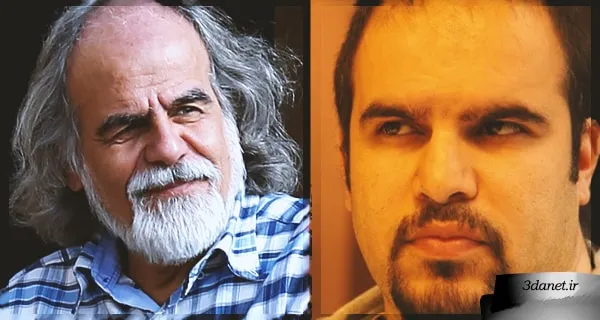
In previous articles we expounded and critiqued Malekian’s theory of rationality and spirituality. Malekian’s theory of tolerance and political secularism is the subject of this section and the next article in this series. As we shall see, Malekian’s political theory is above all a theory about which beliefs citizens in an ideal society should not tolerate on the basis of truth-seeking, and which beliefs they should support through the democratic rule of tolerance and the ballot box, out of a concern for justice. Malekian’s thought rests on the assumption that citizens have two fundamental moral obligations: an epistemological obligation to make certain truth, or what he calls actual objective truth, the basis of their individual and collective lives, and a justice-seeking obligation to make democracy the basis of adjudication between themselves and others when certain truth is not established. A critique of Malekian’s theory of tolerance, and the extent to which he has succeeded in linking the two basic moral values of truth-seeking and justice-seeking on the one hand with a political defense of democracy on the other, is a subject we will address in the fifth and final part of this series of articles.
From the Epistemological Division of Beliefs into Objective and Subjective to the Discussion of Political Tolerance
To explain his theory of tolerance[1], Malekian epistemologically divides human beliefs into two broad categories: objective[2] or factual beliefs and subjective[3] or personal beliefs[4]. By objective or factual beliefs, Malekian means beliefs that can be assumed to be valid for all human beings and for which “it is not impossible to suppose the existence of irrefutable evidence” (“Theoretical Foundations of Tolerance,” p. 116). And by subjective or personal beliefs, he means, in direct contrast, beliefs that cannot be assumed to be valid for all human beings and for which “it is impossible to suppose the existence of irrefutable evidence in their favor.” (ibid.) The distinguishing difference between objective and subjective beliefs is that for determining and ascertaining the truth or falsity of the first category, a criterion, standard, measure, scale, or arbiter that is agreed upon by all human beings, both proponents and opponents of those beliefs, and by reference to which differences and disputes can be resolved, is conceivable, whereas for the second category such a supposition is not conceivable. For example, the propositions “This particular object is red” or “Tehran is located north of Isfahan” (i.e., direct observational propositions), or “The sum of the angles of a triangle is 180 degrees” (i.e., necessary propositions in mathematics and logic), or “The speed of light is 300,000 kilometers per second” and “On a certain planet 500 billion light-years away from us, oxygen exists” (i.e., scientific propositions), or “Parviz is older than his father” (i.e., a false verifiable proposition) are objective, whereas the propositions “The apple is not a tasty fruit,” “Blue is the most beautiful color,” “Saadi’s poetry is more heartwarming than Hafez’s poetry” are instances of subjective propositions. It should be noted that an objective proposition is not necessarily true and can be false (like the proposition “Parviz is older than his father”).
The important point is that in the case of objective propositions, we believe in the existence of intersubjective truth (even if this truth is not currently available to us, i.e., in the case of potentially objective beliefs), whereas in the case of subjective beliefs, truth and falsity are entirely case-specific, subjective, and non-intersubjective, meaning they differ from one individual to another. Some epistemologists have considered reference to memory as the criterion for the intersubjective objectivity of a proposition, some reference to reason, some to sensory perception, and some to introspection; but in any case, when a proposition is objective, one can believe in its intersubjective truth or falsity (Malekian, “Theoretical Foundations of Tolerance,” 117; compare with Malekian, “Secularism and Religious Government,” pp. 255-256).
Objective beliefs, in turn, are divided into two categories: a) objective beliefs for which the scale for determining and discerning their truth or falsity exists not only theoretically and potentially[5], but is also practically and actually[6] available in the "current state of the human sciences and knowledge." b) objective beliefs for which the scale for determining their truth or falsity exists only theoretically and potentially, but the current state of the human sciences and knowledge is not such as to allow us practical and actual access to it. For example, the propositions "there is life after death," or "there is oxygen on a certain planet 500 million light-years away from us" belong to this group of objective beliefs that are potentially investigable but actually uninvestigable. We call the objective beliefs of category (a) "actually objective beliefs," and the objective beliefs of group (b) "potentially objective beliefs."
In Malekian's analysis, from an epistemological perspective, only disputes over actually objective beliefs can be settled, while potentially objective beliefs and subjective beliefs always remain points of contention among believers; that is, "one must adopt pluralism regarding potentially objective beliefs at the level of proof and knowledge (not at the level of reality and fact), and absolute pluralism concerning subjective beliefs." ("The Theoretical Foundations of Tolerance," p. 118).
The result of the above classification, along with the two fundamental moral duties of "truth-seeking in the realm of theory" and "justice-seeking in the realm of practice," is the theory of tolerance that Malekian formulates as follows:
Suppose a belief is expressed by an individual toward which we are to be tolerant or intolerant. If the expressed belief is among actually objective beliefs, then after investigation—that is, after referring to the scale or measure that determines the truth or falsity of beliefs from an epistemological standpoint—its truth or falsity will be established. In this case, "truth-seeking, in the first instance, requires that we not only tolerate the expression of that belief but also adopt the belief itself; and in the second instance, it requires that we not only reject the belief itself but also not tolerate its expression" ("The Theoretical Foundations of Tolerance," p. 121). This is because, in Malekian's view, "truth-seeking is above tolerance." However, if the expressed belief is among potentially objective beliefs or subjective beliefs, in Malekian's view, the moral duty of truth-seeking has no requirement, because we do not possess a scale or measure, based on the consensus of epistemologists, by referring to which we could determine the epistemological preferability or inferiority of this belief compared to beliefs incompatible with it. In such a situation, "the epistemic status of this belief is equal to the epistemic status of all contrary or contradictory beliefs, and preferring any one of them over another has no rational basis." (Ibid.) Here, justice-seeking and the principle of rejecting preference without a preferrer, as one of the instances of justice-seeking, require that no potentially objective or subjective belief be made the basis of decision-making without being exposed to the vote of the people. (Ibid., p. 121; "Secularism and Religious Government," 251)
In other words, if the belief in question is a false actually objective belief, "benevolence toward fellow human beings," which obliges us with the "[moral] duty of reducing the amount of public ignorance and error," requires that we use "rational and moral methods" to prevent the holders of that belief from sharing it with others. This is because, in Malekian's view: "Silence regarding methods of belief-formation that are not based on explanation and reasoning, but benefit from various kinds of rumor-mongering[7], brainwashing, mind-bending, psychological warfare, indoctrination, and suggestion—the comprehensive title for all of which is deception—is contrary to benevolence toward fellow human beings." (Ibid., 122-123)
Nevertheless, if the expressed belief is a true actually objective belief, we must not only tolerate its expression but also adopt it as part of our own beliefs; and if the expressed belief is among potentially objective beliefs or subjective beliefs, we are morally obliged to tolerate all efforts made to convince others of those beliefs and to act for decision-making based on democratic standards. ("The Theoretical Foundations of Tolerance," 122)
Malekian also applies the explanations given above to the realm of legislation. Intolerance in the legislative realm, in his view, means that legislators give legal form to a way of life that, in their own opinion, is the desirable way of life, and demand that all citizens adopt that same way, punishing any deviation from it. On this basis, he concludes that actually objective beliefs, whether true or false, must—without any reference or attention to public opinion and the views of citizens—either necessarily form the basis of legislation (if they are true), or necessarily be disregarded by legislators (if they are false). However, regarding other beliefs, namely potentially objective beliefs and subjective beliefs, in Malekian's view, the citizens of the society, to whom any benefit or harm from the enforcement of laws accrues, must be consulted, and any belief that gains the consensus of all or the majority of citizens should be given legal form. That is, "in the case of actually objective beliefs, truth-seeking requires not referring to public opinion, and in the case of potentially objective beliefs and subjective beliefs, justice-seeking requires referring to public opinion." (Ibid., p. 124) From this discussion, Malekian draws this important conclusion: "Democracy, in this sense, is the result of tolerance in the legislative realm, and the only type of government to which we have an epistemological-moral obligation." (p. 124)
The important point is that, except in mathematics, logic, parts of the natural empirical sciences, small parts of the human empirical sciences, and small parts of the historical sciences, we do not deal with actually objective beliefs and reports. ("Theoretical Foundations of Tolerance," p. 126)
In another classification to explain his theory, Malekian divides beliefs into three broad categories based on their content: first, ontological beliefs[8], that is, beliefs concerning particular things (such as Socrates and this microphone), or relations (such as the father-son relation or the distance between two cities), or events (such as the death of Spinoza), or states of affairs (such as that Saadi wrote Golestan), or sets (such as the set of white flowers), and the like. Second, axiological beliefs[9], that is, beliefs about which things have intrinsic value, meaning they are desirable in themselves and for their own sake, which things have instrumental and means value, which things have contributory value[10], and similar matters. Third, deontological beliefs[11], that is, beliefs, for example, about what we ought or ought not to do, morally or legally, by virtue of being a father or mother, or having a specific job or profession. ("Theoretical Foundations of Tolerance," 119) It is clear that within religious beliefs, one can also speak of ontological, axiological, and deontological beliefs. By combining what was said earlier with this classification regarding religion, Malekian arrives at a model of religious tolerance and political secularism, and writes:
"Among [religious] ontological beliefs, beliefs concerning life before worldly life and life after worldly life and realms beyond the natural world are, in Malekian's epistemological view, counted among potentially objective beliefs. Among [religious] axiological beliefs, again based on the same consensus, beliefs concerning intrinsic values fall under subjective beliefs, and among [religious] deontological beliefs, those relating to moral duties are certainly not actually objective" (Ibid., 125). That is, because most religious propositions are not among actually objective beliefs, they cannot form the basis of government unless the majority of citizens in a society decide, in a public vote, to make them the basis of their government. This, in turn, is a kind of defense of political secularism, meaning not basing government on religion in the absence of a majority request.
Malekian’s claim that most religious ontological, axiological, and deontological propositions are not actually objective is empirical-historical, meaning that, in his view, empirical and historical study shows that most of the aforementioned religious beliefs have so far not been the result of an irrefutable and decisive proof. In other words, studies show that some of our most important and grandest religious and moral beliefs, concerning questions such as “Where have we come from?”, “Where will we go?”, “What have we come for?”, “Is there another world or worlds beyond nature or not?”, “Does God exist or not?”, “Does the universe have a purpose?”, “Is the world system a moral system or not?”, “What is the meaning of life?”, and “What ought we to do?”, none can be accepted as actually objective, and on this basis, politically, one must rule in favor of tolerance regarding these propositions (“Theoretical Foundations of Tolerance,” 125).
If someone objects to this view from a faith-based perspective and says that religious people receive the answers to such great questions through religion and there is no need to provide another independent reason for their answers, because whatever is in the sacred religious and denominational scriptures is truth, Malekian will say in response: “The speaker of these words … has placed the burden of proof for three claims upon their own shoulders: first, the epistemological authority of the speech of the person or persons to whom the sacred religious and denominational scriptures are attributed; second, the historical reliability of these scriptures themselves; and third, the hermeneutical validity of the understanding they have had of the propositions within these scriptures; and none of these three claims are among actually objective claims, rather, all three are among potentially objective claims.” (“Theoretical Foundations of Tolerance,” p. 126) On this basis, it can be claimed that Malekian’s theory of religious tolerance is founded upon a kind of moderate skepticism.
One of the ambiguities of Malekian’s theory is that it is not made precisely clear who the agent of tolerance is, citizens or the state? On the one hand, he considers his theory applicable to decision-making in the legislative domain, where the main actor is logically the state, but on the other hand, he also writes: “It is true that those who study, research, and reflect upon tolerance sometimes speak as if they expect tolerance from individuals, from various social groups, and from the government and state; however, it seems that, in reality, only persons can be tolerant or intolerant. Ultimately, the tolerant or intolerant act can manifest as speech, action, or the enactment of socio-legal laws and regulations (whether political, economic, judicial, penal, international).” (“Theoretical Foundations of Tolerance,” p. 120) Apparently, Malekian has no problem with considering the state as an agent of tolerance, provided that we consider the state ontologically constituted by individuals. In any case, the lack of a precise distinction between the state and individuals is not without influence on his lack of distinction between the locus of actions in the public/political and social/private spheres, which will be pointed out in the concluding section.
Secularism and Religious Government?
Based on Malekian's emphasis in his works, one can conclude that the ideal form of government for him is a type of liberal democracy. For example, in explaining the theoretical foundations of reformism, he writes: "The ultimate goal of reformism is to establish a liberal-democratic system" ("The Theoretical Foundations of Reformism" in Our Destiny, Our Prudence, Negah-e Moaser, 2010, p. 67). Furthermore, as we said, Malekian's theory of tolerance is at the same time a defense of political secularism, according to which a religious government (i.e., a government in which collective decision-making is based on the ontological, anthropological, and deontological beliefs of a specific religion) is only permissible if the majority of society, due to their religiosity, wish to accept the rule of subjective or potentially objective religious propositions—which, incidentally, include many jurisprudential and Sharia rulings—in the public sphere and as the basis for collective decision-making. In other words, when the majority of individuals in a society say, 'While we know that religious beliefs are not actually verifiable and there is no evidence for their truth or falsehood, we are attached to these beliefs and want to make those same beliefs the basis of government in our society,' then, according to the requirements of justice-seeking, one can have a religious government that does not conflict with secularism in this specific sense. However, it is very important to note that the durability of such a type of religious government lasts only as long as it has public opinion behind it. As soon as the majority of people say they no longer want a religious government, a religious government can no longer be maintained ("Secularism and Religious Government," pp. 257-258; compare with "The Theoretical Foundations of Reformism," pp. 41-42).
Another important point is that in a religious government legitimate according to Malekian, the religious propositions that people want to be the basis of decision-making in their collective life must be in accordance with the interpretation that they themselves have of those propositions in religion and desire, not the interpretation of the rulers. Malekian gives the example: suppose leaders, during a religious revolution, ask the religious people, 'Do you want the justice of Ali?' and the people's answer is yes. But if later, in practice, something becomes the basis of collective decision-making that contradicts what the majority of people understood by the justice of Ali, that government is not legitimate. To prevent such a thing from happening, Malekian even recommends creating an institution or mechanism that guarantees that what the people voted for in the name of religion matches the interpretation now manifested from those votes at the stage of implementation ("Secularism and Religious Government," p. 258). The legitimate model of religious government according to this theory can also be called religious democracy, with the emphasis that, apart from this, Malekian considers all other formulations of religious democracy to be paradoxical and instances of deception. ("The Ethics of Reforms" in Our Destiny, Our Prudence; 94-97)[12]
Malekian's theory of religious toleration and political secularism can be formulated in the following argument:
First Premise (The Moral Belief Premise) – Individuals are morally obligated, based on the moral duty of truth-seeking, to exercise tolerance regarding potentially objective and subjective beliefs.
Second Premise (The Epistemological-Historical Premise) – The consensus of epistemologists shows that the majority of religious propositions are potentially objective or subjective, and accordingly, disagreement about them will always exist.
Third Premise (The Egalitarian/Justice-Seeking Premise) – Individuals should be considered equal in terms of their power to influence collective decisions. The basis for decision-making should be the majority vote.
First Conclusion (Political Secularism) – (In the absence of a request by the majority of society) Truth-seeking dictates that the vast majority of religious propositions, except for a few actually objective religious propositions, be subject to toleration and not serve as a basis for establishing a state.
Second Conclusion (Religious Government) – (If we have a society where fifty percent plus one believe a specific religion should be the basis for collective decision-making) Egalitarianism/Justice-seeking dictates that the public decisions of society be made based on religious propositions.
In the next section, we will critique Malekian's socio-political thought from the perspective of Rawls's political liberalism.
.
.
[1] Malekian has elaborated his theory of tolerance particularly in these works: "The Theoretical Foundations of Tolerance" in A Path to Liberation, Negah-e Moaser Publishing, 1381, pp. 113-126; "Secularism and Religious Government" in Tradition and Secularism, Serat Publications, 1381, pp. 245-265; "The Theoretical Foundations of Reformism" in Our Destiny, Our Prudence, Negah-e Moaser Publishing, 1389, pp. 21-34. The most precise account is presented in the article "The Theoretical Foundations of Tolerance," and I rely on it more than the others.
[2] Objective
[3] Subjective
[4] In these writings, I have used the terms āfāqi (objective), eyni (objective), and objective, and anfosi (subjective), zehni (subjective), and subjective, interchangeably.
[5] in principle
[6] in practice
[7] propaganda
[8] ontological
[9] axiological
[10] contributory value
[11] deontological
[12] Given Malekian's interest in Kierkegaard, the 19th-century Danish existentialist thinker, one of the sources of his thought regarding the subjectivity of many religious propositions can perhaps be considered Kierkegaard's philosophy of religion. For Kierkegaard, the subjectivity of religious propositions not only does not contradict their truth-conferring nature, but is a requirement for their being true. See the article "Subjectivity is Truth," written by Søren Kierkegaard and translated by Mostafa Malekian in A Journey in the Sphere of the Soul: Articles and Discourses on Spirituality, Negah-e Moaser, pp. 19-48. If Malekian wishes to speak within an intra-religious framework, he can, like Kierkegaard, believe that there are two types of true propositions: subjectively true propositions and objectively true propositions. Objectively true propositions are intersubjective, and subjectively true propositions are faith-based. Most true religious propositions are subjectively true, and since the foundation of government must be intersubjective propositions, they cannot serve as the basis for government. With this analysis, Malekian's thought would not contradict considering religious propositions as true in the subjective domain.
.
.
A Review of Mostafa Malekian's Socio-Political Theory – Part Four
A Theory of Tolerance
Author: Meysam Badamchi
.
.
Related Content:
A Review of Mostafa Malekian's Socio-Political Theory – Part One
A Review of Mostafa Malekian's Socio-Political Theory – Part Two
A Review of Mostafa Malekian's Socio-Political Theory – Part Three
A Review of Mostafa Malekian's Socio-Political Theory – Part Four
A Review of Mostafa Malekian's Socio-Political Theory – Part Five
.
.

Discussion0 comments
No comments yet; let yours be the first voice.