Political Science
A Review of Mostafa Malekian's Socio-Political Theory – Part Three
Mostafa Malekian's evolution from religious new-thinking to the separation of spirituality from religion marks a shift from a spirituality grounded in the essence of religiosity to a complete demarcation. Prioritising the 'exposition of truth' over the 'reduction of suffering' and breaking with religious traditions ultimately weakens spirituality in the long run.
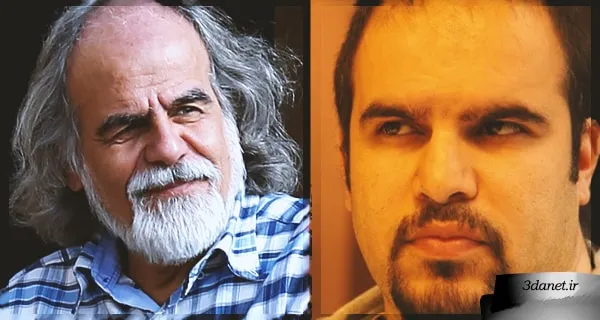
Malekian can be considered the philosopher of the Enlightenment in contemporary Iran, at least among thinkers whose origins lie in religious intellectualism. Malekian's rational and spiritual individual does not enter into a pact of brotherhood with any opinion or belief; rather, he makes his commitment to any belief or opinion conditional upon its being demonstrative, argumentative—that is, upon that opinion or belief possessing epistemic superiority. The rational and spiritual human being, as soon as his opinion and belief on a subject or issue loses its epistemic superiority through his dialectical scientific and intellectual journey, severs his attachment to it and turns to a more correct opinion and belief (
Perhaps the reason for this shift in Malekian's approach regarding the relationship between spirituality and religion is his perfectionist inclination to create a thoroughly coherent and consistent intellectual system. After all, the sacred texts of religions almost always contain propositions that are sometimes contradictory, and efforts to prove the historical authenticity of religious texts from the perspective of historical research face very serious challenges. However, in the author's view, by completely separating spirituality from religion, Malekian, instead of striking a balance between the pursuit and declaration of truth and the reduction of his own and others' pain and suffering, has sacrificed the alleviation of suffering for a particular approach to the pursuit and declaration of truth. As noted in the previous article, Malekian knows that in some cases, the two commitments of discovering and proclaiming the truth, and reducing pain and suffering, may conflict. That is, I "may discover a truth that, if I convey it to you, increases your pain and suffering. And on the other hand, there may be pain and suffering that I wish to reduce, but I can only do so at the cost of concealing a truth." ("Spirituality is the Essence of Religions-1", p. 296) An example he himself gives is the belief of the devout in an anthropomorphic God:
"If you tell the masses of the devout that a personal, anthropomorphic God[4] does not exist—assuming such a thing were true—and that if there is a God, that God is impersonal[5]—if you say such a thing to most of the devout in the world, their pain and suffering will increase. Because they will say, until now, if we were slapped, we would say a God sees it and will one day return that slap to the oppressor and take revenge on him. So it was bad that we ourselves did not answer that slap. Such situations arise, and apparently the pain and suffering of the whole of human life increases. Here, what should you do as an intellectual? It is a great problem. In my opinion, this is the greatest tragic aspect of intellectual life." ("Spirituality is the Essence of Religions-1", p. 296)
As noted at the end of the previous article, Malekian's own answer in cases of conflict is the priority of declaring the truth over reducing suffering. In Malekian's view, human beings must reach maturity and adapt themselves to the truth, however bitter: "What can I do if some are immature! When my child is immature, I should not resign myself to his immaturity for the rest of my life. Eventually, I must rescue him from the ignorance of childhood. At the border of maturity and immaturity, he understands things that increase his suffering, but there is no alternative, and he must eventually reach maturity." ("Spirituality is the Essence of Religions-1", pp. 296-297) The use of the metaphor of maturity in the above passage has a complete resonance with Kant's words in the essay "What is Enlightenment?", at the beginning of which he famously wrote:
"Enlightenment is man's emergence from his self-incurred immaturity. Immaturity is the inability to use one's own understanding without the guidance of another. This immaturity is self-incurred when its cause lies not in lack of understanding, but in lack of resolve and courage to use it without the guidance of another. 'Have courage to use your own understanding!'—that is the motto of enlightenment." (Kant, "What is Enlightenment?", translated by Sirus Arinpour, Agah Publishing) Spirituality, too, is a kind of Kantian religiosity, that is, within the framework of enlightenment and rationality.
However, in Malekian's later approach, to use the English proverb, the baby is being thrown out with the bathwater. If spirituality's account is completely separated from religion, it can hardly fulfill the fundamental commitment to reducing pain and suffering with the same former power. The main audience of theories such as Rationality and Spirituality in Iran or any other society are those who have religious roots and upbringing, but had grown weary of the official reading of religion and its violent Islam[6].
This point can also be formulated as a problem of elitism. Malekian himself, when he still considered himself a religious intellectual, wrote: “A religious reformer is someone who is both a person of thought, reason, and argumentation, and a person of piety and religion. Therefore, they must be able to theoretically explain the synthesis of these two. [...] A religious reformer must be able to prevent the weakening of spirituality and even strengthen it. This is also a serious problem of ours today. Among the masses of religious people, spirituality is always accompanied by a certain form of religiosity. In other words, spirituality that has not taken shape within the form of religiosity is inconceivable for the masses. Perhaps for a few of the elite, a spirituality free from religion is conceivable, but this is not the case for the masses. Therefore, if religiosity is endangered in our society, spirituality will also be jeopardized.” (Dialogue on Religious Governance, in Moshtaghi va Mahjouri, Negah-e Moaser, 1385, pp. 362-341 [pp. 347-348]) The later Malekian’s approach of completely separating religion and spirituality invites this very criticism upon himself; that is, it makes the theory of rationality and spirituality highly elitist, such that it may only be appealing to a limited few. After all, the number of religious people in a religious society like Iran is very large.
The most important originality of the theory of rationality and spirituality was that this theory, at the far end of the spectrum of religious or Islamic intellectualism, presented a completely rational and autonomous form of religiosity. If we compare the thought of the early Malekian with the works of other religious reformers, including Shabestari and Soroush, in the words of Arash Naraghi, in rationality and spirituality,
“Malekian took a great leap over Soroush and Shabestari and landed at the extreme ‘left’ of their project. Within the project of ‘religious reformism,’ Malekian adopted the most radical positions possible (for example, his positions on the nature of the Quran, prophethood, the role of religion in individual and social life, the image of God, etc.). Therefore, now, no matter how ‘radical’ the positions Soroush and Shabestari adopt in the realm of religion and theology, they stand to the right of Malekian—that is, at best, they get a little closer to him. Malekian has sucked the nectar of the radicalism’s attractions within the ‘religious reformism’ project to the last drop. That is, all those who were previously drawn to Soroush and Shabestari by the allure of ‘dissidence’ can now find a ‘purer’ product with Malekian.” (Arash Naraghi, quoted from his Facebook page[7])
However, by removing himself from the spectrum of religious reformism, the later Malekian will place himself alone against much more powerful rivals and will also deprive himself of the power that religion and religious rituals have in reducing human pain and suffering. Philosophy departments in the West, whether in the analytic or continental tradition, are full of non-religious or even anti-religious rational teachings that, in terms of coherence and the literature written on the subject, are even more mature than Malekian (from Nietzsche and Heidegger to the Neo-Marxists, from Freud to the Neo-Darwinists, from the logical positivists to later works in analytic philosophy, and a host of other such examples), and an audience that wants to turn to a theory outside of religion can easily, with some proficiency in foreign languages, turn to them and spare themselves the trouble of reading Malekian’s works. Spirituality without religion and ritual (in a minimal sense) may also, over time, turn into a spirituality-less meaninglessness.
On this basis, the author believes that the best formulation of spirituality is the one the early Malekian presented as the essence of religiosity, and even if not theoretical reason (the reason that, proportionate to the evidence in favor of beliefs, recommends attachment to them), practical reason (the reason whose main goal is the reduction of pain and suffering and also making means and ends proportionate) dictates that Malekian maintain his position at the far end of the religious reformism spectrum, and while criticizing religious intellectualism, remain a religious and spiritual reformer. In this way, he will offer a better balance between truth-seeking and the reduction of pain and suffering.
Ultimately, it is unclear whether, in order for Malekian to remain committed to rationality and spirituality, one must necessarily argue on the basis of maximal rationality. As religious philosophers such as Plantinga and Wolterstorff have shown, one can adopt a minimal view of rationality and truth instead of a maximal one, and employ a kind of reformed epistemology to defend certain religious beliefs. Among religious intellectuals in Iran, Arash Naraghi is a prominent representative of this approach. According to Naraghi, the necessary condition for the rationality of religious beliefs is the fulfillment of the conditions of "minimal rationality," not "maximal rationality." That is, if certain minimal conditions regarding the rationality of a religious belief are not met, commitment to that belief is rationally unjustified; however, the failure to meet maximal conditions regarding the rationality of religious propositions does not necessarily negate the rationality of religious beliefs. Therefore, when opponents and critics of religion claim that the system of religious beliefs is false, and thus continued commitment to them is rationally unjustified, two situations arise: either (a) believers can refute the defeating reasons proposed against their beliefs, in which case their continued belief in those doctrines is rationally justified, or (b) believers cannot refute the defeating reasons presented against their beliefs, in which case their continued belief in those doctrines is rationally unjustified. The important point is that, according to the model of minimal rationality, religious beliefs are innocent in the court of rationality unless proven otherwise:
"The duty of believers, qua believers, is not to prove the innocence of their beliefs, but to rebut the accusation of guilt; that is, here the burden of providing a defeating argument/evidence (i.e., proving guilt) lies with the opponents of religion, and the duty of believers is to show that the reasons and evidence presented against their religious beliefs are invalid. Of course, if it turns out that the defeating reasons/evidence against religious belief X are valid, then the rationalist believer is necessarily obliged by reason to abandon or revise that belief." (See Arash Naraghi, "Traditionalism in the Realm of Religion: A Theory on the Logic of Reforming Religious Thought," p. 8)[8]
Why should we not accept that Naraghi (like Plantinga and Wolterstorff) has also succeeded in reconciling rationality and spirituality?[9]
.
.
[1] On the evolution of Malekian's thought, see Malekian's interview with Samina Rastegari in the May-June 2012 issue of Andisheh Pouya titled "The Tranquil Spirit of an Intellectual."
[2] On the early Malekian's view of spirituality, see the three lectures titled "Spirituality as the Essence of Religions (1)," "Spirituality as the Essence of Religions (2)," and "Questions Concerning Spirituality" in Tradition and Secularism, Serat Publications, Summer 2002. The later Malekian's view of spirituality has not yet been published in book form, but it can be observed in interviews and lectures by Malekian published since the mid-2000s. As another example, see "The Compatibility of Spirituality and Modernity," Malekian's interview with Sadra Sadeh and Fatemeh Shams for Shargh Newspaper, August 2006; and the interview "I Defend Spiritual Intellectualism."
[3] Regarding the early Malekian's view on spirituality, see, for example, the three lectures titled "Spirituality as the Essence of Religions (1)," "Spirituality as the Essence of Religions (2)," and "Questions Concerning Spirituality" in Tradition and Secularism, Serat Publications, Summer 2002. The later Malekian's view on spirituality has not yet been published in book form, but it can be observed in interviews and lectures by Malekian that have been published since the mid-2000s. See, for example, "The Compatibility of Spirituality and Modernity," Malekian's interview with Sadra Sade and Fatemeh Shams for Shargh newspaper, August 2006.
[4] personal
[5] impersonal
[6] In the words of Mohammad Mojtahed Shabestari in his book A Critique of the Official Reading of Religion.
[7] Republished on Akbar Ganji's Facebook page under the title "Arash Naraghi's New Critique of the Views of Abdolkarim Soroush, Mohammad Shabestari, and Mostafa Malekian," accessible at this link: https://www.facebook.com/AkbarGanji/posts/910215505690213
[8] Accessible on the author's website. (Reference is to pages of the PDF file)
[9] Soroush Dabbagh also critiques Malekian's project of rationality and spirituality from the perspective of religious intellectualism in the articles "Dogmatism and Being Modern" and "Malekian and Ethical Utilitarianism". In the first article, Dabbagh critiques Malekian's thought on the incompatibility of religiosity and rationality by drawing on Wittgenstein's philosophical system, and in response, defends the possibility of an epistemic religiosity—in Abdolkarim Soroush's terms—which Malekian would apparently find paradoxical, much like the concept of religious intellectualism. In the article on Malekian and utilitarianism, Dabbagh also emphasizes the importance of utilitarianism or consequentialism in political ethics and evaluates Malekian's view of politics from the perspective of virtue ethics as useful but insufficient. See.
.
.
A Review of Mostafa Malekian's Socio-Political Theory – Part Three
A Critique of the Later Malekian's Approach to Rationality and Spirituality
Author: Meysam Badamchi
.
.
Related Content:
A Review of Mostafa Malekian's Socio-Political Theory – Part One
A Review of Mostafa Malekian's Socio-Political Theory – Part Two
A Review of Mostafa Malekian's Socio-Political Theory – Part Three
A Review of Mostafa Malekian's Socio-Political Theory – Part Four
A Review of Mostafa Malekian's Socio-Political Theory – Part Five
.
.

Discussion0 comments
No comments yet; let yours be the first voice.