Political Science
A Review of Mostafa Malekian's Socio-Political Theory – Part Two
In Malekian's view, spirituality is a remedy for alleviating human pain and suffering, since the traditional understanding of religion can no longer fulfill this role in the modern era. His theory and its relationship to social systems and rationality are examined.
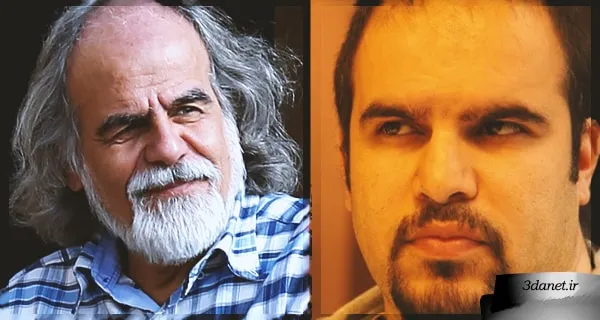
In this article, I will attempt to describe Malekian's theory of spirituality in greater detail, and in the next article, I will critique the later Malekian's approach to rationality and spirituality.
Spirituality, at least in the initial formulation that Malekian presents in the book Tradition and Secularism, is based on the presupposition that the greatest goal of all human beings in life is to attain inner contentment, and inner contentment has three main components: a) peace, b) happiness, and c) hope. We have arrived at these three components through the knowledge of psychology (empirical or mystical psychology). This presupposition is complemented by another historical presupposition, which holds that history testifies that three things, whether negatively or positively, have no role in the attainment or non-attainment of inner contentment (=peace, hope, and happiness): 1) A specific religion or creed: Malekian says that there have been people throughout history who belonged to none of the Abrahamic religions, yet possessed peace, happiness, and hope, just as the opposite is also true. 2) Natural sciences and human knowledge: for example, knowledge of atomic physics, Darwin's theory of evolution, or relativity has no effect on the attainment or non-attainment of peace, hope, and happiness in us (here the phrase
Throughout history, humanity has always expected that religion, among its other tasks, would first identify the mother of all pains and sufferings, and secondly, show the way to eliminate these pains and sufferings: “Humanity’s expectation of religion has not been that it introduce us to superficial, first-order pains and sufferings, because we notice these pains and sufferings ourselves and do not need religion to recognize them. For a long time, religion had the potential to do this. I do not want to say that religion did this for all believers in all places, times, and circumstances; but certainly, if some people wanted it to, religion would do it. [...] But why was religion capable of such a response? The answer is that historical religion offered a metaphysics whose acceptance was reasonable for the human being of that time. But that metaphysics was gradually [in the modern era] called into question. From an intellectual and argumentative standpoint, parts of the weighty and substantial metaphysics that religion possesses are no longer acceptable today. This is what causes the traditional understanding of religion to no longer be able to give us knowledge of those underlying pains and sufferings, nor to specify the way to remedy and eliminate them for us. This is the first reason for raising the discussion of spirituality, and why we are compelled today to offer something other than the traditional understanding of religion.” (“Spirituality is the Essence of Religions-2”, pp. 314-315) Spirituality, in the continuation of this passage, emphasizes that spirituality is different from the traditional understanding of religion, but is not anti-religion.
The second factor that makes raising the discussion of spirituality necessary is that in the post-Industrial Revolution era, humanity’s power to destroy the social order is far greater than in the past. In Malekian’s view, we humans are always predisposed to do whatever we can do. Whereas ethics dictates that the sphere of human potentialities should be different from his permissible acts. Spirituality is necessary to shrink the sphere of human permissible acts relative to the sphere of their potentialities, as an internal mechanism for control. The spiritual person knows they can do many things, but ought not to do them. If past humanity had wanted to use its power to do whatever it could do, it had little power, but if today’s human being wants to use this force of his, due to the growth of technology and science, he will disrupt the social order. So spirituality is necessary from this perspective as well (“Spirituality is the Essence of Religions-2”, pp. 315-316). Attention to this point is itself one of the manifestations of Malekian’s concern for social matters.
We said that the origin of spirituality is the reduction of human pain and suffering. Here it is necessary to add that in Malekian’s view, pain and suffering are subjective (or mental, or in another expression, internal) and not objective (or external). Pain and suffering are not like sugar, which can be shown externally, in plain sight. Pain and suffering are not even intersubjective. My pain and suffering, like my love, like my fatigue, like my despair, are something within me. But the source or sources of pain and suffering are both objective and subjective. Regarding the internal and subjective factors of pain and suffering, one can cite individuals’ beliefs and expectations as examples, and regarding the external and objective factors of pain and suffering, factors such as the existence of security, order, justice, freedom, and the absence of violence in society. (“Questions Concerning Spirituality” in Tradition and Secularism, Serat Publications, 1381 [2002], pp. 373-374). When a spiritual person wants to reduce their own or others’ pain and suffering, they should not only address the external origins of pain and suffering, but must also address the subjective factors that cause pain and suffering. Eliminating the internal origins of pain and suffering even takes priority over eliminating the external factors of pain and suffering: “We have no reason for the total eradication of the objective origins of the pains and sufferings of the world. We have no reason to believe that a state will ever arise in the universe where nothing external is a source of pain and suffering. In this respect, the Stoics were, in my opinion, more correct when they said that since this is the case, let us address those factors that are more within our control. They said that the subjective factors of pain and suffering are more within our control than the objective factors of pain and suffering” (“Questions Concerning Spirituality”, p. 375). As we will see in subsequent articles, this approach in turn opens the way for political quietism, or the absence of a political philosophy in Malekian’s intellectual system.
Expounding Truth, Reducing Suffering; The Two Basic Ethical Duties of Spiritual Intellectuals
Malekian considers the statement of truth and the statement of suffering to be the two prima facie social-ethical duties of spiritual intellectuals, and he has elaborated on this point in detail in the article "Statement of Truth and Reduction of Suffering; The Ethical and Tragic Aspect of Intellectual Life" (this work is one of the most important works that Malekian has written directly and is not a transcription of a lecture or interview. See "Statement of Truth and Reduction of Suffering" in A Way to Liberation, Negah-e Moaser, 1381, pp. 9-33). His account of these fundamental duties and their interrelation is based on the theory of prima facie ethical duties in the moral philosophy of David Ross.[1] Malekian's model of the spiritual intellectual in this article is Socrates, and his ideal society is a Socratic commonwealth in which individuals hold truer beliefs and strive to reduce the pain and suffering of other members of society, especially the deprived. Fulfilling the two fundamental ethical duties of stating the truth and reducing suffering requires creating or cultivating virtues within oneself, which are the virtues of rationality and spirituality.
On this basis, argumentativeness and the proportional fitting of means and ends is the first characteristic of the spiritual intellectual. The second characteristic of the spiritual intellectual is "skepticism," "that is, the courage and initiative to doubt the correctness or incorrectness of any belief or action that someone, some people, or everyone considers correct or incorrect" ("Statement of Truth, Reduction of Suffering" in A Way to Liberation, Negah-e Moaser, 1381, p. 20). The fourth characteristic is "criticism," "that is, considering no one the embodiment of truth or the statue of falsehood, and therefore neither accepting any belief or action without reason nor rejecting it without reason," and demanding reasons from everyone, considering no one above or beneath questioning, and committing to any opinion or action in proportion to the strength of the reason or reasons presented for its truth or correctness. Adherence to criticism leads to a kind of egalitarianism in encountering individuals. The fifth characteristic of the spiritual intellectual is "non-attachment to an ideology" or dogmatic worldview. The sixth characteristic is "striving to reduce the negative effects of specialization" in various scientific fields and disciplines in the modern world. "Using speech free from ambiguity, equivocation, and obscurity," "distinguishing problems from pseudo-problems," "attention to the hierarchy of needs," and "causation and etiology of pains and sufferings" (which were explained earlier in the description of spirituality), "gradual progression and avoidance of any conservatism and revolutionism," "honesty," "fairness in the position of critique and judgment" of others, and finally "readiness to endure any deprivation, pain, and suffering" are other characteristics that Malekian enumerates for spiritual intellectuals (ibid., pp. 19-27).
According to Ross's ethical theory, if there is no conflict between one prima facie duty and another prima facie duty, one must perform the said duty absolutely and without any conditions. However, if a conflict arises between two prima facie duties, the more important duty must be performed. The tragic aspect of the spiritual intellectual life in Malekian's account is that, in his view, stating the truth and reducing suffering are two prima facie moral duties of spiritual intellectuals that may, in some cases, conflict with one another, and we may be forced to prefer one over the other. As is evident from the term tragedy that Malekian employs, such situations are extremely difficult. Nevertheless, if in some instances a struggle occurs between the two moral duties of stating the truth and reducing pain and suffering, and we must choose only one, Malekian's preference would be stating the truth, because, firstly, stating the truth is an instance of fidelity to promises, that is, among the backward-looking prima facie duties (arising from the agent's own prior actions) in Ross's classification, while reducing suffering is among the forward-looking prima facie duties, and it seems that performing backward-looking duties, except in exceptional cases, takes priority over performing forward-looking duties. Secondly, on the whole, knowing the truths, compared to being caught in falsehoods and illusions, causes less pain and suffering and alleviates more pain and suffering. Thirdly, if the heedless and uninformed one day realize that some people have concealed a truth from them and deceived them, they will likely experience a pain and suffering from their feeling of having been deceived that is far greater than the pain and suffering they were spared from enduring during their heedlessness and ignorance. Fourthly, if citizens suspect that intellectuals, even to avoid increasing citizens' pain and suffering, sometimes conceal some truths from them, they will lose their trust in them. And fifthly, "it is true that knowledge of many truths immediately and temporarily causes pain and suffering, but a human being can always, sooner or later and more or less, adapt to the new epistemic situation, that is, find ways to remove the pains and sufferings resulting from this knowledge." ("Reducing Truth and Stating Suffering," pp. 30-33)
The extent to which Malekian's arguments for stating the truth over reducing suffering are convincing is an issue that we will address to some degree in the next writing.
.
.
[1] Soroush Dabbagh is another thinker who has paid attention to David Ross's moral philosophy regarding prima facie moral duties and, for example, in two writings, "The Moral Foundations of Democracy" and "On Politics and Morality," has attempted to reconcile Ross's theory with a moral defense of liberal democracy. See Soroush Dabbagh, The Moral and the Transcendent, Tehran: Parseh Book, 2008, pp. 67-96.
.
.
A Review of Mostafa Malekian's Socio-Political Theory – Part Two
The Theory of Rationality and Spirituality (Part Two)
Author: Meysam Badamchi
.
.
Related Content:
A Review of Mostafa Malekian's Socio-Political Theory – Part One
A Review of Mostafa Malekian's Socio-Political Theory – Part Two
A Review of Mostafa Malekian's Socio-Political Theory – Part Three
A Review of Mostafa Malekian's Socio-Political Theory – Part Four
A Review of Mostafa Malekian's Socio-Political Theory – Part Five
.
.

Discussion0 comments
No comments yet; let yours be the first voice.