Political Science
A Review of Mostafa Malekian's Socio-Political Theory – Part One
Malekian's theory of 'Rationality and Spirituality' rests on the compatibility of religion with the inescapable components of modernity, such as reason and the here-and-now. The ideal life is one of happiness, goodness, and authenticity, and these are the two paths to attaining them.
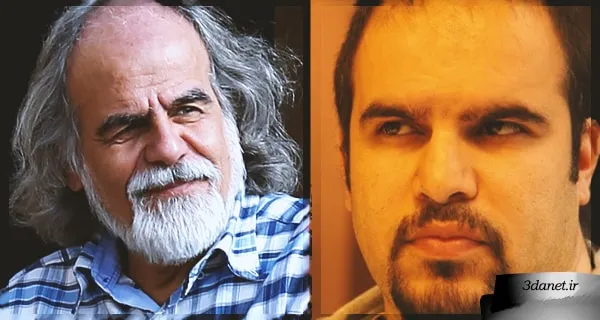
These five articles are a Persian rendering of parts of a chapter on Mostafa Malekian's socio-political theory from the author's forthcoming English-language book Post-Islamist Political Theory: Iranian Intellectuals and Political Liberalism in Dialogue, Springer Publishing, 2017. The theory of rationality and spirituality and its critique (distinguishing between Malekian's early and later approaches to spirituality) is the subject of the first three parts of this series. Malekian's theory of tolerance and its critique (with reference to certain concepts drawn from Rawls's political liberalism) is the subject of the fourth and fifth writings in this collection.
Mostafa Malekian is one of Iran's renowned intellectuals of the last two decades, whose most original contribution to thought can be considered the theory of "rationality and spirituality." Malekian is systematic, attaches great importance to epistemology in religious studies, and coherence is a significant virtue for him. Accordingly, his socio-political thought is also tied to the theory of rationality and spirituality. According to Malekian himself, the reconciliation of rationality and spirituality has been his most important intellectual concern since around 1997. Rationality and spirituality is, at its core, also founded upon a theory concerning the relationship between religion and reason, or in other words, religion and modernity, and to explain it, one must address Malekian's view on the relationship between religion and rationality.
Malekian explains his account of the relationship between religion and rationality by dividing the elements of modernity into avoidable and unavoidable components. It is important to note that spirituality is a form of religiosity that is compatible with the unavoidable components of modernity.
The first and perhaps most important unavoidable characteristic of modernity or modern culture is adherence to reasoning, the opposite of which is dogmatic acceptance. Based on the principle that things are known by their opposites, if we understand dogmatic acceptance well, we will also understand what it means to be reasoning. Dogmatic acceptance, in Malekian's own words,
"means that I say A is B, and you ask, 'How do you know A is B?' I answer, 'Because S says A is B'... The more this form of reasoning grates on your mind, the more modern you are. And the more this form of reasoning does not bother you, it becomes clear that you have not yet approached modernity. For modern man, it is one of the greatest fallacies to say, 'A is B because S says so.' This is dogmatic acceptance. But... in the reasoning form, I claim A is B, you ask, 'How do you say A is B?' I say, 'Because A is C; and C is B; therefore, A is B.' Of course, you may not accept the premise that 'A is C'; in that case, the reasoning continues, for example, I say, 'A is D, and D is C, therefore A is C.' And so on, this process continues." ("Spirituality, the Essence of Religions-1" in Tradition and Secularism, Serat Publications, 2002, p. 274) So the difference between being reasoning and dogmatic acceptance is that when we are reasoning, as long as the other party demands a reason from us, we proceed step by step with them, whereas in dogmatic acceptance, the word of authorities or figures of authority ends the reasoning.
The second unavoidable characteristic of modernity is a kind of distrust of history and of religiosity based on historical narratives. In rationality and spirituality, history is a probabilistic science, not a definitive one, and the truth of religion cannot be founded upon the acceptance of a few historical events.
The third inevitable feature is the here-and-now-ness of the modern person's states, instead of a focus on life after death. (On this basis, Malekian explains elsewhere that in spirituality there is a kind of "secularity" or this-worldliness; that is, the concern of the spiritual person is the here and now. The spiritual person can believe in life after death and even accept a system of posthumous reward and punishment, but what draws a spiritual person to spirituality is its here-and-now character. The spiritual person seeks to attain inner peace, inner joy, and inner hope right here. In Malekian's view, the spiritual person's state is described by this line of Hafez: "I, for whom cash Paradise is realized today, / Why should I believe the ascetic's promise of tomorrow?" This world is the focus of his attention, not in the sense that this world is the only world the spiritual person believes in, but in the sense that he wants, by being spiritual, to obtain certain things right here. See "Spirituality, the Essence of Religions-2," in Tradition and Secularism, pp. 316-317)
The fourth inevitable feature of modernity is the fading of metaphysics; that is, the collapse and destabilization of the comprehensive and vast metaphysical systems of the old world, including those concerning religions. The fifth feature is a kind of desacralization of persons, including religious figures. The sixth feature is a relative disregard for the local and temporary characteristics of religions, that is, a kind of emphasis on universality ("Spirituality, the Essence of Religions-1" in Tradition and Secularism, pp. 275-285). Spirituality is compatible with all these inevitable features of modernity.
In the lecture "Rationality and Spirituality After Ten Years"[1] Malekian emphasizes that the ideal life is one that has three characteristics: first, pleasure[2]; second, goodness[3]; and third, authenticity[4]. Rationality and spirituality are the two inescapable means we need to attain the ideal life, yet in themselves, and without considering their effect in achieving "pleasure," "goodness," and "authenticity of life," they are not ends for human beings. He defines pleasure, goodness, and authenticity as follows: In a pleasurable life, the person seeks the greatest amount of pleasure and the least amount of pain and suffering for themselves and moves in this direction. It is entirely possible that something that creates pleasure for one individual and reduces their pain and suffering does not do so for another, but this does not harm our basic definition of the relationship between pleasure and the ideal life ("Rationality and Spirituality After Ten Years," p. 2). As for goodness, the ideal life is such that a person lives in a way that inflicts the least amount of pain and suffering on others and makes the greatest effort to reduce the pain and suffering of others. Unlike pleasure, which is based on egoism or a kind of selfishness, goodness is based on altruism or a kind of other-regardingness (ibid., p. 3). Finally, authenticity means that life is such that it is worth living. Unlike pleasure and goodness, which deal with the quality of life, in the discussion of authenticity we deal with how one should live so that life is meaningful ("Rationality and Spirituality After Ten Years," p. 4).
In many of his works, Malekian emphasizes that the authentic life means living based on one's own understanding and discernment, a life in which imitation and blind obedience, suggestibility, and following public opinion and the intellectual fashions of the time have no place (for example, see previous, p. 11). Rationality and spirituality harbor a deep belief in a kind of existentialist autonomy within themselves. The spiritual person, in the precise sense of the word, lives an authentic life. The spiritual individual "decides for themselves, based on their own understanding." Non-spiritual people, in contrast, have an inauthentic and borrowed life.[5] In a non-spiritual life, human beings are like vessels into which others have poured things, possessing nothing of their own, whereas the spiritual life is one in which our actions are based solely on our own understanding.[6]
All of this, of course, does not mean that everyone who lives an autonomous life is, in Malekian's view, also spiritual. For example, he critiques the Nietzschean-Sartrean existentialist approach to autonomy and explains that the main point of this type of existentialism is that "your existence has been given to you, and your essence is in your own hands; make of it whatever you wish. Only do so with authenticity, and in the way that truly springs from within you. In Sartre's words, avoid Bad-faith. That is, do not be hypocritical or duplicitous, and realize whatever arises from your own spontaneity and natural disposition." (Mostafa Malekian, "The Gift and the Encounter of Islamic Mysticism", interview with Andishe-ye Eslah, Issue 1, July 2015, p. 14)[7] In Malekian's view, at the opposite pole from Nietzschean-Sartrean existentialism, spirituality says that within us humans there is a dark half; accept this dark half, but do not strengthen it, and strengthen the luminous half. He explains:
"By emphasizing autonomy [self-rule], I want to negate heteronomy or rule by others. But this does not mean that I must actualize everything that exists potentially within me; rather, I must, with my reason and moral conscience, dry up the seeds of many of these potentialities. It was not without reason that the 1968 movement in France and Europe generally emerged from the heart of this existentialism, with young people saying we want to actualize whatever we see within ourselves. We want to be what we are, and they turned to nudism and naturalism. [...] It is from this perspective that I have said being moral is a three-component disposition: autonomy versus heteronomy; second, self-restraint or self-control; and third, altruism. Self-restraint is a serious filtering in the actualization of talents." (The same interview)
Let us return to the discussion of spirituality and the absence of dogmatism. In Malekian's view, religiosity, at least in its traditional form, is based on dogmatism because in religious discourse, when the discussion reaches authorities or religious sources, we fall silent, meaning we refrain from demanding reasons. In Malekian's well-known formulation of this matter, he says that in religious or theological discourse, the devout person ultimately reaches a point in the course of the discussion where, for example, they claim "A is B," and they are asked, how do you know that "A is B," and they say, I have no reason for this statement; rather, I say it based on the word of such-and-such a religious authority or sacred text. "That is, in your religious reasoning, you ultimately arrive at propositions that you accept dogmatically, meaning solely by relying on the authority of spiritual or religious figures." ("Spirituality is the Essence of Religions-1", p. 275) The religious person, in Malekian's terms, is heteronomous or other-ruled,[8] whereas the individual committed to rationality is autonomous or self-ruled.[9]
At least in Malekian's initial formulation of his theory in the early 2000s, spirituality can be considered the part of religion that is compatible with modernity. Accordingly, modernity is not compatible with traditional religion, but it is compatible with rationalized religion or spirituality ("Spirituality is the Essence of Religions-2", p. 316); and the first task in realizing spirituality is "the elimination of the element of dogmatism from religion as much as possible." ("Spirituality is the Essence of Religions-1", pp. 273-275). Based on the initial formulation, the theory of the inevitable components of modernity is, in fact, a theory for religiosity in the new era.
In recent years, Malekian has consistently emphasized that the term "religious intellectualism," because of religiosity's basis in dogmatism and intellectualism's basis in autonomy and reasoning, is fundamentally a paradoxical phrase.[10] Whether when he considered himself among the religious intellectuals in the late 1990s and early 2000s, or today when he emphasizes the boundary between himself and religious intellectuals, he has stressed that the concept of religious intellectualism contains an internal contradiction, and it is better to use the term religious new-thinking instead. Although this statement does not mean that we deny the services that "religious intellectuals" have rendered from the dawn of the Constitutional Revolution to our time in Iran and in other Islamic countries. In his own words:
«The essence of intellectualism is rationality; an intellectual is not an intellectual unless they are committed to rationality, committed one hundred percent to rationality. Committed as much as possible, or nearly one hundred percent. Since the time of Kant, Herder, Lessing, and others when the discussion of intellectualism arose, whether in the French intellectual tradition or in the German and English intellectual traditions, an intellectual was someone who was the guardian of rationality, and the essence of intellectualism is the guardianship of rationality. But on the other hand, the essence of religiosity, piety, and faith is submission. It is impossible for someone to claim to be a Christian and then say, 'I am not submissive to any of Jesus' words; rather, I demand proof for every word that comes from Jesus' mouth, and until Jesus provides convincing and decisive proof, I will not accept his word.' There is nothing wrong with someone saying this; but then they should no longer call themselves a Christian; [...] It is meaningless for someone to say, 'I am a Muslim, but until I demand proof for every single sentence of the Quran and a convincing reason is not presented for it, I will not accept it' [...] A Muslim is someone who is at least submissive to the sentences of the Quran and the Prophet of Islam; that is, accepts these words without question. If the essence of intellectualism is rationality and if the essence of religiosity and faith is submission, I submit that [...] how can two things that inherently negate each other be brought together in the project of religious intellectualism?»(Malekian, "I Defend Spiritual Intellectualism," interview with Farhang-e Emrooz website)[11]
Since in Malekian's formulation the essence of intellectualism is rationality and the essence of religiosity, at least in its historical form, is submission, religious intellectualism is a paradoxical phrase because it attempts to bring together two things that inherently negate each other, and this is impossible. In opposition to the project of religious intellectualism, Malekian defends spiritual intellectualism, and as we will see in the next writing, he considers the articulation of truth and the reduction of suffering to be the two basic moral duties of spiritual intellectuals, and even tries to provide a theory for tolerance by keeping these two basic moral duties in mind.
.
.
[1] For a report on this important lecture, delivered at the Faculty of Law and Political Science of the University of Tehran in Ordibehesht 1389 on the occasion of the tenth anniversary of the theory of Rationality and Spirituality, see.
Reference is to the page numbers of the Word file of the transcribed lecture.
[2] happiness
[3] goodness
[4] authenticity
[5] vicarious
[6] Malekian writes somewhere: "Which of our actions is such that we can say we ourselves were the agent of it? From silence and speech and joy and sorrow... which can we attribute to ourselves and say, 'I was silent here because of an internal factor'? Our silence always has an external cause, not an internal one. Something always compels us to silence. This life is not our own life. We are like a cinema screen whose projector is outside of us, and whatever that device projects is reflected upon us. Nothing wells up from within us. When this is the case, the human being lacks identity. A human being's identity depends on their authenticity." ("Spirituality of the Religions-2", p. 325)
[7] Reference is to the page numbers of the Word file.
[8] heteronomous
[9] autonomous
[10] For an excellent overview of Malekian's theory of Rationality and Spirituality in English, which also seeks to explain the place of Malekian's theory within the larger project of religious intellectualism, see the article by Eskandar Sadeghi-Boroujerdi with these specifications:
Eskandar Sadeghi-Boroujerdi, “Mostafa Malekian: Spirituality, Siyasat-Zadegi and (A)political Self-Improvement”, DOMES: Digest of Middle Eastern Studies, Volume 23, Number 2, 2014, pp. 279–311.
[11] http://farhangemrooz.com/...
.
.
A Review of Mostafa Malekian's Socio-Political Theory – Part One
The Theory of Rationality and Spirituality (Part One)
Author: Meysam Badamchi
.
.
Related Content:
A Review of Mostafa Malekian's Socio-Political Theory – Part One
A Review of Mostafa Malekian's Socio-Political Theory – Part Two
A Review of Mostafa Malekian's Socio-Political Theory – Part Three
A Review of Mostafa Malekian's Socio-Political Theory – Part Four
A Review of Mostafa Malekian's Socio-Political Theory – Part Five
.
.

Discussion0 comments
No comments yet; let yours be the first voice.